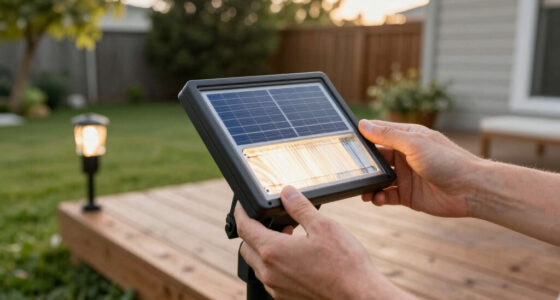
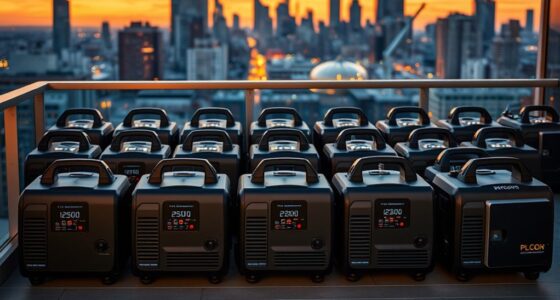
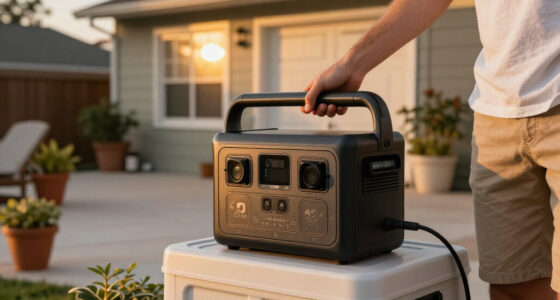
When the power goes out, a solar generator for home backup can keep your fridge, lights, medical devices, and Wi-Fi running without the noise, fumes, and maintenance of a gas generator. After comparing 12 leading models, the Jackery HomePower 3600 Plus stands out as the best overall pick thanks to its 3,584Wh capacity, 3,600W output, and expandability with an extra battery. For tighter budgets, the Anker SOLIX S2000 and BLUETTI Elite 200 V2 deliver dependable mid-size backup at a lower cost, while the UDPOWER S2400 undercuts bigger brands on raw value. The main tradeoff in this category is capacity versus cost and portability: bigger units run whole-home essentials for days but cost more and weigh over 80 pounds, while smaller kits are easy to move but may only cover a fridge and a few devices. Battery chemistry, solar input speed, and whether panels are included also separate models that look similar on paper. Keep reading for the full breakdown of each pick and who it suits best.

Get backup power and energy gear delivered free — and shop member deals
- Fast, free delivery on millions of items
- Access to Prime Big Deal Days deals on October 6–7
- Prime Video, Amazon Music and more included
Complete the kit


Key Takeaways
- Capacity tiers defined the ranking more than brand: 3,000Wh+ units (Jackery HomePower 3600 Plus, Pecron F3000LFP, ABOK Ark3600) can run a fridge plus essentials for a full day or more, while 2,000Wh models are really ‘fridge-and-devices’ backup, not whole-home coverage.
- Whether solar panels are included changes real-world value dramatically — the same Jackery HomePower 3600 Plus appears three times in this lineup with different bundles, and the panel-and-battery combos are the ones actually ready for an outage.
- Solar input speed is the hidden differentiator: the ABOK Ark3600’s 2,000W input can recharge its battery in roughly two sunny hours, while standard kits with 400W of panels may need most of a day — a big deal during multi-day outages.
- The UDPOWER S2400 and Pecron F3000LFP prove lesser-known brands with LiFePO4 chemistry can match or beat household names on specs, but trade away ecosystem polish like expandable battery packs and app control.
- The Jackery Explorer 1000 v2 bundles are the only truly portable picks here — best for apartment dwellers and renters who can’t install anything, but they should not be expected to back up a whole house.
| Jackery HomePower 3600 Plus Portable Power Station, 3584Wh, 3600W |  | Best Overall | Battery capacity: 3584Wh | AC output: 3600W | Parallel output: 7200W (120V/240V) | VIEW LATEST PRICE | See Our Full Breakdown |
| Jackery Explorer 1000 v2 Portable Power Station with 200W Solar Panel |  | Best for Beginners | Battery capacity: 1,070Wh | Battery type: LFP | AC output: 1,500W (3,000W surge) | VIEW LATEST PRICE | See Our Full Breakdown |
| BLUETTI Elite 200 V2 Solar Generator with Two 200W Solar Panels, 2073.6Wh |  | Best Value Kit | Battery capacity: 2,073.6Wh | Continuous AC output: 2,600W | Power lifting mode: 3,900W | VIEW LATEST PRICE | See Our Full Breakdown |
| UDPOWER S2400 Portable Power Station, 2083Wh LiFePO4 Battery, 2400W Output |  | Best Compact Backup | Battery capacity: 2,083Wh | Battery chemistry: LiFePO4 | AC outlets: 6 | VIEW LATEST PRICE | See Our Full Breakdown |
| Jackery HomePower 3600 Plus Portable Power Station with Extra Battery and Two 200W Solar Panels |  | Best Premium Whole-Home Setup | Battery capacity: 3,584Wh (expandable with extra battery) | Output: 3,600W | Voltage: 120V; 120V/240V in parallel | VIEW LATEST PRICE | See Our Full Breakdown |
| Jackery HomePower 3000 Portable Power Station with 2 × 200W Solar Panels |  | Best Ready-to-Use Home Backup Bundle | Capacity: 3,072Wh | AC output: 3,600W | Surge output: 7,200W | VIEW LATEST PRICE | See Our Full Breakdown |
| Jackery Explorer 1000 v2 Portable Power Station |  | Best Compact Backup for Essentials | Capacity: 1,070Wh | AC output: 1,500W | Surge peak: 3,000W | VIEW LATEST PRICE | See Our Full Breakdown |
| Anker SOLIX S2000 Portable Power Station, 2,010Wh, 1,500W |  | Best for Fast UPS Switchover | Battery capacity: 2,010Wh | Battery type: LFP | Continuous output: 1,500W | VIEW LATEST PRICE | See Our Full Breakdown |
| ABOK Ark3600 Portable Power Station with 400W Solar Panel, 2000W Solar Input |  | Best for Expandable Long-Duration Backup | Capacity: 3,840Wh; expandable to 11,520Wh | Battery type and cycle life: LiFePO4; 4,000 cycles | Solar input: Up to 2,000W | VIEW LATEST PRICE | See Our Full Breakdown |
| Pecron F3000LFP Portable Power Station, 3072Wh LiFePO4 Battery, 3600W Output |  | Best Expandable High-Output Station | Battery capacity: 3,072Wh | Expandable capacity: Up to 10,752Wh with additional battery | Battery chemistry: LiFePO4 | VIEW LATEST PRICE | See Our Full Breakdown |
| ABOK Ark3600 Portable Power Station with 3 × 200W Solar Panels |  | Fastest Recharge Pick | Capacity: 3,840Wh, expandable to 11,520Wh | AC input: 1,500W | PV input: Up to 2,000W | VIEW LATEST PRICE | See Our Full Breakdown |
| Jackery HomePower 3600 Plus Portable Power Station with Two 200W Solar Panels |  | Best for Whole-Home Aspirations | Capacity: 3,584Wh, expandable to 21kWh per unit | AC output: 3,600W (7,200W in parallel) | Voltage: 120V; 240V in parallel | VIEW LATEST PRICE | See Our Full Breakdown |
| solar generators for home backup | Battery capacity | Battery chemistry |
|---|---|---|
| Jackery HomePower 3600 Plus Po | 3584Wh | — |
| Jackery Explorer 1000 v2 Porta | 1,070Wh | — |
| BLUETTI Elite 200 V2 Solar Gen | 2,073.6Wh | LiFePO4 |
| UDPOWER S2400 Portable Power S | 2,083Wh | LiFePO4 |
| Jackery HomePower 3600 Plus Po | 3,584Wh (expandable with extra battery) | LFP |
| Jackery HomePower 3000 Portabl | — | LiFePO4; 4,000 cycles to 70% capacity |
| Jackery Explorer 1000 v2 Porta | — | — |
| Anker SOLIX S2000 Portable Pow | 2,010Wh | — |
| ABOK Ark3600 Portable Power St | — | — |
| Pecron F3000LFP Portable Power | 3,072Wh | LiFePO4 |
| ABOK Ark3600 Portable Power St | — | LiFePO4, 4,000+ cycles, up to 10-year lifespan |
| Jackery HomePower 3600 Plus Po | — | — |
More Details on Our Top Picks
Jackery HomePower 3600 Plus Portable Power Station, 3584Wh, 3600W
The HomePower 3600 Plus earns the top spot because it balances raw capability with practical design better than anything else in this lineup. Its 3,584Wh capacity and 3,600W output can run refrigerators, well pumps, and medical equipment through an extended outage, and the expansion path to 21kWh — or 43kWh with parallel units — means a buyer can start with one unit and grow into whole-home coverage without starting over. Compared with the Pecron F3000LFP, which offers similar wattage, the Jackery’s wheels and telescopic handle make a 77-pound unit genuinely movable, and its 6,000-cycle LFP battery rating is among the most durable here. The tradeoff: 120V/240V split-phase and parallel output require additional compatible hardware, and even 3.6kWh runs out fast if you’re powering heating or cooling loads.
Pros:- 3,584Wh capacity expandable to 21kWh per unit (43kWh in parallel)
- Four charging methods including hybrid AC+DC for a 2-hour recharge
- Wheels and telescopic handle make a heavy unit practical to move
- 6,000-cycle battery rating supports roughly a decade of regular use
Cons:- Parallel 240V output and full home backup require extra compatible equipment or a second unit
- Single-unit capacity won’t sustain large HVAC loads for extended outages
Best for: Homeowners who want a single purchase that can cover essentials now and expand toward whole-home backup later
Not ideal for: Renters or apartment dwellers — the size, weight, and home-integration focus are overkill without a place to install and charge it
- Battery capacity:3584Wh
- AC output:3600W
- Parallel output:7200W (120V/240V)
- Expandable capacity:Up to 21kWh per unit, 43kWh with multiple units
- Battery cycle life:6,000 cycles
- Hybrid AC+DC recharge:2 hours
- Solar recharge time:4 hours
- Design:Wheels and telescopic handle
Our verdict“The most complete home-backup foundation you can buy in one box — pick this if budget allows and expansion is on your roadmap.”
Jackery Explorer 1000 v2 Portable Power Station with 200W Solar Panel
Not everyone needs to back up their whole house, and the Explorer 1000 v2 is the smartest low-commitment entry point in this roundup. At 23.8 lbs, it’s less than a third the weight of the HomePower 3600 Plus, and the bundled 200W panel means a first-time buyer gets a complete solar loop out of the box. Where the BLUETTI Elite 200 V2 doubles the capacity and output, this kit costs and weighs far less, which matters if you’re mainly keeping a fridge, phones, and a CPAP alive during a short outage. The 1,500W output with 3,000W surge handles most single-appliance loads, and the LFP battery’s 4,000-cycle rating means it won’t be obsolete in three years. The catch: 1,070Wh disappears in under a day at refrigerator-plus-lights load, and the one-hour charge requires digging into the app’s emergency-charging mode.
Pros:- Complete kit with a 200W solar panel included
- Lightest option in this lineup at 23.8 lbs
- 1,500W output with 3,000W surge handles single large appliances
- LFP battery rated past 4,000 cycles with 5-year coverage
Cons:- 1,070Wh capacity limits multi-day backup for anything beyond essentials
- Fastest charging requires enabling emergency mode in the app rather than working out of the box
Best for: First-time buyers and apartment dwellers who want a complete, portable solar kit for short outages and camping
Not ideal for: Households backing up a full-size refrigerator plus multiple appliances for more than a day — the capacity runs dry too quickly
- Battery capacity:1,070Wh
- Battery type:LFP
- AC output:1,500W (3,000W surge)
- Weight:23.8 lbs
- Included solar panel:200W
- Ports:3 AC, 2 USB-C (100W PD), 1 USB-A, 1 DC car port
- Emergency charge time:1 hour (app-enabled)
- Battery lifespan:Over 70% capacity after 4,000 cycles
Our verdict“The easiest on-ramp into solar backup — buy it if you want portability and simplicity over endurance.”
BLUETTI Elite 200 V2 Solar Generator with Two 200W Solar Panels, 2073.6Wh
For buyers who want a genuine middle ground between the compact Explorer 1000 v2 and the heavyweight HomePower 3600 Plus, the Elite 200 V2 is where the value concentrates. Its 2,073.6Wh capacity sits right alongside the UDPOWER S2400, but the BLUETTI pushes out 2,600W continuous — with a 3,900W power-lifting mode — enough to start power-hungry appliances like a well pump or microwave that would trip a 1,500W unit. The inclusion of two 200W solar panels makes this a true turnkey backup system rather than a battery you still have to accessorize, and the 6,000-plus-cycle LiFePO4 chemistry matches the premium picks for longevity. Realistically, though, the fast 0–80% recharge figures depend on wall power, and hitting the quoted 2.4-hour solar recharge means adding panels up to 1,000W — well beyond what ships in the box.
Pros:- Two 200W solar panels included in the kit
- 2,600W continuous output with 3,900W power-lifting mode for demanding appliances
- Powers up to nine devices at once
- LiFePO4 battery rated for over 6,000 cycles
Cons:- Quoted 2.4-hour solar recharge requires 1,000W of panels — five times what’s bundled
- Solar panels ship separately from the power station
Best for: Budget-conscious homeowners who want a complete two-panel solar kit with enough output for major kitchen appliances
Not ideal for: Anyone expecting rapid off-grid recharging — the quoted solar speeds assume 1,000W of panels, and only 400W are included
- Battery capacity:2,073.6Wh
- Continuous AC output:2,600W
- Power lifting mode:3,900W
- Solar panels included:2 × 200W
- Battery chemistry:LiFePO4
- Battery cycle life:Over 6,000 cycles
- AC/DC recharge:0–80% in 50 minutes
- Maximum devices:9
Our verdict“The best capacity-and-output-per-dollar package here for buyers who want a working solar system on day one.”
UDPOWER S2400 Portable Power Station, 2083Wh LiFePO4 Battery, 2400W Output
What sets the S2400 apart is port density and automatic failover. With six AC outlets, six USB ports, and three DC outputs, it replaces a tangle of power strips during an outage — a contrast to the HomePower 3600 Plus, which offers far more capacity but only three outlets and asks you to manage distribution yourself. Its UPS switching in under 0.01 seconds means a plugged-in computer or sump pump never notices the grid dropped, which is the feature that turns a portable station into genuine home backup. Capacity-wise it’s nearly identical to the BLUETTI Elite 200 V2, though the UDPOWER gives up 200W of continuous output. The tradeoffs are real: 41 lbs with dual handles but no wheels gets awkward fast, solar input caps at 440W, and the panels are a separate purchase.
Pros:- UPS switching under 0.01 seconds protects sensitive electronics
- Six AC outlets plus nine USB/DC ports for simultaneous device charging
- 2,083Wh capacity with 2,400W rated output rivals larger units
- Fast 1.3-hour AC recharge
Cons:- 41 lbs with no wheels — noticeably harder to move than wheeled rivals
- Solar panel sold separately, with a modest 440W input maximum
Best for: Home-office owners and anyone running electronics or a sump pump who needs seamless automatic switchover and lots of outlets
Not ideal for: Off-grid-oriented buyers — the 440W solar input ceiling and separate panel purchase make solar-heavy setups slow and costly
- Battery capacity:2,083Wh
- Battery chemistry:LiFePO4
- AC outlets:6
- Other ports:2 USB-C, 4 USB-A, 2 DC5521, 1 car port
- UPS switching time:≤0.01 seconds
- AC recharge time:1.3 hours
- Maximum solar input:440W
- Weight:41 lbs
Our verdict“The pick for plug-and-play outage protection of electronics, provided solar recharging is a secondary concern.”
Jackery HomePower 3600 Plus Portable Power Station with Extra Battery and Two 200W Solar Panels
This bundle takes the HomePower 3600 Plus platform — my Best Overall pick — and removes its two biggest compromises in one purchase: limited runtime and no included panels. With the extra battery and two 200W solar panels, you get roughly double the storage of the standalone unit plus the means to recharge indefinitely off-grid, which is the difference between riding out a one-day outage and a week-long grid failure. Compared with the BLUETTI Elite 200 V2 kit, this setup targets a different buyer entirely: roughly triple the stored energy and 1,000W more continuous output, at a correspondingly higher investment and footprint. The 3,600W output covers multiple major appliances at once, and the same wheels, telescopic handle, and 6,000-cycle LFP battery carry over. Be prepared for the practicalities — 77.2 lbs per unit, packages arriving separately, and a serious amount of floor or closet space to store it all.
Pros:- Extra battery roughly doubles runtime versus the base HomePower 3600 Plus
- Two 200W solar panels included for off-grid recharging
- 3,600W output runs multiple large appliances simultaneously
- Expandable up to 21kWh per unit for future whole-home coverage
Cons:- The most expensive proposition in this lineup — extra battery and panels add real cost
- 77.2-pound main unit and multiple separately shipped packages make delivery and setup a project
Best for: Buyers in outage-prone regions who want multi-day, solar-rechargeable coverage for several major appliances from day one
Not ideal for: Casual or occasional-outage users — paying for 7kWh-class storage is wasted money if you only need a fridge and router for a few hours
- Battery capacity:3,584Wh (expandable with extra battery)
- Output:3,600W
- Voltage:120V; 120V/240V in parallel
- Battery chemistry:LFP
- Charging methods:Hybrid AC+DC, AC, solar, gas generator
- Charging time:2 hours hybrid; 2.5 hours AC; 4 hours solar
- Included solar panels:2 × 200W
- Weight:77.2 lbs
Our verdict“The complete-out-of-the-box answer for serious, multi-day home backup — buy it if you know a single battery won’t be enough.”
Jackery HomePower 3000 Portable Power Station with 2 × 200W Solar Panels
For a household that wants a substantial battery and solar panels in the same package, the Jackery HomePower 3000 is a straightforward fit. Its 3,072Wh capacity and 3,600W AC output can cover several essential devices, while the ≤20ms UPS transfer is suited to equipment that should stay powered through a brief outage. Compared with the Pecron F3000LFP, it has similar listed capacity and output, but this bundle includes two 200W panels and Pecron supports a higher maximum solar input. The tradeoff is a slower stated solar recharge: reaching 80% takes about nine hours under the stated conditions. Its 2.2-hour AC recharge and long-life LiFePO4 battery add flexibility for repeated outages, though the station and panels may arrive separately.
Pros:- 3,072Wh capacity and 3,600W AC output suit a broad range of household backup needs.
- ≤20ms UPS transfer supports devices that need near-continuous power.
- Includes two 200W solar panels, unlike the standalone Jackery Explorer 1000 v2.
- LiFePO4 battery is rated for 4,000 cycles to 70% capacity.
Cons:- Solar charging to 80% takes about nine hours under the stated conditions.
- Station and solar panels may arrive in separate packages.
Best for: Households seeking a high-output backup station with starter solar panels included for charging essential appliances and devices.
Not ideal for: Buyers who need rapid solar replenishment during short daylight windows or want the panels and station guaranteed to arrive together.
- Capacity:3,072Wh
- AC output:3,600W
- Surge output:7,200W
- UPS transfer time:≤20ms
- Battery chemistry:LiFePO4; 4,000 cycles to 70% capacity
- Included solar panels:2 × 200W
- Recharge time:2.2 hours via AC; 1.7 hours via hybrid AC/DC
- Solar recharge:Up to 80% in about 9 hours
Our verdict“Choose this bundle if you want substantial home backup capacity and included solar panels, and can plan around a slower solar recharge.”
Jackery Explorer 1000 v2 Portable Power Station
The Jackery Explorer 1000 v2 is the compact choice for buyers who need backup for a few essentials and want to move the station without hauling a large battery. At 23.8 lb, it is far easier to reposition than the 92 lb ABOK Ark3600, but its 1,070Wh capacity and 1,500W output are a different scale from the 3,072Wh Jackery HomePower 3000. That makes it a better match for communications gear, lights, and selected small appliances than for extended whole-house backup. Emergency Mode can recharge it in one hour, though that setting must be activated through the app each time. The LFP battery is rated for more than 4,000 cycles, but buyers should factor in that this package does not include a solar panel.
Pros:- At 23.8 lb, it is much easier to carry and reposition than the ABOK Ark3600.
- 1,500W AC output and 3,000W surge peak support a useful range of smaller backup loads.
- Emergency Mode can recharge the battery in one hour.
- LFP battery is rated for 4,000+ cycles while maintaining more than 70% capacity.
Cons:- Its 1,070Wh capacity is limited for extended home backup compared with the larger stations in this lineup.
- Solar panels are not included.
- The one-hour Emergency Mode requires manual activation in the app each time.
Best for: Apartment dwellers and households building a portable backup kit for phones, networking equipment, lighting, and selected lower-wattage appliances.
Not ideal for: Buyers who need multi-day household capacity, high-wattage appliance support, or solar charging hardware included in the package.
- Capacity:1,070Wh
- AC output:1,500W
- Surge peak:3,000W
- Weight:23.8 lb
- Battery type:LFP; 4,000+ cycles at over 70% capacity
- Charging time:1 hour in Emergency Mode; 1.7 hours in Standard Mode
- Ports:3 AC outlets, 2 USB-C, 1 USB-A, 1 DC car port
- USB-C output:PD 100W
Our verdict“Pick the Explorer 1000 v2 for portable backup of essentials, but choose a larger station if you need longer runtimes or heavier loads.”
Anker SOLIX S2000 Portable Power Station, 2,010Wh, 1,500W
The Anker SOLIX S2000 stands apart for outage-sensitive electronics: its UPS switchover under 10ms is the quickest stated transfer in this batch. That can help keep connected equipment running when grid power drops, while its eight outlets make it practical for powering several devices at once. Its 2,010Wh battery is larger than the Jackery Explorer 1000 v2, but the Anker’s 1,500W continuous output is well below the 3,600W offered by the Jackery HomePower 3000 and Pecron F3000LFP. Buyers get up to 400W solar input and six recharge methods, but the listing does not specify a solar panel bundle. The missing 12V DC port also limits direct connection to some vehicle-oriented gear, and real runtime depends on the load.
Pros:- UPS switchover under 10ms is the fastest stated in this batch.
- 2,010Wh capacity exceeds the Jackery Explorer 1000 v2’s 1,070Wh.
- Eight outlets and six recharge methods offer flexible setup options.
- Accepts up to 400W solar input.
Cons:- 1,500W continuous output is much lower than the 3,600W Jackery HomePower 3000 and Pecron F3000LFP.
- There is no 12V DC port for directly powering compatible equipment.
- Runtime varies with the appliance and operating conditions.
Best for: Households prioritizing quick UPS transfer and multiple AC connections for networking, computers, and other outage-sensitive electronics.
Not ideal for: Buyers who need a 12V DC output, high continuous wattage for larger appliances, or an included solar panel kit.
- Battery capacity:2,010Wh
- Battery type:LFP
- Continuous output:1,500W
- Peak output:3,000W
- Solar input:Up to 400W
- Outlets:8
- UPS switchover:Under 10ms
- Weight and dimensions:35.7 lb; 8.2 × 11.1 × 12.7 in
Our verdict“Choose the S2000 when quick UPS switching and several outlets matter more than high appliance wattage or a built-in 12V output.”
ABOK Ark3600 Portable Power Station with 400W Solar Panel, 2000W Solar Input
For buyers planning around extended outages, the ABOK Ark3600 offers the largest stated expansion path here: its 3,840Wh battery can grow to 11,520Wh with additional capacity. That gives it a different role from the Anker SOLIX S2000, whose 2,010Wh battery is smaller and has no listed expansion figure. The ABOK also accepts up to 2,000W of solar input and lists a 1.29-hour combined AC-and-solar recharge, which could help shorten recovery time when compatible input is available. Its 3,600W rated output supports substantial loads, while the included 400W panel provides a starting point. The cost of this scale is physical: at 92 lb, it is cumbersome to reposition, and its footprint makes it less suited to tight indoor storage than the Jackery Explorer 1000 v2.
Pros:- 3,840Wh capacity can be expanded to 11,520Wh for longer backup needs.
- 3,600W rated output and 4,500W peak output support substantial loads.
- Up to 2,000W solar input and combined AC/PV charging offer a high-input recharge path.
- Includes a 400W solar panel and provides 15 output ports.
Cons:- At 92 lb, it is difficult to move despite its wheels and telescoping handle.
- Its 21.6 × 12.6 × 18.5 in footprint demands dedicated storage space.
- The included 400W panel is far below the station’s 2,000W maximum solar input.
Best for: Homeowners who want a high-capacity backup base they can expand for longer outages and have space to store a wheeled 92 lb unit.
Not ideal for: Buyers who need a lightweight station, have limited storage space, or expect the included 400W panel alone to deliver the maximum listed solar input.
- Capacity:3,840Wh; expandable to 11,520Wh
- Battery type and cycle life:LiFePO4; 4,000 cycles
- Solar input:Up to 2,000W
- Included solar panel:400W
- Recharge time:About 1.29 hours with combined AC/PV; about 3 hours via AC
- Output ports:15, including AC, USB-A, USB-C, DC5521, XT60, and cigarette lighter
- Weight and dimensions:92 lb; 21.6 × 12.6 × 18.5 in
Our verdict“Choose the Ark3600 if expandable capacity and high solar input matter more than easy handling or a compact footprint.”
Pecron F3000LFP Portable Power Station, 3072Wh LiFePO4 Battery, 3600W Output
The Pecron F3000LFP pairs 3,072Wh of storage with 3,600W output, putting it in the same power class as the Jackery HomePower 3000. Its distinguishing feature is expansion to 10,752Wh with an additional battery, a practical path for households that may need more stored energy later. It also lists up to 1,600W solar input and about two hours for AC recharging, while the HomePower 3000 bundle includes two 200W panels and the Pecron listing does not describe an included panel. Thirteen ports, app monitoring, and UPS backup broaden its use across household devices. The listed 220V AC deserves careful attention: buyers must confirm it matches their equipment and home setup. Expansion also requires a separately sold battery and cable.
Pros:- 3,072Wh capacity and 3,600W output match the Jackery HomePower 3000’s core power figures.
- Capacity can expand to 10,752Wh with an additional battery.
- Accepts up to 1,600W solar input and lists about two-hour AC recharge.
- Thirteen ports, UPS backup, and app monitoring support flexible household use.
Cons:- Expansion battery and required XT120-M cascade cable are sold separately.
- The listed 220V AC may not suit some household devices or setups.
- No solar panel is listed as included, unlike the Jackery HomePower 3000 bundle.
Best for: Households seeking 3,600W output now with a stated option to expand storage later, and whose devices are compatible with 220V AC.
Not ideal for: Buyers who need a ready-to-use solar bundle, do not have compatible 220V equipment, or want expansion hardware included.
- Battery capacity:3,072Wh
- Expandable capacity:Up to 10,752Wh with additional battery
- Battery chemistry:LiFePO4
- Output:3,600W
- Maximum charging input:1,800W AC; 1,600W solar
- Output ports:13, including 6 AC outlets, 2 USB-C, 2 USB-A, carport, and 2 DC 5525 outputs
- UPS switch time:8–20ms
- AC recharge time and voltage:About 2 hours; 220V AC
Our verdict“Pick the Pecron if you want high output with a defined expansion path and have confirmed that its 220V AC fits your setup.”
ABOK Ark3600 Portable Power Station with 3 × 200W Solar Panels
Among 3,600W-class stations, recharge speed is what sets the Ark3600 apart. With combined AC and solar input, ABOK claims a full recharge in as little as 1.29 hours — a pace the Pecron F3000LFP and most rivals in this capacity range simply can’t match. When the grid is flaky and you need the battery topped back up between outages, that speed matters more than raw wattage. The 3,840Wh capacity expands to 11,520Wh, and the LiFePO4 chemistry rated for 4,000+ cycles means roughly a decade of service. The tradeoff: that headline recharge figure assumes ideal solar conditions alongside AC, so real-world results will usually be slower — and ABOK doesn’t publish weight or dimensions, which makes planning for storage and moving it a guessing game compared with better-documented brands.
Pros:- Combined AC and solar recharge in as little as 1.29 hours
- Expandable from 3,840Wh up to 11,520Wh
- 15 output ports let you run many devices at once
- LiFePO4 battery rated for 4,000+ cycles and up to 10 years
Cons:- Fastest recharge time depends on optimal combined AC and solar conditions
- No published weight or dimensions, complicating placement and portability planning
Best for: Homeowners in areas with frequent, short outages who need to refill the battery quickly between grid failures
Not ideal for: Anyone who needs confirmed portability specs — the missing weight and dimension data makes it hard to plan storage or transport
- Capacity:3,840Wh, expandable to 11,520Wh
- AC input:1,500W
- PV input:Up to 2,000W
- Recharge time:As little as 1.29 hours combined AC and solar; about 3 hours AC alone
- Output ports:15
- Battery chemistry:LiFePO4, 4,000+ cycles, up to 10-year lifespan
- Included solar panels:3 × 200W
- Control:Bluetooth app
Our verdict“This pick makes the most sense for buyers whose top priority is getting a big battery refilled fast between outages, provided they’re comfortable with thinner documentation than bigger brands offer.”
Jackery HomePower 3600 Plus Portable Power Station with Two 200W Solar Panels
Where the ABOK Ark3600 wins on refill speed, the Jackery HomePower 3600 Plus wins on scalability. A single unit runs 3,584Wh at 3,600W, but link units in parallel and you get 7,200W output with 240V support — enough to run well pumps, dryers, and other 240V appliances most portable stations can’t touch. Expandability reaches 21kWh per unit, or 43kWh across multiple units, which puts it closer to whole-home backup territory than anything else in this lineup. The 6,000-cycle battery rating also outlasts the Ark3600’s 4,000 cycles. Practical touches like wheels and a telescopic handle help with a unit this heavy. The catch: 240V only works in parallel, so single-unit buyers lose that capability, and the station and solar panels may arrive in separate shipments, which complicates delivery day.
Pros:- Parallel operation unlocks 7,200W and 240V output for large appliances
- Expandable up to 21kWh per unit or 43kWh with multiple units
- 6,000-cycle battery rating outlasts most competitors
- Wheels and telescopic handle make repositioning manageable
Cons:- 240V output requires a second unit connected in parallel
- Power station and solar panels may ship separately, splitting delivery
Best for: Homeowners planning to build a scalable backup system over time, including 240V appliances like well pumps
Not ideal for: Buyers who only want a single unit for basic fridge-and-lights backup — 240V and parallel features go unused, and cheaper single units cover that need
- Capacity:3,584Wh, expandable to 21kWh per unit
- AC output:3,600W (7,200W in parallel)
- Voltage:120V; 240V in parallel
- Battery cycle life:6,000 cycles
- Charging options:Hybrid AC+DC, AC, solar, gas generator
- Recharge time:2 hours hybrid; 2.5 hours AC or gas generator; 4 hours solar
- Included solar panels:Two 200W panels
- Design:Wheels and telescopic handle
Our verdict“This model is better suited to buyers building toward serious, expandable home backup with 240V needs than anyone stopping at a single unit for occasional outages.”
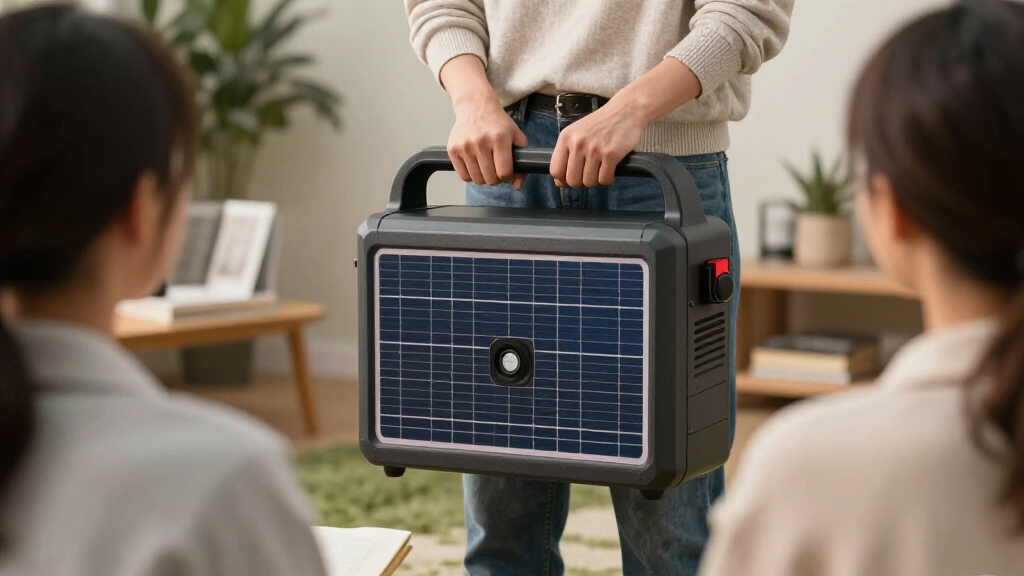
How We Picked
I evaluated each product through one specific lens: reliability during a home power outage. That starts with usable capacity and sustained output — a unit needs enough watt-hours to run a refrigerator overnight and enough inverter power to handle startup surges from compressors and well pumps. I also weighed battery chemistry and cycle life, since a backup unit sits unused for months and LiFePO4 cells tolerate that far better than older NMC designs. Recharge speed mattered too, because during a multi-day outage the only refill option is sunlight, so I compared solar input ceilings and how many panels each bundle actually includes.
Beyond the spec sheet, I factored in expandability (can you add battery packs later instead of buying a whole new unit?), usability like app control and UPS-style pass-through charging, and value relative to capacity. A $-per-usable-watt-hour comparison separated genuine value picks like the UDPOWER S2400 from premium ecosystems like Jackery’s. Finally, I matched each model to a buyer profile rather than ranking on raw numbers alone — a 1,000Wh portable kit isn’t ‘worse’ than a 3,600Wh home unit, it’s built for someone with different needs.
| solar generators for home backup | Battery chemistry |
|---|---|
| Jackery HomePower 3600 Plus Po | — |
| Jackery Explorer 1000 v2 Porta | — |
| BLUETTI Elite 200 V2 Solar Gen | LiFePO4 |
| UDPOWER S2400 Portable Power S | LiFePO4 |
| Jackery HomePower 3600 Plus Po | LFP |
| Jackery HomePower 3000 Portabl | LiFePO4; 4,000 cycles to 70% capacity |
| Jackery Explorer 1000 v2 Porta | — |
| Anker SOLIX S2000 Portable Pow | — |
| ABOK Ark3600 Portable Power St | — |
| Pecron F3000LFP Portable Power | LiFePO4 |
| ABOK Ark3600 Portable Power St | LiFePO4, 4,000+ cycles, up to 10-year lifespan |
| Jackery HomePower 3600 Plus Po | — |
Factors to Consider When Choosing Solar Generators For Home Backup
Before choosing a specific model, it helps to understand what actually determines whether a solar generator will carry your home through an outage. These are the factors that separated the picks in this roundup — and the mistakes that leave buyers with too little (or too much) capacity.Calculate Your Real Watt-Hour Needs Before Anything Else
The most common mistake in this category is buying capacity by feel rather than math. A refrigerator typically draws 100–200W while running but cycles on and off, consuming roughly 1–2kWh per day; a CPAP machine might use under 400Wh overnight; a microwave or coffee maker pulls over 1,000W but only for minutes. Write down the essentials you must keep running, estimate their daily consumption, and multiply by the number of days you want coverage. That number — not marketing language — tells you whether a 2,000Wh unit is enough or whether you need a 3,600Wh-plus expandable system. Buyers who skip this step either overspend on capacity they’ll never use or discover mid-outage that their unit dies the first night.
Surge Wattage Matters as Much as Capacity
Motor-driven appliances — refrigerators, freezers, furnaces, sump pumps — draw two to three times their running wattage for a second or two at startup. A generator with a 1,500W continuous rating may trip offline the moment a fridge compressor kicks on if its surge rating is modest. Every model in this lineup handles a refrigerator, but only the 3,000W-plus inverters (the Jackery HomePower 3600 Plus, Pecron F3000LFP, and ABOK Ark3600) can stack multiple large appliances at once. If your plan includes running a well pump or electric heating equipment, inverter headroom should drive your decision more than battery size.
Solar Input Speed Determines Multi-Day Viability
Capacity tells you how long you’ll last on a full charge; solar input tells you whether you can last beyond it. A 3,600Wh battery recharging from 400W of panels may need most of a sunny day to refill, while the same battery with a 2,000W input ceiling can recover in a few hours — the difference between riding out a week-long outage and going dark on day three. When comparing bundles, look past total wattage of included panels and check the unit’s maximum solar input rating, because panels you add later are wasted if the charge controller caps the intake. Panel quality and orientation matter too: real-world output typically runs 50–75% of rated watts depending on weather, season, and placement.
Battery Chemistry and Cycle Life
Nearly every quality home-backup unit now uses LiFePO4 chemistry, rated for 3,000-plus charge cycles — roughly a decade of typical use — versus the 500–800 cycles of older lithium-ion builds. This matters more for backup power than for camping, because a home unit spends most of its life stored at partial charge and chemistry degradation quietly erodes your usable capacity. Check whether the unit supports pass-through charging (running appliances while recharging from solar or wall power), which effectively turns it into a UPS for sensitive equipment like routers and computers. Also confirm how the unit holds charge in storage; the best models lose only a few percent per month idle.
Expandability versus All-in-One Bundles
Some systems, like the Jackery HomePower 3600 Plus with its extra battery, let you add capacity later — a smart path if your budget doesn’t stretch to the full setup today. Others are sealed units where the only upgrade path is buying a second generator entirely. Expandable systems cost more upfront per watt-hour but protect your investment as your needs grow, and they let you split the physical units across rooms or floors. The tradeoff: expansion batteries are brand-locked, so you’re committing to that ecosystem long-term. If you already own panels or batteries from another brand, compatibility should be checked before buying, not after.
Weight, Portability, and Where You’ll Actually Use It
A 3,600Wh power station can weigh 80–100 pounds; that’s fine if it lives on a shelf next to your electrical panel, but hopeless if you need to haul it upstairs during a storm. Think honestly about deployment: will this unit stay in one place, serve as a rolling cart you move between rooms, or need to travel to a cabin or campsite? Smaller kits like the Jackery Explorer 1000 v2 sacrifice runtime for one-handed carry, which is the right call for apartment dwellers but the wrong one for suburban whole-fridge backup. Also consider cord reach, outlet placement, and whether the unit’s display or app gives you the monitoring you’ll want during a stressful outage.
Frequently Asked Questions
How long will a solar generator run my refrigerator during an outage?
A modern energy-star refrigerator uses roughly 1–2kWh per day, so a 2,000Wh unit like the Anker SOLIX S2000 can typically keep one running for a full day to a day and a half, while a 3,600Wh unit like the Jackery HomePower 3600 Plus stretches that to two or three days. The catch is the compressor’s startup surge — it briefly pulls double its running wattage, so the inverter rating matters as much as the battery. If you pair the unit with solar panels and get decent sun, you can extend runtime indefinitely or even recharge fully each day. In cloudy winter conditions, plan on battery capacity alone carrying you, so size for your worst-case weather, not a sunny summer weekend.
Is it better to buy one large solar generator or two smaller ones?
One large unit is usually the better call for home backup because a single big inverter handles surge loads from appliances that two small units can’t, and you manage one battery, one charge source, and one set of panels. Two smaller units do offer redundancy — if one fails mid-outage you still have power — and let you place power in separate rooms without running extension cords everywhere. The split approach also makes sense if part of your need is portable, like powering a campsite or van alongside emergency home use. For most households backing up a fridge and essentials, though, one 3,000Wh-plus expandable system beats two 1,500Wh units on both performance and long-term value.
Do I need solar panels included, or can I add them later?
Adding panels later is viable but check the unit’s input ceiling first, because many power stations cap solar intake well below what you might want to connect — a unit limited to 400W of input can’t take advantage of a larger panel array no matter how many you buy. Bundles that include panels are typically cheaper per watt than buying panels separately, and they guarantee compatibility with the unit’s charge controller and connectors. The compromise worth considering: buy a unit with a high input rating (1,000W or more) and a modest panel bundle now, then expand the array later as budget allows. What you want to avoid is a large battery trapped behind a slow, capped charge controller during a multi-day outage.
Can a solar generator replace a gas generator for whole-home backup?
For essential circuits — refrigerator, lights, internet, phone charging, and medical devices — a large solar generator absolutely replaces a gas unit, and does it more cleanly, quietly, and with zero fuel storage or maintenance. Where gas still wins is sustained high-draw loads: electric water heaters, clothes dryers, central air conditioning, and whole-house heating typically exceed what even a 3,600W solar generator can run for meaningful durations. Solar generators also can’t be quickly ‘refueled’ — if the sun doesn’t cooperate, you’re drawing down a finite battery. The honest framing: a solar generator is excellent essential-load backup, while a gas generator or fixed home battery system remains the tool for true whole-house coverage.
Are lesser-known brands like UDPOWER, Pecron, and ABOK safe to trust?
The core components that matter most — LiFePO4 battery cells and inverters — are sourced from a small number of global suppliers, so lesser-known brands often deliver comparable hardware to the big names at a lower price, which is exactly what the UDPOWER S2400 and Pecron F3000LFP demonstrate on spec. What you give up is ecosystem polish: Jackery and Anker offer more mature apps, wider accessory availability, longer track records on warranty support, and easier resale. For a buyer comfortable with a slightly rougher software experience, the value proposition of these challenger brands is real. If peace of mind and long-term support are part of what you’re buying, the established brands justify their premium.
Conclusion
The right pick depends entirely on what you’re backing up and for how long. For most households, the Jackery HomePower 3600 Plus with Extra Battery and Two 200W Solar Panels is the best overall choice — it’s the only bundle here that pairs massive capacity, genuine expandability, and panels in the box, making it ready for multi-day outages out of the crate. Best value goes to the UDPOWER S2400, which delivers 2,000Wh-plus of LiFePO4 capacity at a price that undercuts the major brands, with the Pecron F3000LFP as the value pick for those who want 3,600W of inverter headroom. Best premium is the ABOK Ark3600 with its 2,000W solar input — the fastest recharging setup in this lineup and the one I’d point serious preppers toward for extended grid-down scenarios. Best for beginners is the Anker SOLIX S2000: simple, well-supported, and sized right for a first foray into backup power. Best compact pick is the Jackery Explorer 1000 v2 bundle for apartments, renters, and anyone who needs grab-and-go power rather than whole-home coverage, while the BLUETTI Elite 200 V2 splits the difference with more runtime in a still-manageable package. Whatever you choose, buy for the outage you actually expect — capacity first, recharge speed second — and you won’t be left in the dark.
Fall Picks
fall essentials
As an affiliate, we earn on qualifying purchases.