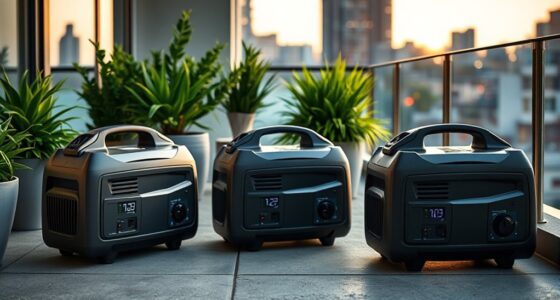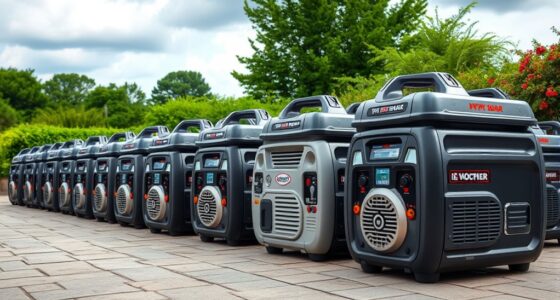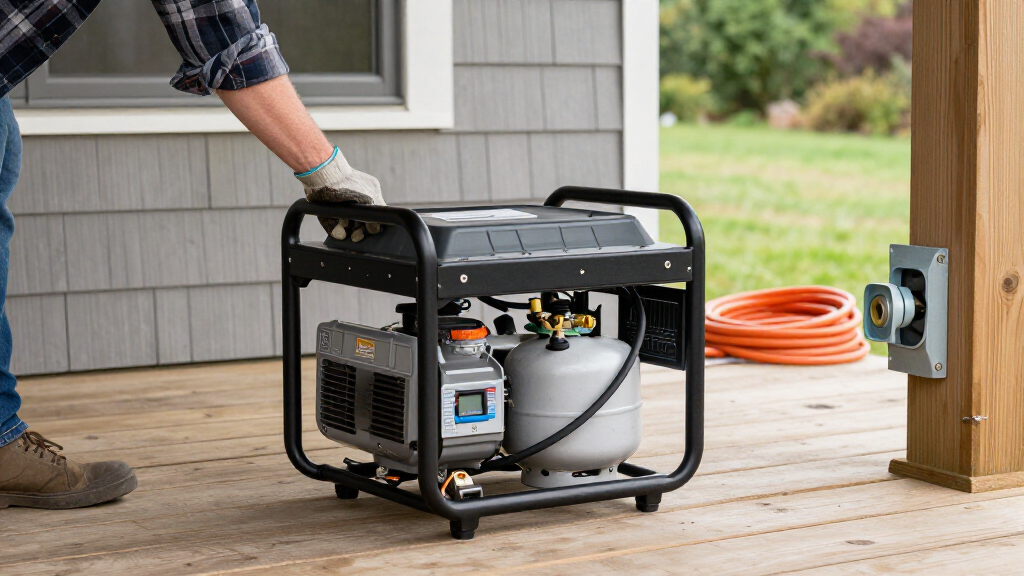
Dual fuel inverter generators let you run on gasoline when you need maximum wattage and switch to propane when you want cleaner storage and longer shelf life — but the category spans everything from 2,200-watt tailgating units to 12,000-watt whole-home backups, and choosing wrong means either wasted money or not enough power. The Westinghouse iGen8200TFc stands out as my best overall pick because it adds natural gas as a third fuel option while delivering enough clean power to run most household essentials. For tighter budgets, the WEN DF360iX offers outstanding mid-range capability, while the Pulsar PG2200BiS is the easiest entry point for camping and light RV use. The main tradeoffs you’ll face in this category are weight versus wattage, propane’s roughly 10% power derating, and whether you need electric start and CO shutoff safety features. Keep reading for the full breakdown of all 13 models.

Get backup power and energy gear delivered free — and shop member deals
- Fast, free delivery on millions of items
- Access to Prime Big Deal Days deals on October 6–7
- Prime Video, Amazon Music and more included
Complete the kit


Key Takeaways
- The Westinghouse iGen8200TFc separated itself from the pack by offering tri-fuel flexibility (gas, propane, and natural gas) — no other model in this lineup can connect to a home’s natural gas line, which eliminates fuel storage entirely during extended outages.
- The 2,200–2,800 watt models (Pulsar PG2200BiS, WEN DF280iX, Westinghouse iGen2800DFc) are dramatically lighter and quieter than the big units, but they cannot run a 30A RV air conditioner — a hard limit that makes them poor choices for anything beyond basic camping.
- Propane output drops roughly 10% below gasoline output on every single model compared, so buyers should size their generator based on propane wattage, not the headline gasoline number.
- Westinghouse dominated the high-wattage end (5,000W, 8,200W, 12,000W models) while WEN offered the best mid-range balance, and PowerSmart and ERAYAK competed mainly on value rather than feature depth.
- Parallel capability became the deciding factor for several picks: smaller units like the WEN DF480iX and Pulsar PG2200BiS let you buy modest power now and double up later, which changes the total cost of ownership calculation.
| Champion 4000-Watt Dual-Fuel RV-Ready Portable Inverter Generator |  | Best for Lightweight RV Trips | Starting power: 4,000 watts | Running power: 3,000 watts gasoline; 2,700 watts propane | Fuel: Gasoline or propane | VIEW LATEST PRICE | See Our Full Breakdown |
| WEN DF480iX 4800-Watt Dual-Fuel Electric Start Inverter Generator |  | Best for Higher Output and Easy Moving | Surge output: 4,800 watts gasoline; 4,320 watts propane | Fuel: Gasoline and propane | Noise: 62 dB at quarter load | VIEW LATEST PRICE | See Our Full Breakdown |
| Westinghouse iGen2800DFc 2800 Peak Watt Dual Fuel Portable Inverter Generator (Gas & Propane) |  | Best Compact Pick | Peak output: 2,800 watts gasoline; 2,520 watts propane | Running output: 2,200 watts gasoline; 1,980 watts propane | Fuel: Gasoline and propane | VIEW LATEST PRICE | See Our Full Breakdown |
| WEN DF360iX 3600-Watt Dual Fuel RV-Ready Portable Inverter Generator with Fuel Shut Off and CO Watchdog |  | Best for Straightforward RV Backup | Surge output: 3,600 watts gasoline; 3,500 watts propane | Fuel: Gasoline and propane | AC outlets: Two 120V three-prong receptacles and one TT-30R RV receptacle | VIEW LATEST PRICE | See Our Full Breakdown |
| Westinghouse 5000 Peak Watt Dual Fuel Portable Inverter Generator |  | Best for Remote Start Convenience | Peak output: 5,000 watts | Fuel: Gasoline or propane | Noise: As low as 52 dBA | VIEW LATEST PRICE | See Our Full Breakdown |
| Westinghouse iGen8200TFc Tri-Fuel Portable Inverter Generator |  | Best for Whole-Home Backup | Fuel Types: Gasoline, propane, natural gas | Running / Peak Watts (Gasoline): 6,600 W / 8,200 W | Running Watts (Propane / Natural Gas): 5,940 W / 5,280 W | VIEW LATEST PRICE | See Our Full Breakdown |
| WEN DF680iX 6800-Watt Dual Fuel RV-Ready Electric Start Portable Inverter Generator |  | Best for RV Owners | Engine: 224 cc dual-fuel | Surge Watts (Gasoline / Propane): 6,800 W / 6,000 W | Noise Level: 64 dB at quarter load | VIEW LATEST PRICE | See Our Full Breakdown |
| Pulsar PG2200BiS 2,200W Dual-Fuel Portable Inverter Generator |  | Best Budget Compact Pick | Gasoline Output: 2,200 peak / 1,800 rated watts | LPG Output: 2,000 peak / 1,600 rated watts | Engine: 80cc 4-stroke OHV, air-cooled | VIEW LATEST PRICE | See Our Full Breakdown |
| PowerSmart 4400W Dual-Fuel Portable Inverter Generator |  | Best Mid-Range Workhorse | Power Output: 4,400W starting / 3,600W rated | Fuel Type: Dual fuel (gasoline / propane) | Engine: 223cc 4-stroke | VIEW LATEST PRICE | See Our Full Breakdown |
| PowerSmart 3800-Watt Dual-Fuel Inverter Generator |  | Best Quiet Value | Running / Starting Watts (Gasoline): 3,300 W / 3,800 W | Running / Starting Watts (Propane): 3,100 W / 3,500 W | Fuel Tank: 1.3 gallons | VIEW LATEST PRICE | See Our Full Breakdown |
| WEN DF280iX 2800-Watt Dual-Fuel Inverter Generator |  | Best for Light, Quiet Loads | Fuel type: Gasoline or propane | Gasoline output: 2,800 surge / 2,250 rated watts | Propane output: 2,800 surge / 2,000 rated watts | VIEW LATEST PRICE | See Our Full Breakdown |
| ERAYAK 4500W Dual-Fuel Portable Inverter Generator, 30A RV Ready |  | Best RV Companion | Peak power (gasoline): 4,500W | Peak power (propane): 4,050W | Weight: 54 lbs | VIEW LATEST PRICE | See Our Full Breakdown |
| Westinghouse iGen12000DFc Dual Fuel Portable Inverter Generator |  | Best Whole-Home Backup Powerhouse | Fuel type: Gasoline or propane | Gasoline output: 12,000W peak / 9,000W running | Propane output: 11,000W peak / 8,100W running | VIEW LATEST PRICE | See Our Full Breakdown |
| dual fuel inverter generator | Runtime | Outlets | Warranty | Noise Level |
|---|---|---|---|---|
| Champion 4000-Watt Dual-Fuel R | Up to 10 hours gasoline or 25 hours propane at 25% load | 120V TT-30R, 120V 20A duplex, 12V automotive-style, and parallel outlets | 3-year limited warranty with lifetime technical support | — |
| WEN DF480iX 4800-Watt Dual-Fue | Up to 7 hours at half load on gasoline; up to 20 hours at half load on a 20-pound LPG tank | Four 120V 5-20R, one 120V TT-30R, one 12V DC, and two 5V USB | 3 years | — |
| Westinghouse iGen2800DFc 2800 | Up to 12 hours at 25% load | 120V TT-30R 30A and 120V 5-20R duplex | — | — |
| WEN DF360iX 3600-Watt Dual Fue | — | — | 3 years | — |
| Westinghouse 5000 Peak Watt Du | — | 120V 5-20R duplex, 30A TT-30R RV outlet, and two USB | 3-year limited service, labor, and parts coverage | — |
| Westinghouse iGen8200TFc Tri-F | Up to 17 hours at 25% load | — | — | Around 60 dBA at 25% load |
| WEN DF680iX 6800-Watt Dual Fue | 6.1 hours at half load (gas); 9 hours on 20-lb LPG | L14-30R, TT-30R, two 5-20R, 12V DC, two USB | 3-year limited | 64 dB at quarter load |
| Pulsar PG2200BiS 2,200W Dual-F | Up to 8 hours on gasoline per tank | Two 120V 15A AC, one 5V USB | — | 60 dB |
| PowerSmart 4400W Dual-Fuel Por | Up to 11 hours at 25% load | — | — | 76 dB at 23 feet and 25% load |
| PowerSmart 3800-Watt Dual-Fuel | Up to 8 hours on gas; up to 24 hours on 20-lb propane | L5-30R twist-lock, 5-20R duplex, 12V 8A DC, dual USB | 2-year limited; lifetime technical support | 59 dBA at 25% load in Eco Mode |
| WEN DF280iX 2800-Watt Dual-Fue | — | Two 120V three-prong receptacles, one 12V DC, two 5V USB | Three years | — |
| ERAYAK 4500W Dual-Fuel Portabl | Up to 16 hours at 25% load (gasoline); 20+ hours (propane) | Two 120V/20A, 30A L5-30P RV outlet, USB-A, 18W USB-C | 3-year limited with US-based lifetime technical support | 58 dBA at 23 feet (quarter load) |
| Westinghouse iGen12000DFc Dual | Up to 19 hours at 25% load | 14-50R 50A, L14-30R 30A, GFCI 5-20R 20A duplex, ST switch | 3-year limited | As low as 64 dBA |
More Details on Our Top Picks
Champion 4000-Watt Dual-Fuel RV-Ready Portable Inverter Generator
The Champion makes the most sense for RV owners who want a 30A TT-30R outlet and manageable carrying weight in the same package. At less than 55 pounds, it is easier to move than the wheeled WEN DF480iX, though that WEN supplies more running power for larger loads. Champion’s 3,000 running watts on gasoline fall to 2,700 on propane, so buyers relying on propane should plan around the reduced capacity. Its stated propane runtime of up to 25 hours at 25% load can stretch a cylinder across a long, lightly loaded trip, while CO Shield adds automatic shutdown protection. The tradeoff is a modest 1.54-gallon gasoline tank and a separately sold parallel kit; this is a portable camping and basic backup choice, not a high-capacity home standby solution.
Pros:- Under 55 pounds with a built-in carrying handle for easier loading
- TT-30R outlet connects to compatible RVs
- Gasoline and propane operation offers fuel flexibility
- CO Shield and under 3% THD support safer operation around electronics
Cons:- Propane running output is lower than gasoline output
- Parallel kit is sold separately
- Small 1.54-gallon gasoline tank limits refueling intervals
Best for: RV travelers who need a portable 30A connection, light loads, and the option to use propane.
Not ideal for: Households expecting to run several high-wattage appliances or buyers who want parallel capability included.
- Starting power:4,000 watts
- Running power:3,000 watts gasoline; 2,700 watts propane
- Fuel:Gasoline or propane
- Noise:64 dBA at 23 feet
- Runtime:Up to 10 hours gasoline or 25 hours propane at 25% load
- Weight:Less than 55 pounds
- Outlets:120V TT-30R, 120V 20A duplex, 12V automotive-style, and parallel outlets
- Power quality:Less than 3% THD
- Warranty:3-year limited warranty with lifetime technical support
Our verdict“Choose the Champion for portable RV use and lighter loads; pick the WEN DF480iX if you need more running capacity and wheels.”
WEN DF480iX 4800-Watt Dual-Fuel Electric Start Inverter Generator
The WEN DF480iX earns its place for buyers who need more running capacity than the compact RV-focused models provide. Its 4,000 rated watts on gasoline and 3,600 on propane exceed the Champion 4000’s corresponding outputs, leaving more room for multiple devices or appliances. The wheels and telescoping handle help offset its larger format, while electric start with recoil backup makes startup less of a chore. Its very low stated THD also suits sensitive electronics, and the 62 dB rating at quarter load is quieter than the Champion’s stated 64 dBA at 23 feet, though the measurement conditions differ. The compromises are a separately sold parallel kit and a seven-hour gasoline runtime at half load; buyers prioritizing low weight may prefer the 45-pound Westinghouse iGen2800DFc.
Pros:- 4,000 rated watts on gasoline and 3,600 on propane
- Electric start with recoil backup
- Wheels and telescoping handle ease movement
- Very low stated THD and CO shutdown protection
Cons:- Parallel connection kit is sold separately
- Gasoline runtime is up to 7 hours at half load
- Larger wheeled format is less suited to carrying by hand
Best for: RV owners and household backup users who need stronger output, electric start, and wheeled transport.
Not ideal for: Campers prioritizing a lightweight unit or buyers who want long gasoline runtime without refueling.
- Surge output:4,800 watts gasoline; 4,320 watts propane
- Fuel:Gasoline and propane
- Noise:62 dB at quarter load
- Runtime:Up to 7 hours at half load on gasoline; up to 20 hours at half load on a 20-pound LPG tank
- Outlets:Four 120V 5-20R, one 120V TT-30R, one 12V DC, and two 5V USB
- Power quality:Under 0.3% THD at no load; under 1.2% at full load
- Starting:Electric start with recoil backup
- Warranty:3 years
Our verdict“Choose the DF480iX when output and wheeled handling matter more than compact carry weight.”
Westinghouse iGen2800DFc 2800 Peak Watt Dual Fuel Portable Inverter Generator (Gas & Propane)
At 45 pounds, the iGen2800DFc is the lineup’s clearest choice for buyers who want to carry their generator rather than roll it. Its 2,200 running watts on gasoline and 1,980 on propane suit a limited set of camping, tailgating, or emergency loads; they fall well below the Champion 4000’s capacity, so larger appliance combinations need a different model. A TT-30R RV outlet adds useful connection flexibility, but the outlet does not increase the generator’s available wattage. Up to 12 hours at 25% load and Eco Mode fuel savings can suit long, lightly loaded outings, while under 3% THD supports sensitive electronics. The tradeoff is tight power headroom, especially on propane, and parallel cables are sold separately for pairing units.
Pros:- 45-pound weight makes it the most carry-friendly pick among these five
- Up to 12 hours of runtime at 25% load
- TT-30R and 5-20R outlets cover common RV and household connections
- Under 3% THD and Eco Mode support electronics use and fuel savings
Cons:- Running output is limited to 2,200 watts on gasoline and 1,980 on propane
- Parallel cables are sold separately
- The TT-30R outlet does not provide more capacity than the generator’s output
Best for: Solo campers and tailgaters who need a carryable generator for a few modest loads and an RV outlet.
Not ideal for: RV users or households who expect to run air conditioning or several appliances together.
- Peak output:2,800 watts gasoline; 2,520 watts propane
- Running output:2,200 watts gasoline; 1,980 watts propane
- Fuel:Gasoline and propane
- Runtime:Up to 12 hours at 25% load
- Weight:45 pounds
- Noise:As low as 52 dBA
- Outlets:120V TT-30R 30A and 120V 5-20R duplex
- Power quality:Less than 3% THD
- Parallel capability:Yes; parallel cables sold separately
Our verdict“Choose the iGen2800DFc for portability and modest loads; choose the Champion 4000 when you need more running watts.”
WEN DF360iX 3600-Watt Dual Fuel RV-Ready Portable Inverter Generator with Fuel Shut Off and CO Watchdog
The WEN DF360iX is a practical middle ground for buyers who want an RV-ready outlet and CO shutdown protection without moving up to the heavier-output DF480iX. It delivers 2,900 rated watts on gasoline and 2,600 on propane, placing it above the Westinghouse iGen2800DFc’s running capacity but below the Champion 4000 on gasoline. That extra headroom over the Westinghouse may help with a broader set of modest loads, although it still does not make high-wattage appliance combinations a safe assumption. The tool-free LPG connector simplifies propane hookup, and USB ports add convenient charging options. WEN lists quiet operation comparable to normal conversation, but the provided data gives no specific dBA figure or runtime, making those harder to compare. Propane output drops, and the unit carries a three-year warranty.
Pros:- 2,900 rated watts on gasoline exceeds the iGen2800DFc’s 2,200
- TT-30R RV outlet plus household, DC, and USB outlets
- Tool-free quick connector simplifies LPG hookup
- CO Watchdog sensor shuts the unit down when dangerous CO is detected
Cons:- Rated output falls to 2,600 watts on propane
- May not support high-wattage appliances at rated capacity
- Provided product data does not state a runtime or specific noise level
Best for: RV owners seeking a mid-output dual-fuel inverter with a simple propane connection and CO protection.
Not ideal for: Buyers who need quantified runtime, higher propane capacity, or enough output for demanding household loads.
- Surge output:3,600 watts gasoline; 3,500 watts propane
- Fuel:Gasoline and propane
- AC outlets:Two 120V three-prong receptacles and one TT-30R RV receptacle
- DC outlets:One 12V DC receptacle and two 5V USB ports
- Propane connection:Tool-free quick connector
- Safety:WEN Watchdog CO shutdown sensor
- Warranty:3 years
Our verdict“Choose the DF360iX for a straightforward mid-capacity RV and backup option, provided its propane output covers your planned loads.”
Westinghouse 5000 Peak Watt Dual Fuel Portable Inverter Generator
The Westinghouse 5000 is the convenience pick for buyers who want remote, electric, and recoil starting alongside substantial peak output. Its 3,900 rated watts give it more gasoline capacity than the Champion 4000’s 3,000, and its digital display and economy mode make operation easier to monitor and manage. A 52 dBA low-end noise claim and runtime of up to 18 hours offer appeal for extended use, though the runtime conditions are not specified here, so they cannot be compared directly with models that state a load level. The 3.4-gallon tank supports longer gasoline stretches but adds fuel to store and carry. Compared with the wheeled WEN DF480iX, this model’s standout is remote starting; its meaningful tradeoff is that the supplied output figures do not separate gasoline and propane ratings.
Pros:- Remote, electric, and recoil starting options
- 3,900 rated watts with household and TT-30R RV outlets
- Up to 18 hours of stated runtime
- Economy mode and digital display support monitoring and fuel management
Cons:- 3.4-gallon tank adds fuel weight and storage needs
- Provided output data does not separate gasoline and propane ratings
- Runtime conditions are not specified, limiting direct comparison
Best for: RV and backup-power users who value remote start, a digital display, and extended operation.
Not ideal for: Buyers who need clearly stated fuel-specific output ratings or a smaller, lighter unit for frequent carrying.
- Peak output:5,000 watts
- Fuel:Gasoline or propane
- Noise:As low as 52 dBA
- Maximum runtime:Up to 18 hours
- Gasoline tank:3.4 gallons
- Starting methods:Remote, electric, and recoil
- Outlets:120V 5-20R duplex, 30A TT-30R RV outlet, and two USB
- Warranty:3-year limited service, labor, and parts coverage
Our verdict“Choose this Westinghouse for remote-start convenience and extended use; choose the WEN DF480iX if you need explicit fuel-specific rated output figures.”
Westinghouse iGen8200TFc Tri-Fuel Portable Inverter Generator
This option stands out for going beyond dual fuel: the iGen8200TFc adds natural gas capability, which means you can hard-plumb it to a home gas line and never worry about fuel spoiling or refueling in a storm. Where the WEN DF680iX tops out around 6,800 surge watts on gasoline, this unit pushes 8,200 peak watts and includes a 50A 14-50R outlet that plugs straight into a home transfer switch or large RV. Clean power under 3% THD keeps electronics safe. The tradeoff is real: output drops on propane and further on natural gas, so buyers should size their loads against the fuel they actually plan to run. Also note the quiet 60 dBA figure only applies at quarter load — at full tilt it will be noticeably louder.
Pros:- Tri-fuel flexibility including natural gas for unlimited runtime during outages
- 50A outlet supports whole-home backup via transfer switch
- Clean inverter power under 3% THD protects sensitive electronics
- Up to 17 hours of runtime at 25% load with CO sensor and low-oil shutdown
Cons:- Output varies meaningfully by fuel type — natural gas drops to 5,280 running watts
- Quoted 60 dBA noise level applies only at 25% load
Best for: Homeowners who want a transfer-switch-ready generator that can run indefinitely on a natural gas line during outages
Not ideal for: Campers and tailgaters — this is a heavy, home-backup-focused machine that overshoots casual portable needs
- Fuel Types:Gasoline, propane, natural gas
- Running / Peak Watts (Gasoline):6,600 W / 8,200 W
- Running Watts (Propane / Natural Gas):5,940 W / 5,280 W
- Engine:298 cc 4-stroke OHV
- Fuel Tank:3.9 gallons
- Runtime:Up to 17 hours at 25% load
- Noise Level:Around 60 dBA at 25% load
- Key Outlets:120/240V 50A 14-50R, TT-30R, GFCI duplex
- Safety:Low-oil shutdown, carbon monoxide sensor
Our verdict“Buy this if you want home backup insurance with permanent natural gas hookup; skip it if you only need portable power for recreation.”
WEN DF680iX 6800-Watt Dual Fuel RV-Ready Electric Start Portable Inverter Generator
For RV households, this model makes the most sense because it covers the full outlet trio — 30A TT-30R, 240V L14-30R, and standard household plugs — plus USB ports for devices. Compared with the Westinghouse iGen8200TFc, it trades natural gas capability and raw wattage for a lighter footprint, electric start, and a telescoping handle that makes loading into a truck bay manageable. Its CO Watchdog sensor is a safety feature buyers shouldn’t overlook for camping environments. Unusually, the bonded-neutral 240V output supports low-rate Level 2 EV charging — handy in a pinch, though too slow to rely on daily. The honest tradeoff: 6.1 hours of runtime at half load on gasoline is unremarkable, and the parallel kit costs extra.
Pros:- Full RV-ready outlet set including TT-30R and 240V L14-30R
- Extremely clean power — under 1.2% THD at full load for sensitive electronics
- CO Watchdog auto-shutdown plus low-oil, low-fuel, and overload protection
- Electric start, wheels, and telescoping handle improve portability
Cons:- Parallel connection kit sold separately
- Level 2 EV charging is limited to low power rates
- Gasoline runtime of 6.1 hours at half load trails some competitors
Best for: RV owners with 30A service who also want occasional 240V and EV top-up capability from one unit
Not ideal for: Buyers prioritizing long unattended runtimes — gasoline runtime at half load is modest and the parallel kit is a separate purchase
- Engine:224 cc dual-fuel
- Surge Watts (Gasoline / Propane):6,800 W / 6,000 W
- Noise Level:64 dB at quarter load
- Fuel Tank:2.9 gallons
- Runtime:6.1 hours at half load (gas); 9 hours on 20-lb LPG
- THD:Under 1.2% at full load
- Outlets:L14-30R, TT-30R, two 5-20R, 12V DC, two USB
- Start Type:Keyless electric start with recoil backup
- Warranty:3-year limited
Our verdict“A well-rounded choice for RV travelers who want electric-start convenience and versatile outlets without stepping up to a home-backup class machine.”
Pulsar PG2200BiS 2,200W Dual-Fuel Portable Inverter Generator
This pick makes the most sense for buyers whose priority is lightweight, affordable power rather than capacity. At 2,200 peak watts on gasoline, it powers essentials — a fridge, fans, phones, lights — and the stable sine-wave output keeps laptops safe. Compared with the PowerSmart 3800-Watt, it gives up roughly half the wattage but wins on portability and price, with a compact body that stores in a car trunk. Propane flexibility is welcome, though buyers should know the limits: a 1-pound bottle runs only about 75 minutes at half load, so propane is really a backup fuel unless you connect a 20-pound tank. There’s also no electric start — recoil only — which matters if pulling a cord is a hardship.
Pros:- Dual fuel with included propane hose and accessories out of the box
- Quiet, compact design easy to carry and store
- Stable sine-wave output safe for laptops and phones
- Parallel capability lets you add a second unit later
Cons:- LPG runtime is only about 75 minutes on a 1-pound tank at half load
- Recoil start only, with no electric-start option
- Single USB outlet limits device charging
Best for: Campers, tailgaters, and emergency-kit builders who want clean, quiet, inexpensive power for basics
Not ideal for: Households hoping to run large appliances or a window AC unit — 1,800 rated watts won’t cover them
- Gasoline Output:2,200 peak / 1,800 rated watts
- LPG Output:2,000 peak / 1,600 rated watts
- Engine:80cc 4-stroke OHV, air-cooled
- Fuel Tank:1.18 gallons
- Runtime:Up to 8 hours on gasoline per tank
- Noise Level:60 dB
- Outlets:Two 120V 15A AC, one 5V USB
- Compliance:CSA, EPA, and CARB compliant
Our verdict“The right call for budget-minded buyers who value portability over raw wattage; anyone needing serious appliance power should size up.”
PowerSmart 4400W Dual-Fuel Portable Inverter Generator
Sitting between the compact Pulsar PG2200BiS and the heavier home-backup class, this model targets buyers who need 3,600 rated watts — enough for a window AC, fridge, and lights simultaneously — without paying for RV-specific outlets or tri-fuel plumbing. Its 11-hour runtime at quarter load is respectable for the tank size, and the safety package includes CO detection alongside low-oil and overload shutdown. The honest tradeoff is noise: at 76 dB at the stated test conditions, it runs notably louder than the PowerSmart 3800-Watt’s 59 dBA Eco rating, which matters for campsites or close neighbors. At 61 pounds with no wheel kit mentioned, it’s also a two-person lift for many users despite the compact frame.
Pros:- 3,600 rated watts covers a fridge, window AC, and lighting together
- Up to 11 hours of runtime at 25% load
- Carbon monoxide detection, low-oil shutdown, and overload protection
- Compact footprint simplifies storage and transport
Cons:- 76 dB at test conditions is loud compared with quieter inverter rivals
- 61-pound weight with no wheel kit is awkward for solo handling
Best for: Budget-conscious homeowners and job-site users who need mid-size wattage for tools or emergency essentials
Not ideal for: Quiet-campground campers and anyone who can’t comfortably lift 61 pounds — noise and weight are real constraints
- Power Output:4,400W starting / 3,600W rated
- Fuel Type:Dual fuel (gasoline / propane)
- Engine:223cc 4-stroke
- Fuel Tank:1.6 gallons
- Runtime:Up to 11 hours at 25% load
- Noise Level:76 dB at 23 feet and 25% load
- Weight:61.29 lbs
- Safety:CO detection, low-oil shutdown, overload protection
Our verdict“A sensible middle-ground buy if wattage-per-dollar matters more to you than quiet operation and easy maneuvering.”
PowerSmart 3800-Watt Dual-Fuel Inverter Generator
This model carves out a niche as the quiet value pick: 59 dBA at quarter load in Eco Mode puts it in conversation with units costing far more, and it undercuts its sibling — the PowerSmart 4400W — on noise by a wide margin while giving up only a few hundred watts. The sleeper feature is propane runtime: up to 24 hours on a 20-pound tank, which beats the WEN DF680iX’s 9-hour propane figure handily and makes it ideal for overnight use where refueling is impractical. Certification to ANSI/UL2201 and PGMA G300 also signals attention to CO safety standards. The tradeoff is a small 1.3-gallon gas tank, so gasoline runtime tops out around 8 hours at light load, and the 30A twist-lock outlet means RV owners will need an adapter.
Pros:- Quiet 59 dBA operation in Eco Mode at 25% load
- Up to 24 hours of runtime on a 20-lb propane tank
- Versatile outlets including twist-lock 30A, 12V DC, and dual USB
- Certified to ANSI/PGMA G300 and ANSI/UL2201 safety standards with 2-year warranty
Cons:- Small 1.3-gallon tank limits gasoline runtime to about 8 hours at 25% load
- No dedicated RV TT-30R outlet — adapters required
Best for: Buyers who want quiet overnight operation and long propane runtimes for camping or essential home circuits
Not ideal for: RV owners wanting a native TT-30R outlet, and anyone who expects long runtimes on gasoline alone
- Running / Starting Watts (Gasoline):3,300 W / 3,800 W
- Running / Starting Watts (Propane):3,100 W / 3,500 W
- Fuel Tank:1.3 gallons
- Runtime:Up to 8 hours on gas; up to 24 hours on 20-lb propane
- Noise Level:59 dBA at 25% load in Eco Mode
- Outlets:L5-30R twist-lock, 5-20R duplex, 12V 8A DC, dual USB
- Safety:Overload, short-circuit, CO sensor, low-oil shutdown
- Certifications:ANSI/PGMA G300, ANSI/UL2201, EPA
- Warranty:2-year limited; lifetime technical support
Our verdict“The strongest value here for quiet, long-running propane operation on essential loads; choose the 4400W sibling instead if raw wattage trumps noise for you.”
WEN DF280iX 2800-Watt Dual-Fuel Inverter Generator
The WEN DF280iX makes the list as the smallest-footprint option in this lineup, and that is its entire appeal. Where the Westinghouse iGen12000DFc exists to run a house, this unit exists to run a few things well: a fridge, some lights, chargers, and a TV. Its clean inverter power and built-in USB ports make it a sensible companion for tailgating or campsite duty where you are mostly charging phones and powering a projector.
The tradeoff is capacity. With only 2,000 rated watts on propane, it falls short of the Pulsar PG2200BiS and well behind the ERAYAK 4500PD for anything RV-scale. Buyers who want to run an air conditioner or a microwave should step up. But for buyers who value portability and simple, safe operation — the CO Watchdog sensor and fuel shutoff are genuinely useful here — this model covers the essentials without paying for wattage they will never use.
Pros:- Light and compact compared with larger inverters in this guide
- Clean power plus built-in USB ports for directly charging devices
- CO Watchdog automatic shutdown adds a real safety layer
- Fuel shutoff helps drain the carburebor for easier long-term storage
Cons:- Only 2,000 rated watts on propane limits what it can run simultaneously
- No RV-style 30A outlet, unlike the ERAYAK 4500PD or Champion 4000-Watt
- Smaller fuel capacity means more frequent refueling on longer outages
Best for: Campers, tailgaters, and homeowners who only need to power a fridge, lights, and small electronics during an outage
Not ideal for: RV owners or anyone running high-draw appliances like air conditioners — 2,000 rated watts on propane is not enough headroom
- Fuel type:Gasoline or propane
- Gasoline output:2,800 surge / 2,250 rated watts
- Propane output:2,800 surge / 2,000 rated watts
- Outlets:Two 120V three-prong receptacles, one 12V DC, two 5V USB
- Safety feature:CO Watchdog automatic shutdown sensor
- Fuel feature:Fuel shutoff
- Warranty:Three years
Our verdict“Buy this if you need quiet, clean, small-scale backup power and know you will not be running heavy appliances.”
ERAYAK 4500W Dual-Fuel Portable Inverter Generator, 30A RV Ready
The ERAYAK 4500PD earns the RV slot because it hits a sweet spot the smaller units in this guide cannot: 3,500 rated watts on gasoline, a dedicated 30A RV outlet, and a 54-pound frame that is actually liftable into a truck bed. Compare that with the WEN DF360iX or Champion 4000-Watt — similar output class — and the ERAYAK’s automatic fuel switching stands out. When one fuel runs low it changes over without your trip going dark, which matters more than most specs when you are boondocking.
Runtime is the other headline: up to 16 hours on gasoline at quarter load and 20-plus hours on propane, supported by very low THD (0.2%–1.2%) for clean sine wave power to laptops and TVs. The compromises are real, though. You must shut down and cool completely before refueling gasoline — annoying mid-meal — and it is strictly an outdoor, ventilated-area machine. Noise at 58 dBA is respectable but not silent.
Pros:- Automatic fuel switching keeps power uninterrupted between gasoline and propane
- Genuinely portable at 54 lbs with a compact footprint for its output class
- Very low THD (0.2%–1.2%) pure sine wave power for sensitive electronics
- Long runtime — up to 16 hours on gasoline, 20+ hours on propane at quarter load
Cons:- Requires full shutdown and cool-down before gasoline refueling
- Outdoor, well-ventilated use only — CO risk rules out any enclosed placement
- Relatively short track record compared with established brands like Westinghouse or Champion
Best for: RV and travel-trailer owners who want a liftable generator with a true 30A RV outlet for off-grid trips
Not ideal for: Buyers needing whole-home backup — 3,500 running watts cannot carry a household, and the cool-down refueling routine is tedious for daily use
- Peak power (gasoline):4,500W
- Peak power (propane):4,050W
- Weight:54 lbs
- Noise level:58 dBA at 23 feet (quarter load)
- Fuel tank:2.25 gallons
- Runtime:Up to 16 hours at 25% load (gasoline); 20+ hours (propane)
- THD:0.2%–1.2%
- Outlets:Two 120V/20A, 30A L5-30P RV outlet, USB-A, 18W USB-C
- Warranty:3-year limited with US-based lifetime technical support
Our verdict“The pick for RV travelers who need RV-ready output in a carry-friendly package with marathon runtime.”
Westinghouse iGen12000DFc Dual Fuel Portable Inverter Generator
At the opposite end of this roundup from the WEN DF280iX, the Westinghouse iGen12000DFc is here for one reason: 9,000 running watts on gasoline (8,100 on propane) through a transfer-switch-ready outlet panel. That is enough to run a well pump, HVAC startup, kitchen appliances, and household circuits simultaneously — territory the ERAYAK 4500PD or WEN DF680iX simply cannot reach. The 14-50R 50A and L14-30R outlets mean an electrician can wire it straight into your home’s transfer switch without adapters.
Thoughtful details back up the big numbers: remote electric start, Eco Mode, low-oil shutdown, and up to 19 hours of runtime at quarter load from the 7.9-gallon tank. The tradeoffs are physics. A 457cc engine and that tank make this a wheeled, stationary machine, not something you load for camping trips, and 64 dBA is quiet for this class but still audible across a yard. Buyers wanting a portable unit should look smaller; buyers wanting their house to stay on should look here.
Pros:- 9,000 running watts (gasoline) with 50A and 30A transfer-switch-ready outlets
- Up to 19 hours of runtime at 25% load from a 7.9-gallon tank
- Remote electric start and Eco Mode add everyday convenience at this scale
- Under 3% THD makes it safe for whole-house electronics and modern appliances
Cons:- Bulky and heavy — realistically a wheeled, stationary unit once positioned
- 64 dBA minimum noise is noticeable in quiet neighborhoods during extended outages
- Higher fuel consumption at load means storing substantial gasoline or propane reserves
Best for: Homeowners who want near-standby-generator backup power without a permanent installation, wired through a transfer switch
Not ideal for: Campers and tailgaters — the size, weight, and 64 dBA output make it impractical to transport and too loud for close-quarters use
- Fuel type:Gasoline or propane
- Gasoline output:12,000W peak / 9,000W running
- Propane output:11,000W peak / 8,100W running
- Engine:457cc 4-stroke OHV
- Fuel tank capacity:7.9 gallons
- Runtime:Up to 19 hours at 25% load
- Noise level:As low as 64 dBA
- Outlets:14-50R 50A, L14-30R 30A, GFCI 5-20R 20A duplex, ST switch
- Warranty:3-year limited
Our verdict“The closest thing to a standby generator you can still wheel into a garage — buy it for whole-home outages, not for portability.”
How We Picked
I evaluated each generator through the lens that actually matters to dual fuel buyers: real-world running wattage on both fuels, fuel efficiency at 25% load, total harmonic distortion for safely powering sensitive electronics, and the practical realities of moving and storing the unit. Safety features like CO shutoff sensors and low-oil shutdown were treated as meaningful differentiators rather than bonus bullet points, and models with electric start were weighted more heavily as wattage climbed — nobody wants to pull-start a 200-pound machine in a storm.
The ranking also reflects versatility over raw specs. A generator that covers camping, tailgating, RV hookups, and emergency home backup with a single purchase scored higher than a similarly priced unit locked into one use case. Where two models offered comparable power, the tiebreakers were noise output at quarter load, warranty length, parallel readiness, and how easy the fuel switch between gasoline and propane actually is in practice. That’s why a mid-range model like the WEN DF360iX outranks some higher-wattage competitors, and why the Westinghouse iGen8200TFc’s natural gas option earned the top spot outright.
Factors to Consider When Choosing Dual Fuel Inverter Generators
Before matching yourself to one of the 13 models above, it helps to understand the category-level decisions that shape every dual fuel inverter purchase. These are the mistakes and tradeoffs I see buyers run into most often.Size by Propane Wattage, Not Gasoline Wattage
The headline number on the box is almost always the gasoline peak rating, and it’s misleading for dual fuel buyers. Every propane conversion loses roughly 10% of output, so a generator advertised at 4,000 running watts on gasoline delivers closer to 3,600 on propane — and you may well be running propane precisely when you need power most, since stored propane doesn’t degrade the way gasoline does. A common mistake is buying based on a wattage chart built with gasoline figures, then discovering during an outage that the propane tank can’t start the RV air conditioner compressor. Add up the starting wattage of your largest appliance, not just running watts, and compare that against the propane rating. If the math is tight on propane, move up a size class rather than hoping it works out.
Match the Outlets to How You’ll Actually Connect
Wattage gets the attention, but outlets determine whether the generator is usable at all. A 30A TT-30R RV receptacle means you can plug your travel trailer in directly instead of juggling adapters; a 50A outlet matters if you’re backing up a larger home panel or running a welder; and multiple household outlets matter for camping and job sites. Several models in this lineup carry big wattage numbers but only one high-amperage outlet, which can strand capacity you’ve paid for. USB ports are a nice convenience but shouldn’t influence your decision — a $20 adapter does the same job. Check the outlet layout against your actual connection plan before comparing prices.
Weight and Portability Have Real Limits
Inverter generators in the 5,000-watt-plus range routinely weigh 120 to over 200 pounds, and while wheels and handles help, that weight still matters for anyone loading into a truck bed solo or positioning the unit on soft ground. The compact 2,200-watt class can be carried one-handed but caps out well below RV air conditioner requirements. Be honest about who will move this generator and how often — a unit you can’t reposition is a unit that stays home during the exact emergencies you bought it for. If you need both portability and more power later, a parallel-capable pair of mid-size units often beats one monster generator.
Fuel Storage Changes the Whole Equation
The entire point of dual fuel is flexibility, but the fuels behave very differently over time. Gasoline starts degrading within months, absorbs moisture, and gums up carburetors — a leading cause of generators failing to start after years of storage. A 20-pound propane tank, by contrast, stores indefinitely and starts reliably in any weather. Buyers who plan for long gaps between uses should lean toward models that start easily on propane and treat gasoline as the occasional high-output option. If your home has a natural gas line, a tri-fuel model like the Westinghouse iGen8200TFc removes fuel logistics altogether.
Safety Features Are Not Optional Extras
Carbon monoxide poisoning from generators is a recurring, preventable tragedy, and CO shutoff sensors — which kill the engine when dangerous levels build up — have become standard on the best models in this lineup but are still missing on budget options. Low-oil shutdown protects the engine from destruction during long unattended runs, and covered outlets add weather resistance. My advice is to treat a CO sensor as a non-negotiable requirement, especially if the generator will run near a home, camper, or tailgate crowd. Saving $50 by skipping this feature is a trade almost no buyer should make.
Noise Ratings Only Tell Part of the Story
Manufacturers quote decibel figures at quarter load, which is the most flattering condition possible — a generator screaming along at 80% load will be substantially louder than its spec sheet suggests. Inverter models are inherently quieter than conventional generators, but the spread within this category is still real, with the small suitcase-style units running conversation-quiet and the 10,000-watt class audible from a couple of campsites away. If you’ll use the generator in campgrounds with quiet hours or suburban neighborhoods, prioritize the sub-60dB models and plan your load accordingly. Running a big unit at low load is quieter than running a small unit at full tilt, which is another reason to slightly oversize.
Frequently Asked Questions
Do I lose power when running a dual fuel generator on propane?
Yes — expect roughly a 10% drop in both running and starting wattage on propane compared to gasoline, and this applied to every model in this comparison. Propane burns slightly less energy-dense per combustion cycle, so the engine simply produces less power. The practical move is to size your purchase around the propane numbers, since that’s the fuel you’ll likely lean on during extended outages when gasoline has degraded or stations are closed. Some buyers run gasoline for peak-demand moments, like starting an air conditioner, then switch back to propane for steady loads. The switch itself takes seconds on every model reviewed here, so you lose nothing operationally by using both.
Can a dual fuel inverter generator run my RV air conditioner?
A 13,500 BTU RV air conditioner typically needs around 3,300–3,500 starting watts, which puts it out of reach for the 2,200–2,800 watt class like the Pulsar PG2200BiS or WEN DF280iX — those are camping and electronics units, not AC units. Models from the 3,600-watt tier upward, such as the WEN DF360iX or Champion 4000, handle a single RV air conditioner with headroom to spare. Remember to check the propane derating: a 3,600-watt gasoline unit may start that compressor on gasoline but struggle on propane. If you want AC plus microwave plus battery charging simultaneously, move into the 4,400–5,000 watt range or consider a parallel-capable pair.
Is a tri-fuel generator worth the extra complexity?
For most buyers, tri-fuel matters only if you have a natural gas line you can tie into — which is exactly why the Westinghouse iGen8200TFc earned the best overall spot. Natural gas removes fuel storage entirely, flows indefinitely during a pipeline outage scenario, and eliminates the fuel-rotation chore that gasoline demands. If you don’t have natural gas at your property, the third fuel option is mostly dead weight and added cost, and a well-priced dual fuel model like the WEN DF360iX or Champion 4000 makes more sense. Renters, campers, and tailgaters should skip tri-fuel altogether. The exception is buyers planning a future home hookup, where buying tri-fuel now saves replacing the generator later.
What size dual fuel generator do I need for home backup?
Start by listing your essentials — refrigerator, freezer, a few lighting circuits, phone and internet gear, and either a window AC unit or furnace fan — and add their starting watts, not just running watts. That basket usually lands between 3,500 and 5,000 running watts, which puts mid-range models like the Westinghouse 5000 Peak Watt or WEN DF480iX in play for essential-circuits backup. Whole-home comfort with central AC pushes you toward the Westinghouse iGen12000DFc class, along with a transfer switch and likely a stationary connection. Don’t forget that inverter generators power electronics safely thanks to clean sine wave output, but you’ll want a proper transfer switch or interlock kit installed by an electrician rather than backfeeding through a dryer outlet, which is dangerous and often illegal.
Are the budget brands like PowerSmart and ERAYAK reliable enough?
The budget models in this lineup deliver real dual fuel capability and inverter-clean power at lower prices, but the savings come from somewhere — typically lighter-duty engines, shorter warranties, and thinner dealer support networks compared to Westinghouse, Champion, and WEN. For occasional camping, tailgating, or one-off emergency use, that trade can be perfectly reasonable. Where I’d be more cautious is heavy, recurring use like frequent job-site duty or multi-day outages every season, where the established brands’ longer warranties and easier parts availability pay for themselves. Check the warranty fine print specifically: some budget brands cover only one year versus three on the major brands. If your usage is light and your budget is firm, the value models are legitimate choices rather than false economies.
Conclusion
After comparing all 13 models, the right choice comes down to how much power you need and how you plan to fuel it. Best overall goes to the Westinghouse iGen8200TFc, whose tri-fuel capability and 8,200 peak watts cover home backup, RV life, and worksite duty in one machine. For best value, the WEN DF360iX and Champion 4000 deliver the most capability per dollar in the sweet-spot 3,600–4,000 watt range. The best premium pick is the Westinghouse iGen12000DFc for buyers who want whole-home power without moving to a stationary standby unit.
Beginners and casual users should start with the Pulsar PG2200BiS or WEN DF280iX — light, quiet, and simple enough that the first start won’t be intimidating. For specific needs: RV owners running an air conditioner should look at the WEN DF480iX or Westinghouse iGen2800DFc pairing, buyers wanting future expandability should favor parallel-capable WEN models, and anyone with a natural gas line should shortlist the iGen8200TFc immediately. Whatever you choose, size against propane wattage and insist on a CO shutoff sensor — those two decisions will serve you better than any single spec on the box.
Fall Picks
fall essentials
As an affiliate, we earn on qualifying purchases.