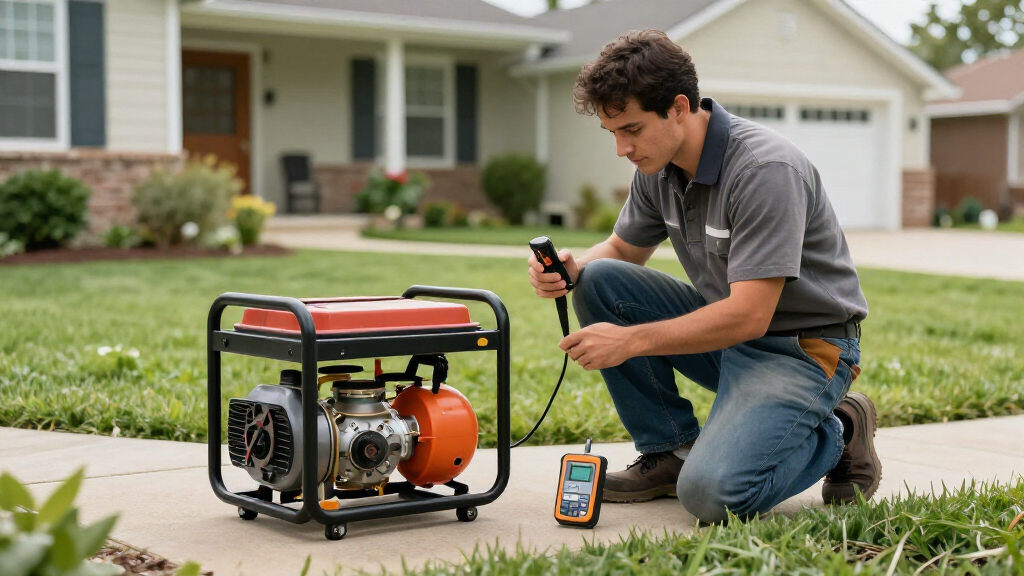
For most generator owners, I’d start with the Klein Tools ET120 for a focused combustible-gas check; the TOPTES PT520B+ adds a rechargeable design and flexible probe, while the Kidde plug-in alarms provide ongoing room monitoring for compatible gases. The right choice depends on whether you need to find a leak at a connection, monitor an indoor area, or detect more than combustible gas. Probe reach, alarm style, power source, and gas coverage matter more here than a long feature list. A handheld detector is not a substitute for safe generator placement, ventilation, or a dedicated carbon monoxide alarm. Read on for how the 13 options compare and which tradeoffs fit different setups.

Get backup power and energy gear delivered free with Prime
- Fast, free delivery on millions of items
- Prime Video, Amazon Music and more included
- Member-only deals all year
Complete the kit


Key Takeaways
- The Klein Tools ET120 is the roundup’s best overall handheld pick for buyers who want a dedicated combustible-gas detector rather than a plug-in room alarm.
- The TOPTES PT520B+ stands apart for its rechargeable power and 17-inch flexible probe, a useful combination for reaching fittings without moving the detector as often.
- The TOPTES Guard-101 measures four gas categories, including oxygen and carbon monoxide, but its broader coverage serves a different task from pinpointing a combustible-gas leak.
- The Kidde plug-in models are better suited to ongoing indoor monitoring than checking generator hoses or fittings; the digital display and battery backup differentiate one model from the simpler version.
- The lineup includes both long-probe and short-probe handhelds, but probe length alone does not make a detector suitable for every generator fuel, location, or safety job.
| Klein Tools ET120 Combustible Gas Leak Detector |  | Best Overall for Generator Fuel-Line Checks | Brand and model: Klein Tools ET120 | Detected gases: Methane, propane, and other combustible gases | Detection range: Approximately 50–10,000 ppm, based on methane | VIEW LATEST PRICE | See Our Full Breakdown |
| TOPTES PT520B+ Rechargeable Gas Leak Detector with 17-Inch Flexible Probe |  | Best for Readout Flexibility | Brand and model: TOPTES PT520B+ | Gas types: Methane, propane, natural gas, and LPG | Detection range: 50–10,000 ppm | VIEW LATEST PRICE | See Our Full Breakdown |
| TOPTES Guard-101 4-Gas Detector for H2S, CO, LEL, and O2 |  | Best for Multi-Gas Site Monitoring | Brand and model: TOPTES Guard-101 | Gas detection: H2S, CO, LEL, and O2 | Alarm modes: Audible, visual, and vibration | VIEW LATEST PRICE | See Our Full Breakdown |
| UEi Test Instruments CD100A Combustible Gas Leak Detector |  | Best for Broad Fuel-Type Detection | Brand and model: UEi Test Instruments CD100A | Detected gases: Acetone, ammonia, butane, methane, natural gas, LPG, and jet fuel | Gooseneck length: 18 inches | VIEW LATEST PRICE | See Our Full Breakdown |
| TOPTES PT199 Portable Natural Gas Leak Detector with Audible and Visual Alarm |  | Best Compact Pick for Close Checks | Brand and model: TOPTES PT199 | Gas types: Natural gas, methane, propane, butane, LPG, and other combustible gases | Detection range: 50–1,000 ppm, based on methane | VIEW LATEST PRICE | See Our Full Breakdown |
| TOPTES PT520A Natural Gas Leak Detector with 17-Inch Gooseneck |  | Best for Reaching Confined Generator Connections | Brand and model: TOPTES PT520A | Gas types: Methane, propane, natural gas, LPG, butane, and more | Probe length: 17 inches | VIEW LATEST PRICE | See Our Full Breakdown |
| TOPTES PT205 Natural Gas Detector with Audible and Visual Alarms, %LEL Detection, and 2 AAA Batteries |  | Best for Reading Combustible-Gas Levels | Brand and model: TOPTES PT205 | Gas compatibility: LPG, methane, ethane, propane, butane, natural gas, coal gas, gas fuel, and LNG | Detection range: 1%–10% LEL; 100–5,000 ppm based on methane | VIEW LATEST PRICE | See Our Full Breakdown |
| Kidde COPDLG Plug-In Carbon Monoxide and Explosive Gas Alarm |  | Best for Fixed Indoor CO and Gas Alerts | Brand and model: Kidde COPDLG | Detection: Carbon monoxide, natural gas, and propane | Power: 120V plug-in with two AA backup batteries | VIEW LATEST PRICE | See Our Full Breakdown |
| Kidde Plug-In Carbon Monoxide and Explosive Gas Alarm with Digital Display and Battery Backup |  | Best for Broader Gas Coverage in a Fixed Alarm | Brand and model: Kidde KN-COEG-3 | Detected gases: Carbon monoxide, methane, propane, natural gas, and sewer gas | Power: 120V AC plug-in | VIEW LATEST PRICE | See Our Full Breakdown |
| Klein Tools ET190 Compact Gas Leak Detector |  | Best Compact Pick for Portable Spot Checks | Brand and model: Klein Tools ET190 | Detection range: 50–2,000 ppm | Sensitivity modes: High and low | VIEW LATEST PRICE | See Our Full Breakdown |
| TOPTES PT177 Portable Combustible Gas Leak Detector with Audible and Visual Alarms |  | Best Simple Portable Pick | Detected gases: LPG, methane, ethane, propane, butane, natural gas, and coal gas | Alarm: Audible and visual; 75 dB | Response time: 0.5–3 seconds | VIEW LATEST PRICE | See Our Full Breakdown |
| Wurapl WA886 Natural Gas Leak Detectors with Digital Display, 3-Pack |  | Best for Fixed Coverage | Quantity: 3 detectors | Power source: Plug-in | Sensor type: Electrochemical | VIEW LATEST PRICE | See Our Full Breakdown |
| TopTes PT210S Portable Gas Leak Detector with 4-Inch Probe |  | Best for Tight Generator Connections | Detected gases: Natural gas, propane, methane, and butane | Detection range: 100–5,000 ppm (1–10% LEL) | Response time: 0.5 seconds | VIEW LATEST PRICE | See Our Full Breakdown |
| gas leak detectors for generator | Brand and model |
|---|---|
| Klein Tools ET120 Combustible | Klein Tools ET120 |
| TOPTES PT520B+ Rechargeable Ga | TOPTES PT520B+ |
| TOPTES Guard-101 4-Gas Detecto | TOPTES Guard-101 |
| UEi Test Instruments CD100A Co | UEi Test Instruments CD100A |
| TOPTES PT199 Portable Natural | TOPTES PT199 |
| TOPTES PT520A Natural Gas Leak | TOPTES PT520A |
| TOPTES PT205 Natural Gas Detec | TOPTES PT205 |
| Kidde COPDLG Plug-In Carbon Mo | Kidde COPDLG |
| Kidde Plug-In Carbon Monoxide | Kidde KN-COEG-3 |
| Klein Tools ET190 Compact Gas | Klein Tools ET190 |
| TOPTES PT177 Portable Combusti | — |
| Wurapl WA886 Natural Gas Leak | — |
| TopTes PT210S Portable Gas Lea | — |
More Details on Our Top Picks
Klein Tools ET120 Combustible Gas Leak Detector
The Klein Tools ET120 is my most balanced pick for checking generator fuel connections because it combines adjustable sensitivity with an 18-inch flexible gooseneck. High and low settings let you start with a broader search, then narrow in on a suspected leak; its rising LED and audible alerts also help indicate changing gas concentration. Compared with the TOPTES PT520B+, the ET120 keeps the controls and readout simpler, but it does not offer that model’s PPM and %LEL display options or rechargeable USB-C power. Its stated range is based on methane, so I would not treat the figures as identical for every gas it detects. This is a focused combustible-gas tool, not a replacement for a carbon monoxide alarm or safe generator operating practices.
Pros:- Detects methane, propane, and other combustible gases
- High and low sensitivity settings support different search ranges
- 18-inch flexible gooseneck reaches around generator components
- Visual and audible alerts intensify as detected gas concentration rises
Cons:- Published detection range is based on methane, not separately specified for each gas
- Battery type and runtime are not listed
Best for: Generator owners who want an adjustable-sensitivity handheld detector with a long probe for checking fittings and other hard-to-reach fuel connections.
Not ideal for: Buyers who want a rechargeable detector, numerical %LEL readings, or published battery runtime; the product data does not provide those details.
- Brand and model:Klein Tools ET120
- Detected gases:Methane, propane, and other combustible gases
- Detection range:Approximately 50–10,000 ppm, based on methane
- Sensitivity settings:High: approximately 50–1,000 ppm; Low: approximately 1,000–10,000 ppm
- Alerts:Five red LEDs and 85 dB audible alert
- Calibration:Automatic zero-point calibration at power-up
- Gooseneck length:18 inches
- Included items:Batteries and carrying pouch
Our verdict“Choose the ET120 for flexible, adjustable checks around generator fuel fittings, but choose the PT520B+ if rechargeable power and PPM or %LEL readouts matter more.”
TOPTES PT520B+ Rechargeable Gas Leak Detector with 17-Inch Flexible Probe
The TOPTES PT520B+ suits generator owners who want more information than a simple escalating alarm: it displays readings in PPM or %LEL, so buyers can use the unit that fits their checking routine. Its 17-inch flexible probe is nearly as long as the Klein ET120’s 18-inch neck, making both useful around tucked-away connections; the TOPTES adds rechargeable USB-C power and a mute button. The tradeoff is a 30-second warm-up before a check, plus a 75 dB alarm that may need muting in close quarters. Compared with the battery-powered TOPTES PT199, this model has a longer probe and more measurement options, but it is larger and heavier. I’d choose it for repeat inspections, not as a fixed alarm or a substitute for proper generator ventilation.
Pros:- Displays gas concentration in PPM or %LEL
- 17-inch flexible probe reaches hard-to-access areas
- Rechargeable battery and USB Type-C charging
- Audible and visual alarms, with a mute button
Cons:- Requires a 30-second warm-up before use
- 75 dB alarm may be disruptive in close quarters
- At 0.51 kg, it is heavier than the compact PT199
Best for: Generator owners and maintenance users who make repeated leak checks and want a flexible probe, rechargeable power, and PPM or %LEL readings.
Not ideal for: Buyers who want a small, immediately ready detector or prefer replaceable AAA batteries; this model needs warm-up time and rechargeable power.
- Brand and model:TOPTES PT520B+
- Gas types:Methane, propane, natural gas, and LPG
- Detection range:50–10,000 ppm
- Measurement units:PPM or %LEL
- Probe length:17 inches
- Alarm and response:Audible and visual alarm; 75 dB; 0.5-second response time
- Warm-up time:30 seconds
- Power and charging:Rechargeable battery; USB Type-C port
- Included accessories:Protective case, USB Type-C charging cable, and user manual
Our verdict“Pick the PT520B+ if you want rechargeable power and selectable PPM or %LEL readings for generator checks, and accept its warm-up and bulk.”
TOPTES Guard-101 4-Gas Detector for H2S, CO, LEL, and O2
The TOPTES Guard-101 has a different job from the single-purpose combustible-gas detectors here: it monitors H2S, CO, LEL, and oxygen, with sound, lights, and vibration alerts. That broader set can suit generator technicians working in environments where several atmospheric hazards need attention, rather than someone checking only a fuel fitting. Its listed explosion-proof, dustproof, and waterproof housing and back clip also point toward portable site use. Compared with the Klein Tools ET120, it adds carbon monoxide and oxygen monitoring, but the supplied details do not give a combustible-gas ppm range or a flexible probe for close leak locating. Battery life is up to 14 hours, and the initial password is listed as “69,” a setup detail buyers may need to manage. It is not a household CO alarm.
Pros:- Monitors four gases, including CO and oxygen alongside LEL
- Audible, visual, and vibration alarms provide multiple alert channels
- Alarm response time is listed as 0.5 seconds
- Back clip and protective housing support portable worksite use
Cons:- Battery life is listed as up to 14 hours per charge
- No combustible-gas ppm detection range is provided in the product data
- Initial password is listed as “69,” which may require setup attention
Best for: Generator technicians who need portable monitoring for LEL, carbon monoxide, hydrogen sulfide, and oxygen while working in potentially hazardous areas.
Not ideal for: Home generator owners seeking a simple detector to trace a leak at a fuel fitting; the data does not specify a ppm range or a long flexible probe.
- Brand and model:TOPTES Guard-101
- Gas detection:H2S, CO, LEL, and O2
- Alarm modes:Audible, visual, and vibration
- Alarm response time:0.5 seconds
- Battery life:Up to 14 hours
- Housing and protection:ABS engineering plastic; described as waterproof, dustproof, and explosion-proof
- Weight:0.6 kg
- Included accessories:Charging cable, user manual, and standard gas hood
Our verdict“Choose the Guard-101 for multi-gas worksite monitoring, not for close-range generator leak tracing where the ET120 or PT520B+ is better equipped.”
UEi Test Instruments CD100A Combustible Gas Leak Detector
The UEi CD100A makes sense for generator owners or service providers who want a detector listed for a wider mix of fuels and gases, including methane, natural gas, LPG, and butane, as well as acetone, ammonia, and jet fuel. Its 18-inch gooseneck matches the Klein ET120 for reach, while a tip light plus rising audio and visual cues help when looking around connections that are difficult to see. The product data lists a 15-hour battery life, unlike the ET120, whose runtime is unspecified. The tradeoff is less published measurement detail: no detection range or sensitivity settings are provided here, so it is harder to compare concentration thresholds directly with the TOPTES PT520B+. A 10-second warm-up is required, and the one-year limited warranty is specified.
Pros:- Detects a broad list of gases, including methane, natural gas, LPG, and butane
- 18-inch flexible gooseneck reaches tight spaces
- Tip light and increasing audio and visual cues aid leak locating
- Product data lists 15 hours of battery life
Cons:- Detection range and sensitivity settings are not specified in the provided data
- Requires a 10-second warm-up before use
- Warranty is listed as a one-year limited warranty
Best for: Generator service users who work with several combustible fuel types and value a long probe, tip light, and listed battery runtime.
Not ideal for: Buyers who need a stated ppm range or adjustable sensitivity to compare leak readings; those specifications are not provided for this model.
- Brand and model:UEi Test Instruments CD100A
- Detected gases:Acetone, ammonia, butane, methane, natural gas, LPG, and jet fuel
- Gooseneck length:18 inches
- Sensor type:Catalytic
- Alerts and lighting:Audio and visual cues increase as gas is detected; tip light
- Battery life:15 hours
- Warm-up time:10 seconds
- Warranty:One-year limited
Our verdict“Choose the CD100A for broad listed gas coverage and a long, illuminated probe, but prefer the PT520B+ if numerical readings are a priority.”
TOPTES PT199 Portable Natural Gas Leak Detector with Audible and Visual Alarm
The TOPTES PT199 is the compact option for a generator owner who wants to carry a detector to the point of inspection rather than use a long probe to reach around machinery. It detects common fuels including natural gas, methane, propane, butane, and LPG, and its audible and visual alerts intensify as concentration rises; the LCD also turns red at high levels. Its stated methane range is 50–1,000 ppm, narrower than the ET120’s approximately 50–10,000 ppm range, so it is not the better pick for buyers who want that broader published range. The PT199 also needs a 30-second warm-up and must be held just 1–5 cm from the suspected source. Compared with the PT520B+, it is lighter and runs on included AAA batteries, but lacks a long flexible probe and PPM or %LEL display options.
Pros:- Detects natural gas, methane, propane, butane, LPG, and other combustible gases
- Audible and visual alerts intensify as gas concentration rises
- Compact 2.08-ounce design includes a storage bag
- Two AAA batteries are included
Cons:- Detection distance is limited to 1–5 cm from the suspected source
- Requires a 30-second warm-up
- Stated methane range of 50–1,000 ppm is narrower than the ET120’s published range
Best for: Generator owners who want a lightweight, battery-powered detector for close, point-by-point checks of accessible fuel connections.
Not ideal for: Buyers checking fittings tucked behind or beneath generator parts, or those who need a long probe and wider stated methane range.
- Brand and model:TOPTES PT199
- Gas types:Natural gas, methane, propane, butane, LPG, and other combustible gases
- Detection range:50–1,000 ppm, based on methane
- Detection distance:1–5 cm
- Alarm and response:Audible and visual; 0.5-second response time
- Warm-up time:30 seconds
- Power source:Two AAA batteries
- Dimensions and weight:0.79 × 0.79 × 6.5 inches; 2.08 oz
- Included items:Detector, storage bag, two AAA batteries, and user manual
Our verdict“Choose the PT199 for portable close-range checks at accessible generator fittings, but select the PT520B+ or ET120 when reach is more important.”
TOPTES PT520A Natural Gas Leak Detector with 17-Inch Gooseneck
The 17-inch flexible probe gives the PT520A a clear role for checking hard-to-reach fittings around a generator, such as connections tucked behind a frame or enclosure. It detects methane, propane, natural gas, LPG, and butane, with audible and visual alerts to make a finding easier to notice while you work. Its stated 0.5-second response and 50–10,000 ppm methane range suit spot checks, though the range is specified for methane rather than every listed gas.
Compared with the compact Klein Tools ET190, the PT520A trades pocket portability for more reach. It also needs a 30-second warm-up, so it is not an instant-check tool right out of the case. I’d choose it for detailed inspection around crowded generator plumbing, not as a substitute for a fixed alarm or a device meant to monitor an occupied space continuously.
Pros:- Flexible 17-inch probe reaches confined areas around generator fuel connections
- Detects methane, propane, natural gas, LPG, butane, and other listed gases
- Audible and visual alerts provide two ways to notice a detection
- Includes three AAA batteries and a protective case
Cons:- Requires a 30-second warm-up before use
- The 50–10,000 ppm range is specified for methane, not each compatible gas
- Long probe is less convenient to carry than the pocket-sized Klein Tools ET190
Best for: Generator owners or service technicians who need to check fittings and fuel lines in tight, awkward-to-reach areas.
Not ideal for: People who want a pocket-sized detector for quick checks or continuous room monitoring; its long probe suits targeted inspection, and it requires a warm-up.
- Brand and model:TOPTES PT520A
- Gas types:Methane, propane, natural gas, LPG, butane, and more
- Probe length:17 inches
- Methane detection range:50–10,000 ppm
- Response time:0.5 seconds
- Alarm:Audible and visual; 75 dB
- Power:Three AAA batteries
- Warm-up:30 seconds
Our verdict“Choose the PT520A when reaching awkward generator fittings matters more than pocket portability or immediate startup.”
TOPTES PT205 Natural Gas Detector with Audible and Visual Alarms, %LEL Detection, and 2 AAA Batteries
The PT205 is a practical pick for buyers who want more than a beep: its display reports 1% to 10% LEL, giving a reading tied to a gas’s lower explosive limit. It detects methane, propane, butane, natural gas, and other listed combustible gases, and pairs that display with audible and visual alarms. For generator troubleshooting, that can help distinguish a simple alert from a rising reading during a targeted inspection.
Compared with the PT520A, the PT205 gives up the long probe but offers a clear %LEL readout in a more portable package. Its stated 100–5,000 ppm equivalence is based on methane, so buyers should not treat that conversion as universal across gases. A 30-second warm-up and replaceable AAA batteries also make it less immediate than a fixed plug-in alarm such as the Kidde COPDLG. I’d pick this for hands-on checks, not unattended protection.
Pros:- Displays combustible-gas readings from 1% to 10% LEL
- Detects a broad range of listed combustible gases
- Audible and visual alarms supplement the displayed reading
- Includes two AAA batteries and a storage bag
Cons:- Requires a 30-second warm-up before detection
- The ppm equivalence is based on methane and may not describe other gases
- Battery-powered operation requires keeping replacement batteries available
Best for: Generator owners and maintenance workers who want a portable detector with a %LEL reading for checking combustible-gas leaks.
Not ideal for: Buyers who need a long reach for concealed fittings or an always-on alarm; the PT205 is a handheld inspection tool with a warm-up period.
- Brand and model:TOPTES PT205
- Gas compatibility:LPG, methane, ethane, propane, butane, natural gas, coal gas, gas fuel, and LNG
- Detection range:1%–10% LEL; 100–5,000 ppm based on methane
- Response time:0.5 seconds
- Alarm:Audible and visual
- Warm-up:30 seconds
- Power:Two AAA alkaline batteries
- Included items:Detector, storage bag, user manual, and two AAA batteries
- Warranty:36 months
Our verdict“Choose the PT205 if a portable %LEL reading matters more to you than the PT520A’s extended probe reach.”
Kidde COPDLG Plug-In Carbon Monoxide and Explosive Gas Alarm
Unlike handheld detectors in this roundup, the Kidde COPDLG is a plug-in alarm for indoor protection, combining carbon monoxide alerts with natural-gas and propane detection. Its backlit display shows CO levels or “GAS,” while low-level CO alerts begin at 30–70 ppm. For a generator stored or operated in a location where an appropriate indoor alarm is needed, that combination can add useful warning beyond a spot-check tool. It also has an 85 dB alarm and AA battery backup for power outages.
This is not a leak-finding instrument: it does not offer a probe or a ppm range for locating a leak at a fitting, unlike the PT520A or PT205. It needs a 120V outlet, and the supplied product details conflict on warranty length, listing both seven and ten years. I’d treat it as a fixed alarm, not a way to inspect generator plumbing or justify operating a generator indoors.
Pros:- Detects carbon monoxide, natural gas, and propane
- Backlit display shows CO levels or a gas alert
- Two AA backup batteries support operation during a power outage
- Includes an 85 dB alarm and test/hush button
Cons:- Requires access to a standard 120V outlet for normal operation
- Does not provide a probe or a stated gas concentration range for locating leaks
- Provided warranty details conflict, listing both seven and ten years
Best for: Households that need a fixed indoor alarm for carbon monoxide plus natural gas or propane, with backup power during an outage.
Not ideal for: Technicians or generator owners who need to pinpoint a leak at a hose or connection; this plug-in alarm is not a handheld inspection detector.
- Brand and model:Kidde COPDLG
- Detection:Carbon monoxide, natural gas, and propane
- Power:120V plug-in with two AA backup batteries
- Alarm volume:85 dB
- Display:Backlit digital display
- Low-level CO alerts:Starting at 30–70 ppm
- Standards:UL 2034, 5th Edition; ETL listed
- Warranty information:Listing states both seven years and a 10-year limited warranty
Our verdict“Choose the COPDLG for fixed indoor CO and explosive-gas alerts, not for tracing a generator fuel-line leak.”
Kidde Plug-In Carbon Monoxide and Explosive Gas Alarm with Digital Display and Battery Backup
The KN-COEG-3 stands out among the fixed alarms here for listing methane, propane, natural gas, and sewer gas alongside carbon monoxide. Its digital display shows CO levels or “GAS,” and peak-level memory records the last detected CO level, which may help when checking an alert after it occurs. A 9V backup battery and included extension cord add placement flexibility that the COPDLG does not specify in its included items.
Like the COPDLG, this Kidde is a room alarm rather than a detector for tracing a leak along a generator’s fuel connections. It needs a 120V outlet for normal use, and its hush button silences the alarm for about eight minutes, so it is not a replacement for responding to an active warning. The Klein ET190 is more suitable for portable leak checks; I’d choose this model for stationary CO and gas alerts where its broader listed gas coverage is useful.
Pros:- Lists detection of CO, methane, propane, natural gas, and sewer gas
- Digital display shows CO levels or a gas alert
- Peak-level memory records the last detected CO level
- Includes a 9V backup battery and extension cord
Cons:- Requires a standard 120V outlet for normal operation
- The hush function silences the alarm for only about eight minutes
- Does not provide a probe or stated range for pinpointing a generator leak
Best for: People seeking a fixed plug-in alarm for CO and several explosive gases, especially where peak CO memory and flexible placement are useful.
Not ideal for: Generator owners who need a handheld tool to locate a leak at a fitting or fuel line; this alarm is designed for room monitoring.
- Brand and model:Kidde KN-COEG-3
- Detected gases:Carbon monoxide, methane, propane, natural gas, and sewer gas
- Power:120V AC plug-in
- Backup battery:9V
- Alarm volume:85 dB
- Display:Digital LED
- Features:Peak-level memory; hush button silences alarm for approximately 8 minutes
- Certification:UL certified; meets UL 2034 and UL 1484
- Warranty:6 years
Our verdict“Choose the KN-COEG-3 for stationary alerts and broader listed gas coverage, rather than portable leak-finding around a generator.”
Klein Tools ET190 Compact Gas Leak Detector
For buyers who want a detector they can keep close at hand, the ET190’s pocket-sized body and pen clip make it the most portable inspection pick in this group. It detects combustible gas from 50–2,000 ppm and offers high- and low-sensitivity modes, which can help move from a broad check to a more focused search around accessible generator fittings. LED indicators and escalating audible alerts communicate detection without needing a long-probe setup.
That compactness comes with less reach and a narrower stated range than the PT520A, whose 17-inch probe is better for crowded or recessed connections. The PT205 also provides a %LEL readout, while the ET190 emphasizes portability and sensitivity modes. Automatic 30-second zeroing means it is not ready the moment it is switched on, and the product details do not state battery type or runtime. I’d choose it for quick, accessible checks, not deep-reach inspections or continuous monitoring.
Pros:- Pocket-sized form with a pen clip supports easy carry
- High- and low-sensitivity modes support different stages of leak checking
- LED and escalating audible alerts indicate detection
- Automatic zeroing and included batteries reduce setup requirements
Cons:- 50–2,000 ppm range is narrower than the PT520A’s stated methane range
- No long probe is listed for reaching confined generator connections
- Battery type and runtime are not specified in the product details
Best for: Generator owners and mobile service workers who want a lightweight detector for quick checks at accessible fittings.
Not ideal for: People checking recessed connections or needing a displayed %LEL value; the PT520A reaches farther, and the PT205 supplies that type of reading.
- Brand and model:Klein Tools ET190
- Detection range:50–2,000 ppm
- Sensitivity modes:High and low
- Zeroing:Automatic; 30 seconds
- Alerts:LED and audible
- Form factor:Compact, lightweight, pocket-sized with pen clip
- Batteries:Included; type and runtime not specified
Our verdict“Choose the ET190 for portable checks at accessible generator fittings, but pick the PT520A when reach is the priority.”
TOPTES PT177 Portable Combustible Gas Leak Detector with Audible and Visual Alarms
The TOPTES PT177 suits generator owners who want a compact way to check accessible fuel connections and nearby areas for combustible gas. It detects a broad set of gases, including propane, methane, and natural gas, while its five LED indicators and 75 dB alarm grow more noticeable as concentration rises. That gives a quick visual and audible cue without interpreting a digital concentration reading. Compared with the TopTes PT210S, the PT177 is simpler: it lacks that model’s probe and percent-LEL display, so it is less suited to reaching tight spots or tracking a reading. Its pocket clip and included storage bag make it easy to keep with generator maintenance gear. The tradeoff is a 30-second clean-air warm-up and reliance on replaceable AAA batteries.
Pros:- Detects common generator fuels, including propane, methane, and natural gas
- Five LED indicators and audible alarm intensify as gas concentration rises
- Pocket clip and storage bag help keep it portable and protected
- Includes two AAA batteries
Cons:- Needs a 30-second warm-up in a gas-free environment before use
- Replaceable AAA batteries require monitoring and eventual replacement
Best for: Generator owners who want a straightforward handheld check for accessible propane or natural-gas fittings and value simple visual and audible alerts.
Not ideal for: Buyers who need to inspect recessed connections or interpret concentration readings; the PT210S adds a probe and percent-LEL display for those tasks.
- Detected gases:LPG, methane, ethane, propane, butane, natural gas, and coal gas
- Alarm:Audible and visual; 75 dB
- Response time:0.5–3 seconds
- Warm-up time:30 seconds
- Power:2 AAA batteries
- Automatic shutoff:After 5 minutes of inactivity
- Weight:0.12 kg
- Warranty:3 years
Our verdict“Choose the PT177 for portable, easy-to-read checks around accessible generator fuel connections, but pick the PT210S if you need a probe or percent-LEL readings.”
Wurapl WA886 Natural Gas Leak Detectors with Digital Display, 3-Pack
The Wurapl WA886 three-pack takes a different approach from handheld generator checks: plug the units into powered locations where natural gas or other combustible gas could accumulate, and each provides a digital concentration display plus an 85 dB alarm. Multiple detectors can cover a generator-adjacent indoor utility area and other spots in a home, RV, or workspace, while the plug-in design avoids installation work. Compared with the portable TOPTES PT177, the WA886 is better suited to ongoing, stationary monitoring than to tracing a suspected leak around a hose or fitting. Its main limitation for generator use is placement and power: it needs an outlet, and the product information does not specify battery backup. It is not a substitute for checking outdoor equipment or for following generator safety instructions.
Pros:- Three detectors allow coverage in multiple powered locations
- Digital displays show gas concentration rather than relying only on an alarm
- Plug-in setup avoids installation work
- 85 dB alarm provides an audible warning
Cons:- Requires a plug-in power source, limiting placement near outdoor generators
- Product information does not specify battery backup for power interruptions
- Stationary units cannot trace a leak along generator hoses or fittings
Best for: Homeowners or RV users with a gas-fueled generator stored near powered indoor areas who want several fixed detectors with concentration displays.
Not ideal for: People who need to inspect outdoor generators, move a detector between fittings, or maintain monitoring during power loss; these units require outlets and battery backup is unspecified.
- Quantity:3 detectors
- Power source:Plug-in
- Sensor type:Electrochemical
- Compatible gases:Natural gas, LNG, and other combustible gases
- Alarm volume:85 dB
- Display:Digital concentration display
- Operating humidity:10%–95% RH, non-condensing
- Maximum temperature:104 °F
- Enclosure material:ABS
Our verdict“Choose the WA886 if you want several fixed detectors near powered indoor areas, but select a portable model such as the TOPTES PT210S to investigate generator connections directly.”
TopTes PT210S Portable Gas Leak Detector with 4-Inch Probe
For checking generator fittings tucked behind a panel or beside a crowded fuel line, the TopTes PT210S is the most targeted handheld choice in this group. Its 4-inch probe reaches places a detector with no probe may not, while high and low sensitivity modes let the operator adapt the check. The display reports readings in percent LEL, giving more context than the rising LED alerts on the TOPTES PT177. It also responds in 0.5 seconds and detects natural gas, propane, methane, and butane. The tradeoff is that its readings and modes ask more of the user than the PT177’s simpler alert system, and it still runs on two AAA batteries. A five-minute inactivity shutoff may also interrupt a slow inspection if the unit is left idle.
Pros:- Four-inch probe helps reach confined generator connection areas
- High and low sensitivity modes support different inspection needs
- Displays readings in percent LEL and gives visual and audible alerts
- Detects natural gas, propane, methane, and butane
Cons:- Requires replacement of two AAA batteries
- Automatic shutoff after five minutes of inactivity can interrupt a paused inspection
- Multiple modes and percent-LEL readings may be more involved than a simple alert detector
Best for: Generator owners who need to check hard-to-reach hose joints or fittings and want percent-LEL readings with adjustable sensitivity.
Not ideal for: Buyers who prefer a basic alert without interpreting readings or changing sensitivity modes; the TOPTES PT177 is simpler to operate.
- Detected gases:Natural gas, propane, methane, and butane
- Detection range:100–5,000 ppm (1–10% LEL)
- Response time:0.5 seconds
- Probe length:4 inches
- Sensitivity modes:High and low
- Alarm:Visual and audible; 75 dB
- Power:2 AAA batteries
- Automatic shutoff:After 5 minutes of inactivity
- Warranty:36 months
Our verdict“Pick the PT210S for close-up checks of cramped generator fittings and readable percent-LEL results; choose the PT177 for a simpler, less involved alert.”
How We Picked
I ranked these options by how well their stated design and functions match the two jobs buyers often mean by “gas leak detector for a generator”: checking a suspected combustible-gas leak near a connection and monitoring an occupied space for a relevant gas hazard. I weighed gas coverage, probe reach, alarm feedback, portability, power source, and whether a device is handheld or intended to plug into a room outlet. I also separated combustible-gas detectors from carbon monoxide and multi-gas monitors rather than treating their different roles as interchangeable.
The ranking favors practical fit and clear use cases over the greatest number of listed features. The Klein ET120 leads as a straightforward handheld option; the PT520B+ earns attention for reach and rechargeable operation, while the Kidde alarms rank for fixed indoor monitoring, not leak pinpointing. Models with overlapping roles are distinguished by probe length, display or alarm approach, and power needs. Product names alone do not establish compatibility with every generator fuel, so buyers should confirm the manual’s supported gases and follow the generator maker’s safety instructions.
Factors to Consider When Choosing Gas Leak Detectors For Generators
Before choosing a detector, decide what event you need it to catch: a leak near the generator’s fuel system, a buildup of gas in a room, or a different hazard such as carbon monoxide. These jobs call for different sensors and placement. I’d use the following checks to avoid buying a device that alarms reliably but cannot address the hazard you actually have.
Match the detector to the generator’s fuel
Start with the fuel listed in your generator manual, then check the detector’s documentation for that exact gas or an explicitly stated compatible category. “Combustible gas” is a broad label, not proof that every model detects every fuel equally well or at the same sensitivity. Natural-gas detectors may not be appropriate for a gasoline spill, and a carbon monoxide alarm does not detect a fuel leak. Don’t infer compatibility from a product title or a general LEL feature alone. If the documentation is unclear, ask the manufacturer before relying on the device for that fuel. A correct match matters more than choosing the most feature-rich model.
Choose handheld leak checking or fixed room monitoring
A handheld detector is for tracing a suspected leak around accessible fittings, hoses, valves, and connections. A plug-in alarm is designed to monitor the air where it is installed, so it may warn of a room hazard without identifying the source. These approaches are complementary, not interchangeable. Generator placement and exhaust direction also matter: never run a generator indoors or in an enclosed space, even if a room has an alarm. For an outdoor generator, a handheld detector may better fit a targeted inspection, while a separate, properly placed carbon monoxide alarm protects occupied indoor areas. Avoid treating any one device as a replacement for safe operation.
Treat probe reach as access, not extra detection power
A longer or flexible probe can help reach behind equipment and around crowded connections without moving the detector body into a tight space. That convenience may make a leak check easier, but it does not prove greater sensitivity or broader gas compatibility. A shorter probe can be easier to handle and store when the inspection points are accessible. Before paying for reach, map the fittings you need to inspect and check whether the probe can approach them safely. Keep clear of hot surfaces and moving parts, and follow the maker’s distance and operating instructions. Probe shape should solve an access problem, not encourage unsafe positioning.
Read alarm signals and displays before an emergency
Audible and visual alerts can help when a generator is noisy, when lighting is poor, or when the detector is being used at arm’s length. A numerical display may show a changing reading, while a simple alarm can be quicker to interpret for a basic check. Neither format removes the need to learn the manual’s alarm thresholds and response steps. Don’t assume that a digital number means the device identifies the leak source or measures every hazard. Check whether the display reports a gas concentration, an alarm state, or another status. Familiarity with the signals makes it less likely that a warning will be mistaken for a routine notification.
Account for power, storage, and readiness
Rechargeable handheld models reduce disposable-battery changes but need charging and a routine check before use. Battery-powered units are easier to keep independent of an outlet, though you must track battery condition and spares. Plug-in alarms suit fixed locations, but a battery backup only helps during an outage if that model includes one and its backup battery is maintained. Storage conditions can affect readiness, so follow the manufacturer’s temperature and maintenance guidance. Decide where the detector will live and how often you will check it, rather than choosing on power type alone. A detector that is not charged, powered, or maintained cannot help during an inspection.
Plan for calibration, lifespan, and the right backup alarms
Check the manual for calibration requirements, sensor life, bump testing, and any replacement schedule before buying. These details affect the long-term effort of ownership and can differ between handheld instruments and household alarms. A combustible-gas detector is not a substitute for a certified carbon monoxide alarm, and a multi-gas meter’s listed sensors should be checked against the hazards you need covered. Keep the generator’s service instructions and the detector manual together so inspection steps stay consistent. If a detector alarms or you suspect a leak, stop the generator if safe, move away from the hazard, and follow the relevant emergency guidance rather than continuing to troubleshoot in place. Routine maintenance is part of the device’s usefulness, not an optional extra.
Frequently Asked Questions
Can a natural gas leak detector work with a propane generator?
Not automatically. Natural gas and propane are different fuels, so check the detector manual for explicit support for the generator’s fuel before using it. A generic combustible-gas label or an LEL display does not, by itself, confirm the device is suitable for both. If compatibility is missing or unclear, contact the detector maker and choose a model documented for that fuel. Do not use a detector reading as permission to operate a generator with a suspected leak.
Do I need both a handheld detector and a plug-in gas alarm?
They serve different purposes, so some setups may benefit from both. A handheld unit helps investigate a suspected leak near accessible fuel connections, while a plug-in alarm monitors the air around its installed location. A plug-in alarm is not a tool for tracing which fitting is leaking, and a handheld inspection does not provide continuous room monitoring. Neither replaces a carbon monoxide alarm where one is needed. Choose based on the hazards and locations involved, and follow both devices’ placement instructions.
Will a gas leak detector protect me from generator exhaust?
Only a device specifically designed to detect the relevant exhaust hazard can alert to that gas; a combustible-gas leak detector should not be treated as a carbon monoxide alarm. Generator exhaust can create a deadly carbon monoxide hazard, so operate the generator outdoors and away from doors, windows, and vents as directed by its manual. Use a dedicated carbon monoxide alarm in occupied spaces according to its instructions. A gas detector does not make indoor or enclosed generator operation safe. If an alarm sounds or anyone feels unwell, move to fresh air and seek emergency help.
Is a longer probe worth choosing for generator leak checks?
It can be helpful when fittings are recessed, crowded, or awkward to reach, and a flexible probe may make it easier to keep the detector body at a safer distance. It does not necessarily mean the sensor is more sensitive or that the unit supports more fuel types. For open, easily reached connections, a shorter probe may be simpler to store and handle. Compare the probe design with the actual access points on your generator, then check the manufacturer’s instructions for safe inspection distances. Pay for reach when it solves a real access issue.
What should I do if a detector alarms near my generator?
Stop the generator if you can do so safely, move away from the suspected leak, and avoid flames, sparks, or actions that could ignite gas. Follow the generator and detector manuals, and contact the fuel supplier, a qualified service professional, or emergency services as appropriate to the situation. Don’t keep operating the generator to reproduce the reading or search for the leak in a hazardous area. If the alarm may indicate carbon monoxide, get people and pets to fresh air immediately and seek emergency assistance. Treat an alarm as a warning, not as a repair diagnosis.
Conclusion
For the broadest fit among the listed handheld options, I’d choose the Klein Tools ET120 as best overall; it keeps the focus on combustible-gas leak checks. The TOPTES PT205 is my best value pick for buyers who want a portable detector with audible and visual alarms and %LEL detection, while the TOPTES PT520B+ is the best premium-style choice for those who value rechargeable power and a flexible, 17-inch probe. Beginners who want a simple handheld inspection tool can start with the TOPTES PT199, after confirming fuel compatibility and learning its alarm signals. For ongoing indoor monitoring, compare the Kidde plug-in models; for broader listed gas coverage, consider the TOPTES Guard-101, but check its sensor specifications against the hazards you need. Whatever you choose, match the detector to the generator’s fuel and keep carbon monoxide protection and safe outdoor operation separate from leak detection.