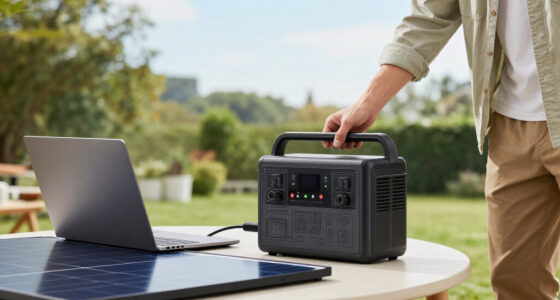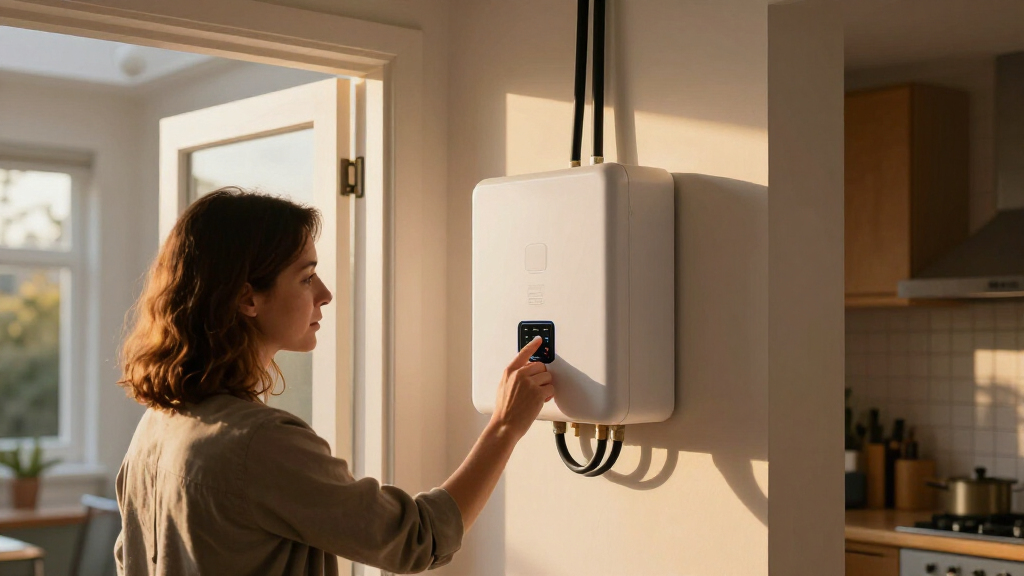

The best home battery energy storage systems balance usable capacity, inverter output, system compatibility, and a setup you can manage safely. My best overall pick is the ECO-WORTHY Powermega 30kWh system, which pairs substantial storage with a 10kW hybrid inverter. The Jackery Explorer 5000 Plus stands out as a more self-contained option, while the GROWATT 48V 100Ah four-pack offers a modular path for buyers who value expansion and listed certifications. The main tradeoff is between a ready-to-use package and a configurable battery-and-inverter system that may need more installation planning. Read on for the full breakdown and guidance on matching storage and output to your home.

Get backup power and energy gear delivered free with Prime
- Fast, free delivery on millions of items
- Prime Video, Amazon Music and more included
- Member-only deals all year
Key Takeaways
- Paired systems reduce compatibility guesswork: The ECO-WORTHY Powermega 30kWh package combines two batteries and a 10kW hybrid inverter, while standalone batteries require buyers to confirm inverter, voltage, and communication compatibility.
- Battery capacity and inverter output solve different problems: The 16.07kWh-class batteries can store energy for longer use, but storage alone does not indicate how many high-draw appliances an inverter can run at once.
- Modular does not automatically mean simple: The GROWATT four-pack is listed as expandable to 40kWh, but buyers still need to verify system limits, installation requirements, and compatibility before adding batteries.
- Complete kits trade flexibility for a more defined setup: ECO-WORTHY packages with batteries and inverters specify more of the system together, while rack batteries let experienced buyers choose components but take on integration work.
- Certifications and monitoring deserve separate checks: The GROWATT listing names UL1973 and UL9540A, and some batteries offer Bluetooth, Wi-Fi, or LCD monitoring; neither feature replaces checking the complete installed system and its local code requirements.
| Jackery Explorer 5000 Plus Power Station, 5040Wh, 7200W AC Output |  | Best Portable Home Backup | Capacity: 5,040Wh; expandable to 60kWh | Voltage: 120V/240V | Battery chemistry: LiFePO4 | VIEW LATEST PRICE | See Our Full Breakdown |
| ECO-WORTHY Cubix100 48V 100Ah LiFePO4 Server Rack Battery |  | Best Modular Rack Battery | Nominal voltage: 51.2V (marketed as 48V) | Capacity: 100Ah | Chemistry: LiFePO4, Grade A cells | VIEW LATEST PRICE | See Our Full Breakdown |
| ECO-WORTHY Powermega 48V 314Ah LiFePO4 Battery, 2-Pack |  | Best for High-Capacity Modular Storage | Configuration: Two LiFePO4 batteries | Energy per battery: 16.07kWh | Nominal voltage: 51.2V | VIEW LATEST PRICE | See Our Full Breakdown |
| ECO-WORTHY 48V Home Backup Power Kit – 10240Wh LiFePO4 Battery (2x 51.2V 100Ah) with 5000W Off-Grid Inverter |  | Best Complete Starter Kit | Total battery capacity: 10,240Wh | Battery configuration: 2 × 51.2V 100Ah LiFePO4 batteries | Inverter output: 5,000W; 10,000W peak | VIEW LATEST PRICE | See Our Full Breakdown |
| HumsiENK 48V 628Ah LiFePO₄ Battery with Bluetooth, Active Balancing, and LCD |  | Best Single-Battery High-Capacity Pick | Energy capacity: 32.15kWh | Voltage: 48V | Capacity: 628Ah | VIEW LATEST PRICE | See Our Full Breakdown |
| ECO-WORTHY Cubix100 48V 600Ah LiFePO4 Battery System with 12,000W Hybrid Inverter |  | Best for High-Demand Whole-Home Backup | Battery chemistry: LiFePO4 | Battery configuration: Six 51.2V 100Ah batteries | Total storage capacity: 30.72kWh | VIEW LATEST PRICE | See Our Full Breakdown |
| ECO-WORTHY Cubix100 48V 400Ah LiFePO4 Server Rack Battery, 4-Pack |  | Best for Modular Battery-Bank Builds | Battery chemistry: LiFePO4 | Number of batteries: 4 | Voltage: 51.2V per battery | VIEW LATEST PRICE | See Our Full Breakdown |
| 48V 314Ah LiFePO4 Lithium Battery (16.07kWh) |  | Best Standalone Battery for Inverter Flexibility | Voltage: 48V | Capacity: 314Ah | Energy: 16.07kWh | VIEW LATEST PRICE | See Our Full Breakdown |
| ECO-WORTHY 48V Home Backup Power System with 10,240Wh Battery Capacity and 10kW Inverter |  | Best for a Balanced Battery-and-Inverter Kit | Battery capacity: 10,240Wh total | Battery configuration: Two 51.2V 100Ah LiFePO4 batteries | Inverter power: 10,000W rated; 20,000W peak | VIEW LATEST PRICE | See Our Full Breakdown |
| ECO WORTHY 10000W Complete Off-Grid Solar Panel Kit for Home with 48V 314Ah Battery |  | Best Complete Off-Grid Solar Package | Continuous and peak output: 10,000W continuous; 20,000W peak | Inverter output: 120V/240V split-phase, pure sine wave | Solar panels: 5 × 590W monocrystalline panels; 2,950W total | VIEW LATEST PRICE | See Our Full Breakdown |
| ECO-WORTHY Powermega 30kWh Home Energy Storage System with 10kW Hybrid Inverter and 2x 48V 314Ah UL1973 LiFePO4 Batteries |  | Best Complete 30kWh Backup System | System capacity: 30kWh+ | Battery configuration: Two 48V 314Ah LiFePO4 batteries | Inverter: 10kW hybrid | VIEW LATEST PRICE | See Our Full Breakdown |
| ECO-WORTHY Cubix100 48V 600Ah LiFePO4 Home Backup Power System with 10,000W Inverter and Cabinet |  | Best Cabinet-Based Complete System | Energy capacity: 30,720Wh | Battery configuration: Six 51.2V 100Ah LiFePO4 batteries | Total output power: 10,000W | VIEW LATEST PRICE | See Our Full Breakdown |
| GROWATT 48V 100Ah LiFePO4 Lithium Battery, 5120Wh Expandable to 40kWh, Home Energy Storage, UL1973 UL9540A Certified (4 Pack) |  | Best for Growatt System Expansion | Model: ALP 5.0L-E2 US | Included quantity: 4 batteries | Voltage and capacity per battery: 48V, 100Ah, 5120Wh | VIEW LATEST PRICE | See Our Full Breakdown |
| VPauexii 51.2V 314Ah LiFePO4 Battery with 16076.8Wh Capacity, 200A BMS, LCD Touchscreen, Bluetooth/WiFi Monitoring, and RS485/CAN/RS232 Communication |  | Best Single-Battery Expansion Capacity | Voltage and capacity: 51.2V, 314Ah | Energy: 16,076.8Wh | Chemistry: LiFePO4 | VIEW LATEST PRICE | See Our Full Breakdown |
More Details on Our Top Picks
Jackery Explorer 5000 Plus Power Station, 5040Wh, 7200W AC Output
The Jackery Explorer 5000 Plus is the most portable-style pick here, pairing a 5,040Wh battery with 7,200W output and support for both 120V and 240V devices. That makes it a better fit for backup that may move between home and RV use than the ECO-WORTHY 48V Home Backup Power Kit, which is built around a separate inverter and installed battery setup. Jackery can also expand to 60kWh and accept up to 4,000W of solar input, giving buyers a path to longer backup rather than a fixed-capacity station. The tradeoff is substantial: at 134.5 pounds, it is not easy to move, and its two listed outlets limit direct connections. I’d choose it for flexible, high-output backup, not as the simplest way to power many household circuits.
Pros:- 7,200W rated output and 120V/240V support cover a broad range of devices.
- Expandable capacity up to 60kWh can support longer backup needs.
- Up to 4,000W solar input and an approximately two-hour solar recharge offer fast replenishment in suitable conditions.
- LiFePO4 battery chemistry is designed for long service life.
Cons:- At 134.5 pounds, moving or repositioning it takes planning.
- Only two total outlets are listed, which can limit direct device connections.
- Its portable power-station format may not suit buyers seeking a permanently integrated home system.
Best for: Households and RV owners who want a high-output battery they can use in more than one setting and may expand with additional storage.
Not ideal for: Buyers seeking a fixed, professionally integrated whole-home system or frequent portability; its 134.5-pound weight and two listed outlets work against both needs.
- Capacity:5,040Wh; expandable to 60kWh
- Voltage:120V/240V
- Battery chemistry:LiFePO4
- Maximum solar input:4,000W
- Weight:134.5 pounds
- Warranty:5 years
Our verdict“Choose the Jackery if you want expandable 120V/240V backup that can serve both home and RV use, and can live with its weight and limited outlets.”
ECO-WORTHY Cubix100 48V 100Ah LiFePO4 Server Rack Battery
The ECO-WORTHY Cubix100 100Ah is a building block for a 48V storage system, not a self-contained backup station: buyers need a compatible inverter to turn its stored energy into household power. Its CAN/RS485 communication can support closed-loop coordination with compatible inverters, while Bluetooth and Wi-Fi add convenient status checks. Compared with the Jackery Explorer 5000 Plus, this rack battery is less ready to use on its own but better suited to a fixed system that can grow unit by unit; up to 32 batteries can be paralleled. Its UL9540, UL1973, and CEC listings also distinguish it from options with less certification information in the supplied data. The main catch is system compatibility: communication features depend on the inverter, and the product is listed as non-returnable except for verified technical issues within the replacement window.
Pros:- UL9540, UL1973, and CEC listings provide multiple relevant certification credentials.
- Supports parallel expansion to as many as 32 units.
- CAN/RS485, Bluetooth, and Wi-Fi enable inverter communication and app monitoring.
- Includes cables and terminal covers as a plug-and-play battery kit.
Cons:- Requires a compatible inverter and other system components; it is not a standalone power station.
- Closed-loop features depend on inverter compatibility.
- The supplied product information notes non-returnable status, with replacement limited to verified technical issues.
Best for: Solar-system owners with a compatible 48V inverter who want certified, app-monitored battery storage that can scale in a rack.
Not ideal for: Buyers who need backup power straight out of the box or do not know whether their inverter supports the battery’s communication protocols.
- Nominal voltage:51.2V (marketed as 48V)
- Capacity:100Ah
- Chemistry:LiFePO4, Grade A cells
- Certifications:UL9540, UL1973, CEC listed
- Communication:CAN/RS485, Bluetooth, Wi-Fi
- Maximum parallel units:32; up to 163.8kWh stated
- Warranty:10-year limited
Our verdict“Pick this battery when you already have, or are designing, a compatible 48V inverter system that you want to expand in modular steps.”
ECO-WORTHY Powermega 48V 314Ah LiFePO4 Battery, 2-Pack
For buyers who want substantial storage without assembling a bank from many small batteries, this Powermega two-pack supplies two 16.07kWh units. Each battery includes a 200A active-balancing BMS, aerosol fire suppression, and a 7-inch touchscreen, giving the system more built-in monitoring and protection features than the simpler Cubix100 100Ah rack battery. It also offers Wi-Fi, Bluetooth, RS485, CAN, and RS232 connectivity, with expansion supported up to 15 units in parallel. That scale is useful for off-grid properties or long-duration backup, but it comes with logistical and integration demands: the batteries are large, arrive by truck, and still need compatible inverter equipment to form a complete home system. Compared with the ECO-WORTHY backup kit in this lineup, this is a higher-storage battery package, but not an all-in-one inverter-and-battery solution.
Pros:- Two batteries provide 32.14kWh combined stated energy capacity.
- Each unit has a 200A BMS with active cell balancing.
- Aerosol fire suppression and an external two-pole circuit breaker add safety provisions.
- Touchscreen, Wi-Fi, Bluetooth, and multiple wired protocols support monitoring and system integration.
Cons:- Large, heavy batteries require truck delivery and a suitable receiving address.
- The package does not include a listed inverter, so building a working backup system requires additional compatible equipment.
- A two-battery bank may be excessive for households with modest backup needs.
Best for: Off-grid homeowners and solar-system builders who need a large two-battery storage bank, broad monitoring options, and room to expand.
Not ideal for: Apartment dwellers, buyers with limited delivery access, or anyone wanting an assembled inverter-and-battery backup kit.
- Configuration:Two LiFePO4 batteries
- Energy per battery:16.07kWh
- Nominal voltage:51.2V
- Capacity per battery:314Ah
- BMS:200A with active cell balancing
- Parallel expansion:Up to 15 units
- Connectivity and display:Wi-Fi, Bluetooth, RS485, CAN, RS232; 7-inch touchscreen
- Certification and warranty:UL 1973; 10-year warranty
Our verdict“Choose the Powermega two-pack for a substantial, expandable battery bank when you have the space, delivery access, and inverter plan to support it.”
ECO-WORTHY 48V Home Backup Power Kit – 10240Wh LiFePO4 Battery (2x 51.2V 100Ah) with 5000W Off-Grid Inverter
This ECO-WORTHY kit is the most direct route in this group from purchased components to a working off-grid backup setup: it bundles two 5.12kWh batteries with a 5,000W inverter, MPPT controller, and battery charger. That makes it a more complete starting point than the Cubix100 100Ah battery, which requires buyers to supply a compatible inverter separately. The kit also supports app monitoring and can scale to six inverters and 32 batteries, so it need not remain a small system. Its 120V output is suitable for many household loads, while parallel inverters can support 120/208/240V configurations. The tradeoff is installation complexity. Components ship separately, and whole-home integration is likely to call for professional work; it is less convenient than the Jackery Explorer 5000 Plus for buyers who want a portable unit with fewer setup decisions.
Pros:- Includes 10,240Wh of LiFePO4 storage and a 5,000W pure sine wave inverter.
- Built-in 100A MPPT controller and battery charger reduce the need to source separate components.
- Bluetooth and Wi-Fi support app-based monitoring.
- Expandable to six inverters and 32 batteries, according to the supplied specifications.
Cons:- Components ship separately, so delivery timing may need coordination.
- Whole-home integration is more involved than using a portable power station and may require professional installation.
- The included inverter provides 120V output; higher-voltage configurations require parallel inverters.
Best for: Homeowners building a fixed 48V off-grid or backup system who want batteries, inverter, charging, and solar control in one package.
Not ideal for: Buyers who need portable, ready-to-use backup or are unwilling to coordinate freight shipments and plan an electrical installation.
- Total battery capacity:10,240Wh
- Battery configuration:2 × 51.2V 100Ah LiFePO4 batteries
- Inverter output:5,000W; 10,000W peak
- Output voltage:120V; 120/208/240V with parallel inverters
- MPPT controller:100A
- PV input voltage range:120–500V DC
- Maximum parallel expansion:6 inverters and 32 batteries
- Certifications:UL1973, UL1741 (Intertek), CEC compliant
Our verdict“Choose this kit if you want a scalable fixed backup system with its core inverter and battery components bundled, and are prepared for installation work.”
HumsiENK 48V 628Ah LiFePO₄ Battery with Bluetooth, Active Balancing, and LCD
The HumsiENK 628Ah packs 32.15kWh into one wall-mount battery, making it the largest single-unit capacity listed among these five products. Its stated 10.24kW continuous output and 200A BMS suit buyers looking to support substantial household loads, while Bluetooth, an LCD, and RS485/CAN/RS232 interfaces give several ways to monitor and connect the battery. Compared with the ECO-WORTHY Powermega two-pack, HumsiENK offers a similar overall storage scale in one listed unit rather than two separate batteries; Powermega, however, provides more detailed built-in safety and display features in the supplied data. HumsiENK lists over 6,000 cycles at 80% depth of discharge and 3A active balancing, but its five-year warranty is shorter than Powermega’s ten years. Freight delivery and wall-mount planning also make this a poor fit for casual or space-constrained buyers.
Pros:- 32.15kWh capacity provides substantial storage in one battery unit.
- 10.24kW continuous output is specified for supporting sizeable loads.
- Bluetooth app, built-in LCD, and RS485/CAN/RS232 interfaces offer multiple monitoring and connection options.
- Rated for over 6,000 cycles at 80% DoD with 3A active balancing.
Cons:- The five-year warranty is shorter than the ten-year warranty listed for the ECO-WORTHY Powermega batteries.
- Wall-mount installation requires suitable space and planning for a large-capacity unit.
- Freight delivery requires an address that can accommodate truck delivery.
Best for: Homeowners with a compatible 48V solar or inverter system who want high capacity in one wall-mounted battery and can plan for freight delivery.
Not ideal for: Buyers who need a portable system, lack suitable wall space, or prioritize a longer listed warranty and detailed safety features.
- Energy capacity:32.15kWh
- Voltage:48V
- Capacity:628Ah
- Continuous output:10.24kW
- Battery chemistry and BMS:LiFePO4; 200A BMS
- Cycle life:Over 6,000 cycles at 80% DoD
- Monitoring and communications:Bluetooth app, LCD, RS485, CAN, RS232
- Mounting and warranty:Wall mount; 5 years
Our verdict“Choose the HumsiENK if you want one high-capacity wall-mount battery for a compatible fixed system and can accept its five-year warranty and freight logistics.”
ECO-WORTHY Cubix100 48V 600Ah LiFePO4 Battery System with 12,000W Hybrid Inverter
I’d put this system near the top for buyers who need substantial stored energy and the inverter capacity to run demanding household loads. Its 30.72kWh battery bank and 12,000W hybrid inverter offer a larger starting point than the 10.24kWh ECO-WORTHY 10kW Home Backup Power System, which suits lighter backup needs but has less stored energy. Split-phase output supports common 120V and 240V circuits, while dual MPPT controllers and generator compatibility give an installer more options for charging and expansion. The tradeoff is scale: six batteries, an inverter, and a cabinet mean a multi-component installation rather than a simple plug-in backup unit. I’d also confirm the installer, delivery, and wiring plan before ordering. Its expandable architecture is useful for growing systems, but may be more than a smaller household needs.
Pros:- 30.72kWh of LiFePO4 storage provides a substantial reserve for extended backup or off-grid operation.
- 12,000W hybrid inverter with split-phase output supports a broad range of household loads.
- Can expand with additional inverters and batteries for a larger system.
- Bluetooth and Wi-Fi monitoring, plus included cabinet and installation accessories.
Cons:- Six batteries, inverter, and cabinet require significant space and installation planning.
- Components may ship separately, complicating delivery and setup.
- A suitable installer is needed to handle system integration and commissioning.
Best for: Homeowners planning a professionally installed backup or off-grid system for multiple large loads, with room to expand storage later.
Not ideal for: Apartment residents, buyers seeking a portable plug-in battery, or households that need only a few hours of backup and cannot coordinate a multi-component installation.
- Battery chemistry:LiFePO4
- Battery configuration:Six 51.2V 100Ah batteries
- Total storage capacity:30.72kWh
- Inverter power:12,000W hybrid inverter; 24,000W peak
- Output:120V/240V split-phase or 120V/208V three-phase
- Expansion:Up to 6 inverters and 32 batteries in parallel
- Communications:CAN/RS485, Bluetooth, and Wi-Fi
- Warranty:Battery: 10 years; inverter: 5 years
Our verdict“Choose this system if you want a high-capacity, expandable home backup setup and are prepared for professional installation.”
ECO-WORTHY Cubix100 48V 400Ah LiFePO4 Server Rack Battery, 4-Pack
This four-battery set makes sense for buyers who already have, or are choosing separately, a compatible inverter and want a sizable battery bank with room to grow. Its 20.48kWh capacity sits between the 16.07kWh standalone 48V 314Ah battery and the 30.72kWh ECO-WORTHY Cubix100 system with inverter and cabinet. That middle ground gives a home backup build meaningful storage without committing to a bundled 12kW inverter. CAN/RS485 and app connectivity give integrators options for monitoring and battery communications, while parallel expansion supports a larger bank later. This is not a complete backup system, though: buyers must match the batteries to an inverter and plan the installation. I’d verify the warranty before purchase, since the supplied information lists both a three-year product warranty and a 10-year limited warranty.
Pros:- Four batteries provide 20.48kWh of combined storage.
- CAN, RS485, Bluetooth, and Wi-Fi support multiple monitoring and integration approaches.
- Parallel expansion is supported up to 32 units.
- Installation accessories are included.
Cons:- An inverter and the rest of the system must be sourced and matched separately.
- Warranty information conflicts between a listed three-year product warranty and a 10-year limited warranty.
- The four batteries may arrive in multiple packages, which can complicate receiving and setup.
Best for: Solar and backup-system builders who already have a compatible 48V inverter and want a four-unit battery bank that can be expanded.
Not ideal for: Buyers who want a ready-to-run battery-and-inverter package or who need clear, consistent warranty terms before committing.
- Battery chemistry:LiFePO4
- Number of batteries:4
- Voltage:51.2V per battery
- Capacity:100Ah per battery; 400Ah total
- Total energy:20.48kWh
- Communications:CAN, RS485, Bluetooth, and Wi-Fi
- Maximum parallel units:32
- Listed certifications:UL9540, UL1973, and CEC
- Warranty information:Listing states a 3-year product warranty; description also mentions a 10-year limited warranty
Our verdict“Pick this four-pack if you want a scalable battery bank for a system you are configuring around a separate compatible inverter.”
48V 314Ah LiFePO4 Lithium Battery (16.07kWh)
I’d choose this battery when inverter choice matters as much as storage capacity. The 16.07kWh LiFePO4 pack is a substantial single-unit addition to a home system, and its RS485/CAN links are designed to work with major inverter brands such as Victron, Schneider, and Growatt. Compared with the ECO-WORTHY Cubix100 four-pack, it offers less total energy than that set’s 20.48kWh, but avoids spreading the capacity across four separate batteries. A 200A BMS, dual breakers, and several monitoring options add useful protection and visibility. The tradeoff is that this is a battery, not a complete home storage system: buyers still need a compatible inverter, installation, and a plan for handling a heavy unit. Its expansion ceiling is also lower than the Cubix100 four-pack’s stated parallel limit.
Pros:- 16.07kWh capacity in one battery provides a substantial storage block.
- RS485, CAN, and RS232 support system integration and monitoring options.
- 200A BMS, six-layer protection, and dual breakers add electrical safeguards.
- Display, Bluetooth/Wi-Fi app, and PC connection provide several ways to check status.
Cons:- Requires a separate compatible inverter and system installation.
- The high-capacity battery is likely heavy despite its built-in wheels and handles.
- Expansion is limited to 15 parallel units, fewer than the 32-unit limit listed for the ECO-WORTHY Cubix100 four-pack.
Best for: Homeowners or installers who need a large single 48V battery and want to pair it with a compatible inverter from a supported brand.
Not ideal for: Buyers seeking a complete battery-and-inverter package, or anyone unable to move and install a heavy battery safely.
- Voltage:48V
- Capacity:314Ah
- Energy:16.07kWh
- Chemistry:LiFePO4
- Battery management system:200A BMS with six-layer protection
- Maximum parallel units:15, up to 241kWh total
- Communications:RS485, CAN, RS232, Bluetooth, and Wi-Fi
Our verdict“Choose this battery if you want a large, inverter-flexible storage unit and are building the rest of the system separately.”
ECO-WORTHY 48V Home Backup Power System with 10,240Wh Battery Capacity and 10kW Inverter
For a buyer who wants the core hardware in one package, this ECO-WORTHY kit pairs 10.24kWh of battery storage with a 10,000W inverter. That makes it a more cohesive starting point than the ECO-WORTHY Cubix100 four-battery set, which supplies more storage but leaves the inverter choice to the buyer. Compared with the 30.72kWh Cubix100 system, this kit has much less energy in reserve, so it better fits backup plans focused on selected household circuits rather than long-duration whole-home coverage. Split-phase 120V/240V output, dual MPPT controllers, and a 200A charger support a range of solar and backup configurations. Expansion is a useful route to more capacity, but the kit’s real footprint is unclear: its listed dimensions apply to one component, not necessarily the complete system.
Pros:- Combines two LiFePO4 batteries with a 10,000W inverter in one system package.
- 10.24kWh storage and 120V/240V split-phase output suit a range of home backup plans.
- Dual MPPT controllers and a 200A battery charger support solar charging.
- Bluetooth and Wi-Fi monitoring and parallel expansion are supported.
Cons:- Its 10.24kWh storage is substantially lower than the 30.72kWh Cubix100 system’s capacity.
- Components ship separately, so delivery and installation need coordination.
- Listed dimensions cover only one component and do not describe the complete kit.
Best for: Homeowners who want a bundled 48V battery and inverter for selected household backup loads, with the option to expand later.
Not ideal for: Households seeking long-duration backup from the initial battery capacity, or buyers who need confirmed dimensions for the complete installed system.
- Battery capacity:10,240Wh total
- Battery configuration:Two 51.2V 100Ah LiFePO4 batteries
- Inverter power:10,000W rated; 20,000W peak
- Output:120V or 240V split-phase; 120V single-phase
- Inverter waveform:Pure sine wave
- MPPT controllers:Two independent controllers
- Maximum battery charger current:200A
- Expansion:Up to 6 inverters and 32 batteries in parallel
- Certifications and standards:UL1973 and UL1741 tested; meets California Energy Commission standards
Our verdict“Choose this kit for a bundled inverter-and-battery starting point when 10.24kWh is enough for your planned backup loads.”
ECO WORTHY 10000W Complete Off-Grid Solar Panel Kit for Home with 48V 314Ah Battery
This package is the most self-contained solar option in this group: it combines panels, a battery, and an inverter, while the other ECO-WORTHY kits here focus on battery and inverter hardware without supplying solar panels. It pairs 2,950W of solar panels with a 16.076kWh battery and a 10kW inverter, giving off-grid planners the main generation and storage components in one purchase. The battery capacity is close to the standalone 16.07kWh battery, but this kit adds panels and split-phase conversion rather than leaving those choices to the buyer. Its stated daily generation of up to 11.8kWh depends on optimal conditions, so location, weather, and system design matter. This is a large, installer-oriented package, not a simple backup appliance; truck delivery and professional installation make it less suitable for small spaces or DIY beginners.
Pros:- Includes solar panels, a 16.076kWh LiFePO4 battery, and a 10kW inverter.
- 10kW continuous output with 120V/240V split-phase supports household circuits.
- Battery can scale to 15 parallel units, and the inverter supports up to six units in parallel.
- Battery monitoring options include a display, Bluetooth, Wi-Fi, PC, RS485, and CAN.
Cons:- The included array is 2,950W, so actual generation and backup performance depend on site conditions and system design.
- Professional installation is strongly recommended; the package is not suited to novice setup.
- Large, heavy shipment arrives by truck on a pallet and requires suitable delivery access.
Best for: Rural homeowners planning an off-grid solar installation who want panels, battery storage, and a split-phase inverter in one package.
Not ideal for: Renters, buyers seeking a portable or plug-in backup unit, and novices without suitable delivery access or an installer.
- Continuous and peak output:10,000W continuous; 20,000W peak
- Inverter output:120V/240V split-phase, pure sine wave
- Solar panels:5 × 590W monocrystalline panels; 2,950W total
- Stated daily generation:Up to 11.8kWh under optimal conditions
- Battery:48V 314Ah LiFePO4; 16.076kWh
- Battery expansion:Up to 15 units in parallel, up to 241kWh
- Battery management system:PACE 200A BMS with dual breakers
- MPPT charging:Dual MPPT controllers; up to 200A battery charging
Our verdict“Choose this package if you are planning an installed off-grid solar system and want panels, storage, and inverter hardware together.”
ECO-WORTHY Powermega 30kWh Home Energy Storage System with 10kW Hybrid Inverter and 2x 48V 314Ah UL1973 LiFePO4 Batteries
I’d choose the Powermega 30kWh system when the goal is a bundled battery-and-inverter setup rather than a battery bank that still needs major components selected. Its 10kW hybrid inverter and split-phase 240V output suit homes planning to run larger household loads, while the 30kWh-plus storage gives outages more staying power than a small portable unit such as the Jackery Explorer 5000 Plus. The LiFePO4 batteries add UL1973 certification, active balancing, and aerosol fire suppression, with app monitoring for day-to-day visibility. The tradeoff is logistics: it ships by truck on a pallet, may arrive in separate packages, and the inverter version can vary. I’d pick the Cubix100 if a cabinet-based six-battery arrangement is a better fit, but this Powermega is the more direct route to a bundled split-phase system.
Pros:- 30kWh-plus capacity provides substantially more outage reserve than a portable power station.
- Included 10kW hybrid inverter supports split-phase 240V and single-phase 120V output.
- UL1973 LiFePO4 batteries include active balancing and aerosol fire suppression.
- Bluetooth and Wi-Fi monitoring, plus RS485, CAN, and RS232 communications.
Cons:- Palletized truck delivery requires an address able to accept freight.
- Packages may arrive at different times, complicating installation planning.
- The inverter version may vary with inventory.
Best for: Homeowners who want a roughly 30kWh battery bank and hybrid inverter together for substantial backup or off-grid use.
Not ideal for: Buyers who need a compact, easily shipped system or cannot receive palletized freight by truck.
- System capacity:30kWh+
- Battery configuration:Two 48V 314Ah LiFePO4 batteries
- Inverter:10kW hybrid
- Output:Split-phase 240V and single-phase 120V
- Certification:UL1973
- Cycle life:9000+ cycles at 80% DoD
- Communications:RS485, CAN, RS232, Bluetooth, and Wi-Fi
- Safety features:Active balancing BMS, circuit breaker, aerosol fire suppression, and buzzer alarm
Our verdict“Choose this bundled system if you want large-capacity storage with a 10kW split-phase inverter and can accommodate freight delivery.”
ECO-WORTHY Cubix100 48V 600Ah LiFePO4 Home Backup Power System with 10,000W Inverter and Cabinet
The Cubix100 is a strong fit for buyers who want the storage, inverter hardware, and rack cabinet specified as one system. Six 51.2V 100Ah batteries provide 30,720Wh, while two 5000W inverters offer 10,000W total output. That closely matches the capacity and inverter class of the ECO-WORTHY Powermega 30kWh system, but the Cubix100’s six-battery cabinet arrangement may suit an installation planned around rack-mounted components. Its pure sine wave output, built-in MPPT controllers, and app monitoring support a solar-centered setup. The supplied description lists 120V AC output, so I would verify that this meets the household’s needs before choosing it over the Powermega’s stated split-phase 240V support. The components ship separately, and the listed dimensions do not identify which part they describe.
Pros:- 30,720Wh total capacity from six LiFePO4 batteries.
- Two 5000W inverters provide 10,000W total output.
- Server rack cabinet and system accessories are included.
- Built-in MPPT controllers, pure sine wave output, and Bluetooth/Wi-Fi monitoring.
Cons:- Product data lists 120V AC output, unlike the Powermega’s explicit split-phase 240V support.
- Batteries, cabinet, and inverters ship separately.
- The stated dimensions do not specify which component they describe.
Best for: Solar-focused homeowners or off-grid planners who want a 30kWh-class system with multiple batteries, two inverters, and a server rack cabinet included.
Not ideal for: Buyers who need clearly specified split-phase 240V output or a single shipment with unambiguous installation dimensions.
- Energy capacity:30,720Wh
- Battery configuration:Six 51.2V 100Ah LiFePO4 batteries
- Total output power:10,000W
- Inverters:Two 5000W units with built-in MPPT controllers
- Listed AC output:120V AC
- PV input voltage range:120–500V DC
- Monitoring and communications:Bluetooth and Wi-Fi app monitoring; CAN and RS485
- Listed testing and standards:UL9540 and UL1741 testing; CEC standards
Our verdict“Pick the Cubix100 if a cabinet-based 30kWh solar system with two inverters suits your installation and its stated 120V output meets your requirements.”
GROWATT 48V 100Ah LiFePO4 Lithium Battery, 5120Wh Expandable to 40kWh, Home Energy Storage, UL1973 UL9540A Certified (4 Pack)
I’d put this four-battery Growatt pack on the shortlist for a buyer building around compatible Growatt equipment, not someone shopping for a universal, ready-to-run backup kit. Each 48V unit stores 5120Wh, and the product is described as expandable up to 40kWh; the stackable format gives a system designer room to scale beyond the four included batteries. IP66 weatherproofing and a built-in smart BMS offer flexibility for suitable indoor or outdoor installations. Against the VPauexii 51.2V 314Ah battery, this is a modular, brand-specific route rather than one high-capacity battery with broad stated inverter compatibility. That limitation matters: the listing says these batteries work only with Growatt inverters and storage systems. I’d also plan around pallet freight and confirm the intended configuration with the inverter before ordering.
Pros:- Four 5120Wh batteries provide a modular storage base with stated expansion up to 40kWh.
- Stackable plug-and-play format is designed for compatible Growatt systems.
- IP66 rating supports installation in suitable indoor or outdoor locations.
- UL1973 and UL9540A certifications, smart BMS, and a 10-year warranty.
Cons:- Compatibility is limited to Growatt inverters and energy storage systems.
- Batteries alone do not provide an inverter or a complete backup system.
- Palletized freight requires a signature and a delivery window.
Best for: Homeowners expanding a compatible Growatt inverter system who want four stackable batteries and a path to higher storage capacity.
Not ideal for: Buyers with non-Growatt inverters or anyone seeking a complete battery-and-inverter backup system in one package.
- Model:ALP 5.0L-E2 US
- Included quantity:4 batteries
- Voltage and capacity per battery:48V, 100Ah, 5120Wh
- Expandable capacity:Up to 40kWh
- Chemistry:LiFePO4
- Certifications:UL1973, UL9540A, FCC, UN38.3, and RoHS
- Warranty:10 years
Our verdict“Choose this four-pack to expand a compatible Growatt system, but skip it if you need inverter flexibility or a turnkey backup package.”
VPauexii 51.2V 314Ah LiFePO4 Battery with 16076.8Wh Capacity, 200A BMS, LCD Touchscreen, Bluetooth/WiFi Monitoring, and RS485/CAN/RS232 Communication
The VPauexii’s defining advantage is 16,076.8Wh in one battery, which can reduce the number of units needed for a large storage bank. Its stated expansion ceiling of up to 15 units—241kWh total—makes it more suited to a system intended to grow than the four-battery GROWATT ALP 5.0L-E2 US pack, though the Growatt option is the clearer fit for buyers already committed to that ecosystem. This battery lists compatibility with several inverter brands and offers CAN, RS485, and RS232 communication, alongside touchscreen and app monitoring. A 200A BMS and built-in aerosol fire suppression add practical protections. The tradeoffs are substantial: a high-capacity battery needs space and suitable installation planning, its warranty is five years, and the listing provides limited long-term feedback.
Pros:- 16,076.8Wh capacity in a single battery limits the number of units needed for substantial storage.
- Can be expanded to 15 parallel units, with a stated total capacity of up to 241kWh.
- Lists compatibility with several inverter brands and provides CAN, RS485, and RS232 ports.
- Includes LCD touchscreen, Bluetooth/Wi-Fi monitoring, and aerosol fire suppression.
Cons:- Large capacity makes the battery a demanding fit for space-limited installations.
- Five-year warranty is shorter than the 10-year warranty listed for the GROWATT battery pack.
- Battery only; inverter and other system components are not included.
Best for: Homeowners or off-grid system builders who want a high-capacity 51.2V battery with multiple communication options and room to expand.
Not ideal for: Buyers with limited installation space, those seeking a complete inverter-and-battery system, or anyone who prefers a longer stated warranty.
- Voltage and capacity:51.2V, 314Ah
- Energy:16,076.8Wh
- Chemistry:LiFePO4
- BMS current:200A
- Cycle life:10,000+ cycles at 80% DoD
- Expandability:Up to 15 units in parallel; listed total capacity up to 241kWh
- Communications:RS485, CAN, and RS232
- Monitoring and display:Bluetooth, Wi-Fi, and LCD touchscreen
- Warranty:5 years
Our verdict“Choose this battery for high per-unit capacity and broad stated inverter compatibility, provided you have room and are comfortable sourcing the rest of the system.”

How We Picked
I ranked these options by how clearly they address real home backup needs: usable storage capacity, inverter output, system completeness, expandability, and ease of planning. A large battery can run loads for longer, but it cannot make up for an inverter that cannot support the home’s simultaneous demand. I gave paired battery-and-inverter packages an advantage for buyers who want fewer compatibility decisions, while standalone batteries remain appealing for people building around equipment they already own.
I also compared the listings for monitoring features, stated certifications, and the information buyers need before installation. A model’s place reflects its apparent fit based on the supplied specifications, not independent testing or a claim that it will suit every home. I ranked broad, well-specified systems ahead of single batteries when the goal is an integrated home backup setup; models with less system detail or a narrower role sit lower, even when their listed capacity is substantial.
Factors to Consider When Choosing Best Home Battery Energy Storage Systems
Before choosing a battery, I would work backward from the loads you want to keep running and the equipment already in your home. A product name or large capacity figure alone cannot show whether a system can power your essential circuits, connect to your solar setup, or meet local installation rules.
Separate Stored Energy From Power Output
Capacity, measured in kWh, estimates stored energy; inverter output, measured in kW, limits how much power the system can deliver at a moment. A higher-capacity battery may run smaller loads for longer without being able to start or run several high-draw appliances together. List the appliances you expect to use during an outage, including their running and startup demands, and compare those needs with the inverter’s specifications. Avoid treating a battery’s watt-hour figure as a promise that every household circuit can be backed up. If you need both long runtime and high simultaneous output, check that the battery bank and inverter are sized as a system. Have an electrician confirm the actual loads and circuit setup before purchasing.
Decide Between a Complete System and Separate Components
Bundled kits can simplify component selection because they name a battery and inverter together, but a kit still needs a clear installation plan. A standalone 48V battery can suit a home with an existing compatible inverter or a knowledgeable installer who wants more choice. Before buying separate parts, confirm voltage range, continuous and surge ratings, battery communication protocols, charge settings, and the number of batteries the inverter supports. A matching voltage label alone does not guarantee two devices will communicate or operate properly together. Ask the seller or installer to confirm compatibility in writing, especially when combining brands. The flexibility of a custom build is useful only if someone takes responsibility for configuring the full system.
Size Storage Around Outage Length and Solar Recharging
More battery capacity helps most when you need longer backup, but it is not automatically the right upgrade for every home. Estimate daily energy use for the circuits you plan to back up, then account for how much solar or grid charging will be available during an outage. A system intended to cover overnight essentials has different needs from one meant to support several days of limited use. Buyers sometimes focus on the largest listed capacity and overlook how quickly their chosen appliances will draw it down. Check whether the advertised capacity is total or usable, and ask about reserve settings and discharge limits. If reliable recharging is part of the plan, check that the inverter and solar equipment can accept the charging input you expect.
Check Expandability Before Planning Future Additions
Expandable capacity is useful only within the system’s stated limits. A battery listing may describe expansion, yet the inverter, battery management system, wiring, and firmware can each cap the final configuration. Before choosing a modular setup, ask how many units can be connected, whether batteries must match in model and age, and whether additional hardware or settings are required. Mixing batteries with different capacities or histories may complicate charging and monitoring. Plan for the capacity you need now, then confirm the exact approved expansion path rather than assuming more batteries will simply plug in. This check can prevent a future upgrade from requiring a new inverter or a costly redesign.
Treat Certification and Installation as System-Level Questions
A certification claim on one battery does not certify the whole installation. Check exactly which component a certification applies to, then ask the installer or local authority what standards and approvals apply to the complete system in your area. The battery, inverter, transfer equipment, wiring, and installation location may each have separate requirements. Confirm that the proposed equipment is suitable for its location and that the installer can provide the required permits and documentation. Do not rely on a product listing alone to settle code compliance or insurance questions. If the documentation is unclear, pause the purchase and get written answers before arranging installation.
Compare Monitoring and Support With Your Comfort Level
Monitoring can make system status easier to understand, but an app, screen, or wireless connection is not a substitute for clear support and documentation. Check what information the interface displays, whether it needs an internet connection, and how the system reports faults when connectivity is unavailable. If you prefer a guided setup, ask who handles commissioning, firmware updates, and troubleshooting. Experienced buyers may be comfortable configuring a rack battery and separate inverter; beginners may prefer a package with clearly documented matching components and installer support. Confirm warranty terms and the process for replacement or service before buying. Strong after-sale guidance can matter more during an outage than an extra dashboard feature.
Frequently Asked Questions
How do I know whether a home battery can run my air conditioner or well pump?
Check both the appliance’s running demand and its startup surge, then compare them with the inverter’s continuous and surge ratings. A battery’s storage capacity does not tell you whether its inverter can start a motor or support that load alongside other appliances. Ask an electrician to check the appliance label or measure its demand, especially for older equipment. Confirm whether the system supports the required voltage and whether the backup circuit includes that appliance. If the inverter cannot meet the surge demand, a larger battery alone will not solve the problem.
Can I connect a 48V battery to an inverter from another brand?
Sometimes, but matching the nominal voltage is only one part of compatibility. The inverter must support the battery’s voltage range, charge limits, discharge current, and communication method, and the battery management system must work safely with the inverter’s settings. Some combinations may operate without direct communications, but that can limit monitoring or require carefully configured settings. Get written compatibility guidance from the manufacturers or installer before connecting equipment. Do not assume two products will work together because both are described as 48V LiFePO4 systems.
Should I buy a larger battery now or add capacity later?
Buying more storage now can make sense if your backup plan already requires longer runtime and the full system is sized for it. Adding batteries later may be harder if the inverter has a limited battery count, the manufacturer restricts mixed battery ages, or the new units need extra hardware. Ask whether the expansion claim applies to the whole system and whether future batteries must match the original model. Also consider whether your solar setup can recharge the larger bank after an outage. If your loads and outage goals are not yet clear, size from an essential-load plan rather than choosing the biggest number on the listing.
Does a battery with UL certification mean my home installation is approved?
No. A certification listed for a battery or another component does not by itself confirm that the complete installed system meets local requirements. The inverter, transfer equipment, wiring, installation location, and permitting process may all affect approval. Ask which exact model and components are covered by each certification and request documentation from the seller or installer. Your local building and electrical authorities, along with your insurer, may have additional requirements. Confirm these details before purchase so you do not end up with equipment that cannot be installed as planned.
What should I compare if two systems have similar battery capacity?
Compare inverter output and surge capability first, because these determine which loads can run at the same time. Then check usable capacity, supported expansion, solar charging inputs, battery-to-inverter compatibility, and what equipment is included. A bundled package may reduce component-matching work, while a standalone battery may offer more choice if you already own a suitable inverter. Review installation requirements and the scope of any stated certifications as well. Similar capacity figures do not mean the systems provide the same backup experience.
Conclusion
For the broadest balance of storage and system integration, I recommend the ECO-WORTHY Powermega 30kWh system as the best overall pick, subject to confirming it fits your loads and installation plan. Buyers seeking a more self-contained, portable-style option can start with the Jackery Explorer 5000 Plus; those building a larger custom system should compare the ECO-WORTHY Cubix100 rack batteries and other standalone 48V units with their chosen inverter. For a modular path with certifications stated in the listing, the GROWATT four-pack is the standout, while the ECO-WORTHY 10,240Wh kit with a 5,000W inverter is a straightforward starting point for beginners who want a defined battery-and-inverter package. Buyers prioritizing a complete solar setup can look at the ECO-WORTHY solar kit, while those prioritizing a larger inverter should compare the 10kW and 12kW system listings. My final recommendation is to choose by backed-up loads and installation compatibility first, then use capacity and expansion plans to narrow the shortlist.