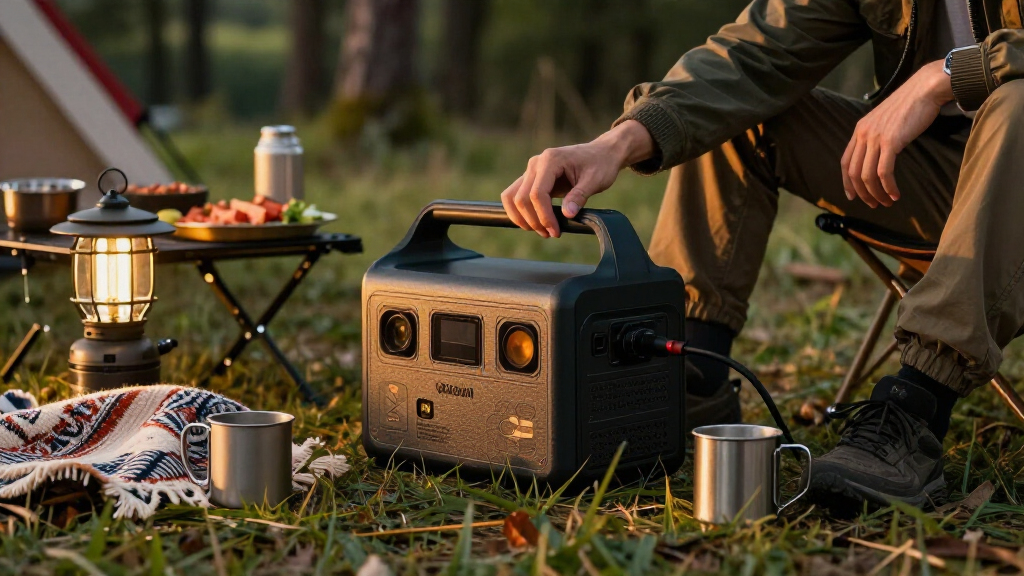
Portable power stations for camping range from palm-sized battery banks that top off a phone to 1,100Wh units that run a mini-fridge all weekend, and the biggest mistake campers make is buying the wrong size for their trip style. My top pick, the BLUETTI AC180, wins on capacity-to-price balance with 1,152Wh of LiFePO4 storage and 1,800W of output, while the Jackery Explorer 1000 v2 edges it out for weekend car campers who prioritize a lighter pack. If you only need lights, a fan, and device charging, the Anker SOLIX C300 keeps things compact and affordable. The core tradeoffs in this category are weight versus capacity, battery chemistry longevity, and whether a solar panel is bundled or sold separately. Keep reading for the full breakdown of all 14 models.

Get backup power and energy gear delivered free with Prime
- Fast, free delivery on millions of items
- Prime Video, Amazon Music and more included
- Member-only deals all year
Complete the kit


Key Takeaways
- The 1,000Wh class (BLUETTI AC180, Elite 100 V2, Jackery Explorer 1000 v2, and the 1000W LiFePO4 unit) offers the best cost-per-watt-hour for campers who stay out 2+ nights, roughly halving the price-per-unit of energy compared to sub-300Wh models.
- Bundled solar panel kits (the 300W generator with 60W panel, ALLWEI, GRECELL) are convenient but the included panels are often underpowered — a 60W panel needs nearly ideal sun for most of the day to meaningfully recharge a 250Wh+ station.
- Sub-100Wh options like the Daran 89.6Wh power bank face no airline restrictions and weigh almost nothing, but they lack the AC runtime to justify carrying a second device on longer trips.
- LiFePO4 chemistry now dominates this lineup (11 of 14 models), which means 2,000+ charge cycles — the older-style units without it should only be bought at a steep discount.
- Output wattage ratings are misleading without context: a 300W station cannot run a 600W blender no matter its battery size, so match surge ratings to your actual appliances before matching capacity to your trip length.


| portable power stations for camping | Capacity | Battery Type | Weight | Ports |
|---|---|---|---|---|
| BLUETTI Elite 100 V2 Portable | 1024Wh | LiFePO4 | 25 lbs | 11 |
| Jackery Explorer 1000 v2 Porta | 1070Wh | LFP | 23.8 lbs | 2 USB-C, 1 USB-A, 1 DC car port, 3 AC |
| BLUETTI Elite 30 V2 Portable P | 288Wh | — | 9.4 lbs | — |
| Portable Solar Generator 300W | — | — | — | — |
| GRECELL Portable Power Station | 230.88Wh | — | — | — |
| 1000W Portable Power Station 1 | 1024Wh | LiFePO4, 3000+ cycles | 27.73 lbs | 2×110V AC, 1×60W PD USB-C, 2×USB-A |
| DaranEner Portable Power Stati | 192Wh | LiFePO4, 3500+ cycles | 5.73 lbs | 2 AC, 1×60W USB-C PD, 2×18W USB-A QC3.0, 12V DC |
| Daran Portable Power Station 8 | 89.6Wh | LiFePO4, 3500+ cycles | 2.54 lbs | 2 AC, 2 USB-C, 2 USB-A, DC5521 |
| Anker SOLIX C300 Portable Powe | 288Wh | LiFePO4, 3000 cycles | — | 3 AC, 1 car socket, 3 USB-C, 1 USB-A |
| HOWEASY Portable Power Station | 88Wh | — | 2.3 lbs | 8 outputs including AC, USB-C, QC USB-A, DC |
| BLUETTI AC180 Portable Power S | — | LiFePO4 | — | — |
| Portable Power Station 600W | 299Wh | — | 6.8 lbs | 2×120V AC, 1×140W USB-C PD, 2×USB-A QC3.0, 1×12V car port, 1×DC port |
| Librids Portable Power Station | 640Wh | LiFePO4 | — | — |
| ALLWEI Portable Power Station | 256Wh | LiFePO4 | 6.4 lbs | — |
More Details on Our Top Picks
BLUETTI Elite 100 V2 Portable Power Station for Camping 1024Wh 1800W
Of everything in this roundup, the BLUETTI Elite 100 V2 hits the sweet spot between capacity, portability, and speed for real camping trips. Its 1024Wh capacity paired with 1800W of AC output means it can run an electric kettle, a portable fridge, or a coffee maker without breaking a sweat — something the smaller BLUETTI Elite 30 V2 or GRECELL 330W simply can’t attempt. The standout feature is the 70-minute full recharge, which changes how you plan a trip: top it off at home or from the car between campsites rather than planning charging days in advance. Compared with the Jackery Explorer 1000 v2, it offers slightly more continuous output and a Power Lifting mode up to 2700W, though at 25 lbs it’s a pound heavier and neither is fun to carry far from the car.
Pros:- 1024Wh capacity with 1800W output runs most camping appliances
- 70-minute full recharge is among the fastest in its class
- LiFePO4 battery rated for 4000+ cycles means years of seasonal use
- 11 ports plus smart app control covers every device a campsite needs
Cons:- At 25 lbs it’s heavier than compact options like the Anker SOLIX C300
- Higher capacity means a higher price than sub-300Wh alternatives
Best for: Campers and overlanders who want to run real appliances like fridges, kettles, or CPAP machines for a full weekend without generator noise
Not ideal for: Backpackers and weight-conscious hikers — 25 lbs is car-camping territory, not trail gear
- Capacity:1024Wh
- AC Output:1800W (2700W Power Lifting)
- Battery Type:LiFePO4
- Recharge Time:70 minutes
- Weight:25 lbs
- Ports:11
- Battery Lifespan:4000+ cycles
Our verdict“If you can only buy one power station for car camping and want it to last a decade, this is the one to get.”
Jackery Explorer 1000 v2 Portable Power Station, 1070Wh, 1500W
The Jackery Explorer 1000 v2 goes toe-to-toe with the BLUETTI Elite 100 V2 as a full-size camping power station, and in a few places it edges ahead. Its 3000W surge peak handles startup spikes from things like mini-compressors more comfortably, and its USB-C PD 100W ports charge modern laptops at full speed — a genuine advantage for remote-work campers. The LFP battery rated for 4000 cycles translates to over a decade of typical seasonal use. Where it frustrates: there’s no solar panel in the box, and it only plays nicely with Jackery’s own panels, which locks you into that ecosystem. The super-fast charge mode also requires app activation, an unnecessary hoop compared with BLUETTI’s plug-and-play approach.
Pros:- 1070Wh capacity with 3000W surge peak handles demanding device startups
- One-hour fast charging minimizes downtime between campsites
- LFP battery rated for 4000 cycles and 10+ years of use
- USB-C PD 100W charging for full-speed laptop power
Cons:- Solar panel sold separately and only Jackery panels are compatible
- Super fast charge mode must be activated through the app
Best for: Tech-forward campers and van lifers who already own or plan to buy Jackery solar panels and want app-managed power
Not ideal for: Buyers on a budget or anyone wanting to mix and match third-party solar panels — the closed ecosystem adds cost
- Capacity:1070Wh
- AC Output:1500W (3000W surge)
- Battery Type:LFP
- Recharge Time:1 hour
- Weight:23.8 lbs
- Charge Cycles:4000
- Ports:2 USB-C, 1 USB-A, 1 DC car port, 3 AC
Our verdict“A polished, long-lasting power station for Jackery ecosystem buyers, though the BLUETTI Elite 100 V2 offers more output for less hassle.”
BLUETTI Elite 30 V2 Portable Power Station 288Wh 600W LFP Solar Generator
The BLUETTI Elite 30 V2 occupies a smart middle ground between the tiny Daran 89.6Wh power bank and the full-size Elite 100 V2. At 9.4 lbs, it’s genuinely carryable to a tent pad or picnic table, yet its 600W continuous output (1500W surge) can briefly start small inductive devices the GRECELL 330W would refuse. The 0-80% charge in 45 minutes is remarkably fast for this class, and the UPS function means it can double as home backup for a router or CPAP between trips. The tradeoff is baked into the 288Wh capacity: this is a phone-and-laptop-and-lights station for a couple of nights, not a fridge-and-blender station. Campers wanting multi-day appliance power should step up to the Elite 100 V2.
Pros:- 9.4 lbs weight makes it easy to carry from car to campsite
- 1500W surge mode starts devices most 300W units can’t
- 0-80% recharge in 45 minutes
- UPS function adds home-backup value between camping trips
Cons:- 288Wh capacity limits runtime for anything beyond small electronics
- Priced above basic entry-level stations like the ALLWEI 300W
Best for: Couples or solo campers who need laptop, phone, camera, and CPAP power for one to two nights and value light packing
Not ideal for: Families or anyone running a 12V fridge for a long weekend — 288Wh runs out fast under sustained loads
- Capacity:288Wh
- Continuous Power:600W
- Surge Power:1500W
- Weight:9.4 lbs
- Fast Wall Charge:380W (0-80% in 45 min)
- Charging Modes:AC wall, solar, car
- UPS Function:Yes
Our verdict“The right size for short trips where every pound matters but you still want fast charging and brand reliability.”
Portable Solar Generator 300W with 60W Solar Panel
Most power stations in this roundup ship without a solar panel, which is exactly why this 300W generator bundle stands out: the 60W foldable monocrystalline panel is included, giving you a genuine off-grid charging loop out of the box. The Jackery Explorer 1000 v2, by contrast, requires you to buy Jackery’s proprietary panels separately — a real cost multiplier. Here, a full day of decent sun adds meaningful charge back into the battery, extending a trip indefinitely for light loads. The compromises are honest ones: 300W caps you at small electronics and LED lighting, output drops in clouds or shade, and the junction box isn’t waterproof, so the panel needs to come inside when weather turns. Still, for the price of a bare station elsewhere, you get the complete solar kit.
Pros:- 60W foldable solar panel included in the box
- Multiple charging paths: AC, solar, and car
- Full BMS protection suite with cooling system
- SOS flashlight adds emergency utility
Cons:- Solar performance drops sharply in low-light conditions
- Junction box is not waterproof and needs dry storage
- 300W ceiling excludes most real appliances
Best for: Budget-conscious campers who want to start solar charging immediately without buying panels separately
Not ideal for: Anyone planning to run appliances over 300W or expecting consistent charging in cloudy, forested campsites
- Power Output:300W
- Solar Panel:60W foldable monocrystalline (included)
- Conversion Efficiency:20.5%
- Charging Ports:2 AC, 1 DC, 3 USB, 1 quick-charge USB
- Charging Methods:AC, solar, car
- Protection Features:Short circuit, over-current, over-voltage, overload, overheating
- Extras:SOS flashlight, BMS, cooling system
Our verdict“The cheapest way to get a complete solar generator setup for light-duty camping, as long as you accept its power limits.”
GRECELL Portable Power Station 330W, 230.88Wh Solar Generator
The GRECELL 330W competes directly with the BLUETTI Elite 30 V2 and Anker SOLIX C300, and its pitch is simple: decent specs at a noticeably lower price. You get 230.88Wh of capacity, a pure sine wave inverter that’s safe for sensitive electronics like laptops and camera chargers, and a 60W USB-C PD port that keeps modern devices topped up without an AC brick. The dual silent fans are quieter than many rivals at full load. But savings show up in the details — no panel is included (unlike the 300W solar bundle), capacity is the smallest of the mid-size picks here, and solar charging requires buying a compatible panel to get the MPPT benefit. It’s the pick when the budget is fixed and the mission is phones, lights, and one laptop.
Pros:- Pure sine wave output protects sensitive laptops and cameras
- 60W USB-C PD and 18W USB-A fast charging built in
- Dual silent fans keep noise down at camp
- Charges via AC, solar, or car with MPPT support
Cons:- 230.88Wh is the smallest capacity among mid-size picks here
- Solar panel not included and must be compatible for best results
Best for: First-time buyers or occasional car campers who want safe, quiet power for phones, lights, and a laptop at the lowest cost
Not ideal for: Campers who eventually want solar self-sufficiency or need to run anything above 330W — they’ll outgrow it quickly
- Capacity:230.88Wh
- Power Output:330W (600W surge)
- Inverter Type:Pure sine wave
- USB-C PD:60W
- USB-A QC:18W
- Charging Methods:AC, solar (MPPT), car
- Cooling:Dual silent fans
Our verdict“The most sensible entry point if you want reliable small-device power without paying for capacity you won’t use.”
1000W Portable Power Station 1024Wh LiFePO4 for Outdoor & Home
Most sub-$300 power stations top out around 300Wh, so finding a 1024Wh capacity with a 1000W inverter at this price point is genuinely unusual. This model stands out for running the things smaller units simply can’t: a portable fridge for a full weekend, a coffee maker, or an electric blanket on a cold night. Compared with the DaranEner 192Wh, it holds roughly five times the energy and triples the output ceiling, which is the difference between charging phones and actually living off-grid. The LiFePO4 chemistry rated for 3000+ cycles means it will survive years of seasonal use, unlike cheaper lithium-ion options such as the HOWEASY. The tradeoff is weight: at 27.73 lbs, this is a car-camping unit, not something you carry to a lakeside site. Solar input caps at 300W, so full off-grid recharges take patience unless the sky cooperates.
Pros:- 1024Wh capacity runs fridges and small appliances for a full weekend
- 1000W output handles devices most compact units can’t start
- LiFePO4 battery rated for 3000+ cycles of long-term reliability
- Solar input up to 300W for genuine off-grid recharging
Cons:- 27.73 lbs is heavy for anything beyond car camping
- 300W solar cap makes cloudy-day recharges slow
- Brand lacks the track record and app support of Anker or Jackery
Best for: Car campers and overlanders who want weekend-long power for a 12V fridge, lights, and laptops without paying premium-brand prices
Not ideal for: Backpackers and anyone who moves camp on foot — at nearly 28 lbs, it belongs in the trunk, not a pack
- Power Output:1000W continuous
- Capacity:1024Wh
- Battery Type:LiFePO4, 3000+ cycles
- Ports:2×110V AC, 1×60W PD USB-C, 2×USB-A
- Solar Input:Up to 300W
- Weight:27.73 lbs
Our verdict“The cheapest way in this roundup to get true weekend-capacity power, provided you never have to carry it far.”
DaranEner Portable Power Station, 192Wh LiFePO4 with 2×300W AC Outlets
This is the sweet spot for campers who need more than phone charging but less than appliance power. At 192Wh with a 300W inverter, it sits neatly between the tiny HOWEASY 88Wh — which can’t run a small fan or speaker setup for long — and the heavy 1024Wh units that are overkill for a one-night trip. The 5.73 lb weight makes it realistic to carry from car to tent, and the dual 300W AC outlets let a laptop and a lamp run at once. The 3500+ cycle LiFePO4 battery outlasts most batteries in this price bracket. Tradeoffs are real: no cable for solar or car charging comes in the box, and the 60W solar input ceiling means an off-grid recharge takes most of a day. For grid-adjacent camping, though, that rarely matters.
Pros:- 192Wh capacity comfortably covers a weekend of device charging
- Two 300W AC outlets allow simultaneous larger loads
- LiFePO4 chemistry rated for 3500+ cycles
- Lightweight 5.73 lb build with built-in LED flashlight
Cons:- 300W output ceiling rules out most kitchen appliances
- Solar and car charging cables sold separately
- 60W max solar input makes off-grid recharges slow
Best for: Weekend tent campers who want laptop and camera charging plus a lamp or fan for two nights without hauling a 25-lb unit
Not ideal for: Anyone running appliances above 300W — no blenders, kettles, or hair dryers, and the missing cables add surprise costs
- Capacity:192Wh
- Output:2×300W AC (600W peak)
- Battery Type:LiFePO4, 3500+ cycles
- Ports:2 AC, 1×60W USB-C PD, 2×18W USB-A QC3.0, 12V DC
- Charging Input:AC (100W), solar (60W), car charger
- Weight:5.73 lbs
Our verdict“The most sensible capacity-to-weight ratio here for short trips, as long as your gear stays under 300W.”
Daran Portable Power Station 89.6Wh LiFePO4 100W Power Bank
At 2.54 lbs and roughly the size of a large water bottle, this is the unit for campers who walk to their site. Its role in this lineup is simple: it does what the HOWEASY 88Wh does — phones, headlamps, a small camera battery — but with a better port selection, including two USB-C ports and a PD-capable input, so the power bank itself recharges fast from a wall. Compared with the Anker SOLIX C300, it gives up three-quarters of the capacity but costs and weighs far less, which is the right call if your trip is one night rather than three. The 100W AC outlets will run a fan or charge a laptop slowly, but nothing beyond that — and the 89.6Wh capacity means a full-size laptop gets maybe one and a half charges. Its silent operation makes it a good tent companion.
Pros:- Genuinely packable at 2.54 lbs and 6.5 inches tall
- Seven ports including two AC and dual USB-C
- Recharges via wall, USB-C PD, car, or solar
- 3500+ cycle LiFePO4 battery with 12 safety protections
Cons:- 89.6Wh capacity is exhausted quickly by laptops
- 100W output ceiling is restrictive even for small appliances
- Solar panel not included
Best for: Hikers, kayak campers, and minimalist overnighters who need device top-ups and one AC outlet without weight penalty
Not ideal for: Anyone charging a laptop multiple times or running anything over 100W — the capacity disappears fast under real loads
- Capacity:89.6Wh
- Output:100W (200W peak)
- Battery Type:LiFePO4, 3500+ cycles
- Ports:2 AC, 2 USB-C, 2 USB-A, DC5521
- Charging Methods:AC wall, USB-C PD, car, solar
- Weight:2.54 lbs
Our verdict“The best pick here for powered camping where every ounce counts, as long as your needs stop at devices and small accessories.”
Anker SOLIX C300 Portable Power Station, 288Wh
If the DaranEner 192Wh is the value play, the Anker SOLIX C300 is the refinement play: 50% more capacity, a shockingly fast 80% recharge in 50 minutes, and a brand with real warranty and app support behind it. That recharge speed changes behavior — you can top up between trips in the time it takes to unpack the car, while the DaranEner takes hours. The port spread is the best in this size class anywhere in the roundup, including three AC outlets and dual USB-C. It runs at 25dB, quiet enough for tent-adjacent use. The catches: the shoulder strap costs extra, the 300W ceiling matches cheaper units rather than exceeding them, and solar compatibility is limited to specific panels — annoyingly, not including Anker’s own SOLIX PS30. You’re paying for polish, not raw watt-hours.
Pros:- 80% recharge in 50 minutes is class-leading for this capacity
- Seven ports including three AC outlets and dual USB-C
- 25dB operation is quiet enough for sleeping near
- Anker brand support and 3000-cycle LiFePO4 warranty backing
Cons:- Priced above competitors with equal 300W output
- Shoulder strap sold separately
- Solar compatibility excludes some panels, including Anker’s own PS30
Best for: Campers who value fast turnaround between trips, polished build quality, and broad port coverage in a carry-friendly 288Wh package
Not ideal for: Buyers maximizing capacity per dollar — cheaper units here deliver similar watt-hours and wattage for noticeably less money
- Capacity:288Wh
- Power Output:300W (600W surge)
- Battery Type:LiFePO4, 3000 cycles
- Ports:3 AC, 1 car socket, 3 USB-C, 1 USB-A
- Recharge Speed:80% in 50 minutes
- Noise Level:25dB
Our verdict“The most complete mid-size option here for buyers willing to pay a premium for speed and reliability over raw value.”
HOWEASY Portable Power Station, 120W (240W Peak) Solar Generator
At 2.3 lbs with a hidden carry handle, the HOWEASY is the lightest powered option in this roundup, and its price undercuts everything else here. Its role is emergency and casual use: keeping phones, headlamps, and a small speaker alive for a night or two. Compared with the Daran 89.6Wh, it matches the weight class but offers more port variety — eight outputs — while sacrificing battery longevity, with a 1500-cycle rating versus 3500+ for the LiFePO4 units. That shorter lifespan is the honest cost of the low price. The 88Wh capacity won’t meaningfully charge a laptop, and the 120W ceiling limits AC use to genuinely small devices. The built-in LED light with SOS mode is a nice touch for tent interiors or roadside emergencies. This makes the most sense for buyers trying power stations for the first time without commitment.
Pros:- Lowest price and lightest weight in the roundup at 2.3 lbs
- Eight output ports cover phones, tablets, and small AC devices
- Recharges via AC, solar, or car socket
- Built-in LED with steady, flash, and SOS modes
Cons:- 1500-cycle battery life falls well short of LiFePO4 competitors
- 88Wh capacity suits only the lightest power needs
- Solar panel not included
Best for: First-time campers and emergency-kit builders who want a cheap, featherweight unit for phones and lights on occasional one-night trips
Not ideal for: Regular campers or anyone charging laptops — 88Wh and 120W run out fast, and the 1500-cycle battery ages quicker than LiFePO4 rivals
- Output Power:120W (240W peak)
- Capacity:88Wh
- Cycle Life:1500+ cycles
- Ports:8 outputs including AC, USB-C, QC USB-A, DC
- Recharging:AC, solar (panel not included), 12V/24V car socket
- Weight:2.3 lbs
Our verdict“A low-risk entry point for light-duty camping power, as long as you accept it’s a starter unit, not a long-term companion.”
BLUETTI AC180 Portable Power Station 1152Wh 1800W LiFePO4 Solar Generator
The AC180 is the brute-force option of this batch. With 1152Wh of capacity and 1800W of output (boostable to 2700W via the app), it can run an electric kettle, a portable fridge, and a laptop simultaneously — something none of the sub-1000Wh units here can manage. Its standout trick is the one-hour AC recharge, which means a quick top-up at a campsite hookup or in the car before the next leg. Compared with the smaller Librids 640Wh, you get nearly double the capacity and triple the running wattage, but you pay for it in weight and price. The 500W solar input cap also lags behind some competing 1000Wh-class stations, so off-grid recharging takes longer than the fast AC numbers suggest.
Pros:- Huge 1152Wh capacity runs multiple appliances for days
- 1-hour full AC recharge is class-leading convenience
- 2700W boost mode handles startup surges from power tools and kitchen gear
- 20ms emergency power response doubles as a capable home backup unit
Cons:- 500W solar input ceiling slows off-grid recharging to nearly 3 hours in ideal sun
- Boosting to 2700W requires using the companion app, which frustrates offline users
- Heavy and bulky relative to the rest of this lineup
Best for: Campers running real appliances — fridges, hot plates, or CPAP machines — for a full weekend without recharging
Not ideal for: Backpackers or car campers watching pack weight — this is a lug-it-to-the-site unit, not something you toss in a daypack
- Battery Capacity:1152Wh
- Battery Type:LiFePO4
- Charge Time (AC):1 hour
- Output Power:1800W (2700W boosted)
- Solar Input:500W
- Charging Time (Solar):2.8–3.3 hours
- Emergency Power Response:20 ms
Our verdict“If your campsite needs genuine appliance-grade power and you can live with the weight, this is the muscle pick of the batch.”
Portable Power Station 600W (1200W Surge), 299Wh Camping Power Station with 2 AC Outlets, 140W USB-C Fast Charging
At 6.8 lbs, this no-name 299Wh unit is the lightest full-featured option in this group, and it earns its spot on price-per-ounce alone. The 140W USB-C PD port is the real headline — it can recharge the unit itself or fast-charge a modern laptop from either side, a flexibility the ALLWEI 300W (with only 60W PD) can’t match. The pure sine wave inverter keeps sensitive electronics safe, which matters if you’re charging camera gear or a drone battery. The obvious ceiling is capacity: 299Wh runs a laptop for several recharges or a string of lights all night, but a 600W limit rules out anything with a heating element. Unlike the Librids, it also needs an external panel you buy separately for solar duty.
Pros:- 6.8 lb weight is the easiest to carry of any full-size option here
- 140W USB-C PD handles both input and output for fast laptop charging
- Pure sine wave output protects sensitive electronics
- Seven ports let a whole campsite’s devices charge at once
Cons:- 299Wh capacity caps realistic use to a single overnight trip
- Solar charging requires buying a separate, compatible panel
- Generic brand means weaker warranty support than BLUETTI or ALLWEI
Best for: Weight-conscious car campers and solo travelers who mainly charge laptops, phones, cameras, and LED lighting
Not ideal for: Anyone planning to run a 12V fridge, fan, or any heating appliance — the 299Wh capacity drains fast under real loads
- Power Output:600W (1200W surge)
- Capacity:299Wh
- Weight:6.8 lbs
- Ports:2×120V AC, 1×140W USB-C PD, 2×USB-A QC3.0, 1×12V car port, 1×DC port
- Inverter Type:Pure sine wave
- Built-in Light:2W LED with Steady/Strobe/SOS modes
Our verdict“The cheapest way to carry sine-wave AC power and modern USB-C charging under seven pounds — just don’t expect it to run anything that makes heat.”
Librids Portable Power Station 640Wh, 1200W Surge, Solar Generator with 4 AC Outlets
The Librids 640Wh stakes its claim on outlet count: four AC sockets means no arguing over who plugs in first at a shared campsite, something the two-outlet 299Wh unit above can’t offer. Its 1.5-hour recharge is quick for this capacity class, and the LiFePO4 chemistry rated for 4000+ cycles with a 5-year warranty gives it the strongest longevity story in this batch — most rivals here spec 3000 cycles or fewer. The catch is odd for a camping roundup: the safety documentation flags it for indoor, dry-environment use, which makes it better suited to RV interiors, cabin trips, and home backup than open-air sites where dew or drizzle is a possibility. Compared with the BLUETTI AC180, you give up roughly half the capacity but gain a much lighter, cheaper package.
Pros:- Four AC outlets let a group charge laptops, fans, and lights simultaneously
- 4000+ cycle LiFePO4 battery with a 5-year warranty leads this batch on longevity
- 1.5-hour full recharge minimizes downtime between trips
- Pure sine wave inverter is safe for laptops and camera gear
Cons:- Indoor/dry-environment use rating limits genuine outdoor versatility
- 640Wh capacity sits awkwardly between light and heavy-duty use cases
- Heavier than the 299Wh compact alternatives despite middling capacity
Best for: RV families and cabin campers who need four devices on AC power simultaneously and want a battery that outlasts the trip by years
Not ideal for: Tent campers and anyone expecting wet-weather durability — the indoor-only safety rating is a real limitation at exposed sites
- Capacity:640Wh
- Surge Power:1200W
- Charging Time:1.5 hours
- Output Ports:4 AC outlets, USB ports
- Battery Type:LiFePO4
- Battery Cycles:4000+
- Warranty:5 years
Our verdict“A battery built to last a decade of trips — best kept inside the RV or cabin rather than exposed at a tent site.”
ALLWEI Portable Power Station 300W, 256Wh Solar Generator LiFePO4 Battery
What separates the ALLWEI 300W is its dual recharging mode: it can accept AC wall power and solar input at the same time, cutting downtime when you’re topping up between stops. Add 12V car charging and you have three independent ways to refill the 256Wh tank. Compared with the 299Wh generic unit, you trade away USB-C speed (60W vs 140W) and one AC outlet, but you gain a 3000-cycle LiFePO4 battery from an established brand and a genuinely compact 9.25-inch footprint that slides into a trunk organizer. The 300W continuous ceiling is the honest limitation — think phones, headlamps, drones, and a small fan, not blenders or heaters. For weekend base-camp charging duty, the flexibility-per-dollar ratio is hard to beat.
Pros:- Dual AC + solar charging simultaneously speeds up recharging
- 3000-cycle LiFePO4 battery from a recognizable brand
- Three recharging methods including 12V car socket
- Compact 9.25-inch footprint stores easily in a vehicle
Cons:- 300W continuous power rules out most appliances beyond small electronics
- 6.4 lbs is heavy relative to its modest 256Wh capacity
- 60W USB-C is slow by current fast-charging standards
Best for: Weekend car campers who want multiple ways to recharge — wall, car, and solar simultaneously — on a modest budget
Not ideal for: Power users with high-draw devices — 300W continuous output won’t run kettles, hot plates, or most fridges
- Capacity:256Wh
- Continuous Power:300W (600W peak)
- Battery Type:LiFePO4
- Charge Cycles:3000
- Weight:6.4 lbs
- Dimensions:9.25×5×6.81 inches
- Output Ports:1 AC, 2 DC5521, 1 car socket, 1 USB-A 18W, 1 USB-C PD 60W
- Recharging Methods:AC wall, 12V car, solar, dual (AC + solar)
Our verdict“The most recharge-anywhere small station in this batch — pick it for charging flexibility, not raw power.”
How We Picked
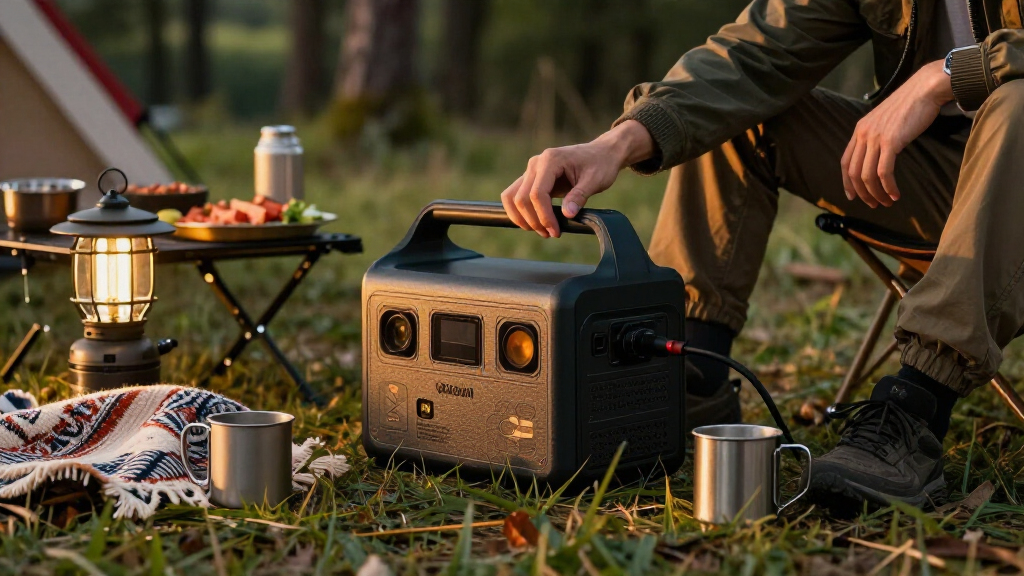
I evaluated each model against four camping-specific criteria: usable capacity per pound, realistic recharge time (including solar input limits), portability for car camping versus backpacking scenarios, and value over the battery’s lifespan based on chemistry and cycle ratings. A station that costs less upfront but uses older battery chemistry often loses financially after two or three seasons of regular use, so LiFePO4 models earned a durability bonus in my ranking.
I also weighted practical details that spec sheets bury: number and type of AC outlets, whether the USB-C port supports fast charging at 100W or higher, pass-through charging behavior, and whether a solar panel is included or a hidden extra cost. Models were then grouped into capacity classes and ranked within them, because comparing an 89.6Wh power bank against a 1,152Wh solar generator would be meaningless — they solve entirely different camping problems.
| portable power stations for camping | Battery Type |
|---|---|
| BLUETTI Elite 100 V2 Portable | LiFePO4 |
| Jackery Explorer 1000 v2 Porta | LFP |
| BLUETTI Elite 30 V2 Portable P | — |
| Portable Solar Generator 300W | — |
| GRECELL Portable Power Station | — |
| 1000W Portable Power Station 1 | LiFePO4, 3000+ cycles |
| DaranEner Portable Power Stati | LiFePO4, 3500+ cycles |
| Daran Portable Power Station 8 | LiFePO4, 3500+ cycles |
| Anker SOLIX C300 Portable Powe | LiFePO4, 3000 cycles |
| HOWEASY Portable Power Station | — |
| BLUETTI AC180 Portable Power S | LiFePO4 |
| Portable Power Station 600W | — |
| Librids Portable Power Station | LiFePO4 |
| ALLWEI Portable Power Station | LiFePO4 |
Factors to Consider When Choosing Portable Power Stations For Camping
Before settling on a specific model, it helps to understand how capacity, output, and recharge behavior interact on a real campsite. These are the factors that separate a purchase you’ll use for years from one that ends up in a closet.Calculate Your Real Capacity Needs, Not the Marketing Number
The most common mistake is buying capacity you’ll never use — or drastically underestimating it. A phone charge costs about 15Wh, running a 12V camping fridge for 24 hours costs 400–600Wh, and a CPAP machine overnight runs 300–500Wh depending on humidity settings. Write down what you’ll actually plug in, multiply each device’s wattage by the hours you’ll run it, and add a 20% buffer for inverter losses. That number, not the sticker capacity, tells you which size class to shop in. Remember too that you rarely drain a station to zero, since most manufacturers recommend stopping at 10–20% to protect cycle life, so usable capacity is roughly 80–90% of the advertised figure.
Battery Chemistry Determines How Many Summers You’ll Get
LiFePO4 batteries deliver 2,000–4,000 charge cycles before degrading to 80% capacity, while older NMC chemistry typically manages 500–800. For a camper who recharges their station monthly from April through October, that difference is roughly five years versus fifteen. LiFePO4 also handles heat better, which matters when a station sits in a hot car trunk between trips. The tradeoff is weight: LiFePO4 stores less energy per pound, which is why the ultra-compact models in this roundup still sometimes use other chemistries. If you camp fewer than three times per year, the chemistry premium matters less than if you’re out every month.
Continuous Output and Surge Ratings Gate Your Appliances
Capacity determines how long you can run devices; output wattage determines whether they’ll turn on at all. Anything with a motor or compressor — blenders, portable air conditioners, some coffee makers — can draw two to three times its rated wattage at startup. A station rated 300W continuous with 600W surge will refuse a 700W microwave outright. Check the surge rating on any model you’re considering and match it against your most demanding appliance, not your average one. Also check inverter type: pure sine wave output is necessary for sensitive electronics, while some budget units use modified sine wave, which can cause fans and motors to buzz or run hot.
Solar Recharging Is Slower Than You Expect
A 60W solar panel rarely produces 60W — real-world output averages 50–70% of the rating due to angle, clouds, and heat derating. That means a bundled 60W panel might take six or more hours of good sun to refill a 256Wh station, and far longer for anything in the 1,000Wh class. If solar is your primary recharge strategy on multi-day trips, prioritize models with high solar input limits (200W+) and buy panels accordingly, even if a smaller panel comes in the box. Position matters more than people expect: re-angling a panel every couple of hours can double daily harvest compared to laying it flat all day.
Weight and Portability: Match the Station to Your Camping Style
Car campers can haul a 35-pound 1,100Wh station without complaint, but anyone carrying gear more than a few hundred feet from the vehicle will regret it. As a rough guide, sub-300Wh stations weigh 5–8 pounds and suit short trips and light loads, while 1,000Wh+ units cross 25 pounds and demand wheels or a dedicated trunk spot. A common compromise is pairing a small station with occasional vehicle charging between campsites. Also consider handle design and shape — a compact brick with a sturdy top handle packs far better than an awkwardly proportioned unit with side rails.
Ports, Pass-Through Charging, and Small Details That Matter at Camp
At minimum, look for a 100W+ USB-C port, since modern laptops, drones, and cameras charge fastest over USB-C PD — using an AC outlet for these wastes battery through inverter losses. Pass-through charging (running devices while the station itself recharges from solar) turns a power station into a small grid hub, and not all budget models support it safely. A built-in light is more useful than it sounds for late-night tent organization. Finally, check the display: models showing percentage remaining and input/output watts in real time make it far easier to manage consumption than those with only four vague battery bars.
Frequently Asked Questions
Is a 300Wh power station enough for a weekend camping trip?
For most weekend campers charging phones, cameras, headlamps, and running a small fan or string lights, 300Wh is genuinely sufficient and saves you 15+ pounds of weight and a lot of money. It falls short once you add anything with a heating element or compressor — an electric kettle alone can drain a 300Wh station in under 30 minutes of use, and a 12V fridge would exhaust it in roughly half a day. If your trip includes coffee from an electric maker or medical devices like a CPAP, step up to the 1,000Wh class. A good middle path is the 600Wh tier, which covers CPAP users and casual appliance use without the weight penalty of the biggest units.
Should I buy a power station with a bundled solar panel or purchase them separately?
Bundles make sense when the included panel’s wattage is proportionate to the station’s capacity — a 100W+ panel paired with a 250–300Wh station is a workable combo. The problem in this roundup is that several bundles pair 60W panels with stations that would need a full sunny day or more to recharge, which frustrates campers expecting off-grid independence. Buying separately usually gets you a better panel for similar total money, since bundled panels are often the manufacturer’s cheapest offering. If you already own a panel from a previous setup, definitely buy the station alone — just verify connector compatibility, since Anker, BLUETTI, and Jackery each use different solar input plugs.
How many years will a LiFePO4 power station realistically last?
LiFePO4 chemistry is rated for 2,000–4,000 full charge cycles before capacity drops to about 80%, which translates to well over a decade for a typical seasonal camper charging the unit 20–40 times per year. The battery will likely outlast the electronics around it — inverters, ports, and displays are the more common failure points after 5–7 years. To maximize lifespan, store the station at 50–70% charge rather than empty or full, and avoid leaving it in a hot vehicle for extended periods. This longevity is why I gave LiFePO4 models a ranking advantage: a cheaper NMC unit that needs replacement in four years often costs more per year of use than a pricier LiFePO4 station.
Can I take a portable power station on a plane or is it only for car camping?
Airlines cap lithium batteries at 100Wh for carry-on without airline approval, which means only the smallest units — like the Daran 89.6Wh model in this roundup — qualify for flights, and that’s exactly why sub-100Wh stations exist. Anything from 100Wh to 160Wh requires airline approval, and stations above 160Wh are prohibited on passenger aircraft entirely. For ground travel there are no restrictions, though you should keep stations out of direct sun in a parked car since extreme heat degrades batteries and can trigger safety cutoffs. If your camping involves flying to a destination and buying gear on arrival, the practical answer is a sub-100Wh unit for the flight and renting or borrowing something larger locally.
Is pass-through charging safe, and do I need it?
Pass-through charging — running devices off the station while solar or wall power recharges it — is safe on any modern station that explicitly supports it, and most LiFePO4 models in this roundup do. It matters most for solar campers: without pass-through, you have to choose between charging the station and using it, which means your panel sits idle while you drain the battery during the day. With it, solar flows straight through to your devices and the battery tops up with the surplus. Check the manual rather than assuming, because a few budget models disable AC output during recharge or warn against it. If your camping style is recharge-at-home-then-discharge, pass-through is a nice-to-have rather than a need.
Conclusion
The right pick depends on how you camp. For the best overall, the BLUETTI AC180 delivers the most usable capacity, output headroom, and cycle life for the money — it’s the model that handles weekend trips, power outages at home, and ambitious off-grid setups without feeling overbuilt. The best value is the GRECELL 330W or the ALLWEI 300W, which cover the essential charging-and-lights mission at a fraction of the big units’ cost. Best premium goes to the Jackery Explorer 1000 v2, whose fast charging and refined app control justify the price for frequent campers who want polish, while the BLUETTI Elite 100 V2 is the strongest middle-weight for buyers who want near-flagship capacity in a more portable shell.
If you’re new to powered camping, start with the DaranEner 192Wh or the Anker SOLIX C300 — cheap enough to be a low-risk experiment, capable enough to teach you what you actually use. For specific needs: CPAP users and fridge-runners should target the Librids 640Wh or step up to the 1,000Wh class, multi-outlet households will appreciate the Librids’ four AC plugs, and ultra-light travelers get everything they need from the Daran 89.6Wh power bank. Whatever you choose, size for the trips you actually take, not the ones you imagine — your back and your budget will thank you.
Columbus Day / Indigenous Peoples' Day Picks
long weekend sales
As an affiliate, we earn on qualifying purchases.