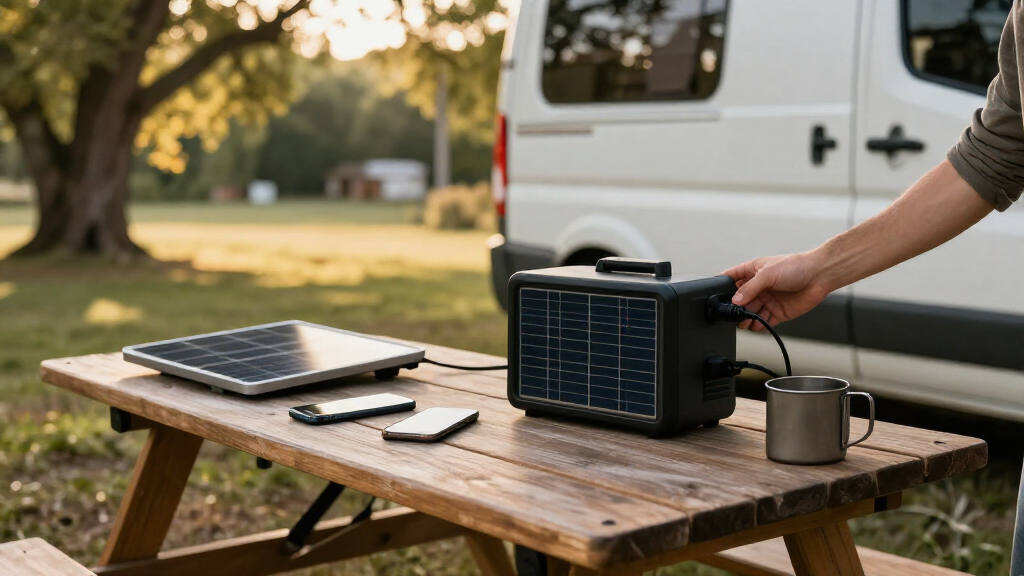

Among these solar battery chargers, I rank the 30W 12V charger with MPPT controller as best overall for its higher output and charge management, while the Voltset 20W kit is a strong middle ground and the POWOXI 7.5W kit suits simpler maintenance needs. The main tradeoff is between panel output, which can help replenish a battery in better sunlight, and a smaller, easier-to-place unit designed mainly to offset gradual drain. Controller features, weather protection, and how the panel connects to your vehicle also affect everyday usefulness. These products are battery maintainers, not substitutes for a conventional charger when a battery is deeply discharged. Read on for my full comparison, buying criteria, and guidance on choosing the right charger for your vehicle and parking conditions.

Get backup power and energy gear delivered free with Prime
- Fast, free delivery on millions of items
- Prime Video, Amazon Music and more included
- Member-only deals all year
Key Takeaways
- The 30W MPPT model leads on capability: its higher stated output and controller make it the strongest fit here for buyers who want more charging headroom, though panel placement and sunlight still limit results.
- Voltset’s 20W kit sits between power and simplicity: it offers more panel output than the 7.5W and 10W options without making the largest panel the default choice for routine maintenance.
- POWOXI and ECO-WORTHY prioritize modest vehicle maintenance: their lower-output kits are better matched to offsetting slow battery drain than rapidly charging a depleted battery.
- Weather protection is not the same as weatherproof installation: the SUNER POWER model is specifically described as waterproof, but buyers still need to check connector exposure and mounting guidance for any kit.
- Use case matters more than wattage alone: a panel that fits the parking location and can be connected safely may serve better than a higher-output charger left shaded or awkwardly installed.


| solar battery charger | Output voltage | Dimensions | Power | Weight |
|---|---|---|---|---|
| POWOXI 7.5W 12V Solar Battery | 12V | 14.76 × 1.89 × 9.06 in | 7.5W | 2.2 lb |
| ECO-WORTHY 10W 12V Solar Batte | 12V DC | 0.47 × 11 × 10.2 in | 10W | 0.3 kg |
| 30W 12V Solar Battery Charger | — | 7 × 4 × 3 in | — | 2.04 kg |
| SUNAPEX 12V Solar Battery Char | 12V DC | 13.3 × 4.9 × 0.5 in | 1.8W | 1.2 lb |
| Voltset 20W 12V Solar Panel Ba | 12V | 12.68 × 14.96 × 1.65 in | — | — |
| SUNER POWER 12W 12V Waterproof | 12V DC | — | 12W | — |
More Details on Our Top Picks
POWOXI 7.5W 12V Solar Battery Charger and Trickle Maintainer Kit
The POWOXI stands out for giving owners two ways to connect: use the vehicle power outlet or attach the included leads directly to the battery. That flexibility helps when a car’s outlet is unsuitable for charging while parked. Its built-in electrical protections address overcharging, overvoltage, and short circuits, while a two-color LED gives a basic indication of sunlight and charging. Compared with the ECO-WORTHY 10W, this panel has less stated power, so it is better framed as a maintenance aid than a faster option for larger batteries. The tempered-glass panel and ABS+PC frame add a more substantial build, but its 2.2-pound weight is less appealing for buyers prioritizing a lightweight portable unit. The listed 2.4A rating may also be hard to interpret alongside its 7.5W output.
Pros:- Offers vehicle-outlet and direct-to-battery connection options
- Protection system is designed to guard against overcharging, overvoltage, and short circuits
- Tempered-glass panel and ABS+PC frame provide a durable construction
- Two-color LED indicates sunlight reception and charging
Cons:- 7.5W output is suited to maintenance rather than rapid charging
- The stated 2.4A current rating is difficult to reconcile with the listed power
- At 2.2 pounds, it is heavier than the ECO-WORTHY 10W unit
Best for: Vehicle owners who want both a cigarette-lighter connection and direct battery clips for maintaining a parked 12V car, motorcycle, boat, tractor, or ATV.
Not ideal for: Buyers seeking faster charging for a large battery, or anyone who needs an unambiguous current specification before choosing a charger.
- Power:7.5W
- Output voltage:12V
- Listed amperage:2.4A
- Dimensions:14.76 × 1.89 × 9.06 in
- Weight:2.2 lb
- Connections:SAE to cigarette lighter; vehicle outlet or direct battery clips
- Frame material:ABS+PC
- Certifications:CE, RoHS
Our verdict“Choose the POWOXI if connection flexibility and a sturdy panel matter more than maximizing output or minimizing weight.”
ECO-WORTHY 10W 12V Solar Battery Charger Trickle Maintainer Kit for Car
At just 0.3 kg, the ECO-WORTHY is the easiest fit here for someone who wants a simple panel to move between vehicles or store when not in use. Its waterproof design, reverse-polarity protection, and overcharge protection suit outdoor battery maintenance, and the SAE plug or alligator clips keep setup straightforward. The monocrystalline panel is described as working in low light and cloudy conditions, though that should not be read as a promise of strong charging without direct sun. Compared with the POWOXI 7.5W, it offers a little more rated power in a lighter package; the Voltset 20W is a better fit when a higher-output kit and adjustable bracket are priorities. One port and 10W output limit this model to modest maintenance needs.
Pros:- Light 0.3 kg construction is easy to move and store
- Waterproof design supports outdoor use
- Reverse-polarity and overcharge protection are built in
- Can connect using an SAE plug or alligator clips
Cons:- 10W output may maintain large batteries slowly
- Single port does not support simultaneous connections
- The supplied data gives only a 30-day return guarantee
Best for: Drivers who want a lightweight, waterproof maintainer for a parked car, motorcycle, or other 12V vehicle battery and value simple SAE or clip connections.
Not ideal for: Owners of large batteries who need more charging capacity, or buyers who want multiple ports or a higher-output panel.
- Power:10W
- Output voltage:12V DC
- Amperage:0.58A
- Dimensions:0.47 × 11 × 10.2 in
- Weight:0.3 kg
- Connector:SAE
- Ports:1
- Warranty information:30-day return guarantee
Our verdict“Pick the ECO-WORTHY for lightweight, basic vehicle-battery maintenance rather than higher-output charging.”
30W 12V Solar Battery Charger & Maintainer with MPPT Controller
This SOLPERK kit takes a more installation-focused approach than the smaller vehicle-maintenance panels: its 30W monocrystalline panel, MPPT controller, and 360° adjustable bracket give buyers more control over sun exposure. That makes it the strongest output option in this group, ahead of the 20W Voltset and the lower-powered POWOXI, though it remains a 12V system and is not a substitute for a larger charging setup. The controller’s LED indicators help track charging, while tempered glass and a corrosion-resistant aluminum frame suit outdoor mounting. It supports several battery chemistries, including LiFePO4, AGM, GEL, and SLA, which is broader than a basic car-only maintainer. The tradeoff is a more involved setup: performance depends on placement and angle, and its listed dimensions are unusually small for a 30W panel, so buyers should verify fit before planning an installation.
Pros:- Highest stated panel output in this lineup at 30W
- 360° adjustable bracket supports flexible panel positioning
- MPPT controller includes LED charging indicators
- Designed for multiple battery types, including LiFePO4, AGM, SLA, and GEL
Cons:- Limited to 12V battery systems
- Sun exposure and mounting angle affect performance
- Listed dimensions appear unusually small for the stated panel output and merit verification
Best for: Owners of 12V batteries who can mount and angle a panel outdoors and want more output and battery-chemistry flexibility than a compact trickle maintainer provides.
Not ideal for: Buyers needing a charger for systems other than 12V, a portable plug-in maintainer, or a panel that performs well without careful sun placement.
- Maximum power:30W
- Maximum voltage:12V DC
- Number of cells:100
- Controller:MPPT with LED indicators
- Connector:MC4
- Dimensions:7 × 4 × 3 in
- Weight:2.04 kg
- Materials:Monocrystalline silicon, tempered glass
Our verdict“Choose this SOLPERK kit when you can mount a 12V panel for good sun exposure and want more output than the smaller maintainers provide.”
SUNAPEX 12V Solar Battery Charger and Trickle Maintainer
The SUNAPEX is the simplest low-output option in this set: its 1.8W panel is aimed at maintaining a 12V battery, not replenishing a depleted one quickly. Suction cups let it sit on a vehicle window, while the included cigarette-lighter plug and alligator clips give owners two connection routes. That makes it more convenient for a parked vehicle than the installation-oriented SOLPERK 30W, but it cannot match that kit’s output or adjustable mounting. A built-in controller stops charging when the battery is full, and the waterproof design adds practical protection for its intended role. Battery compatibility is listed broadly, including lead-acid and lithium types, but the low power means this is best for modest maintenance under useful sunlight. Buyers wanting more headroom should look to the ECO-WORTHY 10W or Voltset instead.
Pros:- Suction cups allow convenient vehicle-window mounting
- Includes both a cigarette-lighter plug and alligator clips
- Built-in controller stops charging when the battery is full
- Waterproof design suits outdoor vehicle use
Cons:- 1.8W output is very limited compared with the ECO-WORTHY 10W and Voltset 20W
- Weak sunlight can further restrict charging
- Designed for 12V batteries only
Best for: Owners of a parked 12V vehicle who want a low-output maintainer that can attach to a window and connect through an outlet or battery clips.
Not ideal for: Drivers who need meaningful charging after heavy battery drain, regularly have weak sunlight, or want a fixed outdoor panel with greater output.
- Power:1.8W
- Output voltage:12V DC
- Dimensions:13.3 × 4.9 × 0.5 in
- Weight:1.2 lb
- Connections:Cigarette-lighter plug and alligator clips
- Compatible batteries:Sealed lead-acid, lithium, LiFePO4, GEL, AGM, and flooded
- Waterproof:Yes
- Warranty:1 year
Our verdict“Choose the SUNAPEX for simple window-mounted battery maintenance, not for quickly charging a depleted battery.”
Voltset 20W 12V Solar Panel Battery Charger Kit
The Voltset fills the middle ground between small trickle maintainers and the higher-output SOLPERK: its 20W panel adds more capacity than the ECO-WORTHY 10W, while its MPPT controller and adjustable bracket make it better suited to a set outdoor position. Its clearest advantage is broad 12V battery compatibility, including LiFePO4, AGM, gel, flooded, and lithium-ion batteries. An IP67 rating, tempered glass, aluminum construction, and charge-status LEDs support outdoor use and basic monitoring. Compared with the SOLPERK 30W, however, it gives up 10W of panel output; compared with the POWOXI, it is less focused on quick vehicle-outlet setup. The included 10A controller and protection features add useful safeguards, but the 20W panel still has limits for large batteries or substantial energy demands.
Pros:- Supports LiFePO4, AGM, gel, flooded, and lithium-ion batteries
- IP67-rated design is suited to outdoor conditions
- Includes an adjustable bracket and LED charge indicators
- 10A controller includes protection against overcharging, short circuits, and reverse polarity
Cons:- 20W output is below the SOLPERK 30W for buyers seeking greater panel capacity
- Limited to 12V battery systems
- The fixed-panel kit is less convenient for quick window mounting than the SUNAPEX
Best for: Owners maintaining different types of 12V batteries who want an outdoor panel kit with an adjustable bracket, charge indicators, and built-in protection.
Not ideal for: Buyers who need the highest output in this lineup, a compact vehicle-window maintainer, or charging for systems above 12V.
- Model:VS-20W
- Maximum power:20W
- Output voltage:12V
- Maximum voltage:18V
- Controller:10A charge controller
- Battery compatibility:LiFePO4, AGM, gel, flooded, and lithium-ion
- Dimensions:12.68 × 14.96 × 1.65 in
- Temperature range:-40°F to 185°F
Our verdict“Choose the Voltset if battery-type compatibility and an outdoor mounting kit matter more than getting the lineup’s highest panel output.”
SUNER POWER 12W 12V Waterproof Solar Battery Charger and Maintainer
The SUNER POWER 12W is a strong fit for owners who want one maintainer to work across several types of 12V batteries. Its stated support for lead-acid varieties and LiFePO4 gives it broader battery compatibility than a narrowly specified trickle charger, while the MPPT controller and three-stage charging manage power as sunlight changes. Automatic stop-and-resume charging helps maintain a connected battery without continuing to charge it once full. Compared with the POWOXI 7.5W, this model offers more rated power and a wider set of connection options; it is still below the 20W Voltset and 30W charger when higher panel output is the priority. Waterproof construction and eight safety protections suit outdoor vehicle or boat storage, but output remains dependent on available sun. It also serves 12V systems only, so buyers with other battery voltages should skip it.
Pros:- Supports several 12V lead-acid battery types as well as LiFePO4
- MPPT controller and three-stage charging manage charging as sunlight varies
- Automatically stops at full charge and resumes when needed
- Waterproof design, eight safety protections, and three connection options
Cons:- Limited to 12V battery systems
- Charging and maintenance performance depends on available sunlight
- Its 12W output is lower than the listed 20W Voltset and 30W charger
Best for: Owners of cars, boats, or RVs with compatible 12V batteries who want a weather-resistant maintainer that can serve different battery chemistries.
Not ideal for: People maintaining 6V or 24V batteries, or buyers who need greater rated solar output than 12W for demanding charging needs.
- Output voltage:12V DC
- Input voltage:12V DC
- Power:12W
- Compatible batteries:Sealed lead-acid, deep-cycle, flooded, gel, AGM, SLA, maintenance-free, and LiFePO4
- Connectors:Alligator clips, cigarette lighter, bare wire
- Charging features:MPPT charge controller, three-stage charging, automatic stop and resume
- Safety and weather protection:Waterproof, spark-proof, eight built-in safety protections
- Dimensions and weight:0.6 × 9.4 × 16.5 in; 3.3 lb
- Certifications:UL, CE
Our verdict“Choose this for a weather-resistant 12V maintainer that supports several battery types; pick a higher-wattage option if output is your priority.”
How We Picked
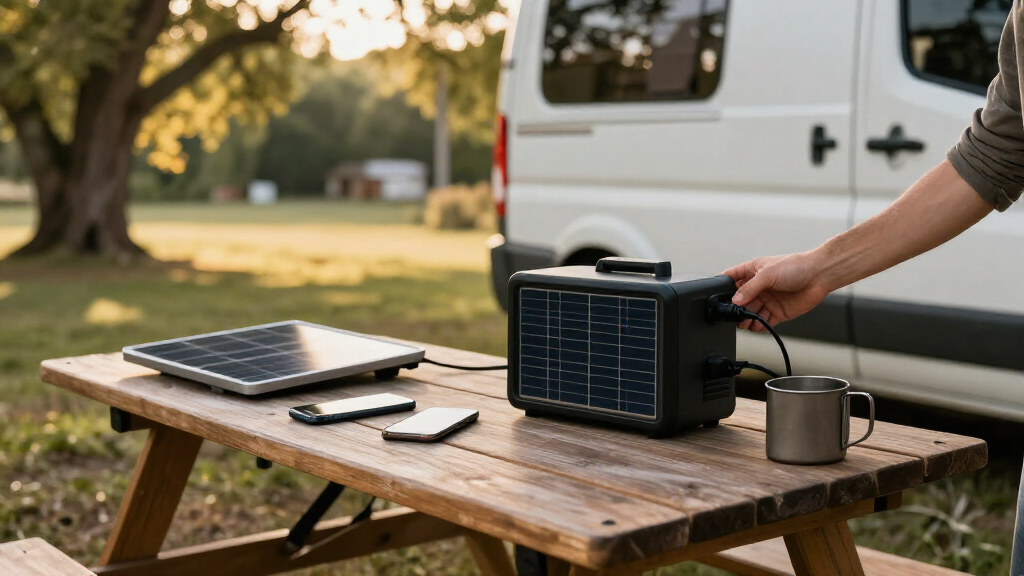
I compared the six products as 12V battery-maintenance options, not as replacements for wall-powered battery chargers. The main criteria were stated panel output, whether a controller is included or identified, suitability for maintaining a parked vehicle battery, weather-related details, and the practical demands of placement and connection. I also weighed how much charging headroom each product appears designed to offer against the added size and setup needs that can accompany higher output.
The 30W model ranks first because its stated output and MPPT controller give it the broadest capability in this lineup. Voltset’s 20W kit follows as a middle-ground option; the smaller POWOXI and ECO-WORTHY kits suit lighter maintenance needs. SUNAPEX and SUNER POWER add alternative choices for buyers prioritizing a straightforward maintainer or a waterproof-described panel. Product details provided for this roundup do not establish real-world charging rates, compatibility with every battery type, or identical protection features across models, so I treat those as points buyers should verify before purchase.
Factors to Consider When Choosing Solar Battery Chargers
Choosing a solar maintainer starts with the battery’s condition and the place where the panel will sit—not just the wattage printed on the listing. I use these checks to separate a practical maintenance setup from a charger that may not suit the parking location or battery.
Match the Charger to Maintenance, Not Recovery
A solar maintainer is generally intended to offset the small losses a vehicle battery accumulates while parked. It may help keep a healthy battery topped up when conditions are suitable, but it is not a reliable way to revive a deeply discharged or damaged battery. Check the product instructions for its intended battery types and operating limits before connecting it. If your battery is already struggling to start the vehicle, test and charge it with equipment designed for recovery first. Buying extra panel wattage does not turn a maintainer into a full-service battery charger.
Choose Output for Your Parking Conditions
Higher panel wattage can offer more charging headroom, but the number alone does not predict how much energy reaches the battery each day. Shade, window placement, panel angle, season, and time outdoors all affect output. A modest panel in clear, direct sunlight may be more useful than a larger one behind tinted glass or under a carport. Think about how long the vehicle sits and whether you can place the panel where it gets consistent light. If sunlight is unreliable, compare a solar maintainer with other battery-maintenance options rather than assuming a bigger panel will solve the problem.
Check Controller and Battery Compatibility
A charge controller regulates what reaches the battery; an MPPT controller is a specific controller approach, not a guarantee of a particular charging result in every setup. Confirm whether a controller is included, whether it is built into the panel or supplied separately, and which battery chemistries the maker supports. Do not assume that a 12V label means compatibility with every 12V battery. Read the manual for connection order, polarity, and any required safeguards against overcharging or reverse current. If the product information does not clearly answer these questions, get confirmation before connecting it to a vehicle.
Plan the Cable Route and Connection Method
A charger that is easy to connect is more likely to be used correctly. Check the supplied cable length, connector type, and whether the kit supports a direct battery connection or a vehicle accessory socket. Some accessory sockets stop supplying power when the ignition is off, which can prevent charging through that route. A cable passed through a door or hood can also be pinched, abraded, or exposed to water if routed carelessly. Choose a secure path that does not interfere with moving parts, and follow the manufacturer’s instructions rather than improvising a connection.
Treat Weather Claims as One Part of Installation
Terms such as waterproof, weather-resistant, or outdoor-ready may apply to the panel but not every connector, cable end, or controller. Look for specific protection details and installation instructions instead of relying on a broad label. A panel mounted outside faces different exposure from one kept inside a vehicle window, where heat and reduced sunlight can affect performance. Secure the panel against wind and movement, and avoid leaving electrical connections in standing water. If the charger will stay outdoors for long periods, prioritize clear guidance for the whole system, not only the panel surface.
Decide How Much Portability You Need
A compact, lower-output panel can be easier to store and position, especially if you move it between vehicles or pack it for occasional use. A larger panel may make more sense for a vehicle that remains parked in one sunny place, but it needs space and a stable mounting plan. Consider whether the panel will be stored in the cabin, attached temporarily, or installed for extended periods. Also check whether the kit includes the mounting hardware and connection accessories your setup requires. Paying for more output is worthwhile only if the panel can be placed and used effectively.
Frequently Asked Questions
Can a solar battery maintainer recharge a car battery that will not start the engine?
Usually, a small vehicle solar maintainer is intended to offset gradual battery drain, not to recover a deeply discharged battery. Its output depends on sunlight and may be too limited for a fast recharge. First check the battery’s condition and use a compatible mains-powered charger or professional battery service if it is substantially discharged. Once the battery is healthy, a solar maintainer may help during long parking periods. Follow the product manual for battery chemistry and connection requirements.
Can I charge a car battery through the 12V accessory socket?
Only if the vehicle socket remains electrically connected when the ignition is off and the charger maker supports that connection method. Many vehicles disconnect accessory sockets when parked, so a panel connected there may not reach the battery. Check the vehicle manual and the charger instructions before relying on this route. A direct battery connection may be needed, but it must be made with the correct polarity and suitable connectors. Avoid leaving a cable where a door, hood, or moving part can damage it.
Will a solar charger work through a windshield?
It may produce some power through glass, but the amount can be lower than in unobstructed outdoor sunlight and will vary with glass, shade, angle, and season. A panel inside the vehicle can be easier to protect from weather, while an external placement may receive stronger light if it is secured safely. Do not let the panel or cable obstruct the driver’s view or interfere with vehicle operation. Check the manufacturer’s instructions for indoor or behind-glass use. If the vehicle is usually parked in shade, a solar panel may not meet your maintenance needs.
Is a 12V solar maintainer suitable for an AGM or lithium battery?
The 12V label alone does not confirm compatibility with AGM, lithium, or other battery chemistries. Charging requirements and acceptable voltage limits can differ, and a maintainer designed for one battery type may not suit another. Check the product manual for an explicit compatibility statement and any required controller setting. If the documentation is unclear, contact the manufacturer before connecting the unit. Never infer compatibility solely from the vehicle’s nominal system voltage.
Should I choose a higher-wattage panel if my vehicle is parked in shade?
A higher-wattage panel can provide more capacity in suitable light, but it cannot remove the limits created by persistent shade. Before upgrading, consider whether you can reposition the panel into direct sunlight or park the vehicle in a brighter location. Compare the usable sunlight window and cable reach with the panel’s stated output. If the vehicle remains shaded for most of the day, a different battery-maintenance method may be more dependable. Treat wattage as one factor alongside placement and actual exposure.
Conclusion
For the broadest capability in this group, I recommend the 30W 12V charger with MPPT controller as best overall, provided its instructions match your battery and setup. The POWOXI 7.5W kit is my best-value-style choice for straightforward maintenance where a modest panel is enough, while the Voltset 20W kit is the step-up pick for buyers who want more output without choosing the largest panel. For beginners, the SUNAPEX maintainer is a sensible shortlist option if its connection method and battery compatibility are clear in the product documentation. For buyers who put weather protection first, consider the SUNER POWER 12W waterproof-described model and verify protection for the complete setup; the ECO-WORTHY 10W kit is another modest-output choice for car maintenance. My final recommendation is to match panel output to available sunlight, then confirm battery compatibility and a safe cable route before buying.