
TL;DR
Meshdiff introduces a new tool that lets users compare two versions of STL 3D models directly in their web browser. It operates entirely client-side, eliminating the need for downloads or server processing. This innovation streamlines version control and review processes for 3D printing and design workflows.
Meshdiff has released a new tool that enables users to visually compare two STL file versions directly in their web browser. The platform performs all processing on the client side, removing the need for downloads or server-based analysis. This development aims to improve workflows in 3D modeling, printing, and design revision processes, making version comparison faster and more accessible.
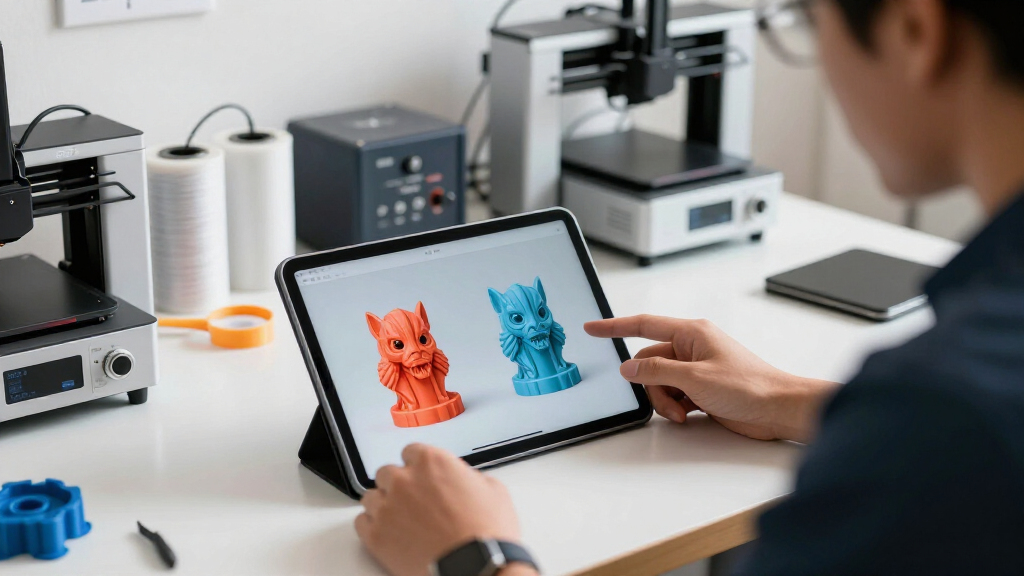
The Meshdiff tool allows users to upload or select two STL files within a web interface and view their differences through an interactive visualization. According to the developers, the comparison is performed entirely within the browser, utilizing WebAssembly and JavaScript for efficient processing. This approach ensures user data remains local, addressing privacy concerns and reducing latency.
Meshdiff is designed to support iterative design workflows, enabling designers, engineers, and hobbyists to quickly identify modifications between STL versions. The tool’s visual interface highlights differences in geometry, surface deviations, and structural variations, facilitating precise review without needing specialized software or technical expertise.
Developers behind Meshdiff state that this feature aims to streamline revision cycles, especially for teams working remotely or without access to dedicated CAD or comparison tools. The platform is currently available as a web-based application, with plans to include export options for reports and integration capabilities in future updates.
Impact on 3D Design and Printing Workflows
This development matters because it simplifies the process of managing multiple STL versions, a common challenge in 3D modeling and printing. By enabling visual comparison directly in the browser, Meshdiff reduces reliance on complex or expensive software, making version control more accessible for hobbyists, small businesses, and educational institutions.
Furthermore, operating entirely client-side enhances privacy, as user data is not transmitted to servers during comparison. It also speeds up workflows by eliminating upload/download delays, especially important for large files or limited bandwidth environments. Overall, Meshdiff’s approach could influence how teams collaborate and review 3D models in real time.
As an affiliate, we earn on qualifying purchases.
Evolution of Browser-Based 3D Model Tools
Recent years have seen increased interest in browser-based CAD and 3D modeling tools, driven by advances in WebAssembly, WebGL, and JavaScript. These technologies enable complex computations and visualizations to run locally within the browser, reducing dependence on desktop software.
Prior to Meshdiff, most STL comparison tools required desktop applications or server-side processing, which posed limitations on accessibility and privacy. This launch marks a step toward more integrated, web-only solutions for 3D model review and version management, aligning with trends toward cloud and browser-based workflows.
While several online viewers exist, few offer detailed visual diff capabilities for STL files without server processing. Meshdiff’s client-side approach distinguishes it as a potentially disruptive tool in this space, especially for users seeking quick, secure, and easy-to-use comparison options.
3D model viewer with version control
As an affiliate, we earn on qualifying purchases.
As an affiliate, we earn on qualifying purchases.
Limitations and Future Development Areas
It is not yet clear how Meshdiff handles extremely large or complex STL files, or how it performs in collaborative environments. The current version may have limitations in processing speed or accuracy with highly detailed models, and integration with existing CAD tools is still under development. Further testing and user feedback are needed to evaluate its full capabilities.As an affiliate, we earn on qualifying purchases.
Upcoming Features and Integration Plans
Meshdiff’s developers plan to introduce features such as report exports, detailed change logs, and integration with popular CAD and 3D printing platforms. They also aim to optimize performance for large files and enhance collaborative review functionalities. Additional updates are expected in the coming months, focusing on usability and workflow integration.
As an affiliate, we earn on qualifying purchases.
Key Questions
Is Meshdiff free to use?
Yes, Meshdiff is currently available as a free web-based tool for individual users and small teams.
Can I compare more than two STL files at once?
At present, Meshdiff supports comparing two STL files at a time. Future updates may include multi-file comparison features.
Does the tool require installation or registration?
No, it operates directly in the browser without the need for installation. Registration may be required for saving projects or accessing advanced features.
How secure is my data when using Meshdiff?
Since all processing occurs locally within your browser, your STL files are not transmitted to external servers, enhancing data privacy and security.
Will Meshdiff support other 3D file formats?
Currently, Meshdiff is focused on STL files. Support for additional formats may be considered in future versions based on user demand.
Source: hn


![The GNU Emacs Architecture: Unlocking The Core [Pdf]](https://invertergeneratorhq.com/wp-content/uploads/2026/07/the-gnu-emacs-architecture-unlocking-the-core-pdf-featured-560x300.jpg)