TL;DR

Get backup power and energy gear delivered free with Prime
- Fast, free delivery on millions of items
- Prime Video, Amazon Music and more included
- Member-only deals all year
Australia installed 276,011 home batteries and 180,878 rooftop solar systems in the first half of 2026, according to the Clean Energy Council. Battery installations rose 52% from the previous six-month period, while solar additions climbed 35% year on year.
Australia installed a record 276,011 home batteries in the first half of 2026, while rooftop solar additions reached their strongest six-month total since 2021, according to a new Clean Energy Council report. The figures show batteries are being added faster than new solar systems, a trend the industry body says reflects both retrofits to homes with existing panels and households choosing solar and storage together.
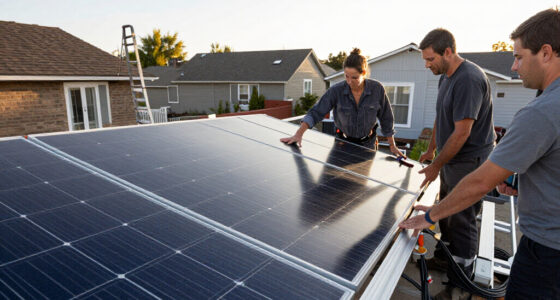
The report records 180,878 rooftop solar systems installed from January through June, 35% more than in the same period of 2025. They added 1,894 megawatts of capacity, a 41% year-on-year increase and the highest six-month capacity total on record. The June quarter alone accounted for 102,234 systems and 1,079 MW, both quarterly records.
Battery installations increased 52% from the second half of 2025. The new systems added 8,691 megawatt-hours of storage, compared with 4,221 MWh in the previous six-month period. For every 100 rooftop solar installations in H1 2026, 153 batteries were deployed; the comparable figure was 130 batteries per 100 solar systems in the second half of 2025.
The CEC links the surge in part to the federal government’s Cheaper Home Batteries Program. It reports that 457,439 batteries, with a combined 12.9 gigawatt-hours of capacity, were installed during the program’s first 12 months. That total covers a year of installations, while the 276,011 figure covers the first six months of 2026.
Battery Rebates Add to Solar Growth
The installation figures indicate that battery demand is accompanying a rebound in rooftop solar, rather than simply replacing new panel installations. The CEC says incentives appear to be prompting some households to add or upgrade solar while installing storage. It also points to retrofitting at homes with existing solar as one reason batteries are being deployed at a higher rate than new solar systems.
For households, the technology can store some electricity generated during the day for use later. The report does not quantify bill savings for individual customers, and actual results depend on system costs, household consumption, tariffs and how the equipment is operated. The CEC’s chief executive, Jackie Trad, described the growth as a consumer and energy-security gain. Those benefits are the industry body’s assessment; the installation totals alone do not establish the savings or reliability outcomes for each household.
The scale also matters for electricity planning. Rooftop solar generated 12.9% of Australia’s electricity in the first six months of 2026, according to the report. More household generation and storage can change when consumers draw power from the grid, but the supplied figures do not measure how much battery capacity was available to support the grid during periods of peak demand.
Solar Rebounds Alongside Storage
Australia’s rooftop solar market had a weaker annual total in 2025: 273,672 installations, the first time since 2020 that the number fell below 300,000. The CEC says the first-half 2026 pace puts installations on track to exceed 300,000 this year. That is a projection based on the reported run rate, not a confirmed full-year result.
Battery deployment accelerated after the federal home battery rebate program began. Across its first 12 months, the CEC counted 457,439 installations. Its report says the rebate has been a key driver, while also describing a mix of new solar-and-storage packages and batteries added to homes with existing panels. The figures do not break down the exact share attributable to the program or to each type of installation.
The report also compares current investment with the Australian Energy Market Operator’s (AEMO) central planning scenario, known as the ISP Step Change scenario. At current rates, the CEC estimates rooftop solar in the National Electricity Market could reach 40.3 GW by 2029-30, about 4.5 GW, or 13%, above that scenario. Consumer battery storage could reach 59.2 GWh, 79% above the scenario’s 33 GWh projection. These are forward estimates, not installed capacity already reached.
““Installation volumes have recovered sharply.””
— Clean Energy Council report
Household Savings Remain Unmeasured
The report provides national installation and capacity totals, but does not state how much a typical participating household has saved on bills, how long systems take to pay back, or how many batteries are available to supply electricity during grid stress. It also does not give a detailed breakdown of installations by state, household type or program eligibility.
The stated 153 batteries per 100 solar installations is a comparison of installation counts in the first half of 2026. It does not mean that 153% of solar households have batteries, because some batteries were installed at properties with solar systems added in earlier years. The CEC attributes the pattern partly to retrofits, but the report summary does not quantify the split between retrofits and new combined systems.
The 2029-30 figures depend on installations continuing at current rates. The report does not establish that those rates will persist, and its comparison with AEMO’s scenario is a projection rather than a revision to AEMO’s own forecast.
Full-Year Installations Will Test Pace
The next clear measure will be whether rooftop solar installations exceed 300,000 for the full year, as the CEC says the first-half pace suggests they may. The annual figure will show whether the rebound continued beyond June; the report’s six-month totals cannot confirm that outcome.
Policy changes may also affect the market. Trad said an expansion of the Small-scale Renewable Energy Scheme to support solar systems up to 1 MW could provide another boost to installations. The supplied material does not specify when the expansion will take effect or estimate how many additional systems it would support.
Further data on program participation, battery retrofits, household costs and performance would help explain who is adopting storage and what the rollout means for consumers and the electricity system. For now, the report establishes a record first half for battery installations and strong growth in rooftop solar, while longer-term outcomes remain dependent on continued installations and household-level results.
Key Questions
How many home batteries were installed in Australia in the first half of 2026?
The Clean Energy Council counted 276,011 batteries installed from January through June 2026. They added 8,691 MWh of storage capacity.
How many rooftop solar systems were installed in the same period?
The report counted 180,878 rooftop solar systems, adding 1,894 MW of capacity. The installation total was 35% higher than in the first half of 2025.
What does 153 batteries for every 100 solar installations mean?
It compares the number of battery installations with the number of new rooftop solar installations in H1 2026. It does not mean that 153% of solar households have batteries, since some batteries were added to homes whose solar systems were installed earlier.
Did the report prove that battery rebates lowered household bills?
No. The CEC identifies the federal Cheaper Home Batteries Program as a key driver of installations, but the supplied report figures do not quantify household bill savings or payback periods.
Are rooftop solar installations certain to exceed 300,000 in 2026?
No. The CEC says the first-half pace puts installations on track to exceed 300,000. The full-year total has not yet been reported.
Source: rss
Halloween Picks
halloween
As an affiliate, we earn on qualifying purchases.