TL;DR

Get backup power and energy gear delivered free with Prime
- Fast, free delivery on millions of items
- Prime Video, Amazon Music and more included
- Member-only deals all year
A Northwest Arkansas homeowner asked GreenBuildingAdvisor whether to use leftover closed-cell spray foam in an unconditioned garage wall. The question raises moisture-management concerns for a south-facing brick-clad wall, but the supplied report does not include an expert answer or a confirmed outcome.
The homeowner described a house built in 1975 in Climate Zone 4A, a mixed-humid region. The wall, from outside to inside, has brick cladding, a one-inch airspace, exterior sheathing described as black-colored, a 2-by-4 stud wall with studs 16 inches on center, and half-inch painted drywall. The project concerns an unconditioned garage, as part of a broader garage-insulation effort, rather than a stated plan to insulate a living space.
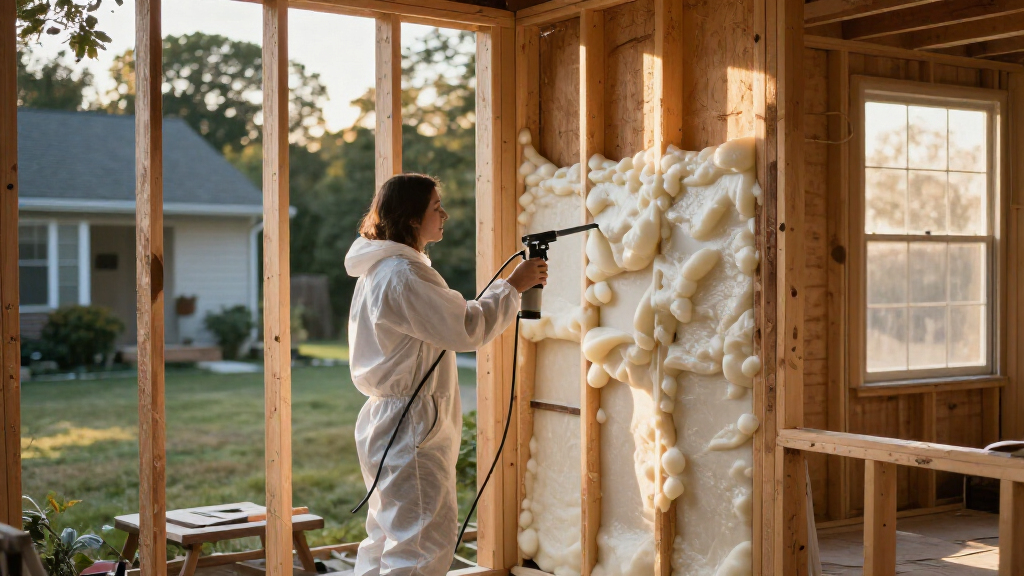
The material under consideration is DAP 600FR dual-tank spray foam left over from another do-it-yourself project. The homeowner said they were considering spraying enough to reach at least two inches, but had become uncertain after researching vapor control and moisture behavior in mixed-humid climates. They had also considered unfaced batt insulation as an alternative.
The central question is whether closed-cell foam could limit drying through the wall enough to increase moisture risk. The homeowner specifically raised concern about a possible “double vapor barrier” and about solar heating of the south-facing brick. Those are concerns posed in the question, not findings that the wall is already wet, damaged, or destined to fail. No inspection results, moisture measurements, code review, or answer from a building professional appear in the supplied material.
Moisture Risk in a Brick Wall
The decision matters because insulation changes how heat and moisture move through an existing wall. In a mixed-humid climate, the appropriate assembly can depend on the wall’s existing layers, indoor and outdoor conditions, and available drying paths. Adding a material with low vapor permeability may alter those paths; the question alone, however, cannot show whether that would cause a problem in this particular house.
The homeowner’s description also makes the case more specific than a general comparison of insulation products. The wall has brick cladding and an airspace, faces south, and separates the house from an unconditioned garage. The garage’s unconditioned status may affect the temperature difference across the wall, as the homeowner suggested, but no measurements or assessment establish how much that changes the risk. A wrong choice could make future moisture problems harder to diagnose or resolve, while a suitable choice could improve the garage’s thermal performance.
For readers considering a similar retrofit, the key takeaway is that leftover material and a target thickness do not by themselves establish that an assembly is appropriate. The available report offers no site-specific recommendation; it documents a homeowner seeking one.
DAP 600FR dual tank closed cell spray foam kit
As an affiliate, we earn on qualifying purchases.
As an affiliate, we earn on qualifying purchases.
The Existing Wall and Proposed Retrofit
The report is a question submitted to GreenBuildingAdvisor, not a published test of the DAP product or a documented retrofit outcome. The homeowner said they had read a guide to mixed-humid building practices repeatedly and were trying to resolve how the proposed foam would interact with the existing layers. Their concern was not simply whether the foam insulates, but whether the completed wall could dry in more than one direction.
The homeowner also raised what building-science discussions call brick heat drive: concern that sun-warmed brick could affect moisture movement behind the cladding. The source does not report measurements, openings in the wall, or evidence of existing damage, and it does not verify the precise properties or condition of the black-colored sheathing. These details therefore remain part of the question’s description rather than an independently assessed wall assembly.
The proposed work is limited in the source to insulating an unconditioned garage wall. No project date, completed installation, permit status, or follow-up is supplied. The report should not be read as a general endorsement or rejection of closed-cell foam in Zone 4A.
“I just don’t want to shoot myself in the foot by creating a moisture trap that destroys the wall in a few years.”
— The homeowner, in the GreenBuildingAdvisor question
unfaced fiberglass batt insulation for 2×4 walls
As an affiliate, we earn on qualifying purchases.
As an affiliate, we earn on qualifying purchases.
No Expert Answer or Inspection Report
The supplied source does not include a response from a building scientist, contractor, product representative, or code official. It is therefore unclear whether the foam was applied, whether the wall was inspected, or what insulation choice was ultimately made. The source also does not establish the sheathing type, its condition, the wall’s moisture history, or the exact vapor-control characteristics of every existing layer.
There is no reported evidence of condensation, rot, mold, or structural damage. Nor is there enough information to determine whether the proposed thickness would meet applicable code requirements or suit the site-specific assembly. Any claim that the foam would certainly trap moisture—or that the garage’s unconditioned status makes it safe—would go beyond what the report confirms.
wall moisture meter for wood sheathing
As an affiliate, we earn on qualifying purchases.
As an affiliate, we earn on qualifying purchases.
A Site-Specific Review Is Needed
The next development would be an answer to the homeowner’s question or a qualified assessment of the wall before insulation is installed. That review would need to account for the existing brick, airspace, sheathing, framing, interior finish, local climate, and intended use of the garage, rather than relying only on the foam type or a nominal thickness.
Until such information is available, the reported status remains an open retrofit question. The supplied material names no planned inspection, installation date, or follow-up, so whether the homeowner proceeds with closed-cell foam, chooses unfaced batts, or delays the work is unknown.
spray foam respirator chemical resistant gloves and protective suit
As an affiliate, we earn on qualifying purchases.
As an affiliate, we earn on qualifying purchases.
Key Questions
Did the homeowner install the closed-cell spray foam?
The supplied GreenBuildingAdvisor material does not say. It records the homeowner’s question and proposed plan, but gives no installation outcome.
Does the report say closed-cell foam is unsafe in every Zone 4A wall?
No. It contains a question about one described wall assembly and no expert conclusion. It does not support a blanket recommendation for or against closed-cell foam across all Zone 4A homes.
What wall did the homeowner describe?
The reported assembly runs from brick cladding and a one-inch airspace to exterior sheathing, a 2-by-4 stud wall, and half-inch painted drywall. The wall is part of a 1975 home and faces south, according to the homeowner.
What alternative was being considered?
The homeowner said they might use unfaced batt insulation instead. The supplied report does not compare its performance with the proposed foam or say which option is preferable.
Source: rss
Fall Picks
fall essentials
As an affiliate, we earn on qualifying purchases.