
TL;DR

Get backup power and energy gear delivered free with Prime
- Fast, free delivery on millions of items
- Prime Video, Amazon Music and more included
- Member-only deals all year
A report from the Center for Strategic Industrial Materials at SAFE argues that better recycling and scrap sorting could help the United States recover aluminum now discarded in landfills. New sensor and AI systems are being tested, but their broader impact depends on recovery rates, investment and policy support.
A new report from the Center for Strategic Industrial Materials at SAFE says the United States could recover more aluminum from scrap now lost to landfills, addressing part of a supply squeeze without relying only on energy-intensive smelters. The report points to advanced sorting technologies and policy incentives as ways to reclaim metal from mixed waste, though the amount that can be recovered at scale remains uncertain.
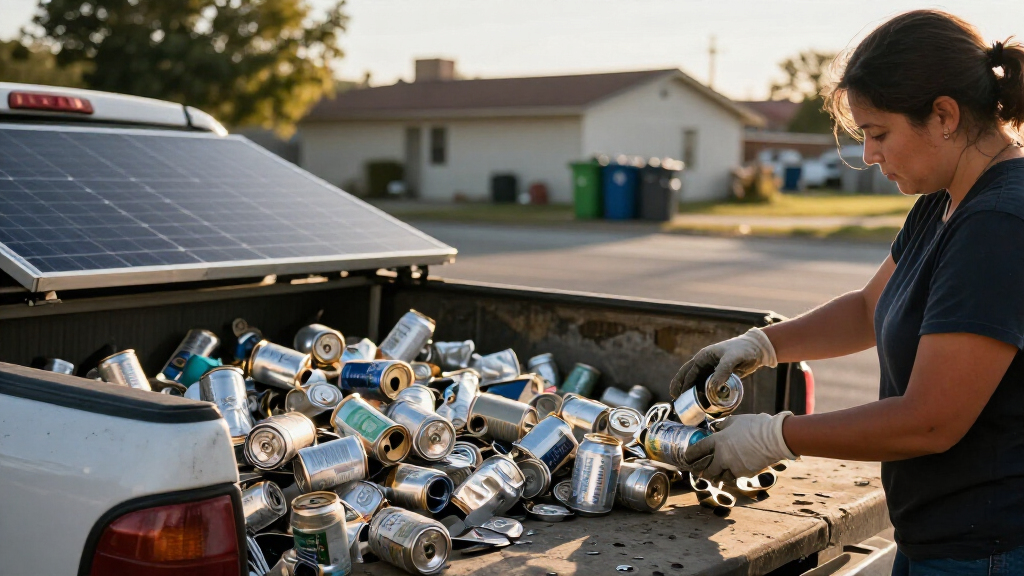
Aluminum demand is rising across uses including cans, solar panels, vehicles, power cables and data centers, while global supply constraints and U.S. tariffs have added pressure to the market this year, according to Canary Media’s report. Proposed and planned smelters could add domestic production, but they require large amounts of low-cost electricity. Recycling offers another source: the report says recycling aluminum uses about 5% of the energy required to produce virgin metal in smelters.
The obstacle is not a lack of scrap, but the difficulty of sorting it. Aluminum can arrive mixed with metals such as copper, brass and titanium, and identifying specific alloys is challenging. The report says U.S. scrap is often shipped overseas for hand sorting or processed into lower-value material. Conventional mechanical systems can also miss recyclable items, particularly when plants are overloaded or equipment is faulty.
Some firms are testing ways to improve recovery. Sortera Technologies raised $45 million last year to build a second facility, in Lebanon, Tennessee, using technology to separate valuable aluminum alloys from mixed scrap. U.K.-based Greyparrot installs AI cameras at recycling plants to track materials on conveyor belts. At a Brooklyn facility operated by Circular Services, Greyparrot found that 89% of aluminum passing through was recyclable, cofounder Ambarish Mitra told Canary Media. That figure describes material at that plant; it is not a national recovery rate.
Recycling Could Ease Metal Supply Pressure
Recovering more scrap could give manufacturers another source of aluminum as demand grows, while using far less energy than producing the metal from ore. Better sorting may also preserve higher-value alloys rather than blending them into lower-grade products. That matters because different uses have different material needs, and some applications depend on particular alloy properties.
The report also frames recycling as a supply-chain security issue. Center director Joe Quinn told Canary Media that the goal is to get metal back into the market, alongside environmental benefits. Benjamin Carlson, the center’s director, said wider use of recycled aluminum could leave more virgin metal available for sectors such as defense and aerospace, which require high-purity supplies. These are potential benefits, not a measure of how much domestic supply recycling can replace.
AI-powered aluminum sorting machine
As an affiliate, we earn on qualifying purchases.
As an affiliate, we earn on qualifying purchases.
Why Scrap Sorting Falls Short
Aluminum is recyclable, but recovering it from everyday waste and industrial scrap depends on collection systems and sorting equipment that can identify and separate it. Mixed metals and varied alloys make that work more complicated than simply removing cans from a recycling stream. When material is missed, it can end up in a plant’s residue line and ultimately be sent to landfill.
Canary Media reported that Greyparrot’s system was installed earlier this year at Circular Services’ Brooklyn facility, which handles most of New York City’s curbside recycling. Mitra said the company’s monitoring found a substantial share of aluminum there that could be recovered. The report also says the Center for Strategic Industrial Materials has urged federal incentives and increased research funding for advanced sorting. Those proposals are recommendations; the source does not report that they have been adopted.
““It’s a secure supply chain issue.””
— Joe Quinn, executive director of the Center for Strategic Industrial Materials at SAFE
advanced recycling conveyor belt cameras
As an affiliate, we earn on qualifying purchases.
As an affiliate, we earn on qualifying purchases.
How Much Metal Can Be Recovered?
The report does not quantify how many additional tons of aluminum could be recovered nationwide, or how much of the country’s supply gap recycling could fill. Greyparrot’s 89% figure applies to aluminum passing through one Brooklyn plant, as assessed by the company; it does not establish performance across U.S. recycling facilities. The report also does not provide independent verification of that estimate or a comparable national baseline.
It remains unclear how quickly advanced sorting equipment can be deployed, what it would cost across different facilities, and whether the recovered alloys can consistently meet buyers’ specifications. The proposed federal incentives and research funding are policy recommendations, and the source does not identify enacted measures or a schedule for action.
As an affiliate, we earn on qualifying purchases.
Policy and Plant Deployments Ahead
The next steps described in the report are continued deployment of sorting systems and consideration of policy measures. Sortera’s planned second facility in Lebanon, Tennessee, is one example of investment in alloy recovery. Greyparrot’s work at the Brooklyn plant offers a case study, but broader results will depend on further installations and data from other facilities.
The Center for Strategic Industrial Materials is calling for federal incentives and more research funding to advance sorting technology. Whether policymakers act, and whether recovered scrap can deliver a meaningful increase in domestic supply, remains to be seen. For now, the evidence points to a possible resource in discarded metal, not a quantified replacement for imports or new smelter production.
As an affiliate, we earn on qualifying purchases.
Key Questions
Why is aluminum in landfills if it can be recycled?
Mixed scrap and varied aluminum alloys can be difficult for conventional systems to identify and separate. Material missed on sorting lines may end up in plant residue and be sent to landfill.
How much energy does aluminum recycling use?
The source report says recycling uses about 5% of the energy needed to produce virgin aluminum in smelters. It does not provide a broader lifecycle comparison.
Does the Brooklyn plant recover 89% of all its aluminum?
No. Greyparrot reported that 89% of aluminum passing through the facility was recyclable. That is not the same as saying the plant recovers 89% of all aluminum, and it is not a national rate.
What policies are being proposed?
The Center for Strategic Industrial Materials has called for federal incentives and increased research funding for advanced sorting technologies. The source does not say those proposals have been enacted.
Source: rss
Halloween Picks
halloween
As an affiliate, we earn on qualifying purchases.