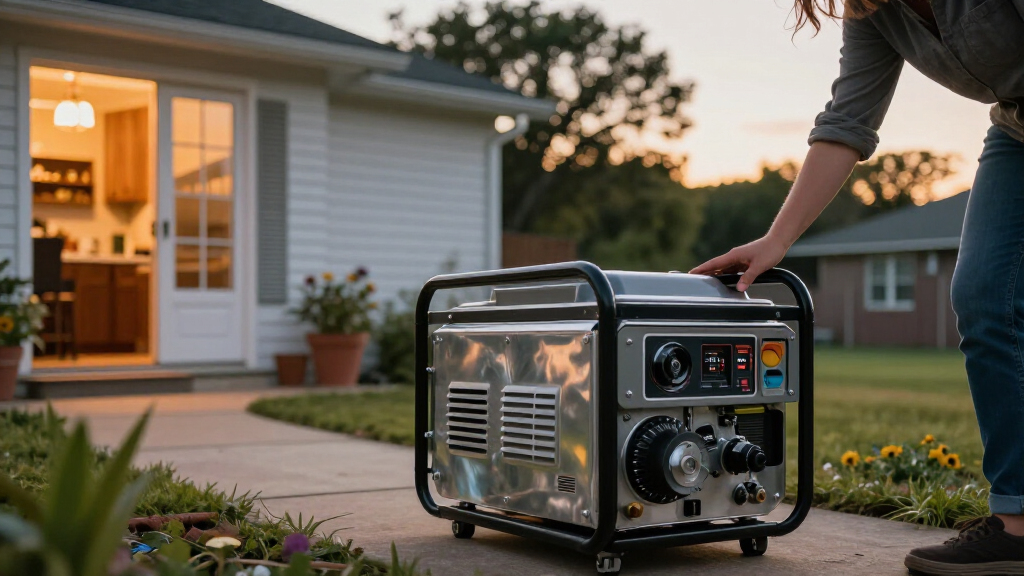

For most homes, I’d start with the Generac 22kW Whole Home Generator with Cellular Connectivity: it balances substantial capacity with remote monitoring. The Generac 26kW models suit larger loads, while the Honeywell 14kW stands out for its included installation pad and natural-gas or propane operation. The main tradeoffs are how much of your home you want to power, whether a transfer switch is included, and how much monitoring and installation work you want to manage. A larger generator may cover more simultaneous loads, but it can require more fuel and a more involved installation. Read on for my ranked breakdown, buying guidance, and recommendations by household need.

Get backup power and energy gear delivered free with Prime
- Fast, free delivery on millions of items
- Prime Video, Amazon Music and more included
- Member-only deals all year
Complete the kit


Key Takeaways
- The 22kW Generac options lead on balance: they offer more headroom than the 10kW and 14kW picks without moving to the lineup’s highest-capacity 26kW tier.
- Capacity is only part of the comparison: several listings bundle a transfer switch, while others emphasize monitoring or generator capacity, so buyers should verify the exact package before choosing.
- The 26kW Generac models target heavier household demand: they make more sense when a load assessment supports the extra capacity, rather than as an automatic upgrade for every home.
- The Honeywell 14kW brings a distinct setup detail: its listed installation pad and natural-gas-or-propane compatibility may appeal to buyers comparing included components and fuel options.
- Monitoring varies across the Generac choices: cellular connectivity, cellular capability, and WiFi monitoring appear in different listings; check the specific unit’s monitoring arrangement instead of assuming they are interchangeable.


| home standby generator | Fuel | Voltage | Dimensions | Output |
|---|---|---|---|---|
| Generac 22kW Whole Home Genera | Natural gas or propane | 240 volts | 46.4 × 26.3 × 30.7 inches | 22,000 watts |
| Generac 26kW Whole Home Genera | Natural gas or propane | 240 volts | 46.4 × 26.3 × 30.7 inches | 26,000 watts |
| Generac Guardian 22kW Home Gen | Natural gas or LP gas | 240 volts | 50 × 27 × 29 inches | 22,000 watts |
| 20kW Standby Generator with 20 | Natural gas or liquid propane | 240 volts | 47 × 26.2 × 32.2 inches | 20,000 watts |
| Generac 24 kW Whole-Home Stand | LP or natural gas | 240 volts | 46.4 × 26.3 × 30.7 inches | 24,000 watts |
| Generac 18kW Whole Home Genera | Fuel powered; dual fuel | 240 volts | 46.4 × 26.3 × 30.7 inches | 18,000 watts (18kW) |
| Generac 10kW Whole Home Genera | Liquefied petroleum gas or natural gas | 120 volts | 47.3 × 25.6 × 30.7 inches | 10,000 watts |
| Honeywell 14kW Home Standby Ge | Natural gas or propane | 120 volts | 48 × 25 × 29 inches | 14,000 watts (14kW) |
| Generac 26kW Whole Home Genera | Fuel powered; natural gas or LP supply required | 240 volts | 46.4 × 26.3 × 30.7 inches | 26,000 watts (26kW) |
| Generac 22 kW Whole-Home Stand | Liquid propane or natural gas | 240 volts | 46.4 × 26.3 × 30.7 inches | 22,000 watts (22kW) |
| Generac 14 kW Whole-Home Stand | Natural gas or LP | 240 volts | 46.4 x 26.3 x 30.7 inches | — |
More Details on Our Top Picks
Generac 22kW Whole Home Generator with Cellular Connectivity
This 22 kW model is a strong fit for homeowners who want automatic backup and a way to check generator status away from home. Its built-in cellular connectivity separates it from the Generac Guardian 22kW, which uses WiFi monitoring, making this option less dependent on a home network for remote status checks. It accepts natural gas or propane, giving buyers fuel flexibility when planning a permanent installation.
The tradeoff is its substantial installation footprint: at 451 pounds, it is not a portable or casual setup, and professional installation may be needed. Remote monitoring also requires a cellular subscription, so buyers who do not need app access may prefer a simpler configuration. I’d choose it for connected oversight at 22 kW, but compare it with the 24 kW Generac if additional output matters more than keeping capacity moderate.
Pros:- Automatically activates during utility outages
- Cellular connectivity supports remote monitoring and control
- Runs on natural gas or propane
- Low-maintenance design with long service intervals
Cons:- Remote monitoring requires a cellular subscription
- Its 451-pound weight and large enclosure call for permanent installation planning
- The 22 kW capacity may not suit homes with higher simultaneous electrical loads
Best for: Homeowners seeking 22 kW of automatic backup with cellular status monitoring and a natural-gas or propane connection.
Not ideal for: Buyers who want to avoid an ongoing cellular subscription, need a portable unit, or cannot accommodate professional installation of a heavy standby generator.
- Output:22,000 watts
- Fuel:Natural gas or propane
- Voltage:240 volts
- Weight:451 pounds
- Dimensions:46.4 × 26.3 × 30.7 inches
- Engine:Internal combustion
- Materials:Aluminum and steel
- Warranty:5-year limited warranty
Our verdict“Choose this Generac if cellular monitoring and dual-fuel flexibility matter more than extra capacity or avoiding a subscription.”
Generac 26kW Whole Home Generator with Cellular Monitoring
Among the listed Generac options, this 26 kW model offers the most output, making it the stronger candidate for larger homes or households that expect several major loads to run together during an outage. It retains the automatic operation and cellular monitoring found on the Generac 22kW Whole Home Generator, while adding automatic voltage regulation and low-oil shutdown to its feature set.
That added capacity comes with a real installation burden: the unit weighs 524 pounds and needs a compatible natural-gas or propane supply. Its dimensions match the 22 kW cellular model, but it is heavier, so delivery, siting, and installation deserve attention before purchase. I’d favor it when a load assessment points to more than 22 kW; smaller households may get a better fit from the 22 kW option rather than choosing capacity they do not need.
Pros:- Highest stated output among these five products at 26 kW
- Automatic operation supports backup when utility power fails
- Cellular connectivity allows remote monitoring and control
- Includes automatic voltage regulation and low-oil shutdown
Cons:- At 524 pounds, installation and placement require substantial planning
- Requires a natural-gas or propane supply, limiting possible siting
- The extra capacity may be unnecessary for homes with lower backup loads
Best for: Owners of larger homes whose planned backup loads may exceed what a 22 kW generator can support.
Not ideal for: Smaller households with modest backup needs, or buyers unable to arrange a permanent gas connection and professional handling of a 524-pound unit.
- Output:26,000 watts
- Fuel:Natural gas or propane
- Voltage:240 volts
- Weight:524 pounds
- Dimensions:46.4 × 26.3 × 30.7 inches
- Engine:Internal combustion
- Additional features:Automatic voltage regulation, automatic idle control, low-oil shutdown
- Warranty:5-year warranty
Our verdict“Pick the 26 kW Generac when a household’s calculated backup demand justifies its greater capacity and heavier installation.”
Generac Guardian 22kW Home Generator, Transfer Switch & WiFi Monitoring
The Guardian’s clearest advantage is that its listing includes an automatic transfer switch alongside a 22 kW generator. That gives buyers a more complete starting point for a standby system than the Generac 22kW Whole Home Generator listing, whose supplied details do not mention a switch. It also offers WiFi monitoring and runs on natural gas or LP, covering the core needs of a permanently installed residential backup setup.
Its monitoring approach differs from the cellular models: WiFi suits homes with dependable internet access, but it may be less useful if the home network or internet service is unavailable during an outage. The Guardian is also larger and heavier than the other 22 kW Generac in this batch, at 466 pounds and 50 inches long. I’d shortlist it when the included transfer switch is a priority; buyers who prefer cellular monitoring may lean toward the other 22 kW model instead.
Pros:- Includes an automatic transfer switch
- WiFi monitoring supports remote performance tracking
- Uses natural gas or LP gas
- Backed by a 5-year limited warranty
Cons:- WiFi monitoring depends on the home network rather than cellular connectivity
- Professional installation by a licensed electrician is required
- At 466 pounds and 50 inches long, it needs substantial installation space and handling
Best for: Homeowners seeking a 22 kW standby package that includes an automatic transfer switch and uses WiFi for remote monitoring.
Not ideal for: Buyers who need cellular monitoring independent of the home WiFi connection, or who cannot arrange licensed professional installation.
- Output:22,000 watts
- Fuel:Natural gas or LP gas
- Voltage:240 volts
- Engine:Generac G-Force 1000 Series
- Engine displacement:999 cc
- Weight:466 pounds
- Dimensions:50 × 27 × 29 inches
- Monitoring:WiFi
- Warranty:5-year limited warranty
Our verdict“Choose the Guardian when a bundled transfer switch and WiFi monitoring matter more than cellular connectivity or a smaller enclosure.”
20kW Standby Generator with 200amp Transfer Switch
This 20 kW Kohler’s main point of difference is its included 200-amp automatic transfer switch and stated restoration time of about 10 seconds. For buyers assembling a home standby system, that switch is a meaningful part of the package; the Generac Guardian 22kW also includes a transfer switch, but provides 2 kW more output and WiFi monitoring. The Kohler instead makes a more moderate-capacity case for homes whose load plan fits 20 kW.
It runs on natural gas or liquid propane and has an aluminum enclosure, but the product details do not specify runtime, so I would not treat that information as settled without confirming operating requirements with the installer. At 485 pounds, it still needs careful permanent siting and professional installation. This is a practical shortlist option when the switch and quick restoration are priorities, not the pick for buyers who need remote monitoring or the highest output.
Pros:- Includes a 200-amp outdoor-rated automatic transfer switch
- Described as restoring power within about 10 seconds
- Accepts natural gas or liquid propane
- Aluminum enclosure and 5-year limited warranty
Cons:- Runtime details are not specified in the provided product information
- Its 20 kW output is below the 22 kW and 26 kW alternatives in this batch
- Weighs 485 pounds, making placement and installation a substantial job
Best for: Homeowners whose load assessment fits 20 kW and who want a 200-amp automatic transfer switch included.
Not ideal for: Buyers who need remote monitoring, want the greater stated output of a 22 or 26 kW model, or need clearly specified runtime information before choosing.
- Output:20,000 watts
- Fuel:Natural gas or liquid propane
- Voltage:240 volts
- Engine:4-stroke
- Engine displacement:999 cc
- Transfer switch:200-amp automatic transfer switch included
- Weight:485 pounds
- Dimensions:47 × 26.2 × 32.2 inches
- Warranty:5-year limited warranty
Our verdict“Choose the Kohler if 20 kW fits your home’s load plan and an included 200-amp transfer switch is a priority.”
Generac 24 kW Whole-Home Standby Generator with Transfer Switch and Cellular Connectivity
This 24 kW Generac sits between the 22 kW cellular model and Generac’s 26kW Whole Home Generator, offering more stated output than the former without reaching the latter’s 524-pound weight. At 461 pounds, it remains a substantial permanent installation, but the capacity-and-weight combination may suit homes that need more headroom than 22 kW while not requiring the listed 26 kW option.
It runs on LP or natural gas and adds cellular monitoring through Mobile Link, including maintenance alerts, plus automatic voltage regulation and low-oil shutdown. The main catch is the subscription requirement for remote monitoring; buyers who do not need app access may prefer to focus on output and installation fit instead. The title names a transfer switch, but the supplied specifications do not describe its rating or configuration, so I would verify those details before treating it as a complete switch package.
Pros:- 24 kW output provides more capacity than the 22 kW options
- Runs on LP or natural gas
- Built-in cellular connectivity supports Mobile Link monitoring and maintenance alerts
- Includes automatic voltage regulation and low-oil shutdown
Cons:- Mobile Link premium subscription is required for remote monitoring
- At 461 pounds, it calls for careful siting and professional installation planning
- Transfer-switch rating and configuration are not specified in the provided data
Best for: Homeowners who need more than 22 kW of standby output, want cellular monitoring, and are willing to confirm transfer-switch details before purchase.
Not ideal for: Buyers who want to avoid a monitoring subscription, need a lighter or portable unit, or require confirmed transfer-switch specifications in the product data.
- Output:24,000 watts
- Fuel:LP or natural gas
- Voltage:240 volts
- Weight:461 pounds
- Dimensions:46.4 × 26.3 × 30.7 inches
- Engine:Internal combustion
- Connectivity:Built-in cellular; Mobile Link premium subscription required for remote monitoring
- Additional features:Automatic idle control, automatic voltage regulation, low-oil shutdown
- Warranty:5-year limited warranty
Our verdict“Consider this 24 kW model if you want a middle ground between 22 and 26 kW, but verify the transfer-switch package and subscription terms first.”
Generac 18kW Whole Home Generator with Cellular Capability
The 18kW capacity gives this Generac a middle ground between the 10kW model and the larger 22kW and 26kW options in this lineup. That can suit a home seeking broad backup coverage without stepping up to the highest output, though actual coverage depends on household loads and installation design. Its cellular monitoring supports remote status checks, and compatibility with smart home energy systems may appeal to owners who want generator information alongside other home controls. Compared with the Generac 22 kW Whole-Home Standby Generator with 200-Amp Transfer Switch, this model is lighter and less powerful, making it a more measured capacity choice. The tradeoff is that full remote features require a premium subscription, and at 426 pounds it still calls for substantial installation planning. I’d shortlist it for connected homes that don’t need the lineup’s biggest output.
Pros:- 18kW output sits between the lower-capacity 10kW and 14kW options and the larger Generac models.
- Cellular capability supports remote monitoring.
- Dual-fuel capability offers fuel-choice flexibility.
- Fully enclosed design and overload protection are suited to outdoor standby use.
Cons:- Premium subscription is required for full remote features.
- Its 426-pound weight can complicate delivery and installation.
- The supplied information does not specify a transfer-switch inclusion.
Best for: Owners of mid-size homes who want automatic backup and cellular monitoring without choosing a 22kW or 26kW unit.
Not ideal for: Large homes with high simultaneous electrical loads, or buyers who want remote monitoring without a subscription.
- Output:18,000 watts (18kW)
- Fuel:Fuel powered; dual fuel
- Voltage:240 volts
- Weight:426 pounds
- Dimensions:46.4 × 26.3 × 30.7 inches
- Construction:Aluminum and stainless steel
- Features:Cellular capability, automatic idle control, overload protection, fully enclosed design
Our verdict“Choose this Generac if you want connected, automatic backup at a middle capacity and can accommodate professional installation and subscription costs.”
Generac 10kW Whole Home Generator with Transfer Switch & Cellular Connectivity
This is the lowest-output option in this batch, which makes it a better fit for carefully prioritized household circuits than for buyers assuming every large appliance can run at once. Its included transfer switch is a useful distinction from the 18kW Generac, whose supplied details do not specify one; a transfer switch is part of coordinating standby power with the home’s electrical system. The unit supports natural gas or propane and adds cellular monitoring, while its five-year limited warranty is stated in the product data. Compared with the Honeywell 14kW, it provides less output, so buyers should be more deliberate about which loads matter during an outage. Its 384-pound weight and large footprint also mean this is not a simple plug-in backup solution, and remote monitoring requires a cellular subscription.
Pros:- Includes a transfer switch.
- Runs on either liquefied petroleum gas or natural gas.
- Cellular connectivity provides remote monitoring and control.
- Product data specifies a five-year limited warranty.
Cons:- 10kW output is lower than the 14kW Honeywell and the other Generac models in this batch.
- At 384 pounds, it requires planning for delivery and installation.
- Remote monitoring requires a cellular subscription.
Best for: Households that plan to back up selected essential circuits and value an included transfer switch and cellular monitoring.
Not ideal for: Owners seeking high simultaneous loads or broad whole-home coverage without carefully sizing and prioritizing circuits.
- Output:10,000 watts
- Fuel:Liquefied petroleum gas or natural gas
- Voltage:120 volts
- Transfer switch:Included
- Weight:384 pounds
- Dimensions:47.3 × 25.6 × 30.7 inches
- Warranty:5-year limited warranty
Our verdict“Pick this model for a lower-capacity standby setup with a transfer switch, not for powering a large home’s many heavy loads at once.”
Honeywell 14kW Home Standby Generator – Automatic Backup Power for Whole Home – Runs on Natural Gas or Propane – Weather-Resistant Enclosure – Installation Pad Included
The Honeywell offers 14kW output with natural gas or propane operation, placing it above the 10kW Generac for capacity but below the 18kW Generac for households with heavier demands. Its clearest practical advantage is the included installation pad, which gives buyers one less component to source, although it does not remove the need for professional installation. The weather-resistant aluminum enclosure is intended for outdoor placement, and automatic shutdown and short-circuit protection add protective functions. Compared with the cellular-equipped Generac models in this batch, the listed Honeywell features focus more on basic standby operation than remote connectivity; the product information describes user-friendly monitoring but does not specify cellular access. Its three-year limited warranty is shorter than the five-year terms listed for the 10kW and 22kW Generacs, so warranty length is a meaningful tradeoff.
Pros:- 14kW output exceeds the 10kW Generac in this batch.
- Accepts natural gas or propane.
- Weather-resistant aluminum enclosure is suited to outdoor installation.
- Installation pad is included.
Cons:- Three-year limited warranty is shorter than the five-year terms listed for some Generac models.
- Professional installation is still required.
- Cellular monitoring is not specified in the supplied product details.
Best for: Homeowners seeking a 14kW natural-gas or propane standby unit with an installation pad included and no stated need for cellular monitoring.
Not ideal for: Buyers who want specified remote cellular monitoring, a longer stated warranty, or output closer to the 18kW-and-up models.
- Output:14,000 watts (14kW)
- Fuel:Natural gas or propane
- Voltage:120 volts
- Installation pad:Included
- Enclosure:Weather-resistant aluminum
- Dimensions:48 × 25 × 29 inches
- Warranty:3-year limited warranty
Our verdict“Choose the Honeywell for a mid-capacity, dual-fuel standby setup with a pad included, provided cellular features and a longer stated warranty are not priorities.”
Generac 26kW Whole Home Generator, Transfer Switch & Cellular Capability
With 26kW output, this is the highest-capacity generator in the batch, making it the strongest candidate here for homes with many loads to support during an outage. It also lists automatic voltage regulation, low-oil shutdown, and cellular monitoring, combining capacity with operating and status features. Compared with the Generac 22 kW Whole-Home Standby Generator with 200-Amp Transfer Switch, the extra stated output may better match heavier demand, but the product data does not specify a transfer switch, unlike that 22kW model. This unit weighs 524 pounds, the heaviest in the batch, so delivery and installation logistics deserve attention. Its remote features also require a Mobile Link premium subscription, and buyers need an existing natural gas or LP supply. I’d rank it for capacity, not for buyers prioritizing a lighter or simpler installation.
Pros:- 26kW output is the highest stated capacity among these five products.
- Cellular capability supports remote monitoring.
- Automatic voltage regulation and low-oil shutdown are listed features.
- Fuel-efficient design is specified in the product information.
Cons:- At 524 pounds, it is the heaviest model in this batch.
- Remote monitoring requires a Mobile Link premium subscription.
- The supplied specs do not confirm whether a transfer switch is included.
Best for: Owners of larger homes with substantial simultaneous electrical demands and access to a natural gas or LP fuel supply.
Not ideal for: Smaller households with modest backup needs, buyers without a compatible fuel supply, or anyone seeking a lighter installation.
- Output:26,000 watts (26kW)
- Fuel:Fuel powered; natural gas or LP supply required
- Voltage:240 volts
- Weight:524 pounds
- Dimensions:46.4 × 26.3 × 30.7 inches
- Frequency:60 hertz
- Features:Cellular capability, automatic voltage regulation, low-oil shutdown, automatic idle control
Our verdict“Choose this Generac when higher output matters more than installation weight and you can supply natural gas or LP.”
Generac 22 kW Whole-Home Standby Generator with 200-Amp Transfer Switch and Cellular Connectivity
This 22kW Generac pairs mid-to-high output with a specified 200-amp transfer switch, giving it a more clearly defined package than the 18kW and 26kW models here, whose supplied details do not specify an included switch. The 200-amp switch is a key fit point for the home’s electrical service, so buyers should confirm compatibility with an electrician rather than treating it as a universal match. It runs on LP or natural gas and includes built-in cellular connectivity for remote monitoring through Mobile Link. Compared with the 26kW Generac, it provides less capacity but weighs 451 pounds rather than 524, a more manageable—though still substantial—installation load. A five-year limited warranty and 24/7 customer support add stated ownership support. The main catch is that remote monitoring requires a premium subscription.
Pros:- Includes a specified 200-amp transfer switch.
- 22kW output offers more capacity than the 18kW and 14kW models in this batch.
- Supports LP or natural gas and includes cellular connectivity.
- Product data lists a five-year limited warranty and 24/7 customer support.
Cons:- Mobile Link remote monitoring requires a premium subscription.
- At 451 pounds, it still requires significant installation planning.
- Its output is below the 26kW Generac for homes with especially high loads.
Best for: Homeowners seeking a specified 200-amp transfer switch, 22kW output, and cellular monitoring in one standby package.
Not ideal for: Buyers needing the lineup’s maximum 26kW capacity or unwilling to pay a subscription for remote monitoring.
- Output:22,000 watts (22kW)
- Fuel:Liquid propane or natural gas
- Voltage:240 volts
- Transfer switch:200 amp
- Weight:451 pounds
- Dimensions:46.4 × 26.3 × 30.7 inches
- Warranty:5-year limited warranty
Our verdict“Choose this model for a defined 22kW standby package with a 200-amp switch, unless your loads call for the 26kW unit or you want subscription-free monitoring.”
Generac 14 kW Whole-Home Standby Generator with 200 Amp Transfer Switch and Cellular Connectivity
This 14 kW Generac is a fit for households that want automatic backup without stepping up to the larger capacity of the Generac 22kW Whole-Home Generator. Its 200 amp automatic transfer switch handles the changeover when utility power fails, while natural gas or LP fuel lets it draw from an existing home supply. Built-in cellular connectivity adds remote status checks and control through Mobile Link, though those app features require a premium subscription. Oil-level monitoring and cold-start features support readiness in poor weather, and the outdoor stainless-steel enclosure is designed for cold and snowy conditions. The tradeoff is capacity: at 14 kW, buyers may need to prioritize essential circuits rather than expect the broader load coverage available from the 22 kW or 26 kW models. Its 391-pound weight also makes installation a substantial job.
Pros:- Automatically starts and transfers power when an outage is detected
- 200 amp automatic transfer switch supports whole-home circuit management
- Cellular remote monitoring and control are built in
- Oil-level monitoring and cold-start features support readiness in cold weather
Cons:- 14 kW capacity is lower than the lineup’s 18 kW, 22 kW, 24 kW and 26 kW options
- Mobile Link app features require a premium subscription
- At 391 pounds, it requires substantial handling and installation planning
Best for: Households seeking automatic backup for prioritized essential circuits, with an existing natural gas or LP supply and interest in cellular monitoring.
Not ideal for: Owners who want greater capacity for running many large appliances at once, or buyers who do not want a paid subscription for remote app features.
- Power output:14,000 watts (14 kW)
- Fuel:Natural gas or LP
- Transfer switch:200 amp automatic
- Voltage:240 volts
- Frequency:60 hertz
- Connectivity:Built-in cellular; Mobile Link premium subscription required
- Weight:391 pounds
- Dimensions:46.4 x 26.3 x 30.7 inches
- Enclosure material:Stainless steel
Our verdict“Choose this Generac when automatic, connected backup for prioritized household loads matters more than the higher capacity of the 22 kW and 26 kW alternatives.”

How We Picked
I ranked these home standby generators by how well their listed capacity, included transfer-switch components, monitoring features, and fuel details line up with common household needs. I gave more weight to a clear, practical package than to capacity alone: a generator paired with a transfer switch can simplify product selection, but installation still needs professional planning. I also looked for meaningful distinctions between similarly sized models, including cellular versus WiFi monitoring and the Honeywell unit’s stated fuel compatibility and included pad.
The order reflects likely fit, not a claim that one generator will suit every home. The 22kW Generac with cellular connectivity takes the lead as a balanced starting point; the 26kW options rank higher for homes with larger loads, while lower-capacity models make more sense when a load calculation supports a narrower backup plan. Where listings appear similar, I treat them as package-specific choices and avoid assuming unlisted differences in performance, warranty, installation, or compatibility.
Factors to Consider When Choosing Home Standby Generators
Generator sizing is a home-specific decision, not a contest to select the largest number. Before comparing listings, decide which circuits must stay powered, what fuel is available, and how the transfer equipment and installation will be handled. These broader checks can prevent a mismatch that a feature list alone will not reveal.
Size for the Loads You Will Run Together
Start with a licensed electrician or generator installer’s load assessment, including appliances that may operate at the same time. A refrigerator, furnace blower, well pump, sump pump, and air conditioner can create a different demand profile from lights and small electronics alone. Motor-driven equipment may draw more power at startup than it uses once running, so a simple sum of running watts can mislead. The 10kW and 14kW options in this roundup may fit a limited or carefully managed backup plan, while 22kW and 26kW models offer more capacity for broader household coverage. Avoid choosing by house size alone: insulation, heating type, equipment efficiency, and usage habits all affect the load. Ask the installer whether a managed-load setup could meet your needs without sizing the generator for every appliance at once.
Check the Transfer-Switch Package Before Comparing Models
A standby generator needs a transfer arrangement that safely separates the home from utility power and routes backup electricity to selected circuits or the whole panel. Some products in this roundup explicitly include a transfer switch, including several listings with a 200-amp switch, while other product names focus on the generator and monitoring. Do not assume two models with similar kilowatt ratings include the same equipment; confirm the switch type, amperage, compatibility, and any required accessories with the seller and installer. A 200-amp rating by itself does not prove that every circuit can run simultaneously or that the generator can supply the home’s full calculated load. Ask whether the installer recommends whole-panel coverage, selected circuits, or load management. This package check can change the true project scope more than a small difference in generator capacity.
Match Fuel Supply to Your Site and Outage Pattern
Natural gas and propane can both support standby systems, but the right choice depends on what is available at the property and how reliably it can be supplied during an outage. The Honeywell listing explicitly names both fuel types; for the Generac models, verify the exact configuration and installation requirements rather than inferring them from the product family. Natural gas avoids storing a tank on site, but a gas interruption can affect availability, and the installer must confirm that the line can supply the generator’s demand. Propane requires suitable storage and planning for runtime and refills during an extended outage. Ask the fuel supplier and installer to confirm pressure, line sizing, regulator needs, and local rules before ordering. A fuel plan should account for long outages, not only routine short interruptions.
Treat Monitoring as a Convenience, Not a Substitute for Service
Cellular or WiFi monitoring can make it easier to check status and receive alerts without standing beside the generator. The roundup includes Generac listings described with cellular connectivity or capability, plus a Guardian model with WiFi monitoring, so confirm which connection method a specific package supports. Connectivity depends on the equipment, setup, signal, and any service terms; ask what functions are included and whether an ongoing plan is needed. Remote alerts can flag a problem, but they do not replace scheduled maintenance, exercise checks, or a technician’s inspection. If the generator sits where you rarely visit, monitoring may be especially useful; if you prefer a simpler setup, prioritize clear local status indicators and a service plan. Do not pay for a feature until you know how it works at your property.
Plan the Installation Before Settling on a Unit
Standby generators are permanent installations, so the unit itself is only one part of the decision. Site access, required clearances, noise rules, permitting, utility coordination, electrical work, gas piping, and a stable base can all affect what is feasible. The Honeywell model’s listed installation pad is a useful package distinction, but it does not remove the need to check local codes or site preparation. Before ordering, have an installer confirm placement, exhaust direction, service access, and whether the proposed location meets local requirements. Ask for a written scope that separates included equipment from labor, permits, wiring, fuel work, and any site changes. This step can prevent a generator that looks suitable on paper from becoming a poor fit for the property.
Compare Total Ownership Needs, Not Just Generator Capacity
A larger unit can provide more room for simultaneous loads, but it may also call for a more demanding fuel supply and installation plan. A smaller generator may be the better match when a prioritized circuit list covers essential needs and the household is comfortable managing nonessential loads. Before choosing, ask about scheduled service, exercise operation, parts availability, warranty coverage, and who will respond if the unit reports a fault. Confirm the details for the exact model and seller rather than assuming every product in a brand family has identical coverage. Include the transfer switch, site work, fuel connection, and ongoing maintenance in your decision, even when those costs are not part of the product listing. Paying for added capacity makes sense when the load assessment shows a real need, not simply because the larger rating sounds safer.
Frequently Asked Questions
Is a 22kW generator enough for my whole home?
It depends on the loads in your home and which equipment you expect to run at the same time. A 22kW model may suit many households, but air conditioning, electric heating, well pumps, and other motor-driven equipment can change the calculation. Ask an electrician or generator installer to calculate both running demand and startup needs. They can also assess whether load management or selected circuits would let you use a smaller unit. The 22kW Generac picks are a useful comparison point in this roundup, not a substitute for a site-specific calculation.
Should I choose a 26kW generator instead of a 22kW model?
Choose the 26kW tier when a professional load assessment shows that the extra capacity will cover equipment you actually need to run together. If your essential loads fit comfortably within a 22kW plan, the larger model may add installation and fuel demands without improving your backup priorities. Compare the exact package as well: the 26kW listings do not all describe the same transfer-switch or monitoring details. Ask the installer to explain the load assumptions behind both recommendations. That gives you a practical reason to pay for additional capacity rather than choosing by rating alone.
Does a generator listing that includes a 200-amp transfer switch cover every circuit?
Not by itself. The 200-amp figure describes the switch’s rating, while the generator’s capacity and the home’s loads determine how much can run at once. Depending on the setup, the installer may recommend selected circuits or load management to keep demand within the generator’s limits. Confirm the transfer-switch type and compatibility for the exact model and panel. Have the installer identify which circuits will receive backup power and which loads may need to be managed during an outage.
Is cellular monitoring better than WiFi monitoring for a standby generator?
Neither connection is automatically better for every property. Cellular monitoring may be useful when the generator is far from reliable home WiFi, while WiFi can suit a site with dependable network coverage and a compatible setup. Check the exact model’s supported connection, service requirements, alerts, and any ongoing fees before relying on a monitoring feature. Signal strength and local connectivity matter, especially during outages. In either case, monitoring can report status but cannot replace maintenance or professional service.
Can I choose the Honeywell 14kW because it lists both natural gas and propane?
The listing identifies natural gas and propane as fuel options, but the right configuration still depends on your property and installation. Ask the seller and installer to confirm which fuel setup applies to the exact unit and what changes or parts are needed to use it. They should check gas-line capacity, pressure, propane storage, local rules, and expected runtime for your outage plan. The listed installation pad is another package detail, not a guarantee that your site is ready for installation. Confirm the complete scope before deciding that the Honeywell is the simpler fit.
Conclusion
For a balanced starting point, I recommend the Generac 22kW Whole Home Generator with Cellular Connectivity as best overall. Buyers comparing a more contained backup plan should look first at the Generac 10kW or 14kW options as potential value picks, but only after a load assessment confirms they can cover the intended circuits. For larger household demand, the Generac 26kW models are my premium choices when the extra capacity is justified. Beginners may find a clearly bundled generator-and-transfer-switch package easier to compare, so I’d start with the listings that name the included switch and ask an installer to verify compatibility. For fuel flexibility and an included pad, the Honeywell 14kW is the specific-needs pick. In every case, let a professional load calculation, site review, and written installation scope make the final call.
Halloween Picks
halloween
As an affiliate, we earn on qualifying purchases.