TL;DR

Get backup power and energy gear delivered free with Prime
- Fast, free delivery on millions of items
- Prime Video, Amazon Music and more included
- Member-only deals all year
The Agile Electrification Project has begun a 12-month research phase in which about 200 California households will help shape hypothetical virtual power plant programs. Researchers will study participants’ preferences and use energy-use data and grid simulations to assess how different program rules could affect households and the electricity system.
The Agile Electrification Project, led by the Design Lab at the University of California, San Diego, has launched a 12-month study in which about 200 volunteer households will help shape hypothetical virtual power plant programs. Their responses will give researchers, policymakers, utilities and energy companies evidence about what households might accept in exchange for sharing electricity flexibility with the grid.
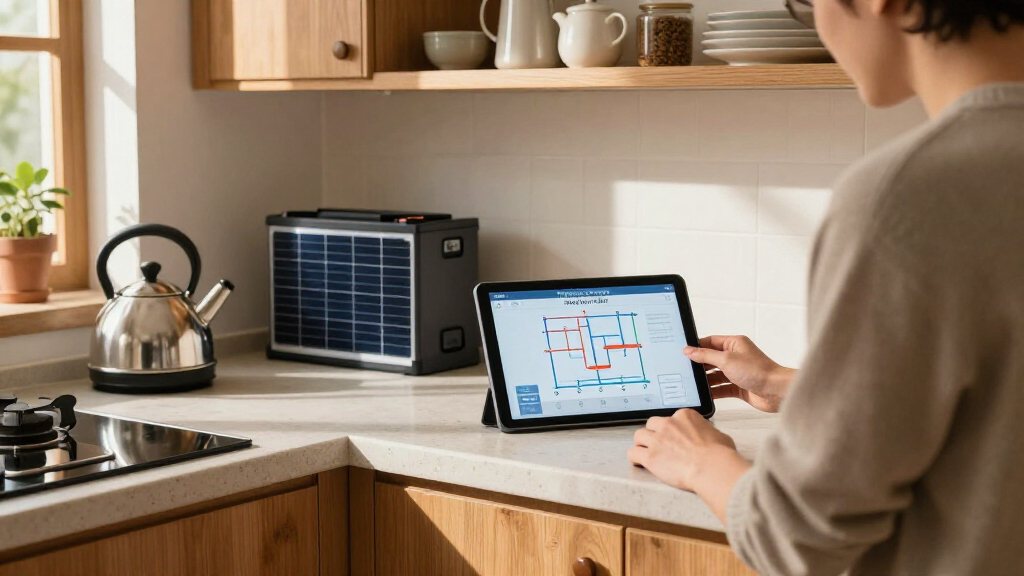
Participants in the project’s Living Laboratory have home energy technologies from different manufacturers, including solar panels, batteries, electric vehicles, heat pumps, smart thermostats and other connected devices. Through surveys, researchers will ask how households would set the terms of participation: how much electricity they might make available, under what conditions, and what incentives they would expect.
The questions include practical choices, such as how often a household would allow its air conditioning to be adjusted during a heat wave and how much battery charge it would reserve for a potential outage. The project will also ask what motivates people to participate. Some may prioritize financial returns or using more clean energy; others may want to support neighbors who rely on electricity for lifesaving medical equipment.
Researchers will use the responses to develop a range of hypothetical program designs. Balto Energy, a San Diego startup, will collect and share data on how participation in those programs could change homes’ hourly electricity use. The project will then use DERConnect, a UC San Diego-backed grid testing facility, to simulate how those changes could affect the wider electricity system. The study is modeling possible outcomes; it is not a report that these households are already enrolled in operating VPP programs.
Household Choices Could Shape Grid Programs
The study targets a central challenge for virtual power plants (VPPs): programs need households to make devices such as batteries, thermostats and electric vehicles available in ways that can help balance electricity demand, but people may have different priorities and limits. A household’s willingness to share battery capacity, for example, may depend on concerns about keeping power available during an outage or on whether the compensation is worthwhile.
Learning those preferences could help program designers test arrangements that offer participants more control and clarify what they receive in return. The project’s grid simulations may also help planners examine how household decisions could add up at a system level. However, the reported plan is a research project; it does not establish that any design will be adopted, that participants will receive payments, or that a particular VPP model will prove effective.
The project also addresses a broader concern raised by its co-lead, contractor Northern Pacific Power Systems CEO Andrew Krause: if more affluent households use solar and batteries to reduce their reliance on utility service, other customers could be left carrying a larger share of grid costs. Krause sees VPPs as one possible way to keep distributed energy resources connected to the grid, but the study has not demonstrated that they will resolve that cost concern.
As an affiliate, we earn on qualifying purchases.
A Study Beyond Existing VPP Offers
VPPs coordinate distributed energy resources—such as home batteries, solar systems and controllable appliances—so they can respond together to electricity-system needs. Existing programs are often organized by utilities, technology companies or equipment providers. The Canary Media report describes the Living Laboratory as a different approach: households will help researchers explore program rules before those hypothetical designs are assessed through grid modeling.
That work comes amid debate about how VPP participants should be compensated for the flexibility they provide. The report says utilities and companies including Sunrun and Tesla are expected to remain involved in expanding VPPs, while critics question whether households receive a fair share of the value. The new project is intended to provide information on preferences and possible program structures, rather than settle that compensation debate.
“What would happen if we put customers in a simulated environment, tweaked the rules, and found compelling, sophisticated program designs that give people agency to achieve their desired outcomes?”
— Andrew Krause, CEO of Northern Pacific Power Systems and Agile Electrification project co-lead
As an affiliate, we earn on qualifying purchases.
Program Rules And Results Remain Open
The study has not yet reported what participants prefer, which hypothetical program designs will result, or how the grid simulations will compare them. The project description also does not specify the exact survey schedule, the incentives participants will evaluate, or whether the designs will lead to real-world utility offerings.
It remains unclear whether the households’ stated preferences will reflect what a broader group of California customers would choose. The source does not provide details on how participants were recruited or whether the sample represents households without solar, batteries or other connected equipment. Nor does it report a completed analysis of VPP compensation or the effect on utility costs. Those are questions the research may inform, not findings established at launch.
smart thermostats for energy savings
As an affiliate, we earn on qualifying purchases.
As an affiliate, we earn on qualifying purchases.
Surveys Feed A Year Of Modeling
Over the next 12 months, researchers plan to survey the volunteer households, use their answers to develop hypothetical VPP programs, and work with Balto Energy to analyze how participation could affect hourly household electricity use. Those modeled changes will be sent to DERConnect for grid simulations.
The next substantive updates will be the participants’ reported preferences and the simulation results. The source material does not give a date for publication of findings or identify a specific decision by a utility or regulator that will follow. Until those results are available, the project’s proposed program designs and their potential grid effects remain under study.
As an affiliate, we earn on qualifying purchases.
Key Questions
What is the Agile Electrification Project studying?
It is studying how households would shape hypothetical virtual power plant programs, including how much energy flexibility they might share, under what conditions and for what incentives.
How many households are taking part?
The project plans to involve about 200 volunteer households with technologies such as solar panels, batteries, electric vehicles, heat pumps and smart thermostats.
Will participants’ homes already operate as a VPP?
The report describes a research study of hypothetical program designs and simulated energy-use changes. It does not say the households are already enrolled in a live VPP program.
How will researchers assess effects on the grid?
Balto Energy will analyze how virtual participation could change household electricity use. Researchers will then use DERConnect to simulate possible effects on the wider grid.
When will the findings be available?
The research phase is planned to run for 12 months, but the source does not give a publication date for results or say when utilities might act on them.
Source: rss
Halloween Picks
halloween
As an affiliate, we earn on qualifying purchases.