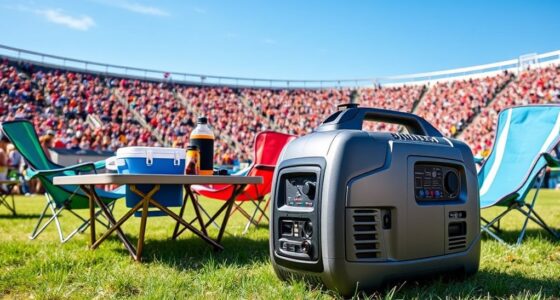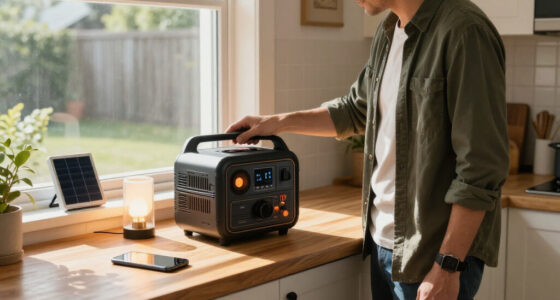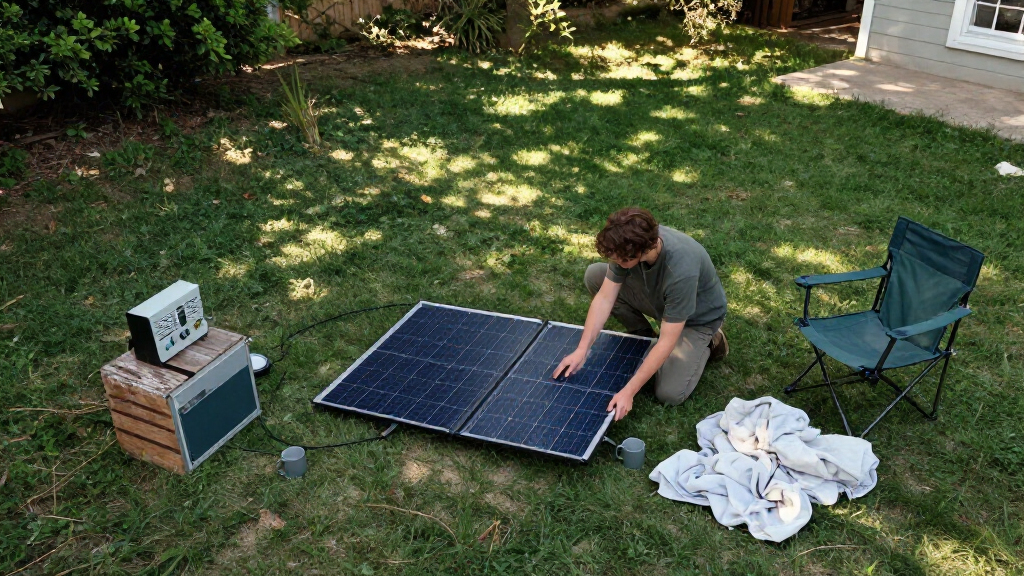
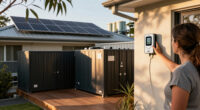
Among these portable solar panels for power stations, I rank the Jackery Solar Generator 1000 V2 with 200W Solar Panel best overall for its straightforward matched bundle. The EF ECOFLOW DELTA 3 Classic with 220W panel stands out for buyers who want a slightly higher-wattage bundled panel, while the Jackery Explorer 2000 v2 with two 200W panels suits larger energy needs. The main tradeoffs are panel output and portability, whether you want a matched power-station bundle or a panel alone, and how much capacity you need to recharge. A 100W option is easier to carry but gathers energy more slowly than a 200W panel in similar conditions. Continue reading for the full breakdown and guidance on choosing a panel that fits your station and routine.

Get backup power and energy gear delivered free with Prime
- Fast, free delivery on millions of items
- Prime Video, Amazon Music and more included
- Member-only deals all year
Complete the kit

Key Takeaways
- Matched bundles simplify compatibility: The Jackery 1000 V2 and EF ECOFLOW DELTA 3 Classic pair a power station with a panel, reducing the need to source components separately.
- More panel wattage can speed charging, but raises carrying demands: The two-panel Jackery Explorer 2000 v2 bundle offers 400W of stated panel capacity, while the GRECELL 100W is the lighter-output choice.
- Panel-only products serve a different buyer: EBL, SOKIOVOLA, Renogy, and GRECELL are candidates for people who already own a compatible power station.
- Renogy’s stated 25% efficiency is a differentiator, not a guarantee: Actual harvest still depends on sunlight, panel angle, temperature, and shading.
- Choose around daily energy use, not just peak watts: A larger station-and-panel bundle may suit extended or higher-demand trips, while a compact panel can be more practical for occasional top-ups.
| Jackery Solar Generator 1000 V2 with 200W Solar Panel |  | Best Overall Solar Generator Bundle | Battery capacity: 1,070Wh | Battery type: LFP | AC output: 1,500W | VIEW LATEST PRICE | See Our Full Breakdown |
| EBL 200W Foldable Portable Solar Panel |  | Best for Broad Connector Compatibility | Maximum power: 200W | Maximum voltage: 35V DC | Stated conversion efficiency: Up to 23.5% | VIEW LATEST PRICE | See Our Full Breakdown |
| Jackery HomePower 1000 v2 Portable Power Station with 200W Solar Panel |  | Best for Backup Power | Battery capacity: 1,024Wh | Battery type: LiFePO4 | AC output: 1,500W pure sine wave | VIEW LATEST PRICE | See Our Full Breakdown |
| SOKIOVOLA 200W Foldable Portable Solar Panel |  | Best for Flexible Panel Placement | Maximum power: 200W | Stated conversion efficiency: Up to 25% | Output voltage: 18V | VIEW LATEST PRICE | See Our Full Breakdown |
| Renogy 200W Portable Solar Panel with 25% Efficiency |  | Best for Direct Device Charging | Power: 200W | Stated efficiency: 25% | Cell type: 16BB N-Type monocrystalline silicon | VIEW LATEST PRICE | See Our Full Breakdown |
| GRECELL 100W Foldable Portable Solar Panel |  | Best for Compact, Flexible Setups | Maximum power: 100W | Output voltage: 20V DC | Maximum current: 5A | VIEW LATEST PRICE | See Our Full Breakdown |
| Jackery Explorer 2000 v2 Portable Power Station with Two 200W Solar Panels |  | Best for High-Capacity Solar Backup | Battery capacity: 2,042Wh | AC output: 2,200W | AC outlets: 3 | VIEW LATEST PRICE | See Our Full Breakdown |
| EF ECOFLOW DELTA 3 Classic Solar Generator with 220W Solar Panel, 1024Wh |  | Best for Fast-Response Backup | Battery capacity: 1,024Wh | Output wattage: 1,800W | Surge capacity: 3,600W | VIEW LATEST PRICE | See Our Full Breakdown |
| portable solar panels for power station | Weight | Battery capacity | Warranty |
|---|---|---|---|
| Jackery Solar Generator 1000 V | 23.8 lbs | 1,070Wh | 5 years |
| EBL 200W Foldable Portable Sol | 17.95 lbs | — | 1 year |
| Jackery HomePower 1000 v2 Port | 25 lbs | 1,024Wh | — |
| SOKIOVOLA 200W Foldable Portab | 16.3 lbs | — | 12 months |
| Renogy 200W Portable Solar Pan | 13.89 lbs | — | 2-year material and workmanship warranty |
| GRECELL 100W Foldable Portable | 10.3 lb | — | — |
| Jackery Explorer 2000 v2 Porta | 39.5 lb for power station; 66.8 lb listed item weight | 2,042Wh | — |
| EF ECOFLOW DELTA 3 Classic Sol | — | 1,024Wh | — |
More Details on Our Top Picks
Jackery Solar Generator 1000 V2 with 200W Solar Panel
The Jackery Solar Generator 1000 V2 is the strongest all-in-one choice here for buyers who want both a power station and a panel in one package. Its 1,070Wh LFP battery and 1,500W AC output give it more capacity than the HomePower 1000 v2, while the included 200W panel provides a ready-made way to recharge off-grid. The app adds charging-mode control, useful when balancing recharge speed against battery care. The tradeoff is that this bundle is heavier than buying a panel alone, and reaching its one-hour charging mode requires enabling emergency charging in the app. The station and panel also ship separately, so the bundle may not arrive together. Compared with the Renogy panel, this is a better fit for someone who needs storage and outlets, not just solar collection.
Pros:- Includes a 200W solar panel alongside the power station
- 1,070Wh LFP battery and 1,500W AC output support a broad range of small appliances
- App provides multiple charging modes
- LFP battery is rated to retain over 70% capacity after 4,000 cycles
Cons:- One-hour charging requires enabling emergency charging in the app
- Power station and solar panel ship separately
- The complete setup is less portable than carrying a panel alone
Best for: Campers and road-trippers who want a ready-to-use solar charging setup with substantial battery capacity and AC power.
Not ideal for: Buyers who already own a compatible power station, want only a lightweight panel, or need the fastest charging mode without app setup.
- Battery capacity:1,070Wh
- Battery type:LFP
- AC output:1,500W
- Surge peak:3,000W
- Included solar panel:200W
- Weight:23.8 lbs
- Ports:3 AC, 2 USB-C, 1 USB-A, 1 DC car port
- USB-C output:Up to 100W
- Warranty:5 years
Our verdict“Choose this bundle if you want a capable power station and matching 200W solar panel together, rather than adding a panel to equipment you already own.”
EBL 200W Foldable Portable Solar Panel
The EBL 200W Foldable Portable Solar Panel earns its place for buyers who need one panel to connect with several kinds of power station. Its included cable offers XT60, Anderson, DC, and aviation connectors, so it has a wider out-of-the-box adapter selection than the Renogy 200W panel, whose 4-in-1 adapter is sold separately. Four kickstands make it easier to angle the panel toward changing sunlight, and the IP65 design adds protection against dust and water exposure. The compromise is portability: at 17.95 pounds, it is heavier than both Renogy and SOKIOVOLA, despite having the same 200W rating. Its 23.5% efficiency is a stated maximum, not a guarantee of real-world output. I’d pick it for car camping and mixed-brand gear, not long walks from a vehicle.
Pros:- Includes MC4 cable adapters for XT60, Anderson, DC, and aviation connections
- Four kickstands help with panel positioning
- IP65 design offers dust and water protection
- Foldable 200W monocrystalline panel
Cons:- At 17.95 lbs, it is heavier than the Renogy and SOKIOVOLA panels
- The 23.5% efficiency figure is a stated maximum
- One-year warranty is shorter than the Renogy panel’s two-year warranty
Best for: Car campers and power-station owners who need a 200W panel with several connector options included.
Not ideal for: Hikers or buyers prioritizing a lighter carry, or anyone expecting the stated maximum efficiency in all conditions.
- Maximum power:200W
- Maximum voltage:35V DC
- Stated conversion efficiency:Up to 23.5%
- Cell material:Monocrystalline silicon
- Weight:17.95 lbs
- Folded dimensions:25.31 × 20.87 × 2.17 in
- Unfolded dimensions:94.17 × 20.83 × 0.25 in
- Connector options:MC4 to XT60, Anderson, DC 7.9 × 0.9 mm, and aviation
- Warranty:1 year
Our verdict“Choose EBL when included connector variety matters more than minimizing carry weight.”
Jackery HomePower 1000 v2 Portable Power Station with 200W Solar Panel
The Jackery HomePower 1000 v2 is the bundle I’d favor when a solar setup also needs to protect connected equipment during an outage. Its 10ms UPS switchover is the key distinction from the Solar Generator 1000 V2: it can hand off to battery power quickly when grid power drops. The 1,024Wh LiFePO4 battery, three pure sine wave AC outlets, and included 200W panel make it suitable for both home backup and trips away from outlets. It also supports up to 400W of solar input, leaving room to pair it with more panel capacity later, subject to compatibility. The costs of that backup focus are a 25-pound carry weight and a default AC charge time of about 1.25 hours; its faster 50-minute mode is optional. Compared with the EBL panel alone, this is a complete storage-and-output system, not a lightweight solar add-on.
Pros:- 10ms UPS function supports quick backup-power handoff
- Includes a 200W solar panel and accepts up to 400W solar input
- Three 1,500W pure sine wave AC outlets
- LiFePO4 battery is rated for over 6,000 charge cycles
Cons:- At 25 lbs, it is heavier than the Solar Generator 1000 V2
- Default charging takes about 1.25 hours
- The 50-minute emergency charging mode is optional
Best for: Households and remote workers who want a solar-ready power station with fast backup switching for connected equipment.
Not ideal for: Buyers who need a lightweight hiking setup or want the shortest standard AC recharge time without selecting an optional mode.
- Battery capacity:1,024Wh
- Battery type:LiFePO4
- AC output:1,500W pure sine wave
- AC outlets:3
- UPS switchover:10ms
- Solar input:Up to 400W
- Included solar panel:200W
- Weight:25 lbs
- USB-C ports:2, up to 100W PD
Our verdict“Pick the HomePower 1000 v2 if UPS backup and future solar-input headroom matter more than keeping the package light.”
SOKIOVOLA 200W Foldable Portable Solar Panel
The SOKIOVOLA 200W panel is a practical match for buyers who want to reposition or secure a portable panel around camp. Its magnetic handle, carrying bag, and four mounting holes give it more placement flexibility than the EBL panel, while the included 5-in-1 cable supports several common power-station connections. The ETFE-coated monocrystalline surface is designed for weather resistance, and the stated efficiency reaches up to 25%. That figure does not remove the usual limits of sunlight, angle, and the power station’s input ceiling: a compatible station may accept less than the panel can produce. At 16.3 pounds, it is lighter than EBL but still a cumbersome choice for longer hikes. Compared with Renogy, it has useful mounting hardware included, while Renogy weighs less and adds direct USB charging.
Pros:- Includes a magnetic handle, carrying bag, and four mounting holes
- 5-in-1 cable supports MC4, XT60, DC5521, DC7909, DC8020, and Anderson connections
- ETFE coating and monocrystalline cells
- Stated conversion efficiency of up to 25%
Cons:- At 16.3 lbs, it is still cumbersome for long hikes
- Actual input can be limited by the connected power station
- Does not list direct USB charging ports like the Renogy panel
Best for: Campers and van travelers who want multiple ways to position or mount a 200W panel near a compatible power station.
Not ideal for: Backpackers or anyone whose power station has a low solar-input limit that would restrict what the panel can deliver.
- Maximum power:200W
- Stated conversion efficiency:Up to 25%
- Output voltage:18V
- Weight:16.3 lbs
- Folded size:21 × 23 in
- Unfolded dimensions:78.68 × 23 × 1.5 in
- Cell and coating:Monocrystalline cells with ETFE coating
- Connector options:MC4 with XT60, DC5521, DC7909, DC8020, and Anderson adapters
- Warranty:12 months
Our verdict“Choose SOKIOVOLA if adjustable placement and included mounting options matter more than the lightest carry or direct device charging.”
Renogy 200W Portable Solar Panel with 25% Efficiency
The Renogy 200W Portable Solar Panel is the most versatile pick here for people who want solar charging beyond their power station. Its USB-C PD 45W and dual USB-A ports let you charge smaller devices directly, which can free the station’s stored energy for AC-powered gear. At 13.89 pounds, it is also lighter than the EBL and SOKIOVOLA panels, making it the easiest of those three to carry between a vehicle and a campsite. The 16BB N-Type cells carry a stated 25% efficiency rating, and four kickstands help with positioning. The main catch is that the 4-in-1 adapter is sold separately, so connecting to some power stations may require another purchase. Unlike the included-adapter options from EBL and SOKIOVOLA, Renogy makes buyers check connector needs before heading out.
Pros:- USB-C PD 45W and dual USB-A ports allow direct device charging
- Lighter than the EBL and SOKIOVOLA 200W panels at 13.89 lbs
- 16BB N-Type monocrystalline cells with stated 25% efficiency
- Four kickstands support multiple panel angles
Cons:- 4-in-1 adapter for some power stations is sold separately
- Compatibility depends on the connected station’s requirements
- USB-C output is limited to 45W
Best for: Campers who want a relatively light 200W panel that can charge a power station and phones or tablets directly.
Not ideal for: Buyers who need a multi-brand power-station adapter included or expect a panel-only setup with no extra accessories.
- Power:200W
- Stated efficiency:25%
- Cell type:16BB N-Type monocrystalline silicon
- Amperage capacity:11.3A
- Maximum voltage:21.6V
- Weight:13.89 lbs
- Outputs:MC4, USB-C PD 45W, dual USB-A
- Folded dimensions:23.72 × 22.99 × 1.97 in
- Warranty:2-year material and workmanship warranty
Our verdict“Choose Renogy if you want a lighter panel with direct USB charging and are prepared to confirm or supply the right power-station adapter.”
GRECELL 100W Foldable Portable Solar Panel
The GRECELL 100W is the standalone panel pick for buyers who already own a compatible power station and want a portable way to add solar charging. Its included adapters suit a range of stations, while kickstands make it easier to position the panel toward the sun than a panel that must lie flat. At 10.3 pounds, it is more manageable for a small campsite than the Jackery Explorer 2000 v2 bundle, which pairs a much larger battery with two 200W panels. The tradeoff is capacity: 100W is a modest input, so recharging a large station can take substantially longer, and output depends on sunlight. ETFE lamination, weather-resistant cloth, and mounting grommets help with outdoor use, but this is still a panel rather than a complete power system.
Pros:- Multiple adapters support compatibility with many portable power stations
- Kickstands, an accessory pouch, and mounting grommets give flexible setup options
- Can be expanded with a second panel in a compatible series or parallel configuration
- ETFE lamination and waterproof Oxford cloth support outdoor use
Cons:- 100W maximum output is a slower match for large-capacity power stations
- Solar generation depends on suitable sunlight and panel positioning
- A second panel and a compatible power station are needed to build a larger charging setup
Best for: Power-station owners who want a relatively compact 100W panel with adapters, kickstands, and mounting options for camping or occasional off-grid charging.
Not ideal for: Buyers who need a solar panel and power station together, or who want to recharge a high-capacity battery quickly; 100W provides less input than the 200W and 220W panels in this roundup.
- Maximum power:100W
- Output voltage:20V DC
- Maximum current:5A
- Solar cell efficiency:Up to 23.5%
- Connector type:MC4
- Dimensions:50.5 × 21.1 × 0.2 in
- Folded dimensions:Approximately 25.25 × 10.55 × 3 in
- Weight:10.3 lb
- Materials:Monocrystalline silicon with ETFE lamination and waterproof Oxford cloth
Our verdict“Choose the GRECELL if you already own a compatible station and value portable setup flexibility over faster solar charging.”
Jackery Explorer 2000 v2 Portable Power Station with Two 200W Solar Panels
This Jackery bundle is the high-capacity choice for buyers who want a power station and substantial solar input in one package: its 2,042Wh battery pairs with two 200W panels. That gives it more storage and included panel wattage than the EF ECOFLOW DELTA 3 Classic, whose bundle has a 1,024Wh battery and one 220W panel. The extra capacity suits longer outages or camping trips with several devices, while 2,200W AC output and three outlets broaden what the station can run. The compromise is portability: the station alone weighs 39.5 pounds, and the listed item weight is 66.8 pounds. Solar charging is listed at about six hours with the 400W panels, so this is a capable but substantial setup, not a lightweight panel kit for quick trips.
Pros:- Large 2,042Wh battery capacity for longer use between recharges
- Includes two 200W solar panels for 400W of total panel capacity
- 2,200W AC output and three outlets support multiple powered devices
- LiFePO4 battery, quiet operation, and 20ms UPS switching suit backup use
Cons:- Power station and panels may ship separately
- The station weighs 39.5 pounds, with a listed total item weight of 66.8 pounds
- Solar charging takes about six hours with the included 400W panel capacity under stated conditions
Best for: Households or campers who need a large battery reserve, multiple AC outlets, and 400W of included solar panels for extended off-grid use or backup power.
Not ideal for: Solo travelers and buyers prioritizing a light, simple carry; the station and two panels make a much heavier setup than the GRECELL 100W foldable panel.
- Battery capacity:2,042Wh
- AC output:2,200W
- AC outlets:3
- Included solar panels:2 × 200W
- Battery type:LiFePO4
- USB-C PD output:100W
- UPS switching time:20ms
- Solar charging time:About 6 hours with 400W panels
- Weight:39.5 lb for power station; 66.8 lb listed item weight
Our verdict“Pick this bundle when battery capacity and a substantial included solar array matter more than easy transport.”
EF ECOFLOW DELTA 3 Classic Solar Generator with 220W Solar Panel, 1024Wh
The DELTA 3 Classic bundle fits buyers who want a power station and panel with fast charging and quick backup switching, rather than the largest battery in the group. Its under-10ms UPS switching is faster than the Jackery Explorer 2000 v2’s listed 20ms, which makes the EcoFlow a stronger fit for backup loads that need a prompt changeover. The included 220W bifacial panel also has more rated wattage than the GRECELL 100W standalone panel, though it is just one panel and its 1,024Wh battery is half the Jackery’s capacity. AC charging from zero to 80% in 45 minutes offers a useful alternative when sunlight is limited. Solar recharging is listed at 5.8 hours under stated conditions, and the generator and panel may arrive separately.
Pros:- Includes a 220W bifacial solar panel with up to 25% solar conversion efficiency
- Under-10ms UPS switching supports quick backup changeover
- Fast AC charging reaches 80% in 45 minutes
- LiFePO4 battery is rated for over 10 years of daily use
Cons:- The 1,024Wh battery offers less stored energy than the Jackery Explorer 2000 v2
- Solar recharging takes 5.8 hours under stated conditions
- The generator and panel may arrive separately
Best for: Home users and campers who want a mid-capacity power station with an included solar panel, fast AC recharge, and rapid UPS switching for backup-sensitive devices.
Not ideal for: Buyers who need the longest runtime or the highest included solar-panel wattage; the Jackery Explorer 2000 v2 bundle offers a larger battery and 400W of panels.
- Battery capacity:1,024Wh
- Output wattage:1,800W
- Surge capacity:3,600W
- Included solar panel:220W bifacial
- Solar conversion efficiency:Up to 25%
- AC charging time:0–80% in 45 minutes
- Solar recharging time:5.8 hours
- UPS switching time:Under 10ms
- Battery chemistry:LiFePO4
Our verdict“Choose the DELTA 3 Classic if fast charging and UPS response matter more to you than maximum battery capacity.”
How We Picked
I ranked these options by how well they serve buyers pairing portable solar with a power station: stated panel output, portability, bundle usefulness, and the practical clarity of the setup. Matched kits rank well for buyers who want a station and panel together; standalone panels remain useful for owners who already have a station but require extra care around connector and input compatibility. I also weighed whether a product’s role is clear, from a compact 100W panel to a multi-panel bundle intended for higher energy needs.
The ranking reflects tradeoffs rather than wattage alone. A higher-output setup can collect more energy when sunlight and station input limits allow, but it may take more space and effort to move. Efficiency claims and headline output do not determine real-world charging by themselves, so buyers should verify their station’s solar input specifications and account for conditions at the site. I favor options with an understandable use case, while noting where a panel-only purchase or larger bundle calls for more planning.
Factors to Consider When Choosing Portable Solar Panels For Power Stations
Before choosing, match the panel to both your power station’s solar input and the way you travel. The panel’s wattage is only one part of the decision: connectors, usable sunlight, setup space, and the energy you need each day can change which option makes sense.
Match Panel Output to the Station’s Input Limits
Check the power station manual for its accepted solar voltage range, maximum input wattage, and connector type before buying a separate panel. A panel rated above the station’s input ceiling may not charge it faster; the station can limit incoming power, and incompatible voltage can prevent charging or create a safety risk. Multiple panels also need to be connected in a way the station supports, since series and parallel wiring affect voltage and current differently. Do not assume two panels can simply be plugged together with any adapter. A matched bundle reduces some guesswork, but buyers should still confirm the listed panel configuration for their exact station model.
Estimate Energy Needs Across a Full Day
Start with the watt-hours your devices use, then account for conversion losses and periods when the panel is not facing strong sun. A device’s running wattage multiplied by its hours of use gives a rough daily estimate, but refrigerators, pumps, and other cycling appliances can draw power unevenly. A larger panel can refill a station faster during good sun, yet it cannot compensate fully for short winter days, heavy shade, or several days of cloudy weather. Buyers often focus on peak panel watts and overlook how many useful sun hours their campsite or home actually gets. If outages are the main concern, plan for cloudy-day reserve rather than sizing only for an ideal sunny afternoon.
Balance Output Against Carrying and Setup Space
Foldable panels are easier to transport than rigid installations, but larger panels still take up room and need a clear place to open. Consider the packed dimensions, weight, handle or case design, and how often you will move the panel during the day to follow the sun. A compact 100W panel can suit short outings or a light kit, though it will generally collect energy more slowly than a higher-output setup under comparable conditions. Two panels can improve available collection area, but they also need more ground space and careful positioning. For frequent car camping, the extra setup may be acceptable; for backpacking, a power station and foldable panel may already be too bulky regardless of the panel’s wattage.
Treat Efficiency Claims as One Part of Performance
Panel efficiency describes how much sunlight a panel converts relative to its surface area; it does not promise a particular daily energy total. A higher efficiency figure can matter when storage space or panel footprint is limited, but orientation, temperature, cloud cover, and shading still shape actual output. Even partial shade across a panel can reduce harvest, so placement may matter more than a small difference in advertised efficiency. Compare the rating alongside panel dimensions and the station’s input range rather than choosing on the percentage alone. When possible, look for clear manufacturer specifications about test conditions and operating limits.
Decide Whether a Bundle or Standalone Panel Fits
A station-and-panel bundle is a practical route for a first-time solar buyer because it puts the main components together and can simplify connector matching. A standalone panel may be the better choice if you already own a power station and have confirmed it accepts that panel’s voltage and connector. Bundles can also limit flexibility: the included panel’s output may not match your future needs, and a kit’s total capacity does not mean every component is interchangeable with other brands. Before purchasing, check whether the panel can be used with other stations or requires a brand-specific adapter. Pay more for a bundle when the matched setup saves meaningful compatibility work, not just because it contains more equipment.
Plan for Weather, Positioning, and Long-Term Care
Portable panels need room to face the sun and may need repositioning as the sun moves, so think about whether your site allows that before relying on solar as your only recharge source. Keep the panel clear of persistent shade and follow its care guidance around rain, dust, storage, and cleaning. A foldable design is easier to pack, but hinges, fabric, and cable connections still need careful handling over repeated trips. Do not assume a weather-resistant panel makes the connected power station safe to leave outdoors; each component has its own protection limits. If dependable charging matters during an outage, keep a wall-charging option or other backup available for poor weather.
Frequently Asked Questions
Can I use a standalone panel with a power station from another brand?
Often, but brand names alone do not establish compatibility. Compare the panel’s voltage and connector with the station’s accepted solar input range, maximum current, and adapter requirements. A connector that physically fits can still deliver an unsupported electrical input. Check the manuals for both products before connecting them, and avoid improvised wiring. If the specifications are unclear, a matched bundle or manufacturer-approved panel is the lower-uncertainty choice.
Will a 200W panel produce 200 watts throughout the day?
No; 200W is a rated peak under specified test conditions, not a steady daily output. Sun angle, cloud cover, heat, dirt, and shade can all lower the power reaching the station. The station may also cap incoming power if its solar input limit is below the panel’s potential output. For planning, use local sunlight conditions and your station’s input specifications rather than multiplying peak watts by every hour of daylight. A panel that can be repositioned into direct sun may collect more energy than one left flat in a partially shaded spot.
Is it better to buy a power station bundle or just add a panel to my existing station?
If you already own a station, adding a standalone panel can avoid buying capacity you do not need, provided the panel is electrically compatible. A bundle is more appealing when you need both pieces and want a simpler path to a working setup. Compare the included panel’s output with the station’s input limit, and check whether the bundle’s cable and connectors suit your intended use. Bundles do not automatically offer the best fit for every buyer, especially if you want to expand with different panels later. Choose based on the equipment you have and the compatibility details you can verify.
Should I choose one 200W panel or two panels for a larger power station?
Two panels can provide more available solar input if the station accepts their combined output and they are wired in a supported configuration. That can be useful when you need to replenish a larger battery during limited daylight, but it also means more packed gear, setup space, and cable management. One 200W panel may be easier to position and carry, though it can take longer to recharge a large station in good sun. Check the station’s maximum solar input before adding panels; extra rated wattage beyond that limit may not improve charging speed. Your daily energy use and available sun should decide the setup, not station capacity alone.
Is a 100W panel enough for camping or emergency backup?
A 100W panel can help maintain a small power station for modest loads, but it may be slow for frequent charging or higher-use appliances. For camping, list the devices you expect to run and their daily energy use, then compare that with realistic sunlight at your site. For emergency backup, several cloudy days can matter more than the panel’s headline rating, so keep reserve capacity or another charging method if power is needed reliably. A compact panel may be the sensible choice when portability and occasional top-ups matter most. Choose a higher-output arrangement when faster recovery or heavier daily use takes priority.
Conclusion
For the broadest mix of ease and useful output, I recommend the Jackery Solar Generator 1000 V2 with 200W Solar Panel as best overall. The EBL 200W Foldable Portable Solar Panel is my best-value-style pick for buyers who already own a compatible station and want a standalone 200W option, while the Jackery Explorer 2000 v2 with two 200W panels is the best premium choice for larger energy needs and buyers prepared to carry more gear. Beginners should look at the EF ECOFLOW DELTA 3 Classic bundle or the Jackery 1000 V2 kit for a station-and-panel starting point; compare their input limits and included setup before deciding. For a more compact, lower-output setup, the GRECELL 100W fits occasional top-ups better than fast replenishment. If panel efficiency claims and a space-conscious footprint are priorities, examine the Renogy 200W specifications alongside your station’s compatibility requirements. The best choice is the one that matches your daily energy demand, input limits, and willingness to manage panel size and setup.