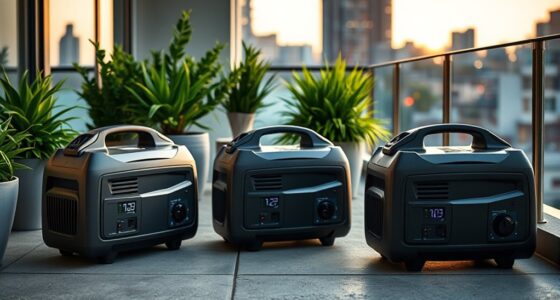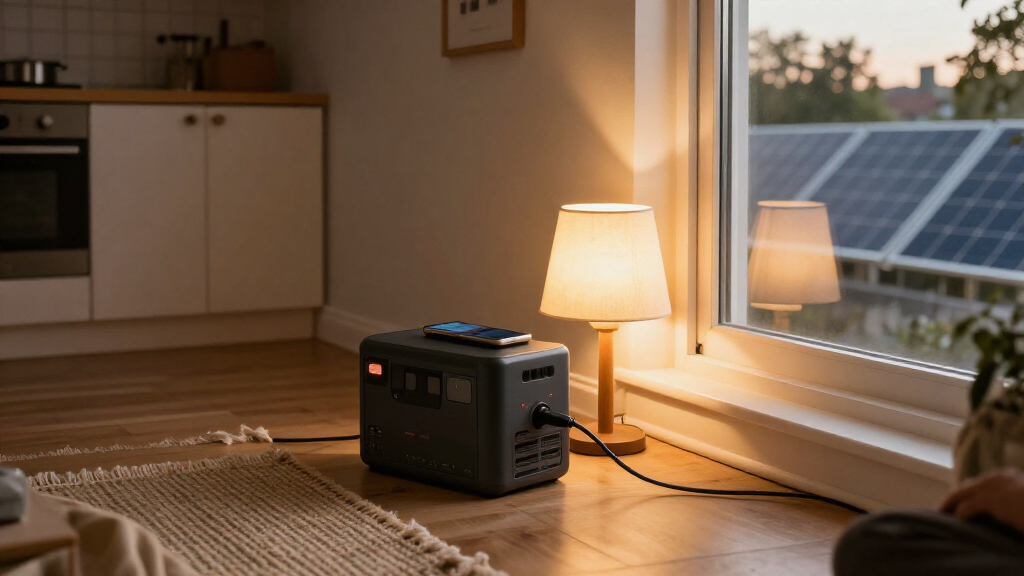
The best portable battery backup systems depend on whether you need a UPS for electronics or a power station for appliances and off-grid use. I rank the EcoFlow DELTA 3 as the best overall balance of usable capacity and output, while the Anker SOLIX S2000 suits longer runtimes and the CyberPower CP1500PFCLCD is a strong choice for a computer-focused UPS. The main tradeoff is between fast, automatic backup for sensitive equipment and larger portable capacity for devices that draw more power or need to run longer. Smaller UPS units cost less space but cannot support high-wattage loads, while large power stations bring more capacity and a different setup. Read on for how each of the 14 options fits a distinct backup need.

Get backup power and energy gear delivered free with Prime
- Fast, free delivery on millions of items
- Prime Video, Amazon Music and more included
- Member-only deals all year
Key Takeaways
The lineup splits into two product types: UPS units for automatic backup of computers and network gear, and power stations for larger or portable loads.
The EcoFlow DELTA 3 stands out as the balanced power-station pick, pairing 1,024Wh capacity with 1,800W output without moving to the larger 2,010Wh Anker SOLIX S2000.
For desktop systems, the CyberPower CP1500PFCLCD and CP1500PFCRM2U offer PFC sine-wave output; the rackmount model is the better fit where rack installation matters.
The smaller BLUETTI Elite 30 V2 favors low-weight portability over runtime, while the Anker SOLIX E10 targets expandable home backup rather than grab-and-go use.
Basic UPS models such as the CyberPower ST425 and APC BE600M1 suit modest electronics, but their lower capacity and output make them poor matches for high-draw appliances.
| CyberPower ST625U Standby UPS Battery Backup and Surge Protector |  | Best Compact Desktop UPS | Capacity: 625VA / 360W | Output waveform: Simulated sine wave | Outlets: 8 total: 4 battery backup and surge protected; 4 surge protected | VIEW LATEST PRICE | See Our Full Breakdown |
| Anker SOLIX S2000 Portable Power Station, 2,010Wh, 1,500W |  | Best for Extended Portable Backup | Battery capacity: 2,010Wh | Battery type: LiFePO4 | Continuous output: 1,500W | VIEW LATEST PRICE | See Our Full Breakdown |
| CyberPower EC850LCD Ecologic UPS Battery Backup and Surge Protector |  | Best for Peripheral Management | Capacity: 850VA / 510W | Outlets: 12 total: 6 battery backup and surge protected; 6 surge protected, including 3 ECO-controlled | Output waveform: Simulated sine wave | VIEW LATEST PRICE | See Our Full Breakdown |
| Anker SOLIX C1000 Gen 2 Portable Power Station |  | Best Fast-Recharging Portable System | Battery capacity: 1,024Wh | Battery type: LiFePO4 | Running output: 2,000W | VIEW LATEST PRICE | See Our Full Breakdown |
| CyberPower CP1500PFCRM2U PFC Sinewave UPS Battery Backup |  | Best for Compact Rackmount Setups | Capacity: 1500VA / 1000W | Output power: 600W | Output waveform: Sine wave | VIEW LATEST PRICE | See Our Full Breakdown |
| BLUETTI Elite 30 V2 Portable Power Station, 288Wh, 600W |  | Best Compact Portable Power Station | Capacity: 288Wh | Continuous output: 600W | Surge output: 1500W in Power Lifting Mode | VIEW LATEST PRICE | See Our Full Breakdown |
| CyberPower CP1500AVRLCD3 Intelligent LCD UPS Battery Backup |  | Best for Basic Desktop UPS Coverage | Capacity: 1500VA / 900W | Outlets: 12 NEMA 5-15R; 6 battery backup and surge protected | USB ports: 1 Type-A and 1 Type-C | VIEW LATEST PRICE | See Our Full Breakdown |
| EcoFlow DELTA 3 Portable Power Station, 1024Wh, 1800W |  | Best for Expandable Home Backup | Capacity: 1024Wh | AC output: 1800W | Surge output: 3600W with X-Boost | VIEW LATEST PRICE | See Our Full Breakdown |
| APC BX1500M 1500VA/900W UPS Battery Backup and Surge Protector |  | Best for Home-Office Monitoring | Capacity: 1500VA / 900W | Outlets: 10 NEMA 5-15R; 5 battery backup and surge protected | Runtime: Up to 68 minutes at a 100W load; varies by load | VIEW LATEST PRICE | See Our Full Breakdown |
| CyberPower CP1000PFCLCD PFC Sine Wave UPS Battery Backup and Surge Protector |  | Best for Active PFC Computer Setups | Capacity: 1000VA / 600W | Waveform: PFC sine wave | Outlets: 10 NEMA 5-15R; 5 battery backup and surge protected | VIEW LATEST PRICE | See Our Full Breakdown |
| APC Back-UPS BE600M1 600VA/330W Battery Backup and Surge Protector |  | Best Compact UPS for Essential Electronics | Capacity: 600VA/330W | Battery-backed outlets: 5 | Surge-only outlets: 2 | VIEW LATEST PRICE | See Our Full Breakdown |
| CyberPower ST425 Standby UPS Battery Backup and Surge Protector |  | Best for Simple, Low-Power Setups | Capacity: 425VA/260W | Outlets: 8 total: 4 battery-backed and surge-protected; 4 surge-protected | Runtime: 1 minute | VIEW LATEST PRICE | See Our Full Breakdown |
| CyberPower CP1500PFCLCD PFC Sinewave UPS Battery Backup and Surge Protector |  | Best for Power-Sensitive Computer Setups | Capacity: 1500VA/1000W | Output waveform: Sine wave | Outlets: 12 total: 6 battery-backed and surge-protected; 6 surge-protected | VIEW LATEST PRICE | See Our Full Breakdown |
| Anker SOLIX E10 Power Dock and Extra Battery, 12–90 kWh |  | Best for Whole-Home Backup | Battery capacity: 12 kWh, expandable to 90 kWh | Continuous output: 7.6 kW | Turbo output: 10 kW | VIEW LATEST PRICE | See Our Full Breakdown |
| portable battery backup system | Capacity | Outlets | Warranty | Output waveform |
|---|---|---|---|---|
| CyberPower ST625U Standby UPS | 625VA / 360W | 8 total: 4 battery backup and surge protected; 4 surge protected | 3 years, including battery | Simulated sine wave |
| Anker SOLIX S2000 Portable Pow | — | 8 | 5 years | — |
| CyberPower EC850LCD Ecologic U | 850VA / 510W | 12 total: 6 battery backup and surge protected; 6 surge protected, including 3 ECO-controlled | 3 years, including battery | Simulated sine wave |
| Anker SOLIX C1000 Gen 2 Portab | — | 9 | — | — |
| CyberPower CP1500PFCRM2U PFC S | 1500VA / 1000W | 8 NEMA 5-15R | 3 years, including battery | Sine wave |
| BLUETTI Elite 30 V2 Portable P | 288Wh | — | — | — |
| CyberPower CP1500AVRLCD3 Intel | 1500VA / 900W | 12 NEMA 5-15R; 6 battery backup and surge protected | 3 years, including battery | Simulated sine wave |
| EcoFlow DELTA 3 Portable Power | 1024Wh | — | — | — |
| APC BX1500M 1500VA/900W UPS Ba | 1500VA / 900W | 10 NEMA 5-15R; 5 battery backup and surge protected | 3 years for UPS hardware; 1 year for battery | Stepped approximation to a sine wave |
| CyberPower CP1000PFCLCD PFC Si | 1000VA / 600W | 10 NEMA 5-15R; 5 battery backup and surge protected | 3 years, including battery | — |
| APC Back-UPS BE600M1 600VA/330 | 600VA/330W | — | — | — |
| CyberPower ST425 Standby UPS B | 425VA/260W | 8 total: 4 battery-backed and surge-protected; 4 surge-protected | 3 years, including the battery | Simulated sine wave |
| CyberPower CP1500PFCLCD PFC Si | 1500VA/1000W | 12 total: 6 battery-backed and surge-protected; 6 surge-protected | 3 years, including the battery | Sine wave |
| Anker SOLIX E10 Power Dock and | — | — | — | — |
More Details on Our Top Picks
CyberPower ST625U Standby UPS Battery Backup and Surge Protector
For a small home-office setup, I’d choose the ST625U over a portable power station when the goal is brief protection from outages and power spikes, not hours of off-grid power. Its eight outlets let me connect several devices, but only four stay powered by the battery; the remaining four provide surge protection alone. Two USB ports add charging convenience, though their 2.1A shared output is modest. The listed two-minute runtime makes this a short-bridge backup for saving work or shutting down, not for keeping a workstation running through a prolonged outage. Compared with the larger-outlet CyberPower EC850LCD, this model is simpler and more compact, but it lacks an LCD status screen and ECO-controlled outlets.
Pros:- Eight outlets combine battery backup and surge protection in one compact unit
- Four battery-backed outlets cover a basic desktop setup
- Two USB charging ports provide a convenient extra charging option
- Status lights and power management software help monitor the unit
Cons:- Listed runtime is only two minutes, limiting backup to brief interruptions or shutdown time
- Only four of the eight outlets provide battery backup
- Shared USB output of 2.1A is limited for charging multiple devices
Best for: Home-office users who want a compact UPS to protect a computer, router, and a few peripherals during brief outages.
Not ideal for: People who need extended backup, more than four battery-backed devices, or power for appliances while camping or during long outages.
- Capacity:625VA / 360W
- Output waveform:Simulated sine wave
- Outlets:8 total: 4 battery backup and surge protected; 4 surge protected
- USB charging:2 ports, 2.1A shared output
- Listed runtime:2 minutes
- Dimensions:3.2 × 9.8 × 5.8 in
- Weight:5 lb
- Warranty:3 years, including battery
Our verdict“Choose the ST625U for compact, short-duration desktop protection, but pick a larger UPS or portable power station if you need more runtime.”
Anker SOLIX S2000 Portable Power Station, 2,010Wh, 1,500W
When backup needs to last well beyond a brief outage, the SOLIX S2000 has a clear advantage over desktop UPS units such as the CyberPower EC850LCD: its 2,010Wh LiFePO4 battery is built for portable power, not just orderly computer shutdowns. The 1,500W continuous output and 3,000W peak give it room for a broader mix of household and camping gear, while eight outlets and a UPS switchover under 10 ms add flexibility for home use. Six charging methods, including solar input up to 400W, offer more ways to replenish it than a conventional UPS. That capacity comes with a 35.7 lb weight, so it is portable in the broad sense, not effortless to carry. Unlike the Anker SOLIX C1000 Gen 2, it has no 12V DC port and accepts less solar input.
Pros:- 2,010Wh LiFePO4 capacity supports substantially longer use than small desktop UPS units
- 1,500W continuous output and 3,000W peak output accommodate a range of compatible devices
- Six recharge methods include solar input up to 400W
- Eight outlets and UPS switchover under 10 ms suit both portable use and compatible home equipment
Cons:- At 35.7 lb, it is cumbersome for frequent carrying
- No 12V DC port for devices that require that connection
- Solar input is capped at 400W
Best for: Campers and households seeking a high-capacity portable power source for electronics and compatible devices during extended outages.
Not ideal for: Buyers prioritizing an easy-to-carry unit, a 12V DC connection, or faster solar replenishment than its 400W input allows.
- Battery capacity:2,010Wh
- Battery type:LiFePO4
- Continuous output:1,500W
- Peak output:3,000W
- Outlets:8
- Solar input:Up to 400W
- UPS switchover:Under 10 ms
- Weight:35.7 lb
- Warranty:5 years
Our verdict“Pick the SOLIX S2000 when longer portable runtime matters more than low carry weight or a 12V DC port.”
CyberPower EC850LCD Ecologic UPS Battery Backup and Surge Protector
The EC850LCD stands out for managing a desk full of equipment, rather than supplying long-duration portable power. Its 12 outlets give it a broader connection layout than the CyberPower ST625U, and the LCD panel makes battery and power conditions easier to check at a glance. Three ECO-controlled outlets can shut off peripherals when a connected computer is off or asleep, which can help reduce standby draw; that function requires a USB connection. Six outlets provide battery backup, while the other six are surge protected only, so outlet count does not equal backup capacity. The listed two-minute runtime is still a brief bridge for saving work or shutting down. Compared with the portable Anker SOLIX S2000, this is a desk-oriented, plug-in UPS with far less stored energy, but it takes up less space and offers a more focused way to organize computer peripherals.
Pros:- Twelve outlets provide more connection options than the ST625U
- LCD displays battery and power conditions
- Three ECO outlets can shut off selected peripherals when a computer is off or asleep
- Three-year warranty includes the battery
Cons:- Listed typical runtime is only two minutes
- Only six outlets provide battery backup
- ECO operation requires a USB connection, and the output is simulated sine wave
Best for: Desktop users with a computer, monitor, and peripherals who want visible UPS status and automatic control of selected accessories.
Not ideal for: People seeking portable, multi-hour backup or buyers who do not want to connect the UPS to a computer to use the ECO feature.
- Capacity:850VA / 510W
- Outlets:12 total: 6 battery backup and surge protected; 6 surge protected, including 3 ECO-controlled
- Output waveform:Simulated sine wave
- Battery type:Sealed lead acid
- LCD panel:Displays battery and power conditions
- Typical runtime:2 minutes
- Input voltage:120V
- Warranty:3 years, including battery
Our verdict“Choose the EC850LCD for a managed desktop setup with clear status information, not for extended or portable backup.”
Anker SOLIX C1000 Gen 2 Portable Power Station
Fast recharge and strong output in a smaller capacity class make the SOLIX C1000 Gen 2 a practical middle ground between a desk UPS and the larger Anker SOLIX S2000. It provides 1,024Wh, 2,000W running output, and a 3,000W peak, so it can support compatible higher-draw equipment while remaining more manageable than the S2000. Its stated 49-minute AC recharge time at 1,600W can shorten the wait between uses, and solar input reaches 600W—more than the S2000’s 400W limit. The tradeoff is less stored energy than the S2000, so it is not the stronger pick for longer loads. Under-10-ms UPS switchover also suits compatible electronics, though this remains a portable power station rather than a substitute for every dedicated UPS. At 11.3 kg, it is still a substantial carry.
Pros:- 2,000W running output and 3,000W peak output serve a broad range of compatible equipment
- AC recharge is listed at 49 minutes when using 1,600W input
- 600W maximum solar input exceeds the SOLIX S2000’s 400W limit
- Under-10-ms UPS switchover and a five-year warranty add home-backup utility
Cons:- At 1,024Wh, it stores roughly half the energy of the SOLIX S2000
- Weight of 11.3 kg may be burdensome for frequent transport
- Solar input has a 60V maximum
Best for: Campers, RV users, and households who want high output, UPS backup, and faster recharging in a more manageable capacity than the SOLIX S2000.
Not ideal for: Buyers who need the longest runtime between recharges or a very lightweight power source for frequent carrying.
- Battery capacity:1,024Wh
- Battery type:LiFePO4
- Running output:2,000W
- Peak output:3,000W
- AC recharge time:49 minutes at 1,600W
- Solar input:Up to 600W, 60V maximum
- UPS switchover:Under 10 ms
- Weight:11.3 kg
- Outlets:9
Our verdict“Choose the C1000 Gen 2 for high output and quick replenishment in a more compact capacity class than the SOLIX S2000.”
CyberPower CP1500PFCRM2U PFC Sinewave UPS Battery Backup
For short-depth equipment racks, I’d favor the CP1500PFCRM2U over the desktop-oriented CyberPower EC850LCD. Its 2U rackmount format and 10.5-inch depth suit compact installations, while sine wave output supports compatible active PFC power supplies and audio/video or networking equipment. Automatic voltage regulation corrects minor fluctuations without drawing on the battery, which helps reserve backup for outages; the color LCD also makes status and alerts easier to read. This is still a rack UPS, not a portable battery station: its lead-acid battery and listed three-minute runtime provide a brief window rather than extended power. The Anker SOLIX C1000 Gen 2 is a better fit for camping or carrying power away from an outlet, while this model is more purpose-built for fixed rack gear. Remote monitoring requires an optional card.
Pros:- 2U format and 10.5-inch depth fit compact rack installations
- Sine wave output supports compatible active PFC power supplies
- Automatic voltage regulation addresses minor power fluctuations without switching to battery
- Color LCD displays power and battery status with alerts
Cons:- Listed runtime is only three minutes, so it is not suited to prolonged outages
- Lead-acid battery makes it a fixed-use UPS rather than a convenient portable power station
- Remote management requires an optional network or cloud monitoring card
Best for: Owners of compact security, networking, or audio/video racks who need sine wave UPS backup and voltage regulation for compatible equipment.
Not ideal for: Campers, RV users, or anyone seeking extended portable power; also skip it if remote monitoring must be built in without an add-on card.
- Capacity:1500VA / 1000W
- Output power:600W
- Output waveform:Sine wave
- Outlets:8 NEMA 5-15R
- Form factor:2U rackmount
- Depth:10.5 in
- Battery type:Lead acid
- Listed runtime:3 minutes
- Warranty:3 years, including battery
Our verdict“Choose the CP1500PFCRM2U for compatible equipment in a shallow rack, but choose a portable power station for power away from the rack.”
BLUETTI Elite 30 V2 Portable Power Station, 288Wh, 600W
The BLUETTI Elite 30 V2 suits trips and short outages where portability matters more than extended runtime. At 9.5 pounds, it is much easier to carry than the 12.5kg EcoFlow DELTA 3, but its 288Wh capacity and 600W continuous output are also far more limited. That makes it a better match for phones, laptops, lights, and other modest loads than for running several household appliances. Its 10ms-or-less UPS switching adds a useful layer for connected electronics, while adjustable AC input and solar or car charging give owners more ways to replenish it. Fast AC charging helps between outings, but it cannot make up for the smaller battery when devices need power for many hours. I’d pick it for light-duty portability, not as a substitute for a larger backup station.
Pros:- 9.5-pound body is easier to carry than the larger EcoFlow DELTA 3.
- Supports AC, solar, car, lead-acid battery, and generator charging.
- Adjustable AC input and fast charging replenish the battery quickly between uses.
- UPS switching time of 10ms or less helps keep compatible connected devices running through brief interruptions.
Cons:- 288Wh capacity limits runtime, especially for devices with sustained power draw.
- 600W continuous output rules out many demanding appliances.
- Power Lifting Mode’s 1500W figure is not the continuous output rating.
Best for: Campers, travelers, and apartment residents who need a lightweight battery for small electronics and brief outages.
Not ideal for: Households seeking long outage coverage or anyone who needs to run high-wattage appliances; its 288Wh capacity and 600W continuous output are limiting.
- Capacity:288Wh
- Continuous output:600W
- Surge output:1500W in Power Lifting Mode
- Weight:9.5 lbs
- Charging:8 modes; AC, solar, car, lead-acid battery, or generator
- AC recharge time:0–80% in 45 minutes; 0–100% in 70 minutes
- UPS switching time:≤10ms
- USB-C output:140W USB PD
Our verdict“Choose the Elite 30 V2 when easy carrying and flexible recharging matter more than long runtime or appliance-level output.”
CyberPower CP1500AVRLCD3 Intelligent LCD UPS Battery Backup
The CyberPower CP1500AVRLCD3 is a desk-side UPS, not a portable power station: its role is to bridge brief interruptions for a computer, router, or entertainment setup rather than supply power during an extended outage. Its 12 outlets make it easier to organize a small equipment cluster, though only six receive battery backup. Automatic voltage regulation handles minor input fluctuations without spending battery charge, and the LCD makes power conditions visible at a glance. Compared with the CyberPower CP1000PFCLCD, this model offers higher stated capacity and more outlets, but it uses simulated sine wave output rather than PFC sine wave. The listed runtime is just three minutes, so I’d treat it as time to save work and shut down, not time to keep operating. Its lead-acid battery also makes it less suited to frequent carrying than a compact station like the BLUETTI Elite 30 V2.
Pros:- Twelve outlets provide room for a computer and connected equipment.
- Six outlets combine battery backup with surge protection.
- AVR corrects minor voltage fluctuations without switching to battery.
- Color LCD and USB-A and USB-C ports add convenient status and charging access.
Cons:- Listed runtime is only three minutes, making it a brief shutdown buffer.
- Simulated sine wave output may not suit equipment that calls for a pure sine wave.
- Lead-acid battery and mini-tower format are less portable than power stations such as the BLUETTI Elite 30 V2.
Best for: Desktop computer and home-network owners who want AVR, status information, and a short window to save work during an outage.
Not ideal for: Campers or anyone seeking portable, extended backup; it is a stationary UPS with a listed runtime of only three minutes.
- Capacity:1500VA / 900W
- Outlets:12 NEMA 5-15R; 6 battery backup and surge protected
- USB ports:1 Type-A and 1 Type-C
- Output waveform:Simulated sine wave
- Runtime:3 minutes
- Battery type:Lead acid
- Battery charge time:8 hours
- Warranty:3 years, including battery
Our verdict“Pick this UPS for a stationary computer setup that needs brief backup and AVR, not for portable or long-duration power.”
EcoFlow DELTA 3 Portable Power Station, 1024Wh, 1800W
The EcoFlow DELTA 3 earns its place as the most capable general-purpose station in this group: its 1024Wh capacity and 1800W AC output give it much more room for multiple devices than the 288Wh BLUETTI Elite 30 V2. That capacity is a better fit for longer camping trips or keeping several household essentials running, while compatible extra batteries let the system grow to 5kWh. The LiFePO4 chemistry is rated for 4,000 cycles to 80% capacity, supporting repeated use over time. It can recharge fully in a stated 56 minutes using AC and solar input, and supports up to 13 appliances at once. The tradeoff is size and system cost in added batteries: at 12.5kg, it is less grab-and-go than the BLUETTI, and expansion depends on buying compatible packs. Its 500W solar input also sets a ceiling on solar replenishment.
Pros:- 1024Wh capacity and 1800W AC output support larger loads than the BLUETTI Elite 30 V2.
- LiFePO4 battery is rated for 4,000 cycles to 80% capacity.
- Compatible extra batteries expand capacity up to 5kWh.
- AC and solar input can recharge the unit in a stated 56 minutes.
Cons:- At 12.5kg, it is less convenient to carry than the BLUETTI Elite 30 V2.
- Solar input is capped at 500W.
- Expansion depends on compatible extra batteries, which are not included in the listed product data.
Best for: Campers and households wanting a higher-capacity portable station with room to expand for longer backup needs.
Not ideal for: Buyers prioritizing a light carry or a simple compact battery; the BLUETTI Elite 30 V2 is easier to transport, while added capacity requires compatible batteries.
- Capacity:1024Wh
- AC output:1800W
- Surge output:3600W with X-Boost
- Battery chemistry:LiFePO4
- Cycle life:4,000 cycles to 80% capacity
- Maximum expandable capacity:5kWh with compatible extra batteries
- Solar input:500W
- Weight:12.5kg
Our verdict“Choose the DELTA 3 if you need more capacity and output than a compact station offers, with the option to expand later.”
APC BX1500M 1500VA/900W UPS Battery Backup and Surge Protector
The APC BX1500M is designed to protect a stationary home-office setup, with an LCD that reports estimated runtime, battery charge, connected load, and input voltage. Its automatic voltage regulation can correct voltage swings without drawing on the battery, while coaxial and Ethernet protection adds coverage for connected data lines. Five outlets provide battery backup and surge protection; the other five are surge-only, so I’d reserve backup outlets for equipment that must stay on during an interruption. Compared with the CyberPower CP1500AVRLCD3, it offers similar 1500VA/900W capacity but adds data-line protection and a replaceable battery. Neither is a portable station like the EcoFlow DELTA 3, and this model’s stepped-approximation waveform and load-dependent runtime make it a poor fit for appliance backup. The replaceable battery supports longer ownership, though it is sold separately.
Pros:- LCD shows estimated runtime, battery charge, connected load, and input voltage.
- AVR stabilizes output at 120V without switching to battery power.
- Coaxial and Ethernet data-line protection adds coverage beyond power outlets.
- Replaceable battery supports continued use after the original battery ages.
Cons:- Only five of the ten outlets provide battery backup.
- Runtime depends on the connected load and is intended for temporary backup.
- Stepped-approximation sine wave output is less suited to equipment requiring a pure sine wave.
Best for: Home-office users who want detailed UPS status, voltage regulation, data-line protection, and a replaceable battery.
Not ideal for: Anyone needing a carryable power source or sustained backup for household appliances; this UPS is intended for electronics and temporary interruption coverage.
- Capacity:1500VA / 900W
- Outlets:10 NEMA 5-15R; 5 battery backup and surge protected
- Runtime:Up to 68 minutes at a 100W load; varies by load
- Voltage regulation:AVR stabilizes output at 120V
- Data-line protection:Coaxial and Ethernet
- Output waveform:Stepped approximation to a sine wave
- Battery:Replaceable APC APCRBC124; sold separately
- Warranty:3 years for UPS hardware; 1 year for battery
Our verdict“Choose the BX1500M for a monitored home-office UPS with data-line protection, not as a portable or long-duration backup system.”
CyberPower CP1000PFCLCD PFC Sine Wave UPS Battery Backup and Surge Protector
The CyberPower CP1000PFCLCD is the right kind of backup for a desktop system whose power supply calls for sine wave output, rather than for camping or household appliances. Its PFC sine wave output supports active PFC and conventional power supplies, a useful distinction from the simulated sine wave CyberPower CP1500AVRLCD3. It has 1000VA/600W capacity, so it gives up output headroom compared with that 1500VA/900W model and the APC BX1500M. Five of its ten outlets provide battery backup; the rest are surge-only. AVR handles minor voltage changes without using battery charge, and the tilting LCD makes status easier to read from a desk. The listed runtime is three minutes, so this is best treated as a save-and-shut-down buffer. Its lead-acid battery and mini-tower form are not intended as a portable power source.
Pros:- PFC sine wave output supports active PFC and conventional power supplies.
- AVR corrects minor voltage fluctuations without switching to battery power.
- Ten outlets include five with battery backup and surge protection.
- Tilting color LCD displays battery and power conditions.
Cons:- Listed runtime is only three minutes.
- Five outlets are surge-only, not battery-backed.
- Its 600W output is lower than the CyberPower CP1500AVRLCD3 and APC BX1500M.
Best for: Desktop users with active PFC power supplies who want sine wave UPS output and a short buffer for saving work.
Not ideal for: Buyers who need extended runtime, more than 600W of output, or a battery system they can carry away from a desk.
- Capacity:1000VA / 600W
- Waveform:PFC sine wave
- Outlets:10 NEMA 5-15R; 5 battery backup and surge protected
- USB charging ports:1 Type-A and 1 Type-C
- Runtime:3 minutes
- Battery type:Lead acid
- Input voltage:120V
- Warranty:3 years, including battery
Our verdict“Choose this UPS for a compatible desktop that needs sine wave backup, but skip it if your priority is portable power or long runtime.”
APC Back-UPS BE600M1 600VA/330W Battery Backup and Surge Protector
I’d choose the APC Back-UPS BE600M1 for a desk where keeping a router, computer, or other small electronics running briefly matters more than powering appliances. Its five battery-backed outlets give more devices outage protection than the CyberPower ST425, which backs up four, while two extra surge-only outlets help accommodate equipment that does not need battery time. The listed 23-minute runtime at 100W is useful for saving work or keeping a network connection active through a short interruption, not for extended backup. At 7.5 pounds, it is far easier to place than the 24.9-pound CyberPower CP1500PFCLCD, but its 330W ceiling also limits what it can support. A USB-A charging port and replaceable battery add everyday utility; the tradeoff is a 10-hour recharge and the separate cost of a replacement battery.
Pros:- Five battery-backed outlets support several essential desk devices.
- Listed 23-minute runtime at a 100W load allows time to save work or ride out a brief outage.
- Replaceable battery can extend the UPS’s useful service life.
- USB-A port provides a convenient phone-charging option.
Cons:- The 330W output is suited to small electronics rather than high-draw equipment.
- Battery backup is intended for short interruptions and safe shutdowns, not prolonged power.
- Replacement battery is sold separately, and a full recharge takes 10 hours.
Best for: Home-office users who need brief backup for a computer, router, and several small electronics in a compact setup.
Not ideal for: People seeking hours of power, backup for high-wattage equipment, or a large battery capacity for extended outages.
- Capacity:600VA/330W
- Battery-backed outlets:5
- Surge-only outlets:2
- Runtime:23 minutes at 100W load
- Battery:12V 6.5Ah sealed lead-acid
- USB port:1.5A USB Type-A
- Dimensions:10.79 x 4.13 x 5.47 in
- Weight:7.5 lb
- Replacement battery:APCRBC154
Our verdict“Choose the BE600M1 for compact, short-duration backup of a small home-office setup, but not for extended outages or high-power loads.”
CyberPower ST425 Standby UPS Battery Backup and Surge Protector
The CyberPower ST425 is a straightforward choice when outlet count and basic outage protection matter more than long runtime or high output. It has eight total outlets, but only four provide battery backup; the remaining four protect against surges without keeping devices powered. That split makes it less suitable than the APC Back-UPS BE600M1 if you need battery support for several desk devices, though the ST425 offers more total connections for peripherals. Its 260W capacity and listed one-minute runtime point toward a narrow job: giving low-power equipment a brief buffer for graceful shutdown, not maintaining service through a lengthy outage. LED indicators help identify power and wiring status, and the three-year warranty includes the battery. I’d skip it for buyers who need useful runtime, sine-wave output, or a more capable backup system.
Pros:- Eight outlets provide room for both battery-backed and surge-only devices.
- Four battery-backed outlets can keep essential low-power electronics on briefly.
- LED indicators show power status and wiring faults.
- Three-year warranty includes the battery.
Cons:- The listed runtime is only one minute, limiting its usefulness during an outage.
- Only four of the eight outlets provide battery backup.
- The 260W output is restrictive for larger computer or entertainment setups.
Best for: Buyers with a low-power router, modem, or basic home-office setup who want a compact UPS for brief interruptions and safe shutdowns.
Not ideal for: People who need sustained runtime, battery backup for more than four devices, or greater output than 260W.
- Capacity:425VA/260W
- Outlets:8 total: 4 battery-backed and surge-protected; 4 surge-protected
- Runtime:1 minute
- Output waveform:Simulated sine wave
- Input/output voltage:120V
- Power cord:5 ft
- Battery type:Lead acid
- Warranty:3 years, including the battery
Our verdict“Pick the ST425 for basic, low-power equipment and a brief shutdown window, not for longer backup or a multi-device battery-backed setup.”
CyberPower CP1500PFCLCD PFC Sinewave UPS Battery Backup and Surge Protector
For a desktop computer or network setup that needs both higher output and a clean waveform, I’d put the CyberPower CP1500PFCLCD ahead of the smaller APC Back-UPS BE600M1. Its 1500VA/1000W capacity and sine-wave output suit systems with active PFC power supplies, while automatic voltage regulation corrects minor fluctuations without using battery power. That can preserve battery reserve for an actual outage. The 12 outlets make it a capable desk hub, but only six have battery backup; the other six are surge-only, so outlet count should not be mistaken for backup capacity. Two USB ports, including USB-C, and a tilting color LCD add practical monitoring and charging options. Compared with the ST425, this is much more capable, but its 24.9-pound weight and larger footprint make it a stationary UPS rather than a grab-and-go portable battery.
Pros:- Sine-wave output supports active PFC and conventional power supplies.
- 1000W output provides substantially more headroom than compact UPS models such as the APC BE600M1.
- AVR addresses minor voltage fluctuations without switching to battery.
- Six battery-backed outlets, two USB charging ports, and an LCD support a well-equipped workstation.
Cons:- At 24.9 pounds, it is considerably less portable than compact UPS options.
- Only six of the 12 outlets provide battery backup.
- The included data does not specify runtime, making outage duration harder to judge.
Best for: Desktop PC owners, home-office users, and network equipment operators who need sine-wave backup, AVR, and up to 1000W of output.
Not ideal for: People who need a lightweight power source to carry between locations, or who expect all 12 outlets to provide battery backup.
- Capacity:1500VA/1000W
- Output waveform:Sine wave
- Outlets:12 total: 6 battery-backed and surge-protected; 6 surge-protected
- USB ports:1 Type-A and 1 Type-C
- Voltage regulation:Automatic Voltage Regulation (AVR)
- Display:Tilting color LCD, up to 22 degrees
- Dimensions:14 x 3.9 x 11 in
- Weight:24.9 lb
- Warranty:3 years, including the battery
Our verdict“Choose the CP1500PFCLCD for a stationary, power-sensitive computer setup that needs sine-wave output and AVR, rather than for lightweight portability.”
Anker SOLIX E10 Power Dock and Extra Battery, 12–90 kWh
The Anker SOLIX E10 belongs in a different class from the APC BE600M1 and CyberPower CP1500PFCLCD: it is a home backup system designed around a 200A Power Dock, not a portable UPS for a desk. Its included power module and two B6000 battery modules provide 12 kWh of capacity, with expansion up to 90 kWh for households that want a larger reserve. The stated 7.6kW continuous output and automatic switchover of 20ms or less are aimed at covering home circuits, while solar input adds a way to replenish the system. Weather resistance and wall- or floor-mounting broaden placement options, but this is not a carry-anywhere battery: the listed item weight is 60.6 pounds, and whole-home coverage may call for professional installation. I’d favor it for home-level backup, not portable electronics or a simple plug-in setup.
Pros:- 12 kWh included capacity can expand up to 90 kWh.
- 200A Power Dock is designed for whole-home circuit coverage.
- 7.6kW continuous output and switchover of 20ms or less support household backup needs.
- LFP batteries, solar input, weather protection, and wall- or floor-mounting support a range of home installations.
Cons:- It is a fixed home backup system, not a practical portable power station.
- Whole-home installation may require professional help.
- The power module and extra battery are dispatched separately.
Best for: Homeowners planning professionally installed whole-home or major-circuit backup, with room to expand capacity or integrate solar input.
Not ideal for: Renters, travelers, and buyers seeking a plug-in portable battery for a few devices; installation needs and system scale are a poor fit.
- Battery capacity:12 kWh, expandable to 90 kWh
- Continuous output:7.6 kW
- Turbo output:10 kW
- Solar input:9 kW per unit
- Power Dock coverage:200A
- Switchover time:20 ms or less
- Battery chemistry:LFP
- Operating temperature:-4°F to 131°F
- Mounting options:Wall or floor
Our verdict“Choose the E10 if you want expandable, installed home backup; skip it if you need a portable battery that can move with you.”
How We Picked
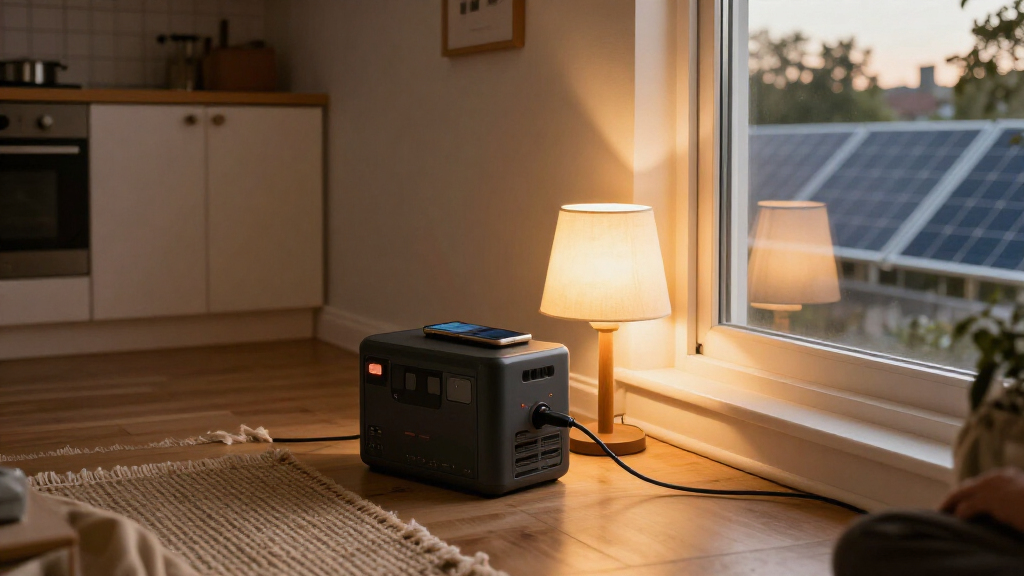
I compared these products by their role as portable battery backup systems, not by treating every battery as interchangeable. The main criteria were usable capacity and output, the kind of equipment each system can support, how it handles backup during an outage, and the practical difference between a compact UPS and a larger power station. I also weighed portability, connection and installation needs, expandability, and whether the product’s design fits a home office, rack, travel kit, or broader home-backup plan.
The ranking puts versatility first: the EcoFlow DELTA 3 leads among portable power stations, while the CyberPower CP1500PFCLCD is a leading UPS choice for compatible computer setups. The Anker SOLIX S2000 ranks higher for longer-duration portable power, but its greater capacity is not useful to every buyer. Smaller UPS models rank well for simple, lower-draw needs, not as substitutes for power stations. The Anker SOLIX E10 serves buyers planning expandable backup, but its system-oriented design is less suited to casual portability.
| portable battery backup system | Output waveform | Battery type |
|---|---|---|
| CyberPower ST625U Standby UPS | Simulated sine wave | — |
| Anker SOLIX S2000 Portable Pow | — | LiFePO4 |
| CyberPower EC850LCD Ecologic U | Simulated sine wave | Sealed lead acid |
| Anker SOLIX C1000 Gen 2 Portab | — | LiFePO4 |
| CyberPower CP1500PFCRM2U PFC S | Sine wave | Lead acid |
| BLUETTI Elite 30 V2 Portable P | — | — |
| CyberPower CP1500AVRLCD3 Intel | Simulated sine wave | Lead acid |
| EcoFlow DELTA 3 Portable Power | — | — |
| APC BX1500M 1500VA/900W UPS Ba | Stepped approximation to a sine wave | — |
| CyberPower CP1000PFCLCD PFC Si | — | Lead acid |
| APC Back-UPS BE600M1 600VA/330 | — | — |
| CyberPower ST425 Standby UPS B | Simulated sine wave | Lead acid |
| CyberPower CP1500PFCLCD PFC Si | Sine wave | — |
| Anker SOLIX E10 Power Dock and | — | — |
Factors to Consider When Choosing Portable Battery Backup Systems
Before choosing, decide what must stay powered and what kind of outage you are preparing for. The right system depends on load, runtime, and how backup begins—not simply the largest capacity number.
1. Decide Whether You Need a UPS or a Power Station
A UPS is designed to take over quickly when mains power fails, making it a natural match for desktop computers, routers, and other electronics that should not shut off abruptly. A portable power station usually focuses on storing more energy for longer use or a wider range of devices; it may not behave like a dedicated UPS for every connected load. A common mistake is buying a large power station when the real need is uninterrupted power for a computer. The reverse mistake is expecting a small UPS to run appliances or provide hours of backup. Start with the equipment and outage scenario, then choose the product type that fits.
2. Match Output to the Device, Not Just Its Label
Capacity describes stored energy, while output describes how much power a unit can supply at once. A system can have ample capacity and still be unable to run a device whose demand exceeds its output limit. Check the wattage of each device, and allow room for startup surges from equipment with motors or compressors. For a computer, also check whether the UPS output type suits the power supply; PFC sine-wave models are designed for compatibility with active PFC supplies. Avoid adding every device on a desk by guesswork—measure or check their power requirements first.
3. Estimate Runtime From Your Actual Load
Battery capacity does not translate directly into device runtime because conversion losses and changing load affect how much energy reaches connected equipment. A lightly loaded router may run far longer than a high-draw appliance on the same system. Make a short list of what must remain on, and separate essential loads from optional ones. Then use manufacturer runtime information at loads close to your own rather than relying on a headline capacity figure. If you need extended backup, reducing the connected load can matter as much as buying a bigger battery.
4. Think Through Placement, Weight, and Connections
A system meant to stay beside a desktop can be bulky, while a unit taken camping or moved between rooms needs manageable weight and practical handles or ports. Check outlet types, USB connections, cord reach, and ventilation before deciding where it will live. Rackmount equipment can make a tidy choice for a compatible server cabinet, but it is less convenient for moving around a home. Power stations offer more flexible placement, though their size and charging arrangements still affect day-to-day use. A unit that cannot sit near both the outlet and the equipment may be a poor fit regardless of its capacity.
5. Pay for Expandability Only If You Have a Growth Plan
Expandable systems can support longer backup as needs grow, but they add planning around extra batteries, space, compatibility, and system setup. That can make sense for a homeowner building toward broader backup, yet it is unnecessary for a single router or office computer. Before choosing an expandable option, identify which loads you may add and whether they require a different output or installation approach. Compare the cost and footprint of the full planned system, not just the base unit. If your needs are fixed and modest, a simpler standalone backup may be easier to manage.
6. Check the Maintenance and Replacement Plan
Battery backup is a long-term ownership choice, so check the manufacturer’s guidance for battery care, warranty coverage, and replacement options. UPS batteries and power-station batteries can have different service arrangements, and a sealed unit may not be maintained like a replaceable-battery design. Keep the unit within its stated operating conditions and test a UPS periodically according to its instructions. For gear that supports work or safety, a backup plan should include what happens when the battery reaches the end of its service life. Do not assume that a product’s initial capacity will remain unchanged indefinitely.
Frequently Asked Questions
Can I use a portable power station instead of a UPS for my desktop computer?
Sometimes, but the two product types do not automatically serve the same purpose. A UPS is built to provide quick backup when mains power drops, while a power station may prioritize larger capacity and portable use. Check whether the station supports UPS-style backup behavior and whether its transfer time is suitable for your computer. Also confirm the output waveform and power rating against the computer’s power supply. If avoiding a sudden shutdown is the main goal, choose a UPS designed for that use rather than relying on capacity alone.
How do I estimate which capacity I need for an outage?
List the devices you need to keep running and note their typical wattage, then estimate how many hours each must operate. Multiply watts by hours for a rough energy requirement, and allow extra margin for conversion losses and variable loads. Do not size the battery around every device in the room if only a few are essential during an outage. Check runtime information at a load close to your planned setup, since results at a much lower load can be misleading. If the outage plan includes high-draw appliances, confirm both capacity and maximum output.
Will a 1,500VA UPS run a 1,500W device?
Not necessarily: VA and watts are different ratings, and the watt limit is often the more direct constraint for the connected load. A 1,500VA label does not mean the UPS can supply 1,500W. Check the specific model’s maximum watt output and compare it with the device’s normal draw and any startup surge. Leave headroom rather than operating at the limit, particularly if several devices share the UPS. This distinction is one reason the APC BX1500M’s stated 900W output matters more than its 1,500VA figure when matching loads.
Should I choose a sine-wave UPS for a gaming PC or workstation?
A PFC sine-wave UPS is a sensible choice for many modern computers with active power-factor-correction power supplies, since compatible output can reduce the chance of power-supply issues while on battery. It is still important to verify the computer’s load against the UPS’s watt limit. A higher-rated unit is not automatically a better match if the system is small and the extra capacity goes unused. The CyberPower PFC models in this roundup offer that output type, while basic standby units serve simpler electronics. Check the computer manufacturer’s requirements if compatibility is uncertain.
When does an expandable home-backup system make more sense than a portable power station?
An expandable system makes more sense when you have a defined plan to increase stored energy or support broader home needs over time. It is less compelling when you only need portable power for a few devices or short outages. Consider where the system and extra batteries will be installed, how they connect, and whether the intended loads require dedicated installation. The Anker SOLIX E10 is aimed at this system-building approach, unlike compact options such as the BLUETTI Elite 30 V2. Compare the full planned setup with a standalone station before choosing.
Conclusion
For the widest range of portable power-station needs, I recommend the EcoFlow DELTA 3 as the best overall; choose the Anker SOLIX S2000 as the best premium capacity pick when longer runtime matters more than minimizing size. For value, the CyberPower CP1000PFCLCD is a strong computer-focused UPS choice when its output and capacity match your setup. Beginners with a small electronics load can start with the CyberPower ST425 or APC BE600M1, while buyers who need PFC sine-wave output should compare the CyberPower CP1500PFCLCD with the rackmount CP1500PFCRM2U. For compact travel power, choose the BLUETTI Elite 30 V2; for a build-out toward larger home backup, consider the Anker SOLIX E10. Pick by the equipment you need to support, then verify output, runtime, and installation fit before deciding.