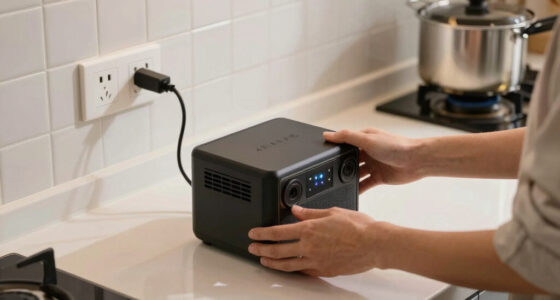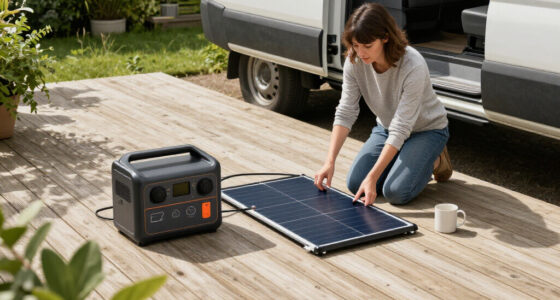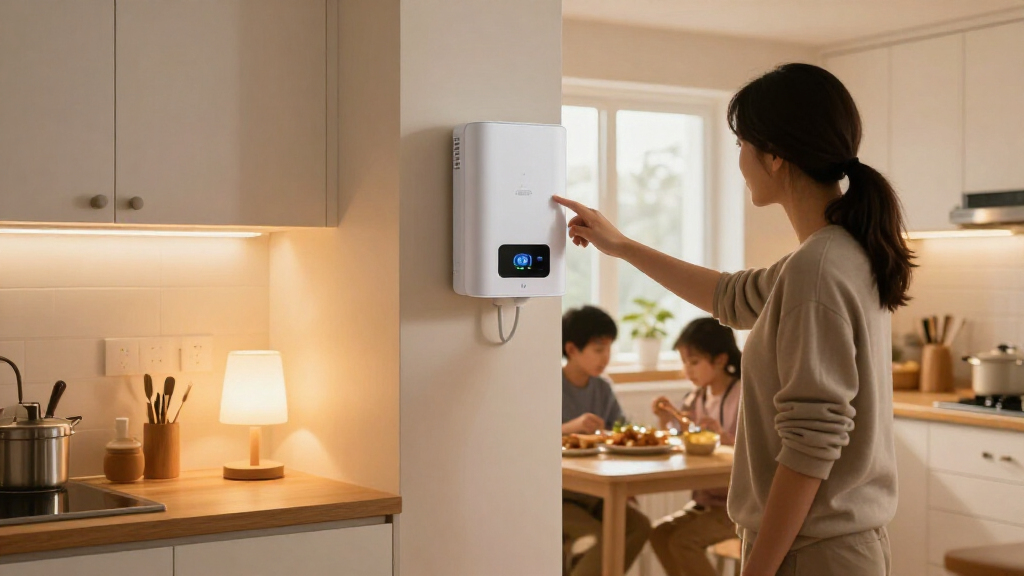

Whole home battery backup systems range from expandable, panel-connected setups to batteries and inverters that require more system planning. My best overall pick is the Anker SOLIX E10 with Power Dock, which stands out for its expandable 12–90 kWh capacity; the EcoFlow DELTA Pro Ultra X with Smart Home Panel 3 is another strong option for a more integrated home setup, while the ECO-WORTHY 10 kW Off-Grid Solar Kit suits buyers building around solar. The main tradeoff is between a coordinated system with simpler home integration and more modular components that can offer flexibility but demand careful compatibility checks. Battery capacity alone does not tell you how much of a home a system can power: inverter output, voltage, wiring, and transfer equipment matter too. Continue reading for the full breakdown and help matching a system to your backup goals.

Get backup power and energy gear delivered free with Prime
- Fast, free delivery on millions of items
- Prime Video, Amazon Music and more included
- Member-only deals all year
Key Takeaways
- Anker SOLIX E10 leads this roundup for buyers who want a purpose-built, expandable home system, with listed capacity spanning 12–90 kWh; its larger configurations call for careful planning around installation and system components.
- EcoFlow DELTA Pro Ultra X appears in both a cable-based configuration and a Smart Home Panel 3 bundle, showing how the same core platform can suit different installation and home-circuit needs.
- Several ECO-WORTHY options are component-led: buyers can choose batteries, an inverter-and-battery system, or an off-grid solar kit, but should verify compatibility and what installation equipment is included.
- The Anker SOLIX F3800 Plus and DELTA Pro are portable power stations rather than the clearest fit for whole-home circuit integration; they suit targeted backup better unless paired with the appropriate home equipment.
- The listed capacities range from 3.6 kWh portable units to roughly 16 kWh battery systems, so the right choice depends on backed-up loads and outage duration, not the phrase “whole home” on its own.
| Anker SOLIX E10, Power Dock and Extra Battery, 12kWh-90kWh |  | Best for Whole-Panel Coverage | Starting capacity: 12kWh (2 battery packs) | Expandable capacity: Up to 90kWh | Continuous output: 7.6kW per unit; scales to 22.8kW | VIEW LATEST PRICE | See Our Full Breakdown |
| EF ECOFLOW DELTA Pro Ultra X 12,288Wh Power Station with AC Cable |  | Best for Maximum Expandability | Capacity: 12,288Wh; expandable to 180kWh | System output range: 12–36kW | Battery chemistry: LiFePO₄ | VIEW LATEST PRICE | See Our Full Breakdown |
| ECO-WORTHY Powermega 48V 314Ah LiFePO4 Battery, 2-Pack |  | Best for DIY Storage Expansion | Battery count: 2 | Energy per battery: 16.07kWh | Capacity per battery: 314Ah | VIEW LATEST PRICE | See Our Full Breakdown |
| Anker SOLIX F3800 Plus Portable Power Station and Home Power Panel Kit, 3,840Wh |  | Best for Flexible, Smaller-Scale Backup | Starting capacity: 3,840Wh | Expandable capacity: Up to 53kWh | Output: 6,000W | VIEW LATEST PRICE | See Our Full Breakdown |
| ECO-WORTHY 48V Home Backup Power System with 10kW Inverter and Two 100Ah LiFePO4 Batteries |  | Best Value for a Complete 48V Kit | Battery configuration: Two 51.2V 100Ah LiFePO₄ batteries | Total capacity: 10,240Wh | Inverter output: 10,000W pure sine wave | VIEW LATEST PRICE | See Our Full Breakdown |
| EcoFlow DELTA Pro Ultra X Power Station with Smart Home Panel 3, 12,288 Wh |  | Best for Scalable Whole-Home Backup | Battery capacity: 12,288 Wh | Expandable capacity: 12–180 kWh | Output: 12 kW | VIEW LATEST PRICE | See Our Full Breakdown |
| ECO-WORTHY PowerMega 48V 314Ah LiFePO4 Energy Storage System with 10kW Hybrid Inverter |  | Best Integrated Battery-and-Inverter Value | Battery chemistry: LiFePO4 | Battery capacity: 314 Ah at 51.2 V | Usable energy: 16.1 kWh | VIEW LATEST PRICE | See Our Full Breakdown |
| ECO-WORTHY Powermega 51.2V 314Ah LiFePO4 Battery, 16.07kWh |  | Best Expandable Battery for a Custom System | Energy: 16.07 kWh | Voltage and capacity: 51.2 V, 314 Ah | Battery chemistry: LiFePO4 | VIEW LATEST PRICE | See Our Full Breakdown |
| EF ECOFLOW TITAN 10 kWh Backup System with Extra Battery and Smart Home Panel 10 |  | Best for Managed Essential-Circuit Backup | Battery capacity: 10,017 Wh | Battery chemistry: LiFePO4 | Output power and voltage: 7,200 W; 120 V/240 V split-phase | VIEW LATEST PRICE | See Our Full Breakdown |
| ECO-WORTHY 10 kW Off-Grid Solar Kit with 16.1 kWh Battery |  | Best Complete Off-Grid Solar Package | Maximum inverter output: 10,000 W continuous; 20,000 W peak | Inverter output voltage: 120 V or 120/240 V split-phase | Solar array: 5 × 590 W panels; 2,950 W total | VIEW LATEST PRICE | See Our Full Breakdown |
| EF ECOFLOW Portable Power Station 3600Wh DELTA Pro, 120V 3600W AC Output | 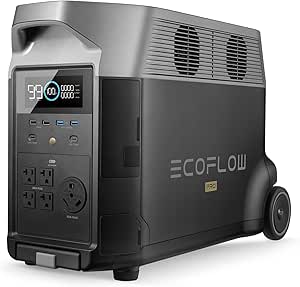 | Best Portable Backup for Essential Circuits | Battery capacity: 3,600Wh (3.6kWh) | Battery chemistry: LFP | AC output: 3,600W running at 120V | VIEW LATEST PRICE | See Our Full Breakdown |
| whole home battery backup system | Battery chemistry |
|---|---|
| Anker SOLIX E10 | — |
| EF ECOFLOW DELTA Pro Ultra X 1 | LiFePO₄ |
| ECO-WORTHY Powermega 48V 314Ah | LiFePO₄ |
| Anker SOLIX F3800 Plus Portabl | LiFePO₄ |
| ECO-WORTHY 48V Home Backup Pow | — |
| EcoFlow DELTA Pro Ultra X Powe | — |
| ECO-WORTHY PowerMega 48V 314Ah | LiFePO4 |
| ECO-WORTHY Powermega 51.2V 314 | LiFePO4 |
| EF ECOFLOW TITAN 10 kWh Backup | LiFePO4 |
| ECO-WORTHY 10 kW Off-Grid Sola | — |
| EF ECOFLOW Portable Power Stat | LFP |
More Details on Our Top Picks
Anker SOLIX E10, Power Dock and Extra Battery, 12kWh-90kWh
The Anker SOLIX E10 is the strongest fit here for buyers who want backup routed through the home’s full 200A panel, rather than a smaller set of selected circuits. Its listed 7.6kW continuous output and 12kWh starting capacity can scale with additional units and batteries, giving it more room to grow than the 3,840Wh Anker SOLIX F3800 Plus kit. The Power Dock also supports a claimed ≤20ms switchover, so backed-up circuits can regain power quickly during an outage.
The tradeoff is that the E10 depends on a dedicated dock and a larger installation plan; it is not a simple portable station. Its batteries and dock ship separately, and the listed warranty differs between those components. I’d choose it for broad panel coverage, but not for buyers who want a compact, ready-to-carry backup source.
Pros:- Power Dock is designed for 200A whole-panel coverage rather than a limited group of circuits.
- 12kWh starting capacity can expand up to 90kWh.
- 7.6kW continuous output with stated scaling to 22.8kW across units.
- Outdoor-rated E10 module and stated operating range from -4°F to 131°F.
Cons:- Requires the Power Dock and a more involved home installation than a portable power station.
- Battery modules and Power Dock ship separately.
- E10 and Power Dock have different stated warranty periods.
Best for: Homeowners seeking 200A whole-panel backup with capacity that can grow as household needs or solar production increase.
Not ideal for: Renters and buyers seeking a portable, plug-in backup unit or a system without a dedicated Power Dock installation.
- Starting capacity:12kWh (2 battery packs)
- Expandable capacity:Up to 90kWh
- Continuous output:7.6kW per unit; scales to 22.8kW
- Turbo output:10kW; scales to 30kW with three units
- Panel coverage:200A Power Dock
- Solar input:9kW per unit
- Transfer time:≤20ms
Our verdict“Choose the E10 if full-panel coverage and substantial expansion matter more than portability or a simpler installation.”
EF ECOFLOW DELTA Pro Ultra X 12,288Wh Power Station with AC Cable
The EF ECOFLOW DELTA Pro Ultra X is the capacity-first option in this group: its 12,288Wh starting setup can expand to 180kWh, far beyond the Anker SOLIX F3800 Plus’s stated 53kWh ceiling. That headroom can support longer outages and a larger household load, while the listed system output range of 12–36kW gives it room to scale power alongside storage. Automatic switching among solar, battery, and off-peak grid power also suits homeowners coordinating several energy sources.
Its under-20ms transfer and LiFePO₄ batteries support a fast, durable backup setup, but the system is not lightweight: the listed weight is 350lb. The inverter and extra battery ship separately, too. I’d rank it ahead of smaller kits for expandability, but buyers with limited installation space or no need for very large storage may prefer a simpler system.
Pros:- Capacity expands from 12,288Wh up to 180kWh.
- System output range of 12–36kW supports expansion beyond smaller backup kits.
- Automatic switching among solar, battery, and off-peak grid power.
- LiFePO₄ batteries with dual BMS and temperature control.
Cons:- Listed 350lb weight makes placement and handling difficult.
- Inverter and extra battery ship in separate packages.
Best for: Homeowners planning extensive storage for long outages, large electrical loads, or future expansion across multiple batteries and power sources.
Not ideal for: Households with limited installation space, modest backup needs, or a preference for a lightweight unit that is easy to move.
- Capacity:12,288Wh; expandable to 180kWh
- System output range:12–36kW
- Battery chemistry:LiFePO₄
- Transfer time:Under 20ms
- Weight:350lb
- Dimensions:26.6 × 18.7 × 9.06in
- Temperature range:Down to freezing and up to 122°F
- Included components:1 inverter, 2 batteries, and AC cable
Our verdict“Pick the DELTA Pro Ultra X if you want unusually large expandable storage and can accommodate its weight and installation demands.”
ECO-WORTHY Powermega 48V 314Ah LiFePO4 Battery, 2-Pack
This ECO-WORTHY Powermega two-pack is a battery bank, not a complete whole-home backup system: buyers still need a compatible inverter, panel arrangement, and installation plan. Its strength is storage, with 16.07kWh per battery and support for up to 15 units in parallel. That makes it a better fit for a custom system than the ready-to-configure Anker SOLIX E10 bundle, which includes a Power Dock and defined panel coverage.
The batteries add useful monitoring and protection features, including a touchscreen, wireless monitoring, active cell balancing, and aerosol fire suppression. Those details help owners track battery status and manage a larger DIY setup, but they do not remove the work of matching inverter communications or arranging safe installation. At about 280lb per battery, each unit also demands careful delivery and placement. I’d choose this pack for buyers building around compatible 48V equipment, not anyone expecting a complete backup system in one box.
Pros:- Each battery provides 16.07kWh of stated energy, with two batteries included.
- Supports parallel expansion up to 15 units.
- 200A smart BMS includes active cell balancing and aerosol fire suppression.
- Touchscreen, Wi-Fi, Bluetooth, RS485, CAN, and RS232 support monitoring and integration.
Cons:- Batteries alone do not provide the inverter or whole-home panel integration needed for a complete backup system.
- Each battery weighs about 280lb and requires freight delivery and planned placement.
- Compatibility and system design are the buyer’s responsibility.
Best for: Experienced DIY solar and backup-system builders who already have, or are selecting, a compatible 48V inverter and want substantial battery capacity.
Not ideal for: Buyers seeking an all-in-one, panel-ready system or anyone unable to handle freight delivery and placement of very heavy batteries.
- Battery count:2
- Energy per battery:16.07kWh
- Capacity per battery:314Ah
- Nominal voltage:51.2V
- Battery chemistry:LiFePO₄
- BMS:200A smart BMS with active cell balancing
- Parallel expansion:Up to 15 units
- Monitoring and interfaces:7-inch touchscreen, Wi-Fi, Bluetooth, RS485, CAN, and RS232
- Weight per battery:280lb
Our verdict“Choose this battery pair if you are building a compatible 48V system and value storage expansion over an integrated, ready-to-use backup package.”
Anker SOLIX F3800 Plus Portable Power Station and Home Power Panel Kit, 3,840Wh
The Anker SOLIX F3800 Plus kit is the most portable-minded route in this group to 120V/240V backup, though its 3,840Wh starting capacity is modest beside the Anker SOLIX E10’s 12kWh baseline or the EcoFlow DELTA Pro Ultra X’s 12,288Wh. It makes sense for households that want to back up selected home loads and add batteries later, rather than starting with a large whole-home reserve. Its 6,000W output and four recharge methods—solar, generator, home power panel, and AC—give owners useful flexibility when grid power is unavailable.
The included panel kit connects the station to a home setup, but installation requires a licensed electrician, and a 100A breaker is required separately. Even the station weighs 135.6lb, so “portable” does not mean easy to carry around. Compared with the larger integrated systems, this is a more modular starting point, but it needs expansion for longer whole-home coverage.
Pros:- Supports both 120V and 240V appliances with 6,000W output.
- Expandable capacity is stated up to 53kWh.
- Can recharge from solar, a generator, the home power panel, or an AC outlet.
- Kit includes a home power panel, subpanel, and ground bar.
Cons:- Starting capacity of 3,840Wh is substantially smaller than the E10 and DELTA Pro Ultra X systems.
- A licensed electrician is required, and the required 100A circuit breaker is sold separately.
- At 135.6lb, the power station is difficult to move frequently.
Best for: Homeowners who want a modular 120V/240V backup source for selected circuits, with multiple charging options and the ability to add storage later.
Not ideal for: Households seeking high starting capacity or broad, long-duration whole-home backup without buying additional batteries.
- Starting capacity:3,840Wh
- Expandable capacity:Up to 53kWh
- Output:6,000W
- Voltage:120V / 240V
- Solar input:3,200W
- Recharge methods:Solar, generator, home power panel, and AC outlet
- Battery chemistry:LiFePO₄
- Weight:135.6lb
- Installation requirement:Licensed electrician; 100A circuit breaker required and sold separately
Our verdict“Choose the F3800 Plus kit for flexible, expandable backup of selected home loads, but plan on extra batteries for longer outages.”
ECO-WORTHY 48V Home Backup Power System with 10kW Inverter and Two 100Ah LiFePO4 Batteries
The ECO-WORTHY 48V Home Backup Power System pairs a 10kW inverter with two LiFePO₄ batteries, making it a more complete starting package than the Powermega battery-only set. Its 10,240Wh storage and 120V or 120V/240V output give buyers a practical foundation for home backup, while dual MPPT controllers let the inverter manage two solar inputs. That configuration is less expansive out of the box than the Anker SOLIX E10’s 12kWh setup, but the ECO-WORTHY system can grow by paralleling up to six inverters and 32 batteries.
This is a substantial installed system, not a portable station: the listed weight is 265.5lb, and the inverter and batteries ship separately. The product data also describes testing against UL standards rather than stating that the complete system is certified, so buyers should confirm installation and compliance details for their location. I’d favor it for a technically prepared household seeking inverter and battery components together, not for a hands-off panel-ready purchase.
Pros:- Includes a 10kW pure sine wave inverter and two LiFePO₄ batteries.
- Provides 10,240Wh of storage and supports 120V single-phase or 120V/240V split-phase output.
- Dual independent MPPT controllers support solar charging.
- Can expand to six inverters and 32 batteries in parallel.
Cons:- Listed total weight is 265.5lb, making delivery and installation planning necessary.
- Components ship separately.
- Requires system configuration and installation rather than offering the dock-based panel integration of the Anker SOLIX E10.
Best for: Homeowners and installers seeking a 48V inverter-and-battery kit with split-phase output, solar charging capability, and room to add parallel equipment.
Not ideal for: Buyers who want a lightweight portable station, an integrated whole-panel dock, or a system that needs little configuration.
- Battery configuration:Two 51.2V 100Ah LiFePO₄ batteries
- Total capacity:10,240Wh
- Inverter output:10,000W pure sine wave
- Peak output:20,000W
- Output voltage:120V single-phase or 120V/240V split-phase
- MPPT controllers:Two independent
- Parallel expansion:Up to 6 inverters and 32 batteries
- Communications:CAN, RS485, Bluetooth, and Wi-Fi
- Weight:265.5lb
Our verdict“Choose this ECO-WORTHY kit if you want inverter and battery components in one expandable 48V package and can manage a substantial installation.”
EcoFlow DELTA Pro Ultra X Power Station with Smart Home Panel 3, 12,288 Wh
For a household that may grow from essential-circuit backup to longer whole-home coverage, the DELTA Pro Ultra X offers the broadest stated expansion range here: its 12.288 kWh starting capacity can scale to 180 kWh, paired with 12 kW output and 240 V support. That gives it more headroom for larger loads and future battery additions than the TITAN system, which expands to 30 kWh. Its under-20-millisecond switching is also a strong fit for circuits where a brief outage interruption matters. Solar, battery, and off-peak grid charging give owners several ways to manage energy. The tradeoff is that the Smart Home Panel 3 needs professional installation, and the inverter, battery, and panel ship separately. Unlike a fixed, hardwired installation, the system can be moved, but whole-home integration still takes planning.
Pros:- Capacity expands from 12.288 kWh to as much as 180 kWh.
- 12 kW output and 240 V support suit larger household loads.
- Automatic backup switching takes under 20 milliseconds.
- Supports solar, battery, and off-peak grid power.
Cons:- Smart Home Panel 3 installation requires a professional.
- Inverter, battery, and panel ship in separate packages.
Best for: Homeowners planning a professionally installed backup system that can start at 12.288 kWh and expand substantially as their household’s energy needs grow.
Not ideal for: Buyers who want a ready-to-use, self-installed system or need all components to arrive together; the Smart Home Panel 3 requires professional installation and the components ship separately.
- Battery capacity:12,288 Wh
- Expandable capacity:12–180 kWh
- Output:12 kW
- Voltage:240 V
- Backup switching:Under 20 milliseconds
- Power sources:Solar, battery, and off-peak grid power
- Dimensions:26.6 × 18.7 × 9.06 in
- Installation:Smart Home Panel 3 requires professional installation
Our verdict“Choose the DELTA Pro Ultra X if you want high output and a system that can scale well beyond the TITAN’s 30 kWh ceiling, and can arrange professional panel installation.”
ECO-WORTHY PowerMega 48V 314Ah LiFePO4 Energy Storage System with 10kW Hybrid Inverter
The PowerMega pairs a 16.1 kWh LiFePO4 battery with a 10 kW hybrid inverter, making it a strong fit for buyers who want substantial storage and split-phase output in one listed system rather than sourcing an inverter separately. Its 120 V single-phase and 240 V split-phase options make it more suitable for household circuits than the 120 V-only DELTA Pro, while the battery’s active-balancing BMS, breaker, and aerosol fire suppression add layers of built-in protection. App monitoring and an LCD also help owners keep tabs on system status. Compared with the ECO-WORTHY 16.07 kWh standalone battery, this package includes the inverter, but it is less flexible for shoppers who already own compatible conversion equipment. The single-battery listing does not include parallel cables, and freight delivery and a randomly selected inverter exterior version can complicate setup expectations.
Pros:- Includes a 16.1 kWh LiFePO4 battery and 10 kW hybrid inverter.
- Supports both 120 V single-phase and 240 V split-phase output.
- Includes active-balancing BMS, circuit breaker, and aerosol fire suppression.
- Offers Wi-Fi and Bluetooth monitoring, plus an LCD.
Cons:- Parallel connection cables are not included with the single-battery listing.
- Battery ships by truck freight and may arrive separately.
- The inverter exterior version is selected randomly.
Best for: Homeowners or off-grid users seeking a bundled 16.1 kWh battery and 10 kW inverter with 120 V and 240 V output options.
Not ideal for: Buyers who already have an inverter, need multiple batteries connected immediately, or want to avoid freight delivery and setup uncertainty around the inverter exterior version.
- Battery chemistry:LiFePO4
- Battery capacity:314 Ah at 51.2 V
- Usable energy:16.1 kWh
- Inverter output:10,000 W
- Output voltage:120 V single-phase or 240 V split-phase
- Cycle life:9,000+ cycles at 80% DoD
- Communication:RS485, CAN, RS232, Wi-Fi, and Bluetooth
- Warranty:10 years
Our verdict“Pick this bundled ECO-WORTHY system over the standalone PowerMega battery if you need its included 10 kW inverter and can accommodate freight delivery and expansion planning.”
ECO-WORTHY Powermega 51.2V 314Ah LiFePO4 Battery, 16.07kWh
This Powermega is a battery component, not a complete whole-home backup system: buyers need a compatible inverter and an installation plan. In return, it gives system builders 16.07 kWh of LiFePO4 storage, a 200 A active-balancing BMS, and stated support for up to 15 units in parallel. That expansion path can suit a larger custom installation better than the PowerMega bundle’s single-battery listing, especially for owners who already have compatible equipment. The 7-inch touchscreen and Wi-Fi and Bluetooth monitoring make local and remote status checks more accessible, while UL 1973 certification and integrated aerosol fire suppression add relevant safety details. Those features do not remove the logistics: this is a large battery shipped by truck freight, and it cannot provide backup power on its own. Skip it if you need a ready-to-connect system.
Pros:- Provides 16.07 kWh of LiFePO4 energy storage.
- Supports parallel expansion to as many as 15 units.
- Includes a 200 A active-balancing BMS, breaker, and aerosol fire suppression.
- Offers a 7-inch touchscreen and Wi-Fi and Bluetooth monitoring.
Cons:- Does not include an inverter or other complete backup-system components.
- Large size and weight require pallet delivery by truck.
- Delivery requires an address that can accommodate truck access.
Best for: Solar and backup-system builders who already have a compatible inverter and want to add substantial LiFePO4 storage with a path to parallel expansion.
Not ideal for: Homeowners seeking an all-in-one backup system; this listing includes only the battery, so compatible inverter equipment and system installation are still needed.
- Energy:16.07 kWh
- Voltage and capacity:51.2 V, 314 Ah
- Battery chemistry:LiFePO4
- BMS current:200 A
- Certification:UL 1973
- Maximum parallel expansion:15 units
- Display and connectivity:7-inch HD touchscreen; Wi-Fi, Bluetooth, RS485, and CAN
- Warranty:10 years
Our verdict“Choose this battery over the PowerMega inverter bundle if you already own compatible equipment and want to build storage capacity in stages.”
EF ECOFLOW TITAN 10 kWh Backup System with Extra Battery and Smart Home Panel 10
The TITAN makes whole-home backup more approachable by pairing its 10,017 Wh battery with a prewired Smart Home Panel 10 that can manage 10 circuits. Its 7,200 W split-phase output supports 120 V and 240 V household loads, while AC, solar, and generator charging give owners options when grid power is unavailable or energy costs vary. Compared with the DELTA Pro Ultra X, the TITAN has a lower expansion ceiling—up to 30 kWh rather than 180 kWh—so it better fits a defined backup plan than a system intended to grow dramatically. The panel’s 10-circuit limit also means it will not cover every circuit in a larger home. At 119 lb, the equipment is not light, though its included panel integration avoids some of the planning associated with separate components.
Pros:- Includes a Smart Home Panel 10 for 10 backup circuits.
- Provides 7,200 W of 120 V/240 V split-phase output.
- Battery capacity can expand to 30 kWh.
- Supports AC, solar, and generator charging.
Cons:- Smart Home Panel is limited to 10 circuits.
- The 119 lb system is heavy to move.
- Its 30 kWh expansion ceiling is well below the DELTA Pro Ultra X.
Best for: Homeowners who want a bundled battery-and-panel system for selected household circuits, with split-phase output and multiple charging options.
Not ideal for: Owners of large homes who want to back up more than 10 circuits or need storage to expand beyond 30 kWh; the DELTA Pro Ultra X offers a higher stated capacity ceiling.
- Battery capacity:10,017 Wh
- Battery chemistry:LiFePO4
- Output power and voltage:7,200 W; 120 V/240 V split-phase
- Expandable capacity:Up to 30 kWh
- Backup circuits:10
- Charging inputs:AC up to 7.6 kW; solar up to 4 kW; generator up to 7.2 kW
- UPS transfer time:20 ms
- Weight:119 lb
Our verdict“Choose the TITAN if 10 managed circuits and up to 30 kWh cover your plan; choose the DELTA Pro Ultra X for a much larger expansion path.”
ECO-WORTHY 10 kW Off-Grid Solar Kit with 16.1 kWh Battery
Unlike the battery-focused PowerMega listings, this ECO-WORTHY kit includes five 590 W bifacial panels, a 10 kW split-phase inverter, and a 16.076 kWh LiFePO4 battery. That makes it the clearest choice here for buyers building an off-grid solar setup from a bundled package, rather than adding storage to an existing system. The inverter’s 120 V or 120/240 V output supports household loads, and the battery can be expanded to 15 units. The panels’ 2,950 W combined capacity may generate up to 11.8 kWh per day under optimal conditions, but that figure is not a guaranteed daily supply; weather and installation conditions affect production. This is not a simple plug-in whole-home backup product. Professional installation is strongly recommended, and pallet freight adds a practical delivery hurdle.
Pros:- Bundles five 590 W bifacial panels, a 10 kW inverter, and a 16.076 kWh battery.
- Inverter supports 120 V or 120/240 V split-phase output.
- Battery supports parallel expansion to as many as 15 units.
- Battery monitoring includes a display, Bluetooth, Wi-Fi, and PC connectivity.
Cons:- Professional installation by a qualified electrician or solar installer is strongly recommended.
- The stated daily generation of up to 11.8 kWh applies only under optimal conditions.
- Freight delivery requires pallet shipping.
Best for: Rural homeowners and off-grid builders who need a bundled solar array, split-phase inverter, and expandable battery rather than a battery-only purchase.
Not ideal for: Buyers who need quick backup for an existing home, lack space for five large panels, or cannot arrange qualified installation and pallet delivery.
- Maximum inverter output:10,000 W continuous; 20,000 W peak
- Inverter output voltage:120 V or 120/240 V split-phase
- Solar array:5 × 590 W panels; 2,950 W total
- Estimated daily generation:Up to 11.8 kWh under optimal conditions
- Battery:48 V, 314 Ah LiFePO4; 16.076 kWh
- Battery parallel capacity:Up to 15 units
- Panel efficiency:23.23%
- Installation:Professional installation is strongly recommended
Our verdict“Choose this kit over the battery-only Powermega models if you are building an off-grid solar system and can handle panel installation and freight logistics.”
EF ECOFLOW Portable Power Station 3600Wh DELTA Pro, 120V 3600W AC Output
The DELTA Pro is a portable power station, not a complete whole-home backup installation: its 3.6kWh capacity and 120V output suit selected appliances and essential loads, rather than sustained power for an entire house. Its advantage over the Anker SOLIX F3800 Plus Home Power Panel Kit is a broad range of charging options and a compact, movable format; its disadvantage is that home integration and capacity expansion require additional equipment. One unit delivers 3,600W running output, with X-Boost advertised up to 4,500W, while paired units can reach 7,200W. Expandability to 25kWh gives it room to grow, but reaching that level adds cost, hardware, and setup complexity. I’d choose it for backup that can move between a home, workshop, or campsite—not as a plug-and-play replacement for a professionally integrated system.
Pros:- 3.6kWh LFP battery provides portable storage for essential devices and appliances
- Expandable capacity, with compatible equipment, up to 25kWh
- Multiple charging paths include wall power, solar, EV charging, car outlet, and a smart generator
- Fifteen output methods, including five AC outlets and 100W USB-C ports
Cons:- A single unit’s 3.6kWh capacity is limited for whole-house use or extended outages
- Home circuit integration and higher capacity require additional compatible equipment
- At 99 pounds, it is movable but not easy for one person to carry regularly
Best for: Households that want a movable battery for selected essential appliances, with the option to add batteries or a compatible generator later
Not ideal for: Buyers seeking turnkey whole-home backup, automatic household circuit coverage, or several days of high-load operation without adding substantial capacity
- Battery capacity:3,600Wh (3.6kWh)
- Battery chemistry:LFP
- AC output:3,600W running at 120V
- X-Boost output:Up to 4,500W
- Expandable capacity:Up to 25kWh with compatible extra batteries or smart generators
- Outlets:15 total output methods
- Charging options:EV station, solar, wall outlet, smart outdoor generator, or car outlet
- Weight:99lb
- Dimensions:25 × 11.2 × 16.4in
Our verdict“Choose the DELTA Pro if portability and flexible charging matter more than built-in whole-home integration; skip it if you need an out-of-the-box household backup system.”
How We Picked
I ranked these whole home battery backup systems by how well their listed components support a practical home-backup plan: usable storage capacity, inverter output, home-panel or transfer integration, expandability, and solar readiness. I also weighed how clearly each listing defines a complete system versus a battery or power station that may need additional equipment. Those distinctions matter because a high-capacity battery cannot power household circuits on its own without a compatible inverter and a safe way to connect it to the home.
The ranking favors systems with clearer paths to whole-home integration and expandable storage, then considers value and flexibility for buyers prepared to plan around separate components. A panel bundle ranks ahead of a standalone portable unit for a buyer seeking circuit-level backup, while a modular battery can still be a sensible choice for someone who already has compatible equipment. I treated listed capacity and power ratings as different measures, and did not assume that a bundle includes every cable, permit, or installation service needed for a finished installation.
| whole home battery backup system | Battery chemistry |
|---|---|
| Anker SOLIX E10 | — |
| EF ECOFLOW DELTA Pro Ultra X 1 | LiFePO₄ |
| ECO-WORTHY Powermega 48V 314Ah | LiFePO₄ |
| Anker SOLIX F3800 Plus Portabl | LiFePO₄ |
| ECO-WORTHY 48V Home Backup Pow | — |
| EcoFlow DELTA Pro Ultra X Powe | — |
| ECO-WORTHY PowerMega 48V 314Ah | LiFePO4 |
| ECO-WORTHY Powermega 51.2V 314 | LiFePO4 |
| EF ECOFLOW TITAN 10 kWh Backup | LiFePO4 |
| ECO-WORTHY 10 kW Off-Grid Sola | — |
| EF ECOFLOW Portable Power Stat | LFP |
Factors to Consider When Choosing Whole Home Battery Backup Systems
Before choosing a system, I would define what “whole home” means for your household. It may mean keeping a few essential circuits running, or supporting larger loads across much of the house. These checks can prevent a large battery from becoming an expensive mismatch for your electrical panel or backup goals.
Decide Which Loads Must Stay On
Write down the circuits you want during an outage before comparing battery capacities. Refrigerators, internet equipment, lighting, and medical devices create a different backup plan from central air conditioning, electric cooking, or a well pump. Ask an electrician to identify each load’s running and startup demand, since motors can briefly draw much more power when they start. A battery with ample stored energy may still be unable to start a large appliance if its inverter output is too limited. Backing up selected circuits can reduce system size and complexity, while whole-panel backup may require more capacity and load management. Avoid treating every circuit as equally necessary unless your budget and electrical setup support that plan.
Match Storage Capacity to Outage Duration
Battery capacity, usually stated in kilowatt-hours, describes stored energy; it does not tell you how many appliances can run at once. Estimate daily use for the loads you plan to back up, then account for conversion losses and the fact that some loads cycle on and off. A household aiming to cover overnight essentials may need far less storage than one expecting multi-day outages with heating or cooling. Expandable systems can let you start with a smaller bank, but check whether expansion requires matching batteries, extra controls, or changes to the inverter setup. One common mistake is buying the largest listed capacity without checking whether the system can deliver enough continuous power for peak loads.
Check Inverter Output and Electrical Compatibility
Look beyond battery size to continuous and surge output, supported voltage, and the type of circuits the system can serve. Homes with 240-volt appliances, such as some well pumps or HVAC equipment, need equipment and wiring that support those loads; a 120-volt portable unit will not fill that role by itself. Confirm whether the advertised output applies to one device, a split-phase setup, or a paired system. Ask whether the inverter is included, whether it can operate with your existing electrical panel, and what transfer equipment is required. A system can list a powerful inverter yet still need separate hardware or professional configuration for safe household use.
Choose a Connection Method Before Buying
A smart home panel or approved transfer switch can connect backup power to selected household circuits, while a portable station may power devices through its outlets or a compatible inlet. These approaches are not interchangeable: panel integration can make circuit backup more convenient, but it often adds installation planning and electrical work. Check which circuits can be backed up and how the system handles utility outages and restoration. Do not assume that a product bundle includes an installed panel, permits, or every required cable simply because the product name mentions a home panel. Ask an installer to confirm the exact wiring plan and equipment list before placing an order.
Plan for Solar, Charging, and Long Outages
Solar readiness matters most if you want to recharge during an extended outage, but compatibility depends on more than having panels. Check the system’s solar input limits, supported panel voltage, charge controller arrangement, and whether the panels or wiring are part of the package. Grid charging can refill a battery before an expected storm, while solar charging may depend on weather, roof orientation, and available daylight. Off-grid kits can bundle useful components, but they also place more responsibility on the buyer to confirm system design and installation. A realistic plan should account for cloudy days and essential-load demand rather than assuming solar will restore the battery quickly.
Compare Total System Scope and Maintenance
Compare what is actually included: battery, inverter, home panel, cables, monitoring hardware, solar equipment, and installation support. A lower-component-count listing may require separate purchases that affect both the final setup and compatibility. Ask about warranty coverage for each component, battery cycle or throughput terms, firmware support, and service access in your area. Also check placement requirements, ventilation, temperature limits, weight, and whether the installation location meets local rules. Paying more can make sense when a coordinated bundle reduces integration work or supports the loads you need, but it does not replace a clear written scope from the installer.
Frequently Asked Questions
Can a 3,600Wh portable power station back up my whole house?
A 3,600Wh portable station is generally better suited to selected devices or essential loads than to running an entire home for an extended outage. Its usable runtime depends on the devices connected, inverter losses, and whether large loads such as air conditioning are involved. Whole-house circuit backup also requires an approved connection method and compatible electrical equipment; outlet capacity alone does not provide that connection. I would treat the DELTA Pro as a targeted-backup option unless a qualified installer confirms a suitable home integration plan. List the loads you need first, then compare their power draw with the station’s output and usable energy.
Should I buy a battery-only system or a complete backup bundle?
A battery-only product can fit buyers who already own a compatible inverter and understand the system’s voltage and communication requirements. A bundle is often easier to evaluate as a home-backup plan because it may pair storage with an inverter or home-panel equipment. Still, the word “bundle” does not guarantee that installation materials, permits, or labor are included. Before buying, request a component list and have an installer confirm compatibility with your panel and intended loads. The ECO-WORTHY battery listings offer modularity, while the EcoFlow Smart Home Panel bundle presents a more integrated route.
How much battery capacity do I need for an overnight outage?
There is no single capacity that fits every household, because overnight use varies with appliances, weather, and backup priorities. Add the estimated energy use of the circuits you plan to run for the expected outage period, then allow for conversion losses and startup demands. A refrigerator, lights, and internet equipment usually create a very different requirement from electric heating or cooling. Check both kilowatt-hours for runtime and inverter output for the ability to run loads at the same time. If estimates are uncertain, ask an electrician or installer to review your recent energy use and essential circuits before choosing a battery size.
Can I add solar panels later to any system in this roundup?
No; solar charging depends on the system’s supported input range, charge controls, and wiring, not just the presence of a battery. Some products are presented as solar or off-grid kits, while portable power stations may have specific input limits and compatible panel requirements. Confirm whether panels are included, what connectors and voltage ranges are supported, and whether the system can charge while serving household loads. A later solar addition may also call for permits, roof work, or changes to the electrical design. Get the manufacturer’s compatibility details and installer approval before purchasing panels separately.
What should I confirm before connecting a battery system to my electrical panel?
Confirm the system’s voltage and output, the exact transfer equipment required, which circuits it can back up, and whether it supports the loads you plan to use. Have a qualified electrician check panel capacity, wiring, grounding, local code requirements, and any utility rules that apply. Ask who supplies the transfer switch or smart panel and whether it is included in the product listing. A portable power station should never be connected to household wiring through an improvised method. A written installation scope can reveal missing components and prevent a capacity mismatch before the equipment arrives.
Conclusion
For buyers seeking one clear starting point, I recommend the Anker SOLIX E10 with Power Dock as the best overall choice for its broad expansion range and home-system focus. The best value depends on existing equipment: the ECO-WORTHY battery-and-inverter options may suit a buyer who can verify compatibility and manage a modular setup, while the best premium-style integrated pick is the EcoFlow DELTA Pro Ultra X with Smart Home Panel 3 for buyers prioritizing a coordinated home connection. Beginners should start with a clearly defined bundle and ask an installer to confirm every included component; the Anker SOLIX F3800 Plus Home Power Panel Kit is a more approachable route for targeted backup, though its listed 3,840Wh capacity is not a substitute for sizing a full-home plan. For solar-focused or off-grid needs, compare the ECO-WORTHY 10 kW Off-Grid Solar Kit with the PowerMega battery-and-inverter system, paying close attention to included equipment and installation requirements. If you only need portable backup for a limited set of devices, the DELTA Pro is the simpler category fit; for broader home coverage, prioritize system integration, load planning, and verified electrical compatibility over battery capacity alone.