
Transfer switch interlocks are safety features that prevent you from switching between power sources improperly, such as back-feeding electricity or connecting multiple sources at once. Common myths include thinking they cause power loss or are unnecessary, but in reality, they guarantee safe, reliable operation and protect both your equipment and workers. Understanding how different types work and when they’re needed can improve your system’s safety. Keep exploring to learn more about how these devices keep you safe during power transfers.
Key Takeaways
- Transfer switch interlocks prevent simultaneous connection of multiple power sources, enhancing electrical safety during power transfers.
- Common myths include believing interlocks cause power loss or are unnecessary; facts confirm they prevent back-feeding and hazards.
- Interlocks come in manual and automatic types, each suited for different applications to ensure safe, reliable switching.
- Proper installation and adherence to electrical codes are essential for interlock effectiveness and legal compliance.
- Interlocks significantly reduce risks of electrical accidents, equipment damage, and back-feed during generator or utility power switching.
What Are Transfer Switch Interlocks and How Do They Work?
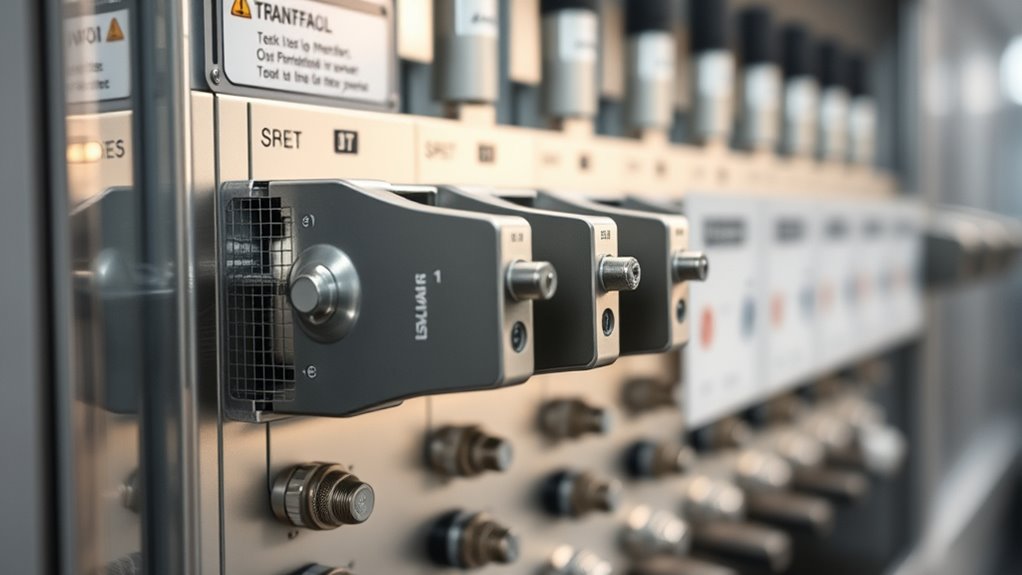
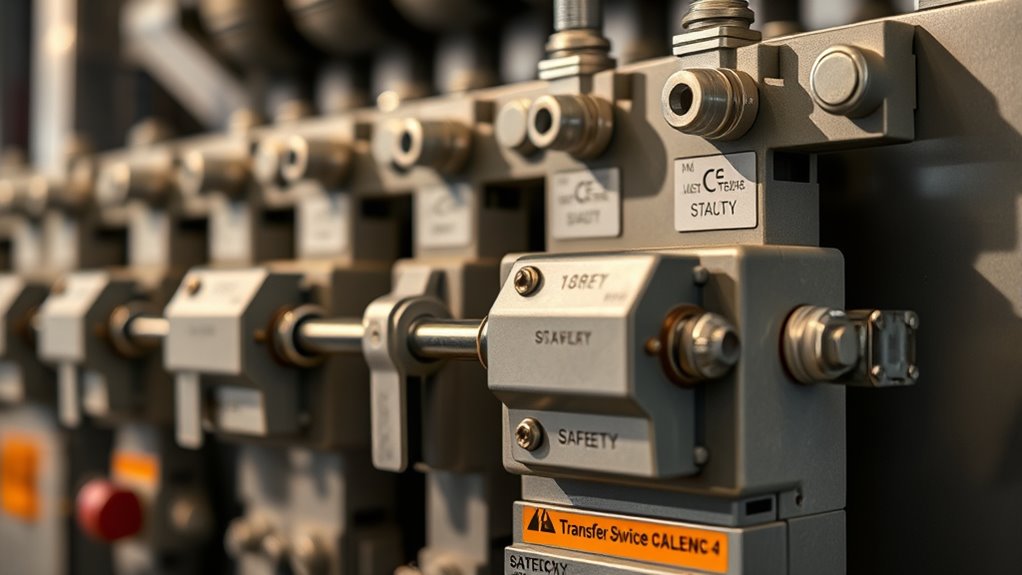
Transfer switch interlocks are safety mechanisms that prevent you from switching between power sources accidentally or improperly. When a power outage occurs, these interlocks guarantee you don’t mistakenly transfer power from the main grid to your emergency backup, which could cause dangerous back-feeding. They work by physically blocking the switch from connecting both sources at once, maintaining electrical safety. This way, you can confidently use your generator during an outage without risking damage to your home or utility workers. Interlocks are essential for proper operation, making sure you switch sources only when it’s safe. By preventing unsafe transfers, they protect both your household and the electrical system from potential hazards during emergency backup situations. Additionally, understanding the lifestyle benefits of safe power management can improve overall home safety and efficiency.
Common Myths About Transfer Switch Interlocks Debunked
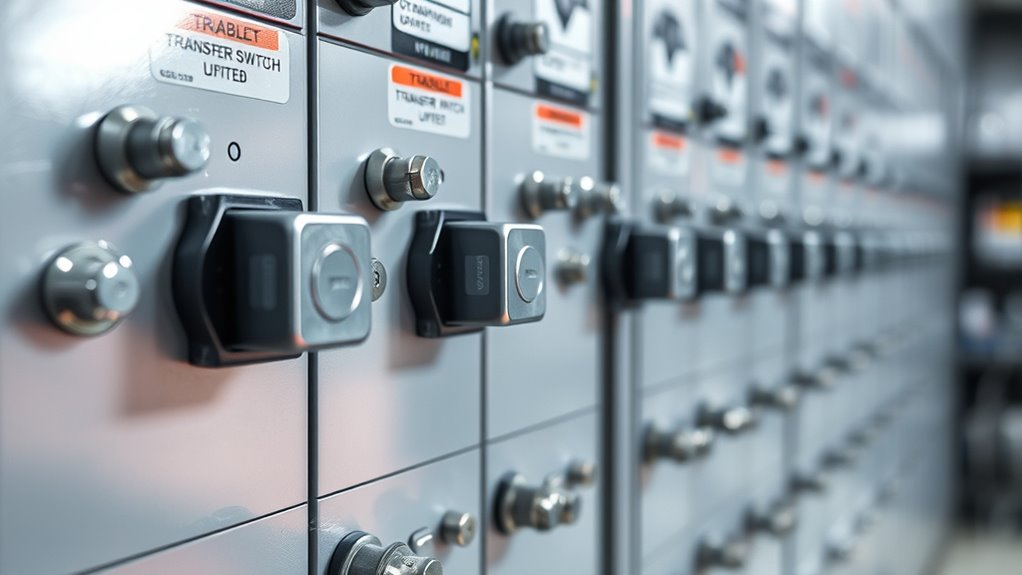
Many people believe transfer switch interlocks cause power loss, but they actually prevent dangerous back-feeding and guarantee safety. You might assume all transfer switches are the same, yet different models have unique features and interlock mechanisms. Some think interlocks are unnecessary, but they are essential for safe, reliable operation during power transfers. Properly functioning interlocks help avoid issues like power spoilage, ensuring the safety and integrity of your electrical system.
Interlocks Prevent Power Loss
One common myth is that transfer switch interlocks cause power outages or prevent power from flowing when needed. In reality, interlocks are designed to guarantee safe operation and don’t block power transfer when properly installed. They work in harmony with generator compatibility and adhere to specific power transfer protocols to prevent back-feeding and electrical faults. Properly configured interlocks allow seamless switching between utility power and generator supply, minimizing the risk of power loss during an outage. They’re vital for safety and reliability, ensuring your system functions smoothly without unnecessary interruptions. When set up correctly, interlocks facilitate safe, automatic transfer of power, debunking the myth that they hinder power flow. Instead, they protect your system while maintaining continuous power during emergencies. Vetted
All Transfer Switches Are Same
While all transfer switches serve the same basic purpose of switching power sources, they are not identical in design, features, or suitability for different systems. Not all switches meet the same certification standards, which can impact safety and reliability. Some models are designed for simple applications, while others accommodate system upgrades and more complex setups. Choosing the right transfer switch involves considering your system’s current needs and future expansion plans. Not all switches have built-in interlocks or meet industry safety standards, which is vital for preventing dangerous back feeds. Understanding these differences helps you select a switch that aligns with your system’s requirements and complies with certification standards, ensuring safe, reliable operation now and as your system evolves. Additionally, juice detox principles can be applied to system maintenance by emphasizing the importance of regular checks and proper safety measures to keep your electrical system healthy and efficient.
Interlocks Are Unnecessary
Some believe that transfer switch interlocks are an unnecessary feature, but this misconception can compromise safety. Skipping interlocks might seem to save on cost considerations or improve aesthetic appeal, but it puts you at risk of dangerous back feeds and equipment damage. Interlocks ensure that only one power source connects at a time, preventing costly and potentially deadly mistakes. Consider the emotional impact: risking your safety or that of loved ones isn’t worth saving a few dollars or maintaining a sleeker look. The table below highlights the true value of interlocks:
| Myth | Reality |
|---|---|
| They’re unnecessary | They safeguard lives and equipment from hazards |
| Cost considerations matter | Safety should always be the priority |
| Aesthetic appeal is key | Interlocks can be discreet and integrated seamlessly |
| They complicate setup | They simplify safe operation |
| They’re optional | They’re a crucial safety feature |
Additionally, understanding the functionality of interlocks helps emphasize their importance in maintaining a safe transfer switch system.
The Safety Benefits of Using Interlocks in Transfer Switches
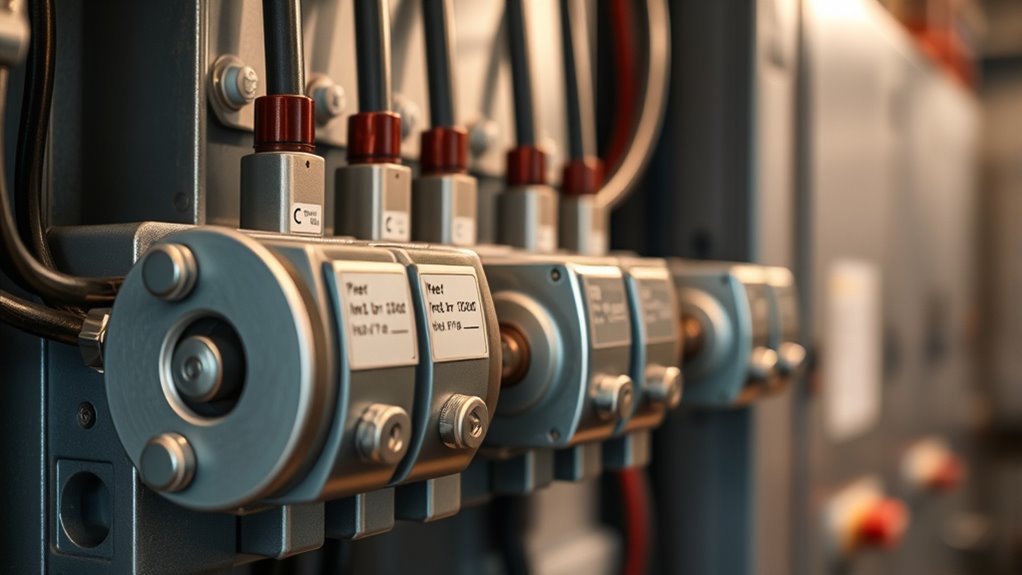
Interlocks in transfer switches substantially enhance safety by preventing dangerous operational errors. They verify that generators are compatible before switching and help maintain proper load balancing, reducing overload risks. By preventing simultaneous connection to both utility and generator, interlocks eliminate the chance of back-feeding and electrical faults. This safeguards your equipment and personnel from potential harm. Additionally, interlocks help avoid accidental transfer switch operation during maintenance, reducing injury risk. They also promote proper sequencing, ensuring the system functions as intended. Proper installation and maintenance are essential to ensure these interlocks operate effectively and reliably.
Types of Interlocks and Their Specific Applications
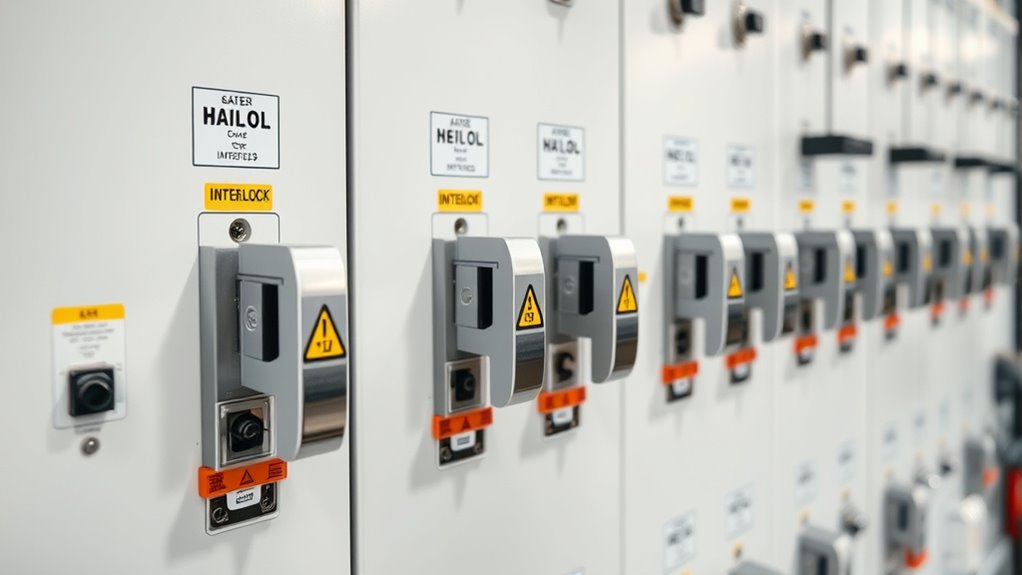
Understanding the different types of interlocks helps you choose the right safety features for your transfer switch. Transfer switch lockouts can prevent accidental operation, while manual and automatic interlocks serve distinct purposes. Recognizing how each functions ensures you maximize safety and reliability in your setup.
Transfer Switch Lockouts
Transfer switch lockouts are essential safety features designed to prevent accidental or improper transfer of power sources. They guarantee that only one power source is connected at a time, reducing the risk of backfeeding or electrical hazards. These lockouts help you stay compliant with electrical codes and enhance safety protocols. You can also customize interlocks to fit specific system requirements, providing added flexibility. Properly functioning eye patches can also contribute to overall safety by improving visibility in low-light conditions during maintenance.
Manual vs. Automatic Interlocks
Manual and automatic interlocks serve different roles in ensuring safe transfer switch operation. Manual operation requires you to actively engage or disengage the interlock, giving you direct control over the transfer process. This type is useful when you want to verify conditions before switching sources. This allows for oversight and precision, ensuring that operators can monitor and control the transfer process carefully. Automatic activation, on the other hand, triggers the interlock without your intervention, ensuring rapid response during power failures or emergencies. Automatic interlocks are ideal for critical systems where immediate transfer is essential. Both types prevent simultaneous source connection, but they suit different needs—manual for oversight and precision, automatic for quick action. Understanding these distinctions helps you choose the right interlock for your facility, ensuring safety and reliable power transfer.
How Interlocks Prevent Electrical Accidents and Equipment Damage
Interlocks play a crucial role in preventing electrical accidents and protecting equipment by guaranteeing that transfer switches operate safely. They prevent dangerous scenarios like simultaneous connection of power sources or accidental energizing of circuits. Proper generator coordination is maintained, so the generator only connects when it’s ready, avoiding overloads. Circuit isolation ensures that only one power source supplies your equipment at a time, preventing back-feed or short circuits. Interlocks also stop operators from switching sources while equipment is energized, reducing shock risk. Additionally, predictive analytics can be used to monitor and optimize transfer switch performance, further enhancing safety and reliability.
Installation Best Practices for Transfer Switch Interlocks
Proper installation of transfer switch interlocks is essential to guarantee they function correctly and enhance overall safety. Follow clear installation guidelines to ensure the interlock installation is accurate and reliable. Begin by carefully reviewing the manufacturer’s instructions, paying close attention to wiring connections and mounting positions. Use the correct tools and high-quality components to prevent future issues. Make certain the interlock mechanism aligns properly with the transfer switch to prevent accidental energization of both sources. Double-check all connections for tightness and proper insulation. It’s vital to test the interlock after installation to confirm it operates as intended, preventing simultaneous power sources. Additionally, understanding the Rhythm Failure principles can help troubleshoot and ensure the interlock system maintains optimal performance. Adhering to these best practices during interlock installation minimizes risks and ensures your transfer switch system performs safely and efficiently.
Recognizing When an Interlock Is Necessary for Your System
You need an interlock when your system load fluctuates or equipment requires maintenance, to guarantee safe operation. They also become indispensable when preventing electrical hazards that could harm personnel or damage gear. Recognizing these signs helps you determine when an interlock is a vital safety feature for your system.
System Load Changes
When system loads fluctuate markedly, it’s essential to recognize when an interlock is needed to maintain safe and reliable operation. Sudden power fluctuations or uneven load balancing can cause equipment stress or damage. An interlock helps prevent switching errors during these changes, ensuring seamless power transfer. Watch for signs like unexpected drops in power or overloading components.
Consider these indicators for interlock activation:
- Rapid changes in load demand
- Unusual power fluctuations
- Imbalanced loads causing system strain
- Frequent switching between power sources
Equipment Maintenance Needs
Regularly inspecting your equipment is essential because maintenance needs can signal the necessity of engaging interlocks to protect your system. If you notice signs like worn components, unusual noises, or frequent breakdowns, it’s time to consider equipment upgrades or replacing parts. Using spare parts appropriately can prevent further damage and ensure system reliability. When components are nearing the end of their lifespan, interlocks become crucial to prevent unsafe operation during maintenance or repairs. Proper maintenance also involves checking for compatibility of upgrades with existing systems. Recognizing these signals helps you determine when to activate interlocks, safeguarding personnel and equipment. Staying proactive with maintenance guarantees your transfer switch system remains operational, safe, and compliant with safety standards.
Preventing Electrical Hazards
Electrical hazards can arise unexpectedly if interlocks are not in place to prevent unsafe conditions during system operation or maintenance. Recognizing when an interlock is necessary helps protect you from potential shocks, burns, or fires. Use interlocks to guarantee proper circuit protection and maintain electrical insulation between power sources. Consider these situations:
- When switching between utility and backup power to avoid simultaneous energization
- During maintenance to prevent accidental contact with live circuits
- In systems with high voltage or current levels that pose increased risk
- When equipment lacks built-in safeguards against improper operation
Implementing appropriate transfer switch interlocks enhances safety by reducing the chance of arc flashes, electrical faults, and other hazards, ensuring safe system operation.
Legal and Code Requirements for Transfer Switch Safety Devices

Understanding the legal and code requirements for transfer switch safety devices is crucial to guarantee compliance and reliable operation. You must ensure your transfer switch meets all relevant standards for transfer switch certification, which verify its safety and functionality. Local and national electrical codes, like the NEC (National Electrical Code), specify mandatory safety measures and installation procedures. These codes aim to prevent backfeed and electrical hazards, ensuring safe switching between power sources. Non-compliance can lead to legal issues, fines, or unsafe conditions. Hence, it’s essential to verify that your transfer switch and safety devices adhere to all applicable regulations. Staying informed about legal requirements helps you maintain proper documentation, guarantees safety, and avoids costly penalties. Always consult local authorities and certified professionals for proper compliance.
Troubleshooting and Maintaining Transfer Switch Interlocks
When transfer switch interlocks malfunction, it can compromise safety and disrupt power transfer operations. Regular troubleshooting helps identify issues before they cause safety hazards or downtime. Start by inspecting interlock mechanisms for dirt, corrosion, or damage. Check that battery backups are functioning properly, ensuring power is available for safe switching during outages. Watch for signs of power surges that may damage the interlocks or wiring. Test the interlocks periodically to confirm they prevent simultaneous power sources. Keep connections tight and replace worn components promptly. Ensure your transfer switch is clean, dry, and free of debris. Use a multimeter to verify electrical continuity. Proper maintenance minimizes risk, extends interlock lifespan, and keeps your system running smoothly.
Making Informed Decisions: Choosing the Right Interlock for Your Needs
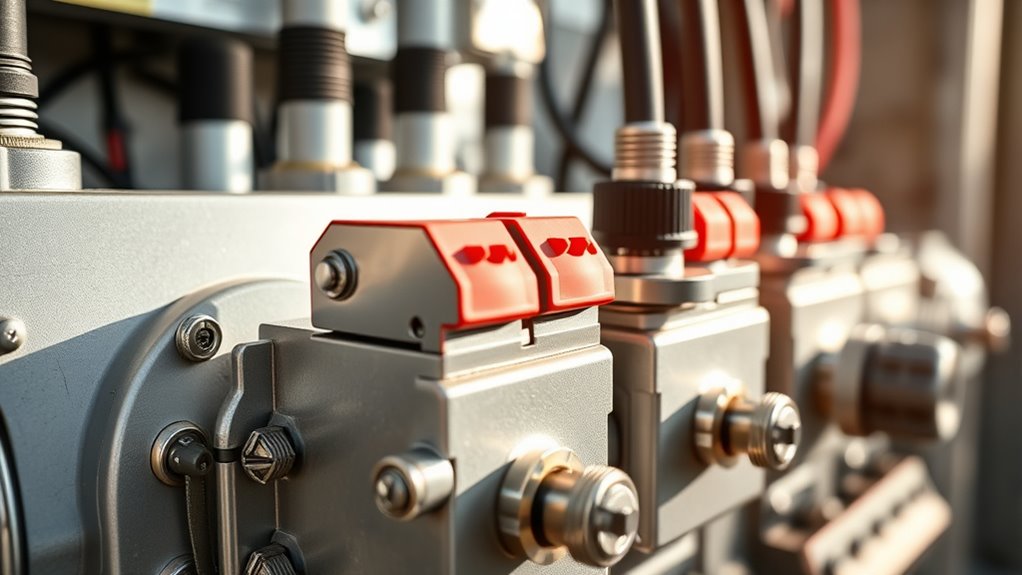
Choosing the right interlock for your transfer switch is vital to guarantee safe and reliable power transfer. To make an informed decision, consider factors like cost comparison and environmental impact. Different interlocks vary in price, installation complexity, and durability, affecting long-term expenses. Additionally, some interlocks are more environmentally friendly, using fewer materials or energy. Here’s a quick comparison:
| Interlock Type | Cost & Efficiency | Environmental Impact |
|---|---|---|
| Mechanical | Lower cost, simple | Minimal materials |
| Electronic | Higher cost, precise | Energy-consuming |
| Hybrid | Moderate, balanced | Moderate impact |
| Custom | Varies, tailored | Depends on design |
| Standard | Basic, economical | Less eco-friendly |
Choose based on your budget, safety needs, and environmental priorities to guarantee optimal performance.
Frequently Asked Questions
Are Transfer Switch Interlocks Compatible With All Generator Types?
Transfer switch interlocks are not compatible with all generator types. You need to verify generator compatibility before installation, as some models may require specific interlock features or configurations. Proper interlock installation ensures safe operation and prevents backfeeding. Always consult manufacturer guidelines and a professional installer to confirm compatibility, ensuring your generator and transfer switch work seamlessly together for your safety and system reliability.
How Often Should Transfer Switch Interlocks Be Inspected or Tested?
To keep your system running smoothly, you should follow a diligent maintenance schedule, inspecting your transfer switch interlocks at least once a year. Regular inspection frequency guarantees they function properly and safely. While more frequent checks might be beneficial in harsh environments, annual inspections strike an ideal balance. Always consult the manufacturer’s guidelines to tailor the maintenance schedule, ensuring peak performance and peace of mind with your generator setup.
Can Interlocks Be Retrofitted Into Existing Transfer Switches?
Yes, you can retrofit interlocks into existing transfer switches, but installation challenges may arise depending on the switch’s age and design. Make certain you evaluate compatibility to avoid costly modifications. Retrofit typically reduces ongoing maintenance requirements by enhancing safety, but you should still plan for periodic inspections to confirm proper operation. Consulting a qualified electrician helps address installation challenges and ensures the interlocks function correctly, maintaining safety and compliance.
What Are the Cost Implications of Installing Interlocks?
Installing interlocks typically adds $200 to $500 per switch, depending on size and complexity, and can increase installation costs by up to 20%. While the upfront cost might seem high, it considerably reduces risks, potentially saving you money on repairs or insurance. Keep in mind, ongoing maintenance is minimal, but including it in your budget ensures your interlock system remains reliable and safe over time.
Do Interlocks Meet International Electrical Safety Standards?
Yes, interlock installation typically meets international electrical safety standards. When you install interlocks correctly, they enhance safety compliance by preventing dangerous transfer switch operations. Make sure your installation follows recognized standards such as IEC or UL requirements, and consult a qualified electrician. Properly installed interlocks guarantee your system adheres to safety protocols, reducing risks and ensuring reliable, compliant operation across different international standards.
Conclusion
By understanding transfer switch interlocks, you can prevent costly accidents and protect your equipment. Think of interlocks as guardians, silently watching over your system like a sturdy lock on a safe. Without them, chaos could break loose—like a storm tearing through a calm harbor. Embrace these safety devices, and you’ll build a shield against electrical mishaps, ensuring peace of mind when power is on your side.