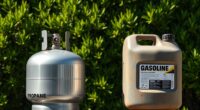
To winterize your generator for cold weather storage, start by adding fuel stabilizer to prevent gunk and running the engine briefly to circulate it. Check and charge the battery, clean terminals, and disconnect or maintain it to prevent freezing. Change the oil to guarantee proper lubrication and inspect for mechanical issues. Store in a dry, sheltered area with good airflow. For detailed steps, keep exploring to keep your generator in top shape during winter.

Get backup power and energy gear delivered free — and shop member deals
- Fast, free delivery on millions of items
- Access to Prime Big Deal Days deals on October 6–7
- Prime Video, Amazon Music and more included
Key Takeaways
- Use fuel stabilizers and run the engine to circulate stabilized fuel before storage.
- Disconnect or maintain the battery to prevent freezing and ensure it stays charged.
- Check and change the oil to maintain proper lubrication in cold temperatures.
- Store the generator in a dry, sheltered area away from moisture and extreme weather.
- Inspect and address mechanical issues, ensuring proper airflow and ventilation during storage.

As winter approaches, it’s essential to prepare your generator to withstand cold temperatures and prevent breakdowns. Cold weather can cause fuel issues, battery problems, and mechanical failures if you’re not proactive. To start, focus on using fuel stabilizers. These additives are crucial because they prevent fuel from degrading over time, especially when the generator isn’t in regular use. During winter storage, stale fuel can clog the carburetor and fuel lines, making it difficult to start your generator when you need it most. Before storing your generator, add a fuel stabilizer to the tank according to the manufacturer’s instructions, then run the engine for a few minutes. This guarantees the stabilized fuel circulates through the system, protecting your engine from potential damage caused by old fuel.
Battery maintenance is equally vital in winterizing your generator. Cold temperatures can weaken the battery’s charge and reduce its lifespan. Check the battery’s charge level and top it off with distilled water if it’s a conventional lead-acid battery. If your generator has a maintenance-free or sealed battery, simply inspect for corrosion around the terminals and clean them if necessary. For added protection, disconnect the battery or use a battery maintainer or trickle charger designed for cold climates. This helps keep the battery charged and ready for use, preventing it from freezing or losing power when you need your generator. Additionally, ensure the battery is securely mounted and free of corrosion, which can hinder starting performance.
Beyond fuel and battery care, other winterizing steps are important. Drain the fuel system if you plan to store the generator for an extended period, or keep the tank full to minimize condensation inside the tank, which can cause rust and fuel contamination. Store the generator in a dry, sheltered location away from snow, ice, and moisture. Before storing, run a brief test to confirm everything is functioning correctly and address any mechanical issues. Also, check the oil level and change it if necessary, since cold weather can thicken oil, making it harder for the engine to start. Ensuring proper airflow and ventilation during storage also helps prevent moisture buildup and corrosion inside the generator components.
As an affiliate, we earn on qualifying purchases.
Frequently Asked Questions
How Often Should I Run My Generator During Winter Storage?
You should run your generator at least once a month during winter storage. Before running it, add fuel stabilizers to prevent gumming, and check the oil level, changing it if necessary. Running the generator helps circulate stabilized fuel and fresh oil, preventing issues like stale fuel or engine corrosion. This routine keeps your generator ready for use and guarantees it stays in good condition throughout the cold months.
Can I Use Regular Motor Oil for Winterizing?
You shouldn’t use regular motor oil for winterizing your generator because it might not provide the right viscosity in cold weather. Cold temperatures demand a lower viscosity oil to keep things running smoothly. Always check the oil change interval and switch to winter-grade oil if needed, so your generator stays protected. Don’t take chances—using the right oil guarantees your generator stays reliable when you need it most.
What Is the Best Way to Prevent Fuel Gumming?
To prevent fuel gumming, you should add a fuel additive designed for cold weather to your storage container before filling it up. This additive helps keep the fuel stable and prevents gum formation. Make sure to run your generator for a few minutes after adding the additive, so it circulates through the system. Regularly check and top off your fuel to ensure your generator is ready when you need it.
Should I Remove the Battery for Winter Storage?
Investigating whether removing the battery is necessary, you find that it depends on your storage conditions. If you’re storing your generator in a cold, damp environment, removing the battery for winter storage is a smart move. It prevents battery drain and corrosion. Otherwise, if you keep the battery charged and perform regular battery maintenance, leaving it in place is acceptable. Just ensure it’s fully charged and protected from extreme cold.
How Do I Protect My Generator From Rodents?
To protect your generator from rodents, you should implement rodent prevention strategies and follow storage tips. Seal any openings or vents with steel wool or metal mesh to block entry points. Keep the area clean and free of food debris, and consider using rodent repellent or mothballs around the storage space. Regularly inspect your generator for signs of rodents, and ensure it’s stored in a secure, elevated location to minimize risks.
As an affiliate, we earn on qualifying purchases.
Conclusion
By properly winterizing your generator, you guarantee it’s ready to perform when you need it most. Imagine a homeowner who skipped winterization and faced a cold snap with a frozen, non-starting generator. Conversely, if you take the time now to prepare yours, you’ll avoid costly repairs and stay powered during emergencies. Taking these simple steps now can save you trouble later, giving you peace of mind knowing your generator will work reliably when it counts most.
As an affiliate, we earn on qualifying purchases.
As an affiliate, we earn on qualifying purchases.
Fall Picks
fall essentials
As an affiliate, we earn on qualifying purchases.