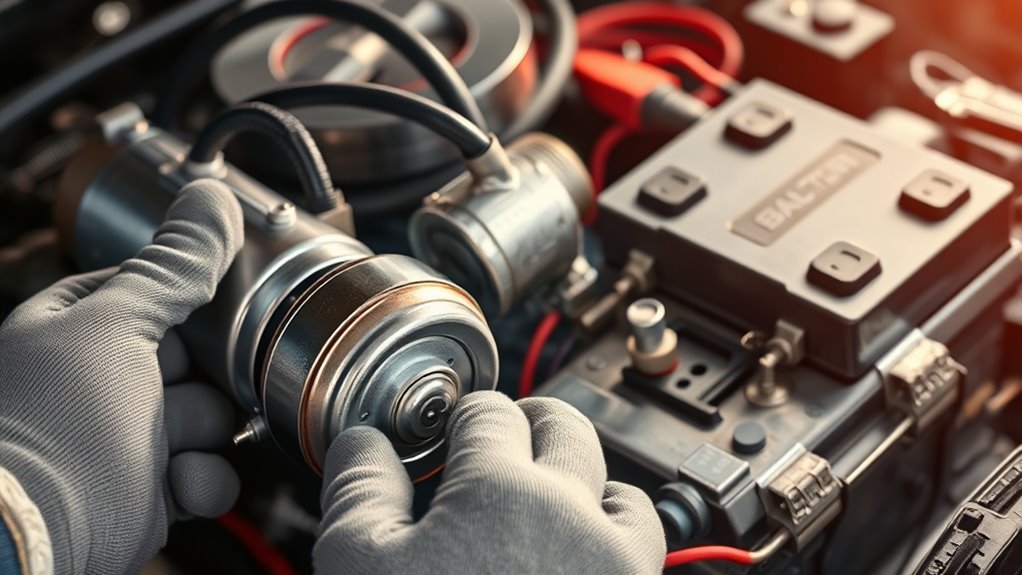

When troubleshooting your electric starter, start by checking the battery’s voltage with a multimeter—aim for around 12.6 volts. Look for corrosion or loose terminals, and clean or tighten as needed. If the battery’s good but you hear no click or the engine doesn’t turn, the solenoid might be faulty—test it for continuity. Narrowing down the issue helps you fix it faster; further details can guide you toward the right solution.

Get backup power and energy gear delivered free — and shop member deals
- Fast, free delivery on millions of items
- Access to Prime Big Deal Days deals on October 6–7
- Prime Video, Amazon Music and more included
Key Takeaways
- Check the battery voltage with a multimeter; below 12.6V indicates a recharge or replacement is needed.
- Listen for a clicking sound when turning the key; no sound suggests a faulty solenoid or connection issue.
- Inspect and clean battery terminals to ensure a good connection; corrosion can mimic starter or solenoid problems.
- Test the solenoid for continuity across its terminals; absence of continuity indicates it may need replacement.
- Confirm wiring and connections are intact and secure to prevent false diagnoses of battery or solenoid failure.

Electric starter problems can be frustrating, especially when you’re ready to get your equipment up and running. When your starter refuses to turn over, it’s tempting to assume the worst, but often the issue lies with either the battery or the solenoid. To troubleshoot effectively, you need to understand how to diagnose these common problems. One of the first steps is to focus on battery maintenance. A weak or dead battery is a frequent culprit behind starter failure. Check the battery’s voltage with a multimeter; a fully charged battery should read around 12.6 volts. If it’s considerably lower, you might need to recharge or replace it. Corrosion on the terminals can also cause poor connections, so clean them with a wire brush and ensure they’re tightly secured. Proper battery maintenance not only extends its life but prevents unnecessary troubleshooting down the line.
Once you’ve addressed the battery, if your starter still doesn’t engage, it’s time to look at the solenoid. The solenoid acts as a switch that transmits power from the battery to the starter motor. If it’s faulty, the starter won’t turn regardless of a good battery. To test the solenoid, you can listen for a clicking sound when you turn the key; no click usually indicates a problem. For a more definitive test, disconnect the solenoid and perform solenoid testing with a multimeter. Check for continuity across the terminals when the key is turned to the start position. If there’s no continuity, the solenoid isn’t functioning properly and needs replacing. Be sure to inspect the wiring for any damage or loose connections, as these can mimic solenoid issues. Recognizing the critical role of the solenoid in your starting system helps pinpoint issues more accurately.
In some cases, the problem may be a combination of both battery and solenoid issues, or even wiring problems elsewhere in the starting circuit. It’s essential to rule out each component systematically. Regular battery maintenance, including checking for corrosion, ensuring tight connections, and testing voltage, can prevent many starter issues before they happen. Meanwhile, solenoid testing can confirm whether the switch is functioning properly or needs to be replaced. Remember, troubleshooting electric starter problems requires patience and a methodical approach. By focusing on these key areas, you’ll save time and avoid unnecessary parts replacements. Ultimately, understanding the role of the battery and solenoid in your starting system helps you diagnose problems quickly and get your equipment back in action with confidence.
Frequently Asked Questions
How Can I Tell if My Battery Is the Problem?
You can tell if your battery’s the problem by checking its health with a voltage test. Use a multimeter to measure the voltage; a healthy battery should read around 12.6 volts when fully charged. If it’s below 12.4 volts, your battery may be weak or dead, causing starter issues. Additionally, look for corrosion or swelling, which also indicate battery problems needing replacement or recharging.
What Are Signs of a Faulty Starter Solenoid?
Remember, a faulty starter solenoid can be as frustrating as a dial-up modem! Signs include clicking sounds when you turn the ignition switch, no engine cranking, or intermittent starting issues. You might also notice the starter relay failing to engage or the solenoid sticking. If these symptoms occur, it’s time to test the starter relay and verify the ignition switch properly signals the solenoid, avoiding a complete breakdown.
Can Corroded Connections Cause Starter Issues?
Corroded connections can definitely cause starter issues. When corrosion buildup occurs on terminals or wiring, it hinders electrical contact, preventing the proper flow of current. This disruption can lead to a slow or failed start. To fix this, you should clean the corroded areas thoroughly, removing any buildup, and make sure all connections are tight and free of corrosion. Regular maintenance helps keep your starter functioning smoothly.
How Often Should I Replace My Starter Components?
Like a car engine needing regular tune-ups, your starter components require routine maintenance. You should replace parts like the solenoid or brushes when they show signs of wear, typically every 50,000 to 100,000 miles or if you notice slow cranking. Regular starter maintenance helps extend component lifespan, preventing unexpected breakdowns. Keep an eye on performance, and don’t hesitate to substitute worn parts to ensure reliable starts and avoid costly repairs down the line.
Is It Safe to Troubleshoot Starter Problems Myself?
Yes, it’s generally safe to troubleshoot starter problems yourself if you follow proper DIY safety precautions. Always disconnect the battery before working on electrical components to avoid shocks. Use insulated tools and wear safety gear. However, if you’re unsure or uncomfortable, it’s best to seek professional repair to guarantee safety and proper diagnosis. Remember, professionals have the experience and tools to handle electrical issues safely and efficiently.
Conclusion
When your electric starter isn’t working, it could be the battery or the solenoid. Check the battery’s charge, test the connections, and listen for clicking sounds. If the battery’s fine, inspect the solenoid for damage or corrosion, and make certain it’s receiving power. Troubleshooting these parts step-by-step helps you identify the cause quickly. Remember, a healthy battery and a functioning solenoid work together to keep your engine starting smoothly—so don’t skip the checks!
Fall Picks
fall essentials
As an affiliate, we earn on qualifying purchases.