
To prevent your generator from overheating, regularly check the cooling system’s components such as the radiator, hoses, fans, and coolant levels. Make sure the radiator is free of dirt and debris, and that fans move freely without obstructions. Inspect for leaks or clogged vents and top off coolant with the recommended type. Routine maintenance and early repairs are essential—keep your system in top condition to avoid costly failures. Learn more about effective cooling system checks and fixes to keep your generator running smoothly.

Get backup power and energy gear delivered free with Prime
- Fast, free delivery on millions of items
- Prime Video, Amazon Music and more included
- Member-only deals all year
Key Takeaways
- Regularly inspect radiator, coolant levels, hoses, and fans for leaks, blockages, or damage.
- Keep the radiator clean and free of dirt, debris, and dust to ensure proper cooling.
- Check and replace coolant as needed, ensuring it is topped off with the recommended type.
- Test cooling fans for proper operation and unobstructed movement to prevent overheating.
- Address any cooling system issues immediately, including leaks or faulty components, to maintain optimal temperatures.
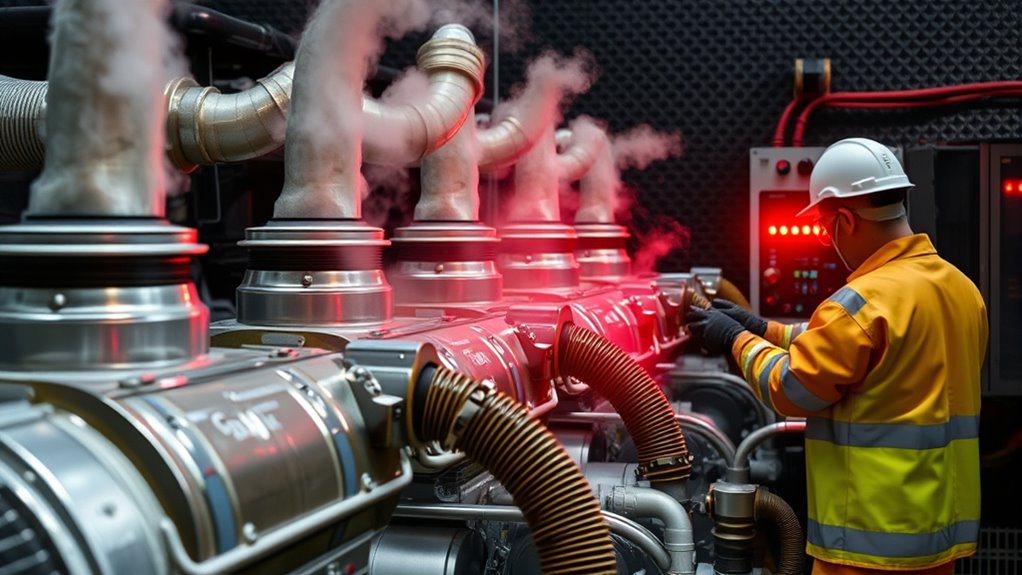
Generators can overheat when they’re pushed beyond their capacity or if they lack proper maintenance. One common cause is a cooling system that isn’t functioning correctly, which can lead to serious damage if not addressed promptly. To prevent this, you need to pay close attention to your generator’s cooling system and guarantee it’s in top condition. Regularly checking and maintaining the cooling components can help keep the generator running efficiently, avoiding costly repairs and downtime. Proper maintenance scheduling plays a vital role here. When you establish a routine maintenance plan, you’re more likely to catch issues early, such as coolant leaks, clogged vents, or faulty fans, before they cause overheating.
Regular cooling system checks prevent generator overheating and costly repairs.
Fuel efficiency is another important factor to ponder when preventing overheating. An inefficient fuel system can cause the engine to run hotter than necessary. For example, if your generator isn’t burning fuel properly—maybe due to dirty filters or incorrect fuel mixture—it can generate excess heat. By keeping the fuel system clean and well-maintained, you not only improve fuel efficiency but also reduce the risk of overheating. Regularly inspecting fuel lines, replacing filters, and ensuring that the fuel mixture is correct help your generator operate smoothly and stay cool under load.
You should also routinely check the cooling system itself—this includes inspecting the radiator, coolant levels, hoses, and fans. If you notice any leaks or blockages, address them immediately. Make sure the radiator isn’t clogged with dirt, debris, or dust, which can impede airflow and lower cooling efficiency. Cooling fans should spin freely and operate without obstruction. If you find that the coolant levels are low, top them off with the recommended type of coolant, and look for any leaks that could be draining the system. Remember, neglecting these checks can lead to overheating, especially during long periods of use or high load conditions. Conducting regular maintenance and inspections is essential for optimal performance.
Another essential step is to keep detailed records of your maintenance schedule. This allows you to track when you last checked or replaced key components. Consistent maintenance ensures the cooling system remains in good condition and prevents unexpected failures. When you stay proactive about these checks, you’re less likely to experience overheating episodes. Additionally, monitoring operating temperatures during use can alert you to potential problems early, giving you the chance to act before damage occurs. Ultimately, by prioritizing cooling system checks and sticking to a strict maintenance schedule, you extend your generator’s lifespan, improve fuel efficiency, and keep it running safely and reliably under all conditions.
As an affiliate, we earn on qualifying purchases.
Frequently Asked Questions
How Often Should I Service My Generator’s Cooling System?
You should service your generator’s cooling system every 3 to 6 months. During this time, perform coolant maintenance by checking coolant levels and topping off if needed. Also, inspect the fan to ensure it runs smoothly and isn’t damaged. Regular servicing helps prevent overheating, keeps your generator running efficiently, and extends its lifespan. Don’t forget to follow the manufacturer’s recommendations for more specific maintenance intervals.
Can Using the Wrong Coolant Cause Generator Overheating?
A stitch in time saves nine, so using the wrong coolant can definitely cause your generator to overheat. When coolant isn’t compatible, it hampers temperature regulation, leading to inefficient cooling and risking engine damage. Always verify you use the recommended coolant for your generator, as incompatible fluids can clog passages and reduce heat transfer. Proper coolant choice keeps your generator running smoothly and prevents costly repairs down the line.
What Are Signs of a Failing Cooling Fan?
You’ll notice cooling fan malfunctions through signs like unusual noise, slow or no spinning, or vibrations. Overheating warning signs include the generator running hotter than normal, frequent shutdowns, or temperature alerts. If the fan isn’t functioning properly, it can’t cool the engine effectively, leading to overheating. Check for these signs regularly to prevent damage and ensure your generator operates smoothly.
How Do Ambient Temperatures Affect Generator Cooling Efficiency?
You might think high ambient temperatures don’t matter, but they substantially affect your generator’s cooling efficiency. When ambient temperatures rise, your cooling system struggles to dissipate heat, risking overheating. Conversely, cooler air helps your generator stay within ideal operating temperatures. To keep it running smoothly, monitor ambient conditions and make sure your cooling system is functioning properly, especially during hot weather, so your generator doesn’t overheat or suffer damage.
Is It Safe to Operate a Generator While Cooling System Is Under Repair?
You shouldn’t operate a generator while its cooling system is under repair, as it jeopardizes generator safety. Running it during repairs can lead to overheating, damage, or failure. Always follow proper repair procedures and confirm the cooling system is fully functional before restarting. This minimizes risks, protects your equipment, and guarantees safe, reliable operation. Never bypass safety protocols—waiting until repairs are complete is the best practice.
generator coolant level check kit
As an affiliate, we earn on qualifying purchases.
As an affiliate, we earn on qualifying purchases.
Conclusion
Remember, your generator’s cooling system is the heartbeat that keeps it alive. When you check and maintain it, you’re tending to the very soul of your power source. Overheating isn’t just a technical issue; it’s a silent storm threatening your energy flow. By ensuring proper cooling, you’re not only safeguarding your equipment but also nurturing the steady flame of reliability. Embrace this vigilance—your generator’s health is the lighthouse guiding your uninterrupted power journey.
generator cooling system maintenance parts
As an affiliate, we earn on qualifying purchases.
As an affiliate, we earn on qualifying purchases.
As an affiliate, we earn on qualifying purchases.
Halloween Picks
halloween
As an affiliate, we earn on qualifying purchases.