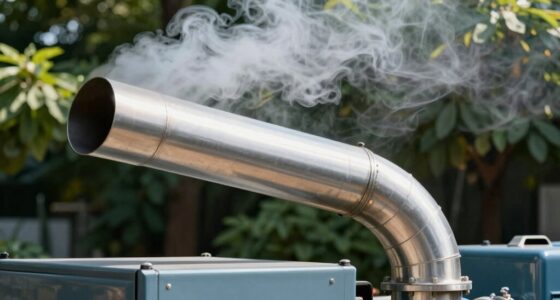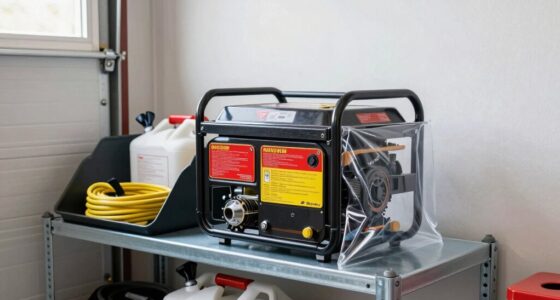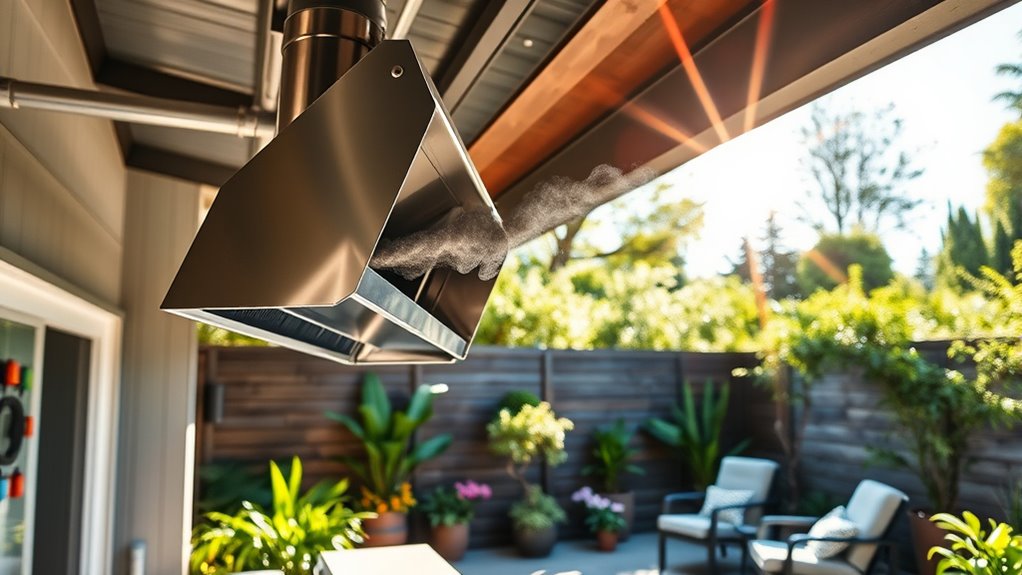

To effectively direct fumes away from your living areas, guarantee your ventilation system is designed for proper airflow, pushing contaminated air outward through strategically placed exhaust vents. Regularly maintain and clean your exhaust systems to prevent blockages, and consider upgrading components for better efficiency. Position vents high on walls or roofs to disperse fumes properly and seal any gaps to avoid leaks. For more tips on keeping your indoor air safe, stay tuned for additional guidance.
Key Takeaways
- Install exhaust fans and vents positioned high on walls or roofs to effectively disperse fumes away from living spaces.
- Ensure proper airflow patterns that direct contaminated air outward and bring in fresh outdoor air.
- Regularly maintain and clean exhaust systems to prevent blockages and ensure unobstructed fumes expulsion.
- Seal gaps around vents and ducts to prevent fumes from leaking into indoor environments.
- Incorporate HEPA filtration or additional air purification methods if ventilation alone doesn’t fully remove fumes.
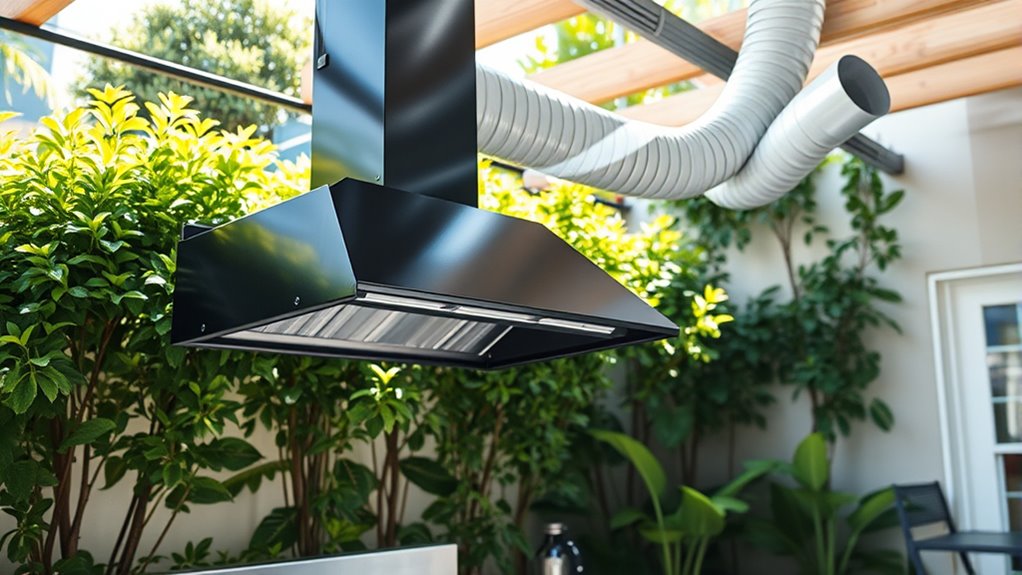
Exhaust fumes can quickly become a frustrating and dangerous problem if not addressed properly. When fumes from vehicles, appliances, or industrial processes seep into your living space, they pose health risks and create an unpleasant environment. To prevent this, you need effective ventilation strategies that direct these fumes away from your home and ensure fresh air flow. Implementing proper ventilation isn’t just about installing a vent; it involves understanding airflow patterns and ensuring continuous exchange of indoor and outdoor air. You might consider exhaust fans, windows, or dedicated vents that draw fumes outward, reducing their presence inside. The goal is to create a steady airflow that pushes contaminated air outside while bringing in clean air from outside. Proper HEPA filtration can also help remove airborne pollutants that linger indoors if ventilation isn’t sufficient. However, having a good ventilation plan isn’t enough if your exhaust system isn’t properly maintained. Exhaust system maintenance is critical for keeping fumes away from your living areas. Over time, debris, dust, and grease can accumulate in vents, fans, and ducts, restricting airflow and causing fumes to back up or leak into spaces where they shouldn’t. Regular inspections and cleanings of your exhaust system ensure it functions correctly. You should check for blockages, corrosion, or damages that might impair performance. If you notice strange noises, reduced airflow, or lingering fumes, it’s time to service or repair your system. Proper maintenance not only keeps fumes moving in the right direction but also prolongs the lifespan of your equipment, saving you money and hassle in the long run.
In addition to routine maintenance, consider upgrading components of your exhaust system if they’re outdated or inefficient. Modern ventilation solutions often incorporate smarter controls and more durable materials, which can improve overall safety and efficiency. Don’t forget that sealing gaps around vents and ducts is equally important, as leaks can undermine your entire ventilation strategy. When designing or improving your ventilation setup, think about the placement of exhaust outlets relative to living areas. Positioning vents high on walls or roofs can help prevent fumes from settling into occupied spaces.

DARAN Portable Power Station 89.6Wh LiFePO4 Battery 100W(200W Peak) Solar Power Bank, Portable Charger Small Generator with AC Outlets & PD Fast Charging for Home/Laptop/Camping(Solar Panel Optional)
- Compact and Lightweight: Fits in pocket, weighs 2.54 pounds
- Ergonomic Handle: Easy to carry on the go
- Multiple Output Ports: 7 ports including AC, USB-C, USB-A, DC
As an affiliate, we earn on qualifying purchases.
Frequently Asked Questions
What Are the Health Risks of Inhaling Exhaust Fumes?
Inhaling exhaust fumes can harm your indoor air quality, causing respiratory issues, headaches, and dizziness. Long-term exposure may increase your risk of heart disease and lung problems. To protect yourself, you should focus on emission reduction by ensuring proper ventilation and directing fumes away from living spaces. This way, you minimize health risks and maintain a safer environment inside your home.
Can Natural Ventilation Effectively Remove Exhaust Fumes?
You can’t rely solely on natural ventilation to clear exhaust fumes because it often isn’t enough. Proper airflow optimization is essential to keep indoor air safe, especially when outdoor air quality fluctuates. Opening windows may help, but fumes can linger if outdoor conditions are poor. Think of it as putting a band-aid on a bigger problem—use mechanical ventilation or exhaust systems for real peace of mind.
Are There Specific Materials That Help Block Exhaust Odors?
Yes, you can block exhaust odors effectively with specific materials. Use an air barrier to prevent fumes from seeping into your living areas, ensuring a tight seal around vents and ducts. Additionally, incorporate odor-absorbing materials like activated charcoal or baking soda near exhaust sources. These materials help neutralize odors, keeping your space fresh. Proper sealing and odor-absorbing products work together to minimize unpleasant smells and improve indoor air quality.
How Often Should Exhaust Systems Be Inspected or Maintained?
You should schedule an inspection at least once a year to make certain your exhaust system functions properly. Regular maintenance, ideally every six months, helps prevent blockages and leaks that could direct fumes into your living space. Keep an eye on performance and look for unusual odors or noises, which signal it’s time for a check-up. Staying consistent with your inspection schedule and maintenance frequency keeps your home safer and your system working efficiently.
What Are the Legal Regulations for Exhaust Venting in Residential Areas?
Imagine your home’s ventilation system as a guardian, protecting you from harmful fumes. Building codes and ventilation standards set strict legal regulations, requiring exhaust vents to direct fumes safely outside and away from living spaces. You must guarantee your exhaust systems comply, with proper installation, clearance, and venting routes, to meet these laws and keep your home safe and healthy. Always check local regulations, as they vary by area.

Portable Solar Generator 300W Portable Power Station with 60W Solar Panel
- Portable with 60W Solar Panel: Powerful 300W generator for outdoor use
- Multiple Charging Outlets: AC, DC, USB ports with SOS flashlight
- Versatile Charging Options: Recharge via AC, solar, or carport
As an affiliate, we earn on qualifying purchases.
Conclusion
Now, picture the gentle flow of fresh air sweeping away stubborn fumes, leaving your living space crisp and clean. By properly directing exhaust, you create a sanctuary where harmful gases vanish like mist at dawn. Take control of your environment and guarantee those fumes don’t creep into your home’s cozy corners. With a simple, mindful setup, you turn your space into a haven of purity, where every breath feels like a invigorating breeze on a bright, clear day.

Porch Shield Generator Cover for 5000-10000W, 32 x 24 x 24 inch, Black
- Compatibility: Fits 5000-10000W generators
- Durable Material: 600D water-resistant polyester fabric
- All-Weather Protection: Protects against sun, rain, snow, dust
As an affiliate, we earn on qualifying purchases.
Porch Shield Generator Cover for 5500-15000W, 38 x 28 x 30 inch, Black
- Compatibility: Fits 5500W to 15000W generators
- Premium Material: 600D water-resistant polyester fabric
- All-Weather Protection: Resists sun, rain, snow, wind, dust
As an affiliate, we earn on qualifying purchases.