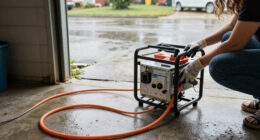
To keep your generator ready in minutes, store it in a clean, dry, and well-ventilated area away from extreme temperatures. Regularly inspect and tighten bolts, change oil, and replace worn spark plugs. Use fresh fuel or stabilizer if stored long-term, and run the generator briefly every few months to keep parts lubricated. Cover it with a breathable cover and follow manufacturer guidelines for maintenance—these tips will help guarantee you’re always prepared when you need power.

Get backup power and energy gear delivered free with Prime
- Fast, free delivery on millions of items
- Prime Video, Amazon Music and more included
- Member-only deals all year
Key Takeaways
- Perform regular maintenance, including oil changes and inspecting spark plugs, to ensure quick startup readiness.
- Store in a clean, dry, well-ventilated location protected from extreme temperatures.
- Stabilize fuel or drain it before long-term storage to prevent stale fuel issues.
- Periodically start and run the generator for a few minutes to keep parts lubricated and ready.
- Keep a detailed maintenance log and follow manufacturer guidelines for storage and servicing.
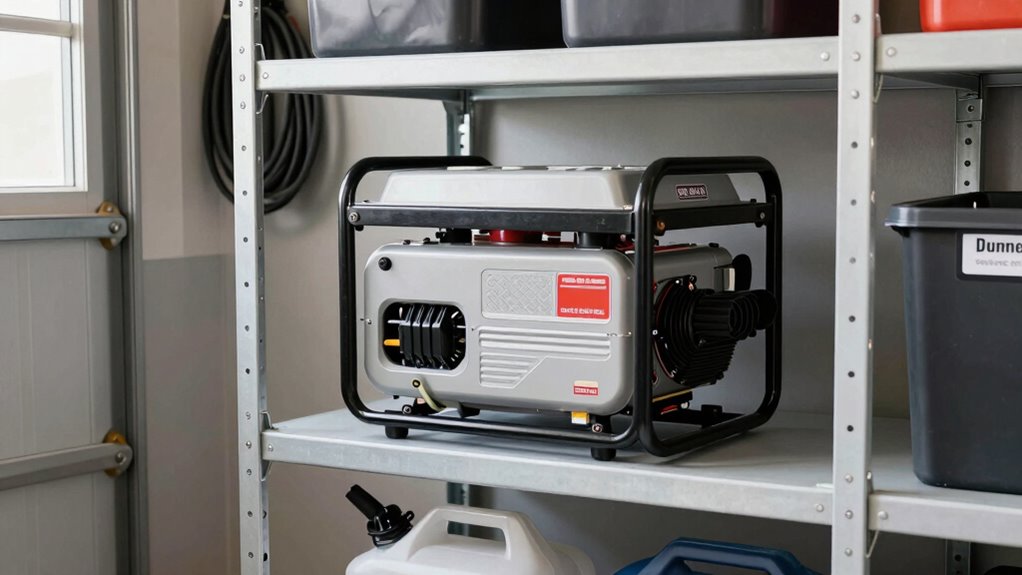
Having a generator ready to go at a moment’s notice is essential during power outages or emergencies. Proper storage plays a big role in ensuring your generator starts quickly when you need it most. To make sure your generator is always prepared, you should establish a routine that covers maintenance tips and fuel stabilization. Regular maintenance keeps the engine in top shape and reduces the risk of breakdowns, while fuel stabilization prevents your fuel from degrading over time, which can clog carburetors and cause starting issues.
Regular maintenance and fuel stabilization ensure your generator is ready to start instantly during emergencies.
Start by performing routine maintenance checks. Before storing your generator, clean it thoroughly—remove dirt, dust, and oil spills that could cause rust or corrosion. Check the oil level and change it if necessary, following the manufacturer’s recommendations. Inspect spark plugs and replace them if they show signs of wear. Regularly tightening bolts and checking for loose parts helps prevent issues during emergencies. Keeping a maintenance log is also helpful, so you know when the next service is due. Proper storage techniques can also help extend the lifespan of your generator and ensure it’s always ready for use. Additionally, ensuring proper ventilation during storage can prevent moisture buildup that may lead to corrosion. Adequate ventilation is especially important in humid environments to avoid moisture accumulation that can damage internal components. It’s also advisable to store the generator off the ground to further protect it from moisture and dirt.
Fuel stabilization is critical for long-term storage. If your generator will sit unused for more than a month, add a fuel stabilizer to the gasoline tank. This prevents the fuel from breaking down and forming varnish or gum deposits that can clog filters and carburetors. Run the generator for about 10-15 minutes after adding the stabilizer to ensure the treated fuel circulates through the system. When storing the generator, always drain the fuel if you plan to keep it stored for several months, especially if it isn’t regularly used. Use fresh fuel when you’re ready to operate it again, and store it in a cool, dry place, away from direct sunlight and moisture. Remember that proper storage methods not only protect your equipment but also help maintain its reliability when you need it most. Properly discharging the fuel system before long-term storage can also help prevent stale fuel issues.
Additionally, understanding proper generator storage techniques can help you maintain its readiness and prevent damage over time. Make sure your generator is stored in a clean, dry location where it won’t be exposed to extreme temperatures or humidity. Cover it with a breathable cover to prevent dust buildup but avoid plastic that can trap moisture. Periodically starting the generator and letting it run for a few minutes helps keep the engine components lubricated and ready for immediate use. Also, check the fuel and oil levels before each use, and top them off if necessary.
As an affiliate, we earn on qualifying purchases.
Frequently Asked Questions
How Often Should I Run My Stored Generator?
You should run your stored generator at least once a month to keep it ready. Follow a regular maintenance schedule, including checking oil levels and inspecting parts. Place your generator in a well-ventilated storage location to prevent moisture buildup. Running it briefly guarantees the fuel remains fresh and the engine stays lubricated. Consistent use and maintenance help prevent issues and ensure your generator’s readiness during emergencies.
Can I Store a Generator Outdoors Safely?
Yes, you can store a generator outdoors, but you need proper outdoor protection and security considerations. Use a weatherproof cover to shield it from rain, snow, and sun damage. Place it on a concrete pad or a sturdy, elevated surface to prevent flooding. Secure it with a lock or chain to prevent theft. Regularly check on it to make certain it stays protected and in good condition, ready for quick use.
What Fuel Type Is Best for Long-Term Storage?
For long-term storage, gasoline with added fuel stabilizers is your best choice because it prevents fuel degradation and engine issues. Always drain or stabilize the fuel before storing your generator. Additionally, perform battery maintenance by disconnecting or fully charging the battery to prevent corrosion and guarantee quick startup. Regularly check the stored generator to keep it in peak condition, making sure it’s ready to run when you need it.
How Do I Prevent Corrosion During Storage?
Corrosion can destroy your generator faster than rust devours steel, so don’t let it happen! To prevent corrosion during storage, clean and dry your generator thoroughly, apply a corrosion inhibitor, and keep it covered with a breathable tarp. Regular storage maintenance, like inspecting for moisture and reapplying protective coatings, is essential. This way, your generator stays in top shape, ready to power up in minutes when you need it most.
Is It Necessary to Drain the Fuel Before Storage?
Yes, you should drain the fuel before storage. Fuel stabilization helps prevent gumming and clogging, guaranteeing your generator runs smoothly when needed. You can also add a fuel stabilizer if you plan to store it for an extended period, avoiding the need for draining. Don’t forget to maintain the battery by disconnecting it and keeping it charged, which helps prevent corrosion and guarantees your generator is ready to go in minutes.
As an affiliate, we earn on qualifying purchases.
Conclusion
Storing your generator properly isn’t just about maintenance; it’s about ensuring peace of mind when minutes matter most. By following these simple steps, you keep your backup power ready to spring into action at a moment’s notice. Remember, neglect now means frustration later—think of your generator as a trusted friend who deserves care. When stored correctly, it’s always prepared to serve, proving that preparedness isn’t just a choice; it’s a necessity.
As an affiliate, we earn on qualifying purchases.
As an affiliate, we earn on qualifying purchases.
Fall Picks
fall essentials
As an affiliate, we earn on qualifying purchases.