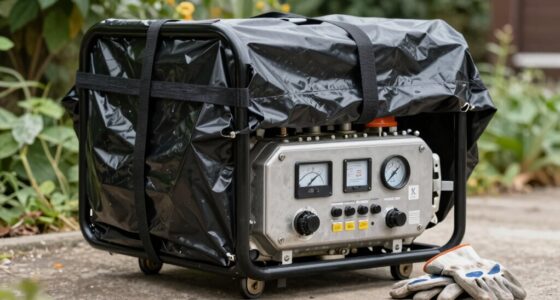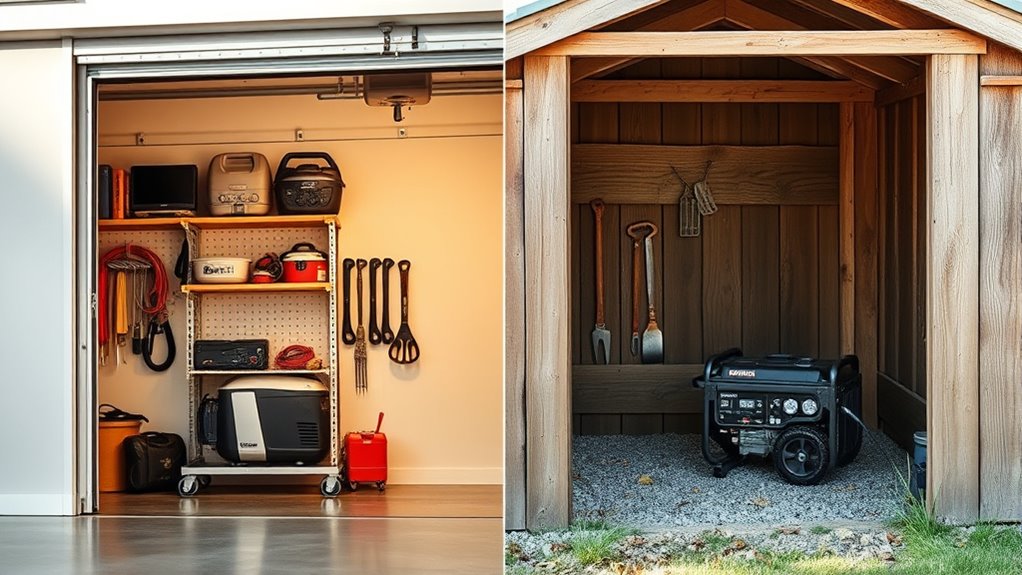

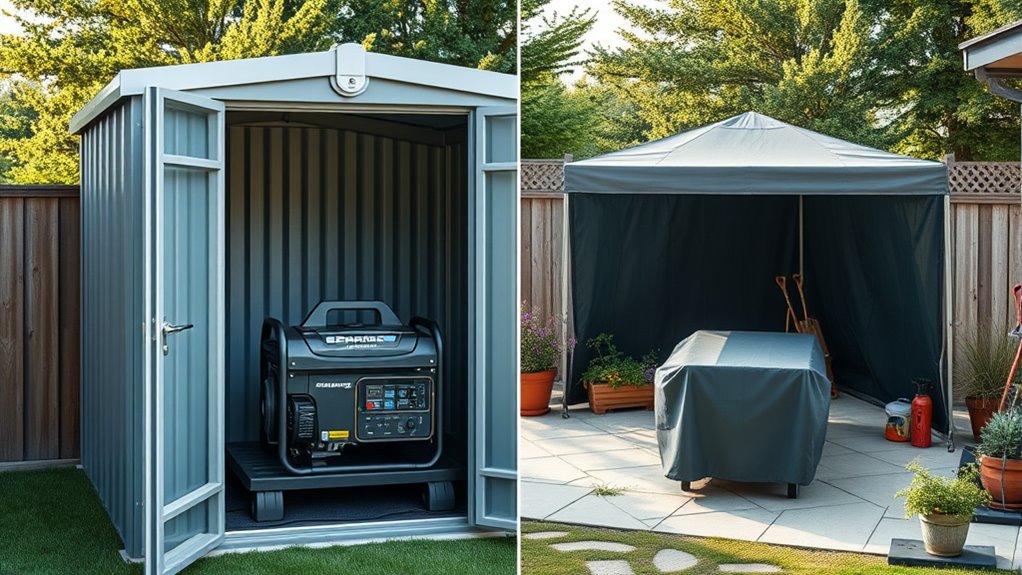
When deciding to store your portable generator inside or outside, consider protection from weather and environmental exposure. Indoor storage offers a controlled, dry environment that prevents rust, corrosion, and damage to electrical components, while also making maintenance easier. Outside storage requires weatherproof covers or sheds, periodic inspections, and careful battery management to prevent deterioration. To maximize your generator’s lifespan and reliability, understanding these options helps you choose the best setup—more tips and tips will guide you further.
Key Takeaways
- Inside storage offers a controlled environment, protecting the generator from weather, moisture, and corrosion.
- Outside storage requires weatherproof covers or sheds to shield from rain, UV rays, and humidity.
- Regular inside storage simplifies battery maintenance and reduces exposure to environmental damage.
- Outside storage demands periodic inspections for rust, corrosion, and battery condition due to environmental factors.
- Proper preparation, like cleaning and stabilizing fuel, is essential for both inside and outside storage to ensure longevity.
Storing your portable generator properly is essential to guarantee it remains reliable and safe for future use. Whether you choose to store it inside or outside, proper preparation can make all the difference in extending its lifespan and ensuring it’s ready when you need it. One of the most critical steps in storage is fuel stabilization. If you plan to store your generator for more than a month, you should add a fuel stabilizer to the tank. This prevents the fuel from degrading, which can clog carburetors and fuel lines, leading to starting issues later on. Run the generator for a few minutes after adding stabilizer to ensure it circulates through the system. This simple step saves you headaches when you need the generator most. Proper maintenance practices can significantly enhance your generator’s longevity and performance.
Proper fuel stabilization extends your generator’s lifespan and ensures reliable starts when needed.
When considering inside versus outside storage, think about how each environment affects fuel stabilization and battery maintenance. Inside storage offers a controlled environment, protecting your generator from weather elements such as rain, snow, or excessive humidity. This helps prevent rust and corrosion, especially on metal parts and electrical components. Inside, you can also easily maintain the battery. Disconnect the battery and store it in a cool, dry place, ensuring it’s fully charged. Regularly check the battery’s charge and add distilled water if it’s a maintenance-type battery. Keeping the battery in good condition guarantees quick starts and reliable performance.
Outside storage can be convenient but requires careful planning. If you choose outdoor storage, use a weatherproof cover or shed to shield your generator from the elements. This minimizes exposure to moisture and UV rays that can damage plastics and rubber parts. Still, you should periodically inspect the generator for signs of rust or corrosion, especially if you notice any moisture buildup. Outdoor storage might also mean you need to take extra steps to protect the battery, such as using a weatherproof battery box or disconnecting the battery entirely during long-term storage to prevent drainage.
Regardless of where you store it, always clean your generator thoroughly before storing it. Remove dirt, oil, and debris, and check for any leaks or damages. Properly draining the fuel tank or adding a fuel stabilizer ensures the fuel remains fresh, reducing the risk of gumming up the system. Keep the storage area dry and well-ventilated, and avoid placing the generator directly on concrete, which can absorb moisture and cause corrosion. Regularly starting and running the generator during storage can also help circulate fluids and keep components lubricated. By paying attention to fuel stabilization and battery maintenance, you’ll keep your portable generator in top shape, ready to perform whenever you need it.

Porch Shield Waterproof Universal Generator Cover 38 x 28 x 30 inch - for Most Generators 5500-15000 Watt, Black
- Compatibility: Fits 5500W to 15000W generators
- Premium Material: 600D water-resistant polyester fabric
- All-Weather Protection: Resists sun, rain, snow, wind, dust
As an affiliate, we earn on qualifying purchases.
Frequently Asked Questions
How Long Can a Portable Generator Be Stored Without Maintenance?
You can store a portable generator for about 6 to 12 months without maintenance if you take proper steps. Before storage, use fuel stabilization to prevent gumming, and guarantee the fuel tank is full to avoid moisture buildup. Don’t forget to disconnect and maintain the battery, charging it periodically to prevent it from dying. Regularly check for corrosion or leaks, especially if stored outside, to keep your generator in good shape.
What Are the Best Pest Control Methods for Generator Storage?
Did you know rodents cause over $1 billion in damages annually? To protect your generator, focus on rodent prevention by sealing small entry points and using pest deterrent sprays around storage areas. Regularly inspect and clean the area, and consider using natural repellents like peppermint oil. These methods keep pests away, ensuring your generator stays in good condition and ready when you need it most.
Can a Generator Be Stored in a Humid Environment Safely?
You can store a generator in a humid environment, but it’s risky. Humidity increases corrosion risks, which can damage internal parts and reduce lifespan. To protect your generator, make sure you use corrosion prevention measures like moisture-resistant covers, silica gel packs, or dehumidifiers. Regularly inspect and maintain it, especially if stored outside or in high-humidity areas. Proper storage helps prevent rust and keeps your generator ready when you need it most.
Is It Necessary to Cover a Generator Stored Outside?
In a flash, yes, you should cover your outdoor generator. Covering provides essential protection against weather, dust, and debris, acting like a digital shield in the age of smart homes. Implement weatherproofing measures such as a quality cover to prevent moisture buildup and rust. This not only prolongs your generator’s lifespan but also guarantees it’s ready when you need it most, keeping it in top shape through all seasons.
How Often Should a Stored Generator Be Run to Maintain Functionality?
You should run your stored generator at least once every month for about 15-30 minutes. This keeps the generator fuel fresh and prevents carburetor buildup. During these runs, check and maintain the battery, ensuring it stays charged and corrosion-free. Regular operation helps identify issues early, so your generator remains reliable when you need it. Remember, consistent maintenance keeps your generator ready and prolongs its lifespan.
Porch Shield Waterproof Universal Generator Cover 32 x 24 x 24 inch - for Most Generators 5000-10000 Watt, Black
- Compatibility: Fits 5000-10000W generators
- Durable Material: 600D water-resistant polyester fabric
- All-Weather Protection: Protects against sun, rain, snow, dust
As an affiliate, we earn on qualifying purchases.
Conclusion
Whether you store your portable generator inside or outside, remember it’s like safeguarding a loyal steed—each choice offers its own adventure and risks. Inside, you shield it from the elements, but must guarantee proper ventilation. Outside, it braves the weather but needs protection from moisture and theft. Think of your generator as a trusted companion, deserving a safe haven that keeps it ready for action whenever you need it—your own fortress in the storm.

Generator Cover Portable Waterproof,Generator Rain Cover for Outside,Universal Generator Cover for Most Portable Generators 5000-10000 Watt(32"L x 24"W x 24"H)
- Dimensions: 32x24x24 inches for most generators
- Universal Fit: Fits 5000-10000 Watt generators
- Windproof Design: Adjustable drawstring and Velcro straps
As an affiliate, we earn on qualifying purchases.

Jackery Explorer 300 Portable Power Station,292Wh
- Lightweight Design: Only 7.5 lbs with 292Wh capacity
- Portable Handle: Integrated handle for easy carrying
- Multiple Device Charging: 2 AC outlets, USB-C, USB-A, car port
As an affiliate, we earn on qualifying purchases.