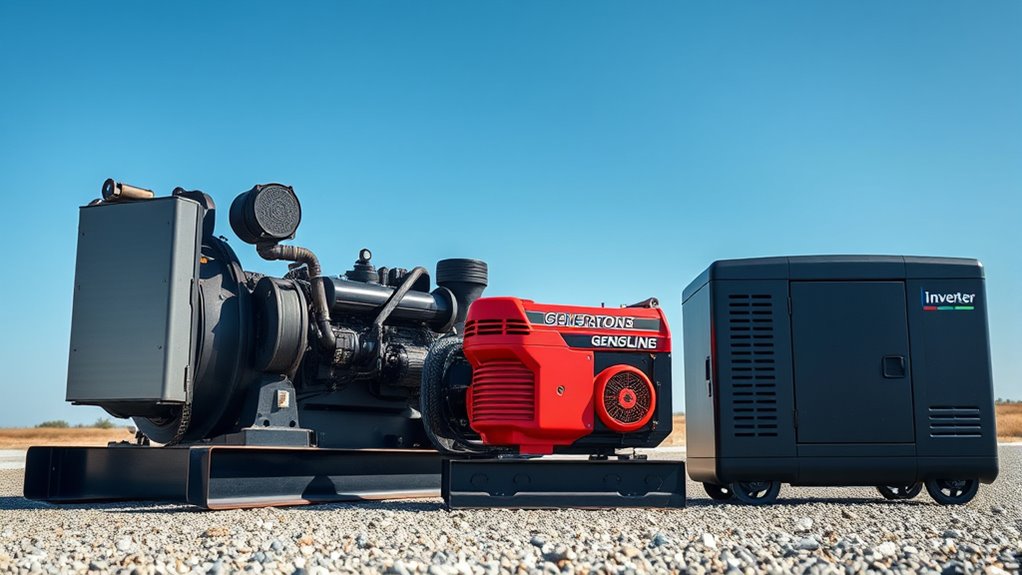

If you compare noise levels, diesel generators tend to be the loudest, producing more decibels unless they have soundproofing. Gasoline models are usually quieter but can vary depending on design. Inverter generators are known for their quiet operation, making them ideal for noise-sensitive areas. Proper sound attenuation and vibration control can make any of these types more tolerable. Keep exploring to discover how each generator’s sound levels can be minimized for your specific needs.

Get backup power and energy gear delivered free — and shop member deals
- Fast, free delivery on millions of items
- Access to Prime Big Deal Days deals on October 6–7
- Prime Video, Amazon Music and more included
Key Takeaways
- Diesel generators typically produce louder noise levels than gasoline and inverter models due to larger engines and heavier construction.
- Gasoline generators are generally quieter than diesel units but may still generate more noise than inverter generators with advanced sound-dampening features.
- Inverter generators are known for their quiet operation, making them ideal for noise-sensitive environments.
- Incorporating soundproof enclosures and vibration damping reduces noise across all generator types, especially in diesel models.
- Proper mounting and sound attenuation measures can significantly lower the operational noise of any generator, enhancing suitability for quiet settings.

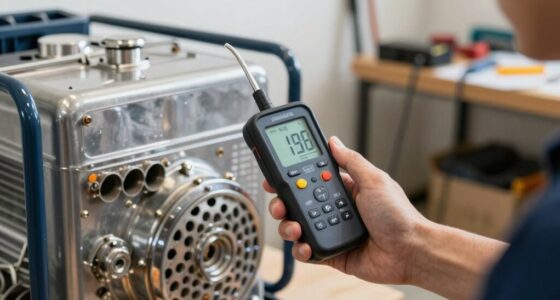
When choosing a generator, understanding noise levels is essential, especially if you plan to use it in residential or noise-sensitive environments. The noise produced by generators can be a deciding factor in how comfortable your surroundings remain during operation. Diesel, gasoline, and inverter generators all differ markedly in their sound output, but beyond just decibel levels, features like sound attenuation and vibration reduction play a key role in minimizing disturbance. Sound attenuation involves incorporating materials or design features that absorb or block sound waves, effectively reducing the noise that escapes from the unit. Vibration reduction focuses on dampening physical vibrations that cause noise and wear, resulting in quieter operation and longer-lasting components.
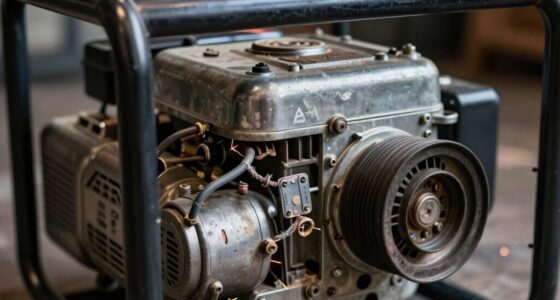
Diesel generators tend to produce more noise than their gasoline or inverter counterparts. Their larger engines and heavier-duty construction generate substantial vibrations, which translate into louder sounds unless specific vibration reduction measures are in place. Many diesel units are equipped with soundproof enclosures or mufflers to help with sound attenuation, but these are often secondary to their primary purpose of providing high power output. If noise is a concern, you’ll want to look for models with built-in soundproofing features or add external sound barriers around the unit. Proper mounting and vibration isolation pads can considerably dampen vibrations, making diesel generators more tolerable in semi-residential or commercial settings. Additionally, choosing models with soundproofing features can significantly reduce operational noise.
Diesel generators produce more noise and vibrations unless equipped with soundproofing and vibration reduction measures.
Gasoline generators generally produce less noise than diesel models but more than inverter generators. They tend to be smaller and more portable, which helps keep vibration levels lower naturally. Many modern gasoline units incorporate basic sound attenuation features such as mufflers and enclosures to keep noise manageable during regular use. However, these features vary widely among brands and models. If quiet operation is a priority, choosing a gasoline generator with advanced sound-dampening technology can make a noticeable difference. Proper installation, including vibration reduction accessories like anti-vibration mounts, can further reduce operational noise and vibrations, making them suitable for use in campgrounds, outdoor events, or backup power in residential areas.
Inverter generators are renowned for their quiet operation, making them ideal for noise-sensitive environments. Their design inherently reduces vibrations through balanced internal components and sophisticated engine technology. Many inverter models also come with advanced sound attenuation features, such as insulated enclosures or mufflers designed specifically to lower noise levels. These units are often used in camping, tailgating, or residential backup scenarios precisely because of their low noise output. When selecting an inverter generator, pay attention to both sound attenuation features and vibration reduction capabilities. By combining these elements, you can enjoy reliable power without disturbing neighbors or wildlife, ensuring your generator’s operation remains unobtrusive in any setting.
As an affiliate, we earn on qualifying purchases.
Frequently Asked Questions
How Does Generator Noise Impact Nearby Wildlife?
You might not realize it, but generator noise can substantially impact nearby wildlife by causing disturbance and stress. Noise pollution from loud generators, especially diesel and gasoline types, can disrupt animals’ natural behaviors, feeding, and mating routines. To minimize wildlife disturbance, opt for quieter inverter generators, use sound barriers, or operate during times when animals are less active. Your mindful choices help protect the local ecosystem and reduce stress on wildlife.
Are There Specific Locations Where Quieter Generators Are Required?
You need quieter generators in urban environments and residential areas to minimize noise disturbances. These locations demand lower noise levels to avoid disrupting residents and wildlife. In such settings, inverter generators are ideal because they operate more quietly than traditional diesel or gasoline models. Always check local regulations, as some areas have strict noise ordinances, and choosing a quieter generator helps you stay compliant and maintain good community relations.
What Safety Precautions Are Necessary for Loud Generator Operation?
Handling loud generators is like managing a roaring lion—safety first. You should wear ear protection and keep a safe distance, especially in enclosed spaces. Follow sound attenuation practices to minimize noise and adhere to local noise regulations to avoid fines. Regularly inspect your generator for leaks and overheating, and make sure proper grounding. These precautions keep you safe and respectful of your environment while operating loud generators.
How Do Noise Levels Influence Generator Maintenance Routines?
You should consider noise levels when planning your maintenance routines, as louder generators may require more frequent inspections to prevent wear from vibrations and sound-induced stress. Sound insulation can reduce noise impact, helping you maintain a safer environment. Incorporate noise assessments into your maintenance scheduling, ensuring components like mufflers and exhaust systems stay effective, and minimize noise-related fatigue or damage, ultimately extending your generator’s lifespan.
Can Noise Levels Affect Generator Performance or Lifespan?
High noise levels can actually impact your generator’s performance and lifespan. Excess sound may indicate underlying issues like worn parts or poor insulation, which can lead to overheating or fatigue. Sound insulation helps reduce noise, ensuring compliance with noise regulations and preventing stress on components. Keeping noise levels in check not only protects your equipment but also extends its durability, making maintenance easier and avoiding costly repairs down the line.
As an affiliate, we earn on qualifying purchases.
Conclusion
When choosing a generator, think of noise levels as the heartbeat of your power source. Diesel generators often thump loudly like a drum, while gasoline ones beat a bit softer but still noticeable. Inverter generators, however, whisper like a gentle breeze, offering serenity amid the chaos. So, if you seek quiet, inverter models are your lullaby; for raw power with some noise, diesel and gasoline may be your rhythm. Pick what suits your symphony of needs best.
generator vibration damping pads
As an affiliate, we earn on qualifying purchases.
As an affiliate, we earn on qualifying purchases.
As an affiliate, we earn on qualifying purchases.
Fall Picks
fall essentials
As an affiliate, we earn on qualifying purchases.