
To avoid noise complaints when using a generator, always place it on a flat, stable surface and keep it at least 15-20 feet from your home and neighbors’ windows or vents. Install barriers or soundproofing measures to absorb noise, and operate during reasonable hours to prevent disturbances. Maintain your generator well and communicate with neighbors about extended use. If you want to learn more about effective community practices, keep exploring these guidelines.
Key Takeaways
- Operate generators during designated hours and avoid late-night or early-morning use.
- Install noise barriers, fences, or shrubbery around the generator to absorb sound.
- Maintain your generator regularly to ensure quiet operation and prevent increased noise from worn parts.
- Keep neighbors informed of extended use and adhere to community quiet hours.
- Place the generator on a flat, stable surface away from windows and vents to minimize noise disturbance.
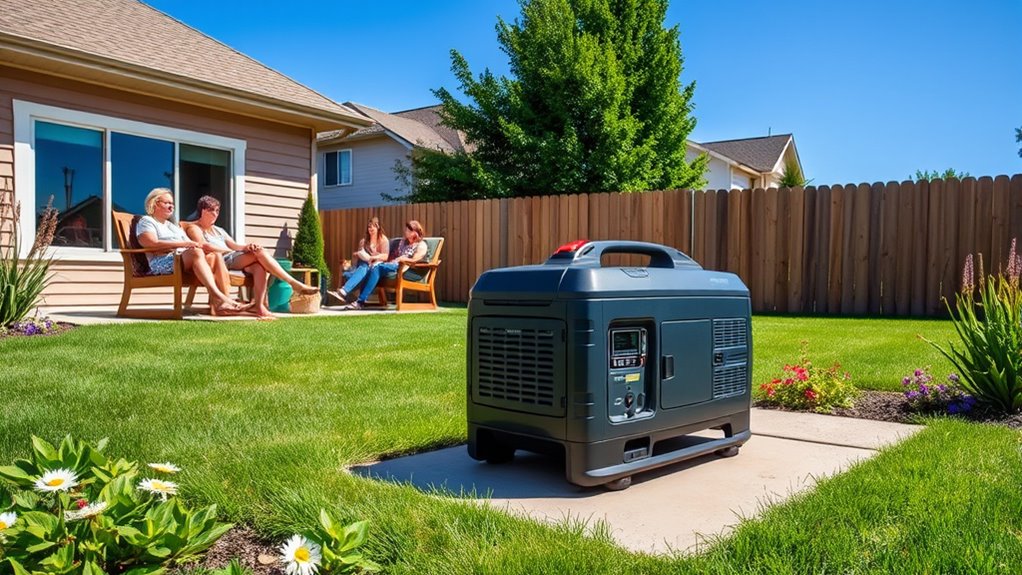
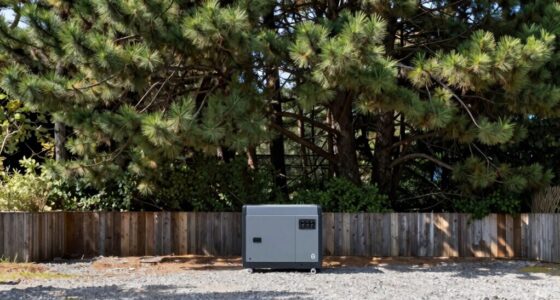
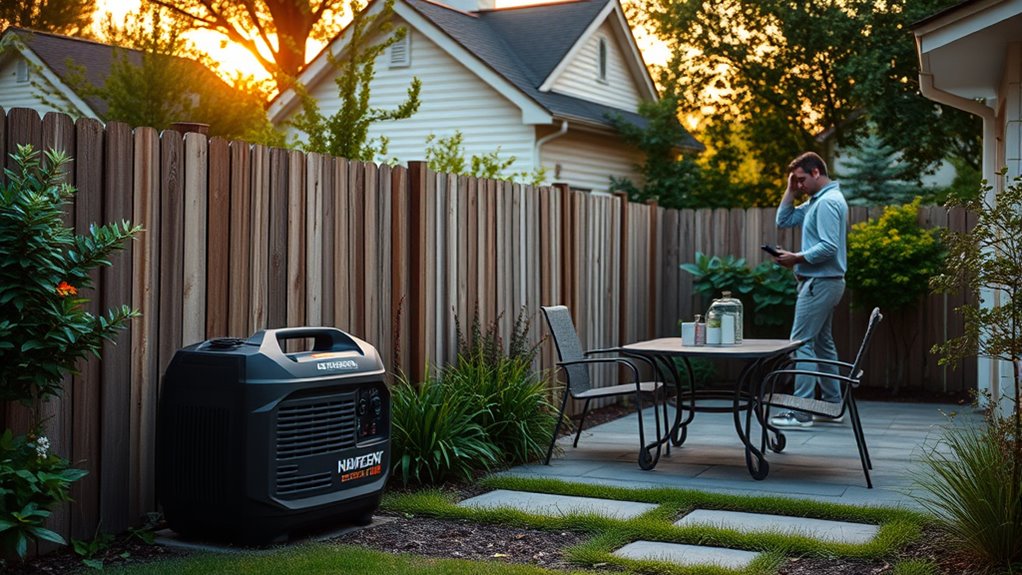
Generators can be a reliable power source during outages, but their proper use is vital for safety and community harmony. One of the most important aspects to consider is generator placement. You want to position your generator in a way that minimizes noise disturbance to neighbors and reduces safety risks. Place your generator on a flat, stable surface away from windows, doors, and vents. Keep it at least 15 to 20 feet from your home and other structures to prevent exhaust fumes from entering indoor spaces. Using a concrete pad or a level ground helps prevent shifting or tipping during operation, which could cause fuel leaks or damage. Proper placement not only enhances safety but also plays a crucial role in noise mitigation.
Proper generator placement reduces noise and safety risks during power outages.
Noise from generators can easily become a source of tension if not managed properly. To avoid complaints, you should consider soundproofing or installing barriers around your generator. Installing a solid fence, shrubbery, or even a specially designed noise barrier can absorb sound waves, reducing the noise that reaches neighboring properties. If your generator has noise control features, activate them and maintain the equipment regularly. Keeping the generator well-maintained is essential; over time, worn-out parts can cause increased noise levels. Regular maintenance and proper operation also contribute to the overall quiet operation and longevity of your generator.
Additionally, operating your generator during appropriate hours can prevent disturbances. Many communities have quiet hours, typically in the evening or early morning, during which loud noises are discouraged. Being mindful of these times shows respect for your neighbors and helps maintain good community relations. When starting your generator, do so during reasonable hours and avoid unnecessary idling. Once running, limit the duration of continuous operation if possible, and turn it off when it’s no longer needed.
You should also communicate with neighbors if you anticipate extended generator use. A simple heads-up can go a long way in preventing misunderstandings or complaints. If noise issues do arise, be proactive in addressing them—consider adjusting your generator’s placement or adding noise mitigation measures. Regularly inspecting and maintaining your generator ensures it runs smoothly and quietly, further reducing potential disturbances.

TroyStudio Portable Sound Proof Box, 16" x 12" x 16.2" Noise Reduction Enclosure, Light Blocking Quiet Cover, Soundproof Barrier for Ultrasonic Cleaner, Air Pump, Rock Tumbler & Generator
- Dimensions and Components: 16x12x16.2-inch foldable design
- Noise Reduction Capability: Reduces noise up to 21.5dB
- Light Blocking Feature: Seals out light for peaceful sleep
As an affiliate, we earn on qualifying purchases.
As an affiliate, we earn on qualifying purchases.
Frequently Asked Questions
Can I Operate a Generator During Quiet Hours?
You can operate a generator during quiet hours if you guarantee proper generator maintenance and use it efficiently. Regular maintenance keeps noise levels down, while fueling it with the right amount of fuel improves fuel efficiency, reducing unnecessary noise and emissions. To avoid complaints, run the generator only when necessary and consider sound barriers or mufflers. Always follow community guidelines and local regulations for quiet hours to stay respectful of your neighbors.
What Noise Levels Are Considered Acceptable?
You might think loud noise is unavoidable, but noise level standards set clear boundaries—acceptable decibel limits typically range from 50 to 60 dB during quiet hours. Staying within these limits helps you avoid complaints and keeps peace in your community. Use a sound level meter to monitor your generator’s noise, and consider installing mufflers or enclosures to keep noise levels within acceptable decibel limits.
Are There Specific Types of Generators That Are Quieter?
Yes, you can choose quieter options like silent models and inverter generators. Silent models are designed to operate with minimal noise, making them ideal for community settings. Inverter generators also produce less sound because they adjust their speed to match your power needs, reducing noise levels considerably. These types help you stay compliant with community guidelines while providing reliable power, so you can enjoy your activities without disturbing neighbors.
How Do I Report a Noise Complaint?
Imagine your voice echoing in a canyon; that’s like noise complaints when generators get too loud. To report it, start by documenting noise level measurements—use a decibel meter if possible. Then, follow the reporting procedures outlined by your community or local authorities, such as submitting a formal complaint online or calling a community hotline. Clear, accurate info helps make sure your concern gets addressed quickly and effectively.
Are There Legal Penalties for Violating Noise Restrictions?
Yes, there can be legal penalties if you violate noise ordinances. Local laws often impose fines or other sanctions for exceeding permitted noise levels or operating generators during restricted hours. These legal penalties serve to maintain community peace and ensure everyone’s comfort. To avoid trouble, always familiarize yourself with your area’s specific noise ordinances and comply with them, especially when using generators or other loud equipment.

FONDOTIN Soundproof Box: Soundproofing Cover Sound Deadening for Generator and Water Booster – 17.3 Inch Effective Noise Barrier for Home and Worksite
- Tailored Noise Reduction: Reduces noise for generators and water pumps
- Easy Maintenance Access: Allows quick inspection and maintenance
- Modern Sleek Design: Adds aesthetic appeal to installations
As an affiliate, we earn on qualifying purchases.
As an affiliate, we earn on qualifying purchases.
Conclusion
By following these community guidelines, you’ll guarantee your generator runs smoothly without disturbing neighbors. Keep noise levels in check, operate during appropriate hours, and maintain your equipment properly. Remember, even in the age of the roaring twenties, a considerate approach keeps everyone happy. Think of these rules as your modern-day lighthouse, guiding you safely through generator use while preserving peace and harmony in your neighborhood. Stay responsible, and your generator will be a helpful neighbor, not a bother.

Confer Plastics Equipment Pad – 32" x 48" Heavy-Duty Base for Pool Equipment, Generators & AC Units – Weather-Resistant, Rib-Reinforced, Easy to Install – Made in USA (1, Grey, 32×48)
- All-Purpose Equipment Base: Supports pumps, ACs, generators, tanks
- Heavy-Duty Construction: Made from industrial-grade blow-molded plastic
- Versatile Use: Suitable for pool, HVAC, outdoor power gear
As an affiliate, we earn on qualifying purchases.
As an affiliate, we earn on qualifying purchases.

Generac 5W-20 Maintenance Kit for 20Kw-26Kw 999cc Generators (Replaces A0002074712)
- Generac Oil: Includes oil for generator maintenance
As an affiliate, we earn on qualifying purchases.
As an affiliate, we earn on qualifying purchases.