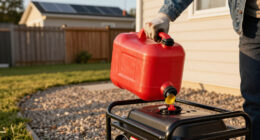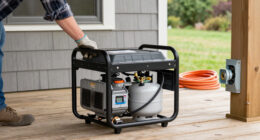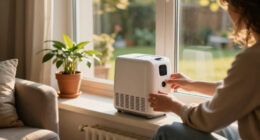
When looking at manufacturer noise specs, check the decibel level provided at a specific distance, typically 1 or 10 meters. Remember, noise levels decrease as you move farther from the source, so a device may sound quieter in your workspace than the spec suggests. Comparing these measurements helps you understand real-world noise exposure. If you keep exploring, you’ll learn how to better interpret these numbers for your environment.

Get backup power and energy gear delivered free — and shop member deals
- Fast, free delivery on millions of items
- Access to Prime Big Deal Days deals on October 6–7
- Prime Video, Amazon Music and more included
Key Takeaways
- Check the specified measurement distance (e.g., 1 meter or 10 meters) in the noise specs for accurate interpretation.
- Understand that decibel levels decrease as distance from the source increases, affecting perceived loudness.
- Compare manufacturer-reported dB at a given distance to your environment to estimate actual noise exposure.
- Consider environmental factors like barriers or enclosed spaces that can alter sound levels from the specified measurement.
- Use the noise level differences at various distances to assess safety and comfort in your specific workspace.
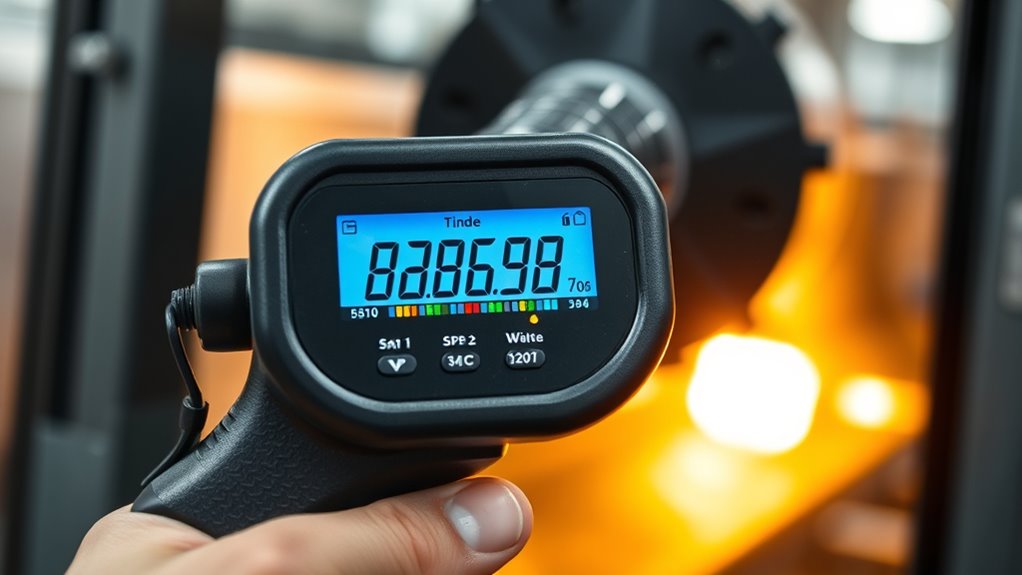
Understanding manufacturer noise specifications can be confusing, but decoding them is essential for choosing the right equipment. When you see noise levels listed in decibels, it’s important to understand what those numbers mean in terms of real-world performance. Noise measurement involves capturing the sound output of machinery at different distances, which directly impacts how you interpret the specs. Most manufacturers provide noise levels at specified distances, often at 1 meter or 10 meters, but these figures can vary widely depending on the equipment. Your goal is to grasp how those measurements translate to actual noise exposure in your environment.
Decoding noise specs helps assess real-world equipment noise exposure and safety.
Spec interpretation begins with recognizing that decibels are logarithmic, meaning a small increase in decibel level signifies a substantial increase in loudness. For example, a reading of 70 dB isn’t just a little louder than 60 dB; it’s actually twice as loud to the human ear. When you look at a noise specification, pay attention to the distance at which the measurement was taken. A machine might produce 80 dB at 1 meter but drop to 70 dB at 10 meters. Understanding this difference helps you assess how loud the equipment will be during operation and at what distance.
Another key aspect of noise measurement and spec interpretation involves considering the environment where you’ll use the equipment. Noise levels decrease with distance, but the rate at which they drop depends on factors like barriers, open space, or enclosed areas. Manufacturers often provide noise level data at specific points, so you should compare those with your actual setup. If your work area is small and enclosed, a machine rated at 80 dB at 1 meter could be much louder in practice, especially if soundproofing isn’t sufficient.
It’s also helpful to understand the importance of context when reading these specs. For instance, a noise level of 75 dB is comparable to a vacuum cleaner, while 85 dB approaches loud traffic noise. Knowing what these levels mean for occupational safety or comfort allows you to make more informed choices. When evaluating different products, focus on how the noise measurement varies with distance and how that aligns with your environment. Remember that spec interpretation isn’t just about reading numbers; it’s about translating those numbers into real-world expectations to ensure both safety and comfort. Additionally, understanding the technology behind noise reduction, such as soundproofing techniques, can further help in managing noise exposure effectively.
noise level meter decibel reader
As an affiliate, we earn on qualifying purchases.
As an affiliate, we earn on qualifying purchases.
Frequently Asked Questions
How Do Noise Levels Vary With Different Types of Machinery?
You’ll find that industrial noise varies markedly between machinery types. Heavy equipment like crushers and turbines produce higher decibel levels, while lighter tools generate less noise. Comparing machinery helps you understand their noise impact, especially at different distances. Keep in mind, noise levels decrease as you move further away from the source, so understanding these variations aids in planning sound control and safety measures effectively.
Are There Standards for Noise Level Measurements Across Industries?
Yes, there are industry standards for noise measurement you should abide by. These standards, like ISO and OSHA guidelines, ensure consistent noise measurement across different industries. They specify how to accurately assess noise levels, including distance and environment considerations. By adhering to these industry standards, you can compare noise data reliably, protect workers’ hearing, and meet legal requirements, ensuring safety and compliance in your workplace.
Can Noise Specs Be Compared Between Different Manufacturers?
You can compare noise specs between manufacturers, but keep in mind that noise standardization varies. Manufacturers may label products differently, so check whether the specs follow recognized standards like ISO or ANSI. Look for consistent testing methods and distances used in their measurements. This helps verify you’re making accurate comparisons, as different labeling practices can affect how noise levels are reported and understood.
How Does Ambient Environment Affect Noise Level Readings?
Ambient environment acts like a mischievous shadow, altering your noise level readings. Background interference, such as other sounds or electrical noise, can mask or amplify the true noise, making measurements less reliable. To guarantee measurement consistency, you need to control these environmental factors, choosing quiet, stable conditions. Otherwise, your readings become a tangled web, obscuring the real noise levels and leading to inaccurate comparisons or assessments.
What Is Considered an Acceptable Noise Level for Residential Areas?
You should aim for noise levels below 55 decibels in residential areas to prevent sound pollution. These levels help guarantee a comfortable environment and support noise mitigation efforts. If noise exceeds this, it can disturb peace and health. Keep in mind, maintaining lower noise levels benefits everyone by reducing sound pollution and creating a quieter, more livable neighborhood. Regular monitoring helps you stay within acceptable limits.
industrial noise measuring device
As an affiliate, we earn on qualifying purchases.
As an affiliate, we earn on qualifying purchases.
Conclusion
Now that you know how to read manufacturer noise specs, you can make smarter choices, compare more confidently, and prioritize your peace of mind. You’ll understand the decibels at different distances, interpret the numbers accurately, and choose quieter options. You’ll avoid surprises, reduce stress, and create a more comfortable environment. With this knowledge, you’re empowered to select products that respect your space, protect your well-being, and bring you peace of mind every time.
As an affiliate, we earn on qualifying purchases.
As an affiliate, we earn on qualifying purchases.
Evergreen bestsellers Picks
bestsellers
As an affiliate, we earn on qualifying purchases.