
To estimate how long your battery backup or solar generator can power your devices, first calculate your total energy needs by multiplying each device’s wattage by your expected run time. Then, consider your battery’s capacity in watt-hours and account for efficiency losses. Keep in mind sunlight conditions and system inefficiencies for more accurate results. If you want practical tips and detailed steps, explore how to refine your estimates and optimize your setup.

Get backup power and energy gear delivered free — and shop member deals
- Fast, free delivery on millions of items
- Access to Prime Big Deal Days deals on October 6–7
- Prime Video, Amazon Music and more included
Key Takeaways
- Calculate total energy needs by multiplying device wattage by daily usage hours to find watt-hours required.
- Convert battery capacity from amp-hours and voltage to watt-hours; use 80% of capacity to ensure longevity.
- Estimate solar panel energy production based on efficiency, sunlight hours, and environmental factors like shading and weather.
- Incorporate system inefficiencies and losses into calculations for a realistic runtime estimate.
- Use conservative assumptions and prioritize critical devices to accurately plan backup power duration.
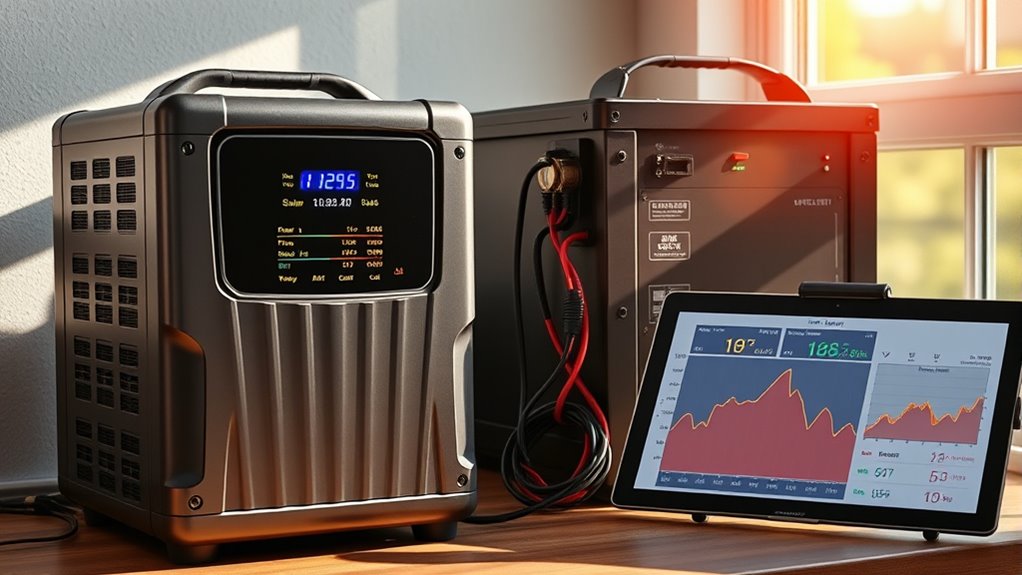
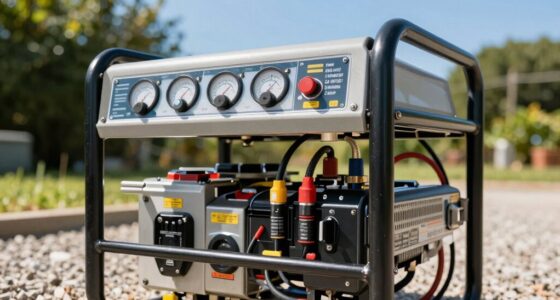
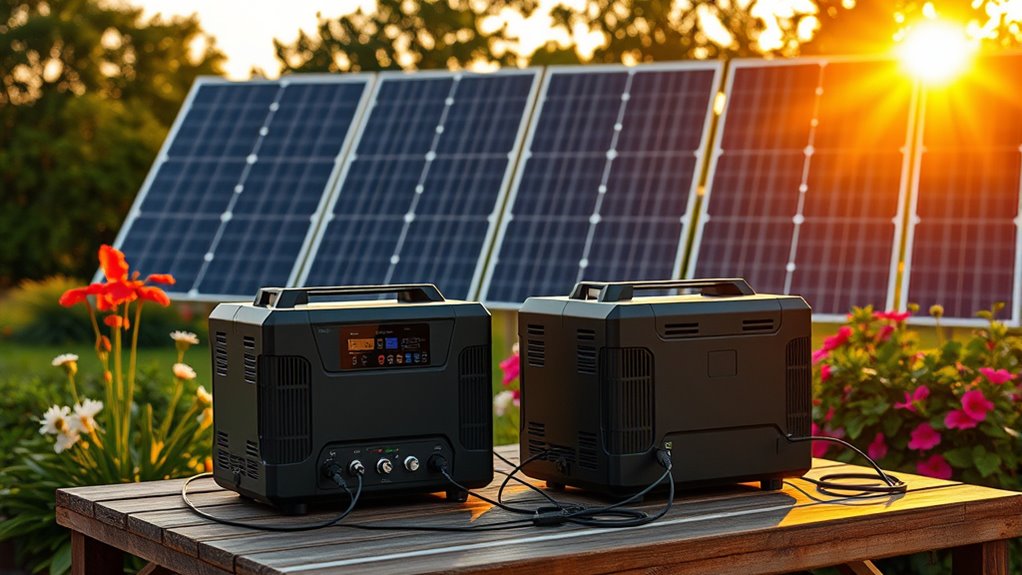
Estimating how long your battery backup or solar generator can power your devices is essential for effective planning during outages or off-grid situations. Knowing this helps you avoid unexpected power loss and ensures you have enough energy for critical needs. To do this accurately, you need to consider factors like solar panel efficiency and battery capacity calculation. Solar panel efficiency determines how effectively your panels convert sunlight into usable electricity. If your panels have high efficiency, they produce more power with less sunlight, extending your generator’s runtime. Conversely, lower efficiency panels generate less power, meaning you’ll need to rely on larger arrays or supplemental power sources to meet your energy demands.
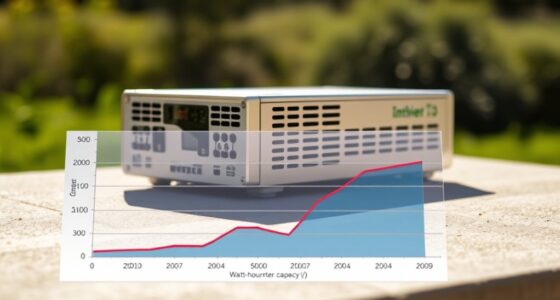
When calculating how long your system will last, start with the total energy consumption of your devices. Add up the wattage of each device and multiply that by the number of hours you expect to run them. This gives you the total watt-hours needed. Next, look at your battery capacity, usually rated in amp-hours (Ah) and voltage (V). To find the total energy stored, multiply the battery’s amp-hours by its voltage, converting it into watt-hours (Wh). For example, a 12V, 100Ah battery stores 1,200 Wh of energy. To be conservative and avoid deep discharges that can damage your battery, use about 80% of the total capacity for your calculations.
Once you know your available battery capacity, compare it to your total energy needs. If, for example, your devices consume 300 Wh per day, and your battery holds 1,200 Wh, you can theoretically run your devices for around four days without recharging. However, this is an ideal calculation that doesn’t account for inefficiencies or energy losses. Solar panel efficiency impacts how much sunlight your panels can convert into usable energy, especially on cloudy days or during seasons with less sunlight. To refine your estimate, take into account the average daily solar insolation in your location, the efficiency of your panels, and any shading or dirt on the panels, which can reduce their output. Additionally, understanding the air purifier features and technology that improve indoor air quality can help prioritize essential devices like your generator during power outages.
solar generator with high efficiency panels
As an affiliate, we earn on qualifying purchases.
As an affiliate, we earn on qualifying purchases.
Frequently Asked Questions
How Does Temperature Affect Battery Backup Performance?
Temperature critically impacts your battery backup performance because extreme heat or cold affects battery chemistry. High temperatures can cause batteries to degrade faster, reducing their lifespan and capacity, while cold temperatures slow chemical reactions, lowering efficiency. Proper thermal management is essential to maintain ideal battery chemistry, ensuring consistent runtime. By controlling temperature, you preserve battery health, maximize backup performance, and extend your system’s longevity.
Can Solar Generators Power High-Wattage Appliances Continuously?
Yes, solar generators can power high-wattage appliances continuously if you optimize solar panel placement and guarantee your battery capacity is sufficient. Proper placement maximizes sunlight exposure, boosting energy production and extending runtime. Keep in mind, frequent high loads may impact battery lifespan, so monitor usage carefully. With the right setup, your solar generator can reliably run demanding appliances, providing sustainable power during outages or off-grid activities.
What Maintenance Is Required for Long-Term Battery Backup Systems?
Imagine your battery backup system as a vintage typewriter—reliable but requiring care. You should regularly check connections, keep the batteries clean and dry, and follow the manufacturer’s maintenance schedule. To maximize battery lifespan, guarantee proper charging, avoid deep discharges, and monitor performance. Periodic inspections and timely replacements keep your system running smoothly, extending its longevity and ensuring dependable backup power when you need it most.
How Do Inverter Efficiency and Battery Capacity Impact Runtime?
Inverter efficiency and battery capacity directly impact how long your backup system runs. Higher inverter efficiency means less energy loss, so your batteries last longer. Larger battery capacity provides more stored energy, extending runtime. Keep in mind, battery degradation over time diminishes capacity, shortening runtime. Proper inverter sizing ensures your system operates efficiently without overloading, helping you maximize backup duration even as batteries age.
Are There Safety Concerns With Large-Scale Solar Generator Setups?
You should know that large-scale solar generator setups can pose safety risks if not properly managed. For instance, improper solar panel placement can cause electrical hazards, and insufficient safety measures may lead to fires or shocks. Additionally, consider battery recycling, which is vital for minimizing environmental dangers. Always guarantee your system is installed by professionals, adheres to safety standards, and includes proper ventilation and fire detection to protect yourself and the environment.
deep cycle battery for backup power
As an affiliate, we earn on qualifying purchases.
As an affiliate, we earn on qualifying purchases.
Conclusion
Estimating your backup power’s runtime is like reading a map before a journey—you gain confidence and avoid surprises. By understanding your batteries and solar generators, you can plan effectively and guarantee your devices stay powered when it matters most. Keep track of your energy usage and adjust as needed, so your backup system becomes as reliable as a trusted compass guiding you through any outage. With proper planning, you’ll navigate power disruptions smoothly and confidently.
portable solar panel kit for camping
As an affiliate, we earn on qualifying purchases.
As an affiliate, we earn on qualifying purchases.
battery capacity monitor for solar systems
As an affiliate, we earn on qualifying purchases.
As an affiliate, we earn on qualifying purchases.
Fall Picks
fall essentials
As an affiliate, we earn on qualifying purchases.