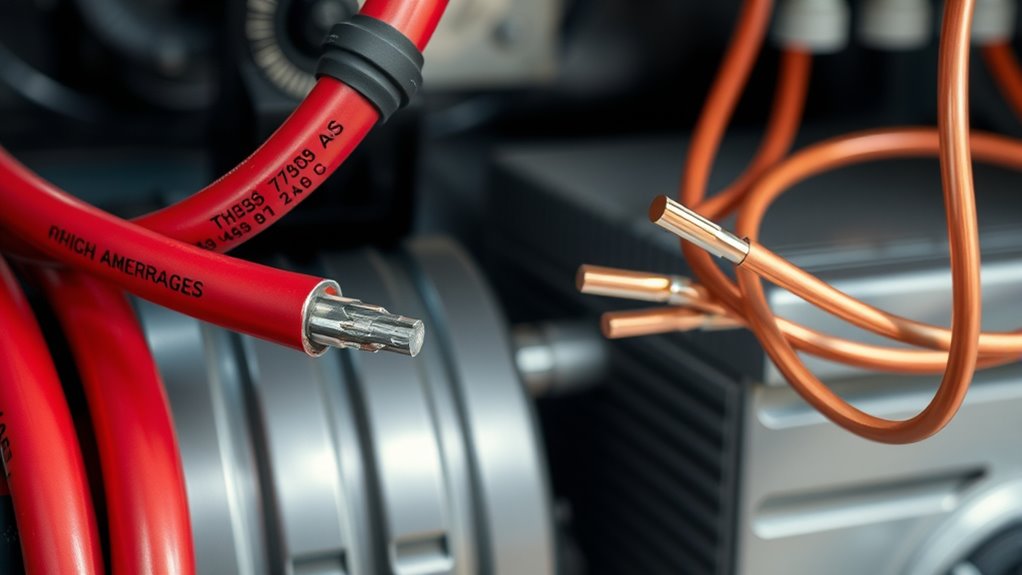

When choosing wire size for your generator circuits, you need to match the wire’s gauge to the amperage it will carry. Thinner wires can overheat, while thicker ones are more durable but cost more. Proper gauge guarantees safety, reduces voltage drops, and improves performance. Consider your current needs, wire materials, and environment to select the right gauge. If you want to make the best choice, explore how amps and gauge work together to protect your system.

Get backup power and energy gear delivered free — and shop member deals
- Fast, free delivery on millions of items
- Access to Prime Big Deal Days deals on October 6–7
- Prime Video, Amazon Music and more included
Key Takeaways
- Match wire gauge to the generator’s amperage to prevent overheating and ensure safe operation.
- Thicker (lower gauge) wires handle higher current loads more safely and durably.
- Using the correct gauge minimizes voltage drops that can impair generator performance.
- Oversized wires increase cost and bulk without added benefit for small or low-current circuits.
- Proper gauge selection enhances system reliability, safety, and compliance with electrical standards.
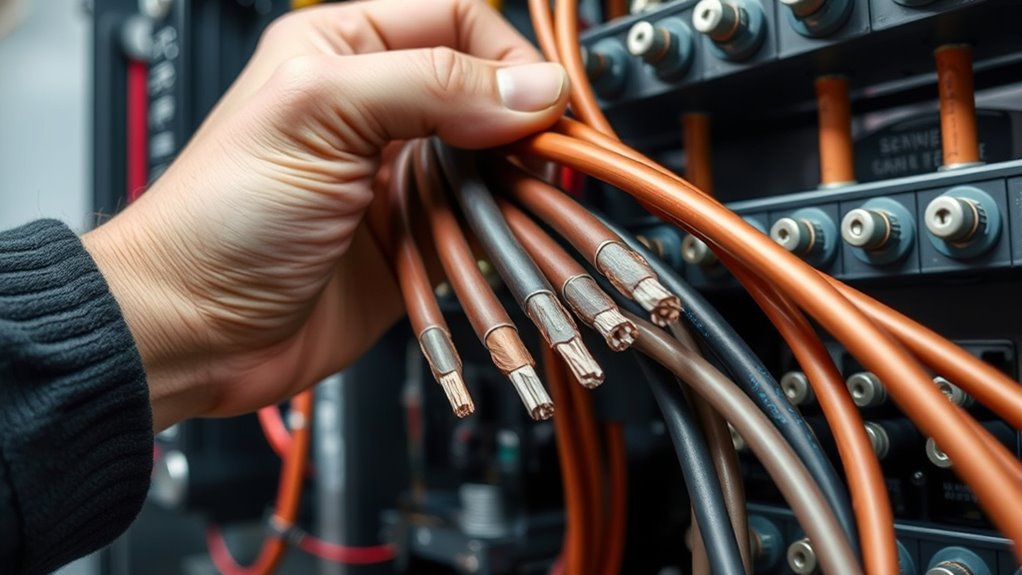
When choosing the right wiring for your electrical or audio system, understanding the difference between amps and gauge is essential. Amps measure the current your system needs to operate safely, while gauge refers to the thickness or diameter of the wire. Picking the correct gauge ensures your setup can handle the required current without overheating or causing voltage drops. If you select a wire that’s too thin, it can lead to excessive heat buildup, risking damage to your equipment and posing a fire hazard. Conversely, using a wire that’s thicker than necessary might seem like a good idea but often comes with increased costs and unnecessary bulk. Balancing these factors is key to a safe and cost-effective installation.
Choosing the right wire gauge balances safety, performance, and cost for your system.
Wire durability is a critical aspect to regard. Thicker wires (lower gauge numbers) tend to be more durable because they have a higher capacity to withstand mechanical stress and heat. If your setup involves frequent movement or exposure to harsh conditions, opting for a more robust wire makes sense. Durable wires also tend to last longer, reducing the need for frequent replacements and repairs, which can save you money in the long run. However, durability isn’t just about thickness; quality materials, insulation, and proper shielding also enhance wire longevity. When shopping, look for wires with high-quality insulation that resist cracking, moisture, and chemical degradation, especially if your environment is challenging. Additionally, using high-quality cables that meet security standards can help prevent electrical failures and enhance overall safety.
Cost considerations play a significant role in choosing the right wire gauge. Thicker wires, while more durable, come with a higher price tag because they require more raw material to produce. If you’re working within a tight budget, you might be tempted to go with thinner wires, but that can compromise safety and performance. On the other hand, overspending on overly thick wires for a small setup can be unnecessary. The goal is to find a balance where the wire’s gauge matches your current needs without overspending or risking safety. Sometimes, investing a little more upfront in better-quality, appropriately gauged wire can prevent costly issues down the line, such as system failures or fire hazards. Furthermore, understanding the specific security features and standards of the wire can help ensure your installation remains safe and compliant.
Ultimately, choosing the right wire size is about understanding your system’s amps requirement, matching it with an appropriate gauge, and factoring in durability and cost. Properly gauged wire keeps your system running efficiently, safely, and reliably. It might seem like a small detail, but making informed decisions now can save you trouble and money later. Remember, the right wire isn’t just about current capacity—it’s about ensuring your entire setup remains safe, durable, and within your budget.
As an affiliate, we earn on qualifying purchases.
Frequently Asked Questions
How Does Wire Length Affect Gauge Selection for Generators?
When selecting wire gauge for your generator, longer wire runs increase resistance, which can cause voltage drop and reduce efficiency. To counteract this, you should choose a thicker gauge wire, as it has lower resistance. This guarantees your generator maintains proper voltage and prevents power loss. Always consider wire length in your calculations to pick the right gauge, preventing issues related to wire resistance and voltage drop.
Can Using a Larger Gauge Wire Improve Generator Efficiency?
Using a larger gauge wire can improve generator efficiency by reducing resistance and voltage drop, especially over long distances. Make certain you select wire with appropriate insulation for your setup to prevent overheating. Good installation practices, like secure connections and proper routing, maximize the benefits of larger gauge wires. Keep in mind, though, that bigger wires are more flexible but might be harder to install in tight spaces.
What Are the Safety Risks of Incorrect Wire Sizing?
Incorrect wire sizing risks grounding safety and insulation integrity. Imagine a garden hose bursting because it’s too narrow for the pressure—similar issues happen with improperly gauged wires. If the wire’s too thin, it overheats, risking fires or shorts, and poor grounding safety can lead to electric shocks. Always match wire gauge to load demands for safe, reliable power, ensuring your generator’s wiring remains secure and efficient.
How Do Temperature Ratings Influence Wire Gauge Choices?
Temperature ratings substantially influence your wire gauge choices because higher ambient conditions or specific insulation materials can cause wires to heat up more. If your environment has elevated temperatures or uses insulation with lower temperature ratings, you need thicker gauge wire to prevent overheating and ensure safety. Always check the insulation’s temperature rating and consider ambient conditions to select the appropriate wire size, maintaining safe current flow and preventing potential hazards.
Are There Specific Codes or Standards for Generator Wiring?
Imagine your generator’s wiring as a well-choreographed dance; strict rules guide every move. Yes, there are specific codes and standards for generator wiring, ensuring safety and reliability. You should follow local electrical codes, such as the National Electrical Code (NEC), to make certain of code compliance and proper installation practices. These standards help prevent hazards and ensure your setup works smoothly, giving you peace of mind during power outages or emergencies.
As an affiliate, we earn on qualifying purchases.
Conclusion
Remember, choosing the right wire gauge based on amps guarantees your generator circuit runs safely and efficiently. For example, imagine you’re installing a backup generator for your home; selecting the wrong gauge could cause overheating or power outages. Always double-check your circuit’s amperage and consult a gauge chart. Making informed choices keeps your setup reliable and safe, so don’t cut corners—your home’s safety depends on it.
heavy duty electrical wire for generator
As an affiliate, we earn on qualifying purchases.
As an affiliate, we earn on qualifying purchases.
As an affiliate, we earn on qualifying purchases.
Fall Picks
fall essentials
As an affiliate, we earn on qualifying purchases.