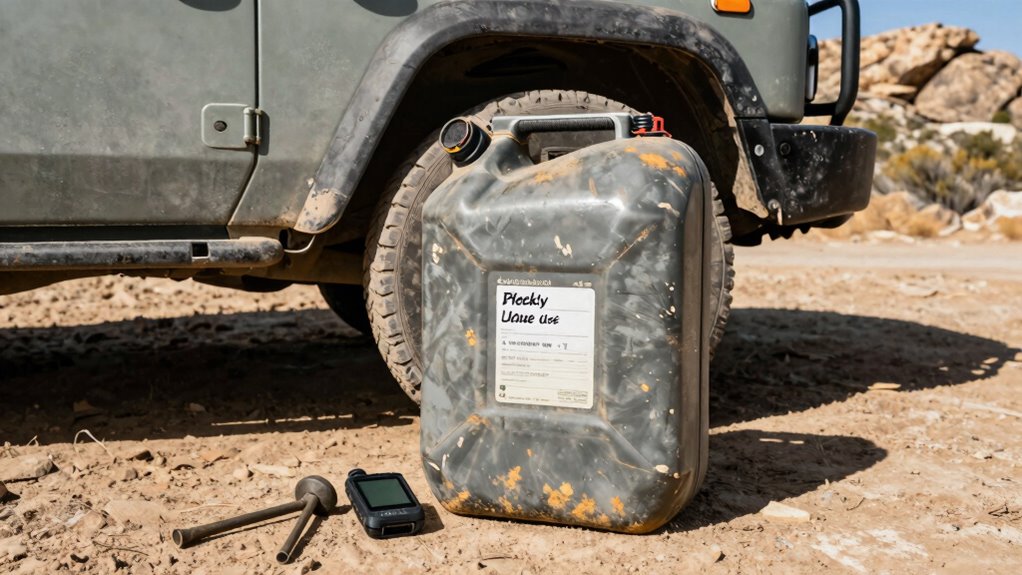
To estimate your weekly fuel use for off-grid work, list all equipment you’ll use and gather their fuel consumption rates from manufacturer specs or actual monitoring. Track how much fuel each piece consumes during operation, then multiply these rates by your planned hours for the week. Add a buffer of 10-15% for unexpected needs. Keep detailed logs, and you’ll improve your estimates over time—if you want to learn more, keep going.
Key Takeaways
- List all equipment used and record their fuel consumption rates based on manufacturer specs or monitored data.
- Track actual fuel use and operation hours during initial days to establish accurate consumption rates.
- Calculate each equipment’s daily fuel needs by multiplying hours operated by its consumption rate.
- Sum daily fuel requirements for all equipment to estimate total weekly fuel consumption.
- Add a 10-15% buffer for unexpected delays, then monitor actual use to refine future estimates.
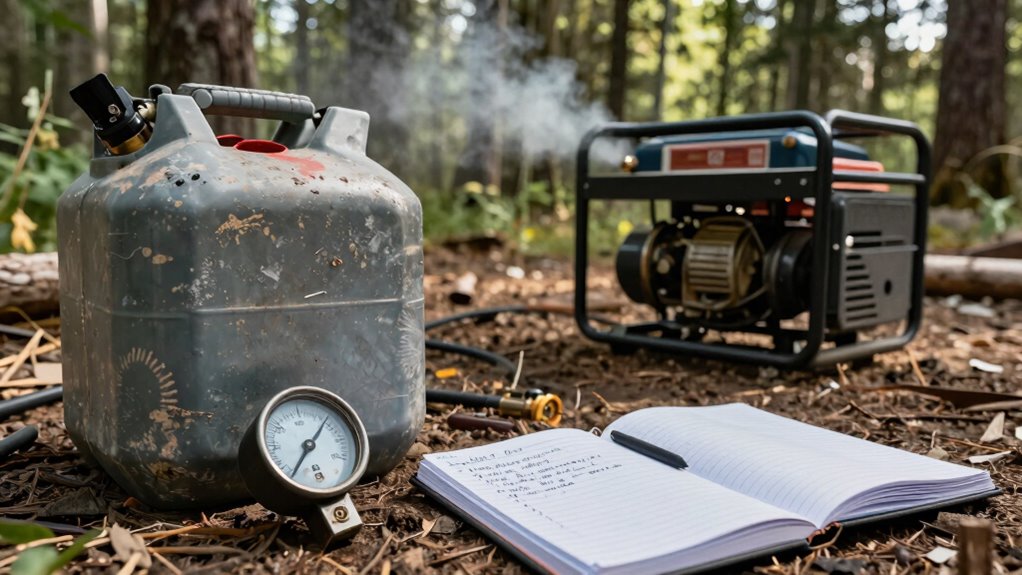
Estimating your weekly fuel use for off-grid work is essential for budgeting and assuring you have enough resources to complete your projects smoothly. To do this effectively, you need to understand the concept of fuel efficiency and how to perform a proper consumption calculation. Fuel efficiency tells you how much work you get from a specific amount of fuel, usually expressed as miles per gallon (mpg) or liters per hour, depending on your equipment. By knowing your equipment’s fuel efficiency, you can better project how much fuel you’ll need over a given period.
Start by identifying all the equipment you’ll operate during the week—such as generators, chainsaws, or vehicles—and note their fuel consumption rates. For each piece, check the manufacturer’s specifications or monitor your actual fuel use over a day or two to get a realistic figure. Record the total fuel used and the hours or distance operated, then calculate the consumption rate. For instance, if your generator consumes 2 gallons in 8 hours, your consumption calculation reveals a rate of 0.25 gallons per hour. This data allows you to estimate total fuel needs based on projected daily operation hours.
Identify and monitor all equipment’s fuel use to accurately estimate your weekly consumption needs.
Next, estimate your work hours for the upcoming week. Consider factors like project scope, weather conditions, and equipment efficiency. Multiply the hours of each equipment operation by their respective consumption rates. For example, if you plan to run a chainsaw for 4 hours a day at a consumption rate of 0.2 gallons per hour, you’ll need about 0.8 gallons daily for that task. Summing these calculations for all equipment gives you a thorough weekly fuel requirement.
It’s wise to add a buffer—around 10-15%—to your total estimate to account for unexpected delays, increased fuel consumption, or equipment inefficiencies. This cushion ensures you’re prepared for any unforeseen circumstances that might cause higher fuel use than initially projected. Keep a detailed log of your actual fuel consumption throughout the week; this record helps refine your estimates for future projects, making your planning more accurate over time.
portable generator fuel consumption monitor
As an affiliate, we earn on qualifying purchases.
As an affiliate, we earn on qualifying purchases.
Frequently Asked Questions
How Accurate Are Fuel Estimates for Variable Workload Days?
Fuel estimates for variable workload days can be fairly accurate if you regularly calibrate your equipment and track fuel consumption closely. You should adjust your estimates based on actual fuel use compared to previous calculations, especially when workload fluctuates. Regular equipment calibration helps guarantee your fuel consumption data remains precise, allowing you to adapt your estimates for days with higher or lower activity, ultimately improving their reliability.
What if My Equipment’s Fuel Efficiency Changes Over Time?
If your equipment’s fuel efficiency changes over time, you should regularly monitor and record its performance. For example, a case study shows that well-maintained machinery maintains consistent fuel efficiency, while neglect leads to increased fuel consumption. Regular equipment maintenance helps sustain peak fuel efficiency, ensuring your estimates stay accurate. Adjust your fuel use calculations accordingly, factoring in any efficiency decline, to avoid underestimating your weekly fuel needs.
How Do Weather Conditions Impact Fuel Consumption Estimates?
Weather variability directly impacts your fuel efficiency, making your fuel consumption estimates less predictable. Cold temperatures can decrease engine performance, causing higher fuel use, while extreme heat may also affect equipment efficiency. Rain or snow can slow work pace, increasing fuel consumption due to idling or slower operation. To maintain accurate estimates, consider adjusting your calculations based on current weather conditions and historical data, accounting for these environmental influences on your fuel efficiency.
Can I Use Historical Data to Improve Future Estimates?
Using historical data can substantially improve your fuel consumption estimates. Did you know that data analysis can increase forecast accuracy by up to 30%? By reviewing past fuel use under similar conditions, you can identify patterns and adjust your estimates accordingly. This approach helps you account for variables like weather and workload, ensuring your predictions are more reliable and tailored to your off-grid work conditions.
What Safety Precautions Should I Consider When Handling Fuel?
When handling fuel, always prioritize safety. Store fuel in approved, clearly labeled containers and keep them in a well-ventilated, cool area away from heat or flames. Wear proper safety gear like gloves, goggles, and protective clothing to prevent spills and contact. Avoid overfilling containers, and handle fuel with care to prevent leaks. Regularly check storage conditions and guarantee fire extinguishers are nearby, reducing the risk of accidents.
As an affiliate, we earn on qualifying purchases.
Conclusion
By estimating your weekly fuel use, you’re fundamentally charting a course through uncharted waters, steering clear of unexpected shortages. Think of it like filling your tank before a long journey—you want enough fuel to reach your destination without carrying excess weight. When I first started tracking my fuel, I realized I was like a farmer counting seeds—knowing exactly how much to plant ensures a bountiful harvest. Accurate estimates keep your off-grid work running smoothly, mile after mile.
As an affiliate, we earn on qualifying purchases.
fuel consumption calculator for generators
As an affiliate, we earn on qualifying purchases.
As an affiliate, we earn on qualifying purchases.