To plan trips and conserve fuel with your RV generator, it is crucial to understand its fuel consumption rate and monitor fuel levels regularly. Proper maintenance and eco-friendly fuel choices can boost efficiency, helping you run the generator longer on each tank. Keep track of hours of operation and plan stops for refueling en route in remote areas. By following these strategies, you’ll optimize fuel use and enjoy a smoother, more cost-effective journey—discover more ways to maximize your RV’s fuel efficiency as you progress.
Key Takeaways
- Regularly monitor your generator’s fuel consumption to accurately estimate trip duration and fuel needs.
- Perform routine maintenance to improve efficiency and reduce unnecessary fuel use during your trip.
- Choose eco-friendly fuels compatible with your generator to enhance fuel economy and lower emissions.
- Plan routes with accessible fuel stops and carry extra fuel safely to prevent shortages in remote areas.
- Use fuel-efficient practices like running the generator only when necessary to conserve fuel and extend its lifespan.
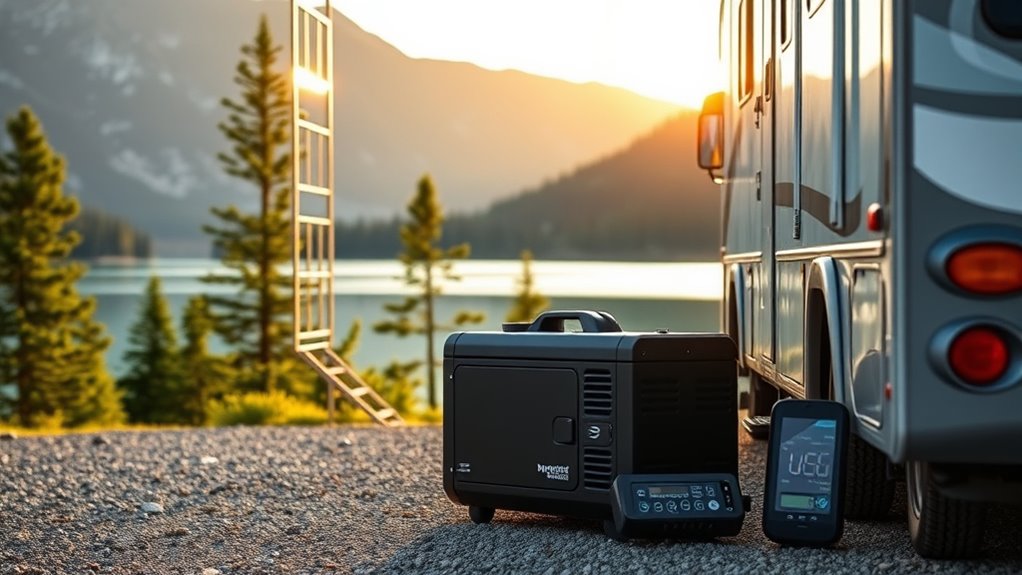
When you’re relying on an RV generator, understanding fuel usage is essential to managing your energy needs efficiently. Knowing how much fuel your generator consumes helps you plan trips better, avoid running out unexpectedly, and save money. Regular generator maintenance is key to keeping your unit running smoothly and efficiently. A well-maintained generator operates more efficiently, uses less fuel, and reduces emissions. Simple tasks like changing the oil, cleaning air filters, and inspecting spark plugs can make a notable difference in fuel consumption. When your generator is in top shape, it burns fuel more completely, which means you get more power from each gallon. This not only prolongs your fuel supply but also minimizes wear and tear on the generator itself. Additionally, understanding your generator’s fuel consumption rate allows for more accurate trip planning and fuel management.
Regular generator maintenance boosts efficiency, reduces fuel use, and extends your RV’s lifespan.
In addition to maintenance, choosing eco-friendly fuel options can considerably impact your fuel efficiency and environmental footprint. Some RV owners are now exploring alternative fuels like propane, biodiesel, or ethanol-blended gasoline, which tend to burn cleaner than traditional fuels. These options can reduce emissions and sometimes improve fuel economy, especially in generators designed to handle such fuels. Using eco-friendly fuels aligns with a greener lifestyle, helping you reduce your carbon footprint during adventures. Before switching fuels, ensure your generator is compatible to prevent damage and maximize efficiency.
Planning your trips with fuel usage in mind means being aware of your generator’s consumption rate and availability of fuel sources along your route. Knowing how many hours your generator can run on a tank helps you estimate how much fuel to carry or purchase en route. If you’re headed into areas with limited fuel stations, consider carrying extra fuel safely, or look for stations offering eco-friendly fuel options to stay aligned with your sustainability goals. Monitoring your generator’s fuel gauge during trips keeps you aware of how much fuel remains and prevents unexpected shutdowns. Also, running your generator only when necessary conserves fuel and reduces wear, extending its lifespan.
Being mindful of your generator’s performance, maintaining it properly, and choosing eco-friendly fuels all contribute to more efficient fuel usage. These practices not only save you money but also support a sustainable approach to RVing. When you understand your generator’s needs and usage patterns, you can better plan your trips, avoid disruptions, and enjoy your adventures with peace of mind. Proper maintenance and fuel choices empower you to get the most out of every gallon, making your journeys more economical and environmentally responsible.
RV generator fuel efficiency monitor
As an affiliate, we earn on qualifying purchases.
As an affiliate, we earn on qualifying purchases.
Frequently Asked Questions
How Does Altitude Affect RV Generator Fuel Consumption?
Altitude effects can increase your RV generator’s fuel consumption because the engine works harder in thinner air. As you go higher, your generator needs more fuel to produce the same power, reducing efficiency. To conserve fuel, consider running your generator only when necessary and maintain it properly. Being aware of altitude effects helps you plan better, ensuring you don’t overuse fuel during your trip at higher elevations.
Can Generator Fuel Efficiency Vary With Different RV Models?
Think of your RV generator like a car—different models and sizes use fuel differently. Yes, generator efficiency can vary among RV models, depending on factors like generator size and fuel type. For example, a smaller, fuel-efficient generator may sip fuel on long trips, while larger ones might guzzle more. Choosing the right model for your needs helps conserve fuel, saves money, and keeps your adventure going smoothly.
What Are the Best Practices for Fuel Storage Safety?
To guarantee fuel container safety, always store fuel in approved, tightly sealed containers away from heat sources and direct sunlight. Follow storage best practices by keeping containers upright, on a stable surface, and in well-ventilated areas. Never overfill, and inspect for leaks regularly. Keep a fire extinguisher nearby and avoid smoking or open flames around stored fuel. Proper storage keeps you safe and maintains fuel quality during your trips.
How Often Should I Perform Maintenance on My RV Generator?
You should perform generator maintenance every 100 to 200 hours of use or at least once a year, whichever comes first. Regular generator maintenance keeps your engine running smoothly and extends its lifespan. Focus on fuel system care by inspecting for leaks, replacing filters, and checking fuel lines. Consistent maintenance guarantees your RV generator operates efficiently, reduces fuel consumption, and prevents costly breakdowns during your trips.
Are There Eco-Friendly Fuel Options for RV Generators?
Yes, you can choose eco-friendly options for your RV generator. Look into alternative fuels like biodiesel, propane, or natural gas, which produce fewer emissions and are more sustainable. Switching to these eco-friendly options helps reduce your carbon footprint while maintaining generator performance. Make sure your generator is compatible with the alternative fuel before making the switch, and always follow safety guidelines for handling these fuels.
As an affiliate, we earn on qualifying purchases.
Conclusion
Think of your RV generator as the heartbeat of your adventure vessel. By planning fuel use wisely, you steer clear of rough waters and keep your journey smooth. Conserve fuel like a seasoned captain trims sails, ensuring your trip lasts longer and stays enjoyable. With mindful planning, you’ll navigate every mile with confidence, turning your RV into a trusty ship sailing effortlessly across the open road. Safe travels, and let your adventures flow like a well-charted voyage.
As an affiliate, we earn on qualifying purchases.
As an affiliate, we earn on qualifying purchases.