
Your storage habits directly affect your generator’s performance and lifespan. Improper storage can lead to fuel degradation, clogging filters and carburetors, making it work harder and use more fuel. Poor conditions like moisture and dirt cause rust and corrosion, increasing the risk of breakdowns. Taking care of how you store it helps prevent these issues and keeps your generator running smoothly. To find out how to optimize your storage practices, keep exploring.
Open a free Amazon Business account
Business pricing, bulk buying and tax-exempt orders.
As an affiliate, we earn on qualifying purchases.
Key Takeaways
- Poor storage conditions accelerate fuel degradation, leading to clogged filters and engine issues.
- Neglecting regular maintenance during storage causes corrosion and reduces generator lifespan.
- Exposure to moisture and extreme temperatures promotes rust and component failure.
- Using old or contaminated fuel in storage results in poor performance and costly repairs.
- Inadequate storage practices increase wear and tear, decreasing overall generator reliability.
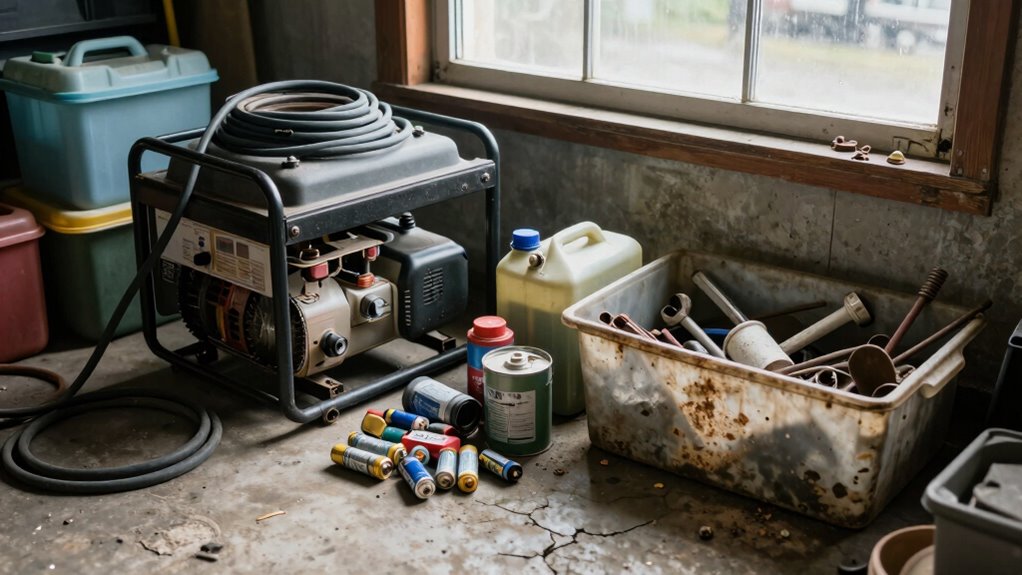
Generator problems often begin with how you store and handle your equipment. If you’re not paying attention to your storage habits, you might unknowingly compromise your generator’s performance. Proper storage is essential because it directly affects the generator’s fuel efficiency and longevity. When stored improperly, fuel can degrade, leading to clogged filters and carburetors, which in turn hampers the generator’s ability to run smoothly. Over time, this results in increased fuel consumption and decreased efficiency, causing your generator to work harder than necessary.
Proper storage prevents fuel degradation, ensuring your generator runs smoothly and lasts longer.
Many people underestimate the importance of regular maintenance routines, especially when their generator isn’t in use. Neglecting routine inspections, oil changes, and cleaning can lead to corrosion and buildup of dirt and debris. These issues aren’t just cosmetic; they impact the internal components, making the engine less responsive and more prone to breakdowns. When you skip maintenance routines, you risk ending up with a generator that struggles to start or runs inefficiently, costing you more in fuel and repairs over the long haul. Ensuring proper storage conditions can significantly reduce these risks by protecting your equipment from environmental damage.
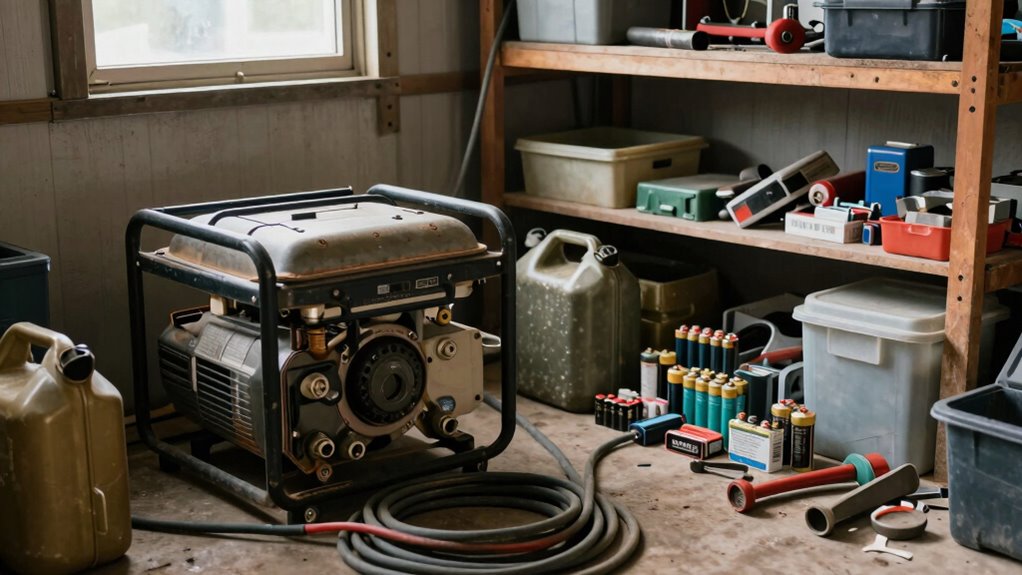
Proper storage also involves choosing the right environment. Storing your generator in damp, dusty, or extreme temperatures accelerates wear and tear. Moisture promotes rust and corrosion, which can clog essential parts and reduce overall performance. If you leave your generator outside or in a poorly ventilated shed, you’re inviting problems. Instead, store it in a dry, sheltered area, ideally elevated to prevent water accumulation around the base. Covering it with a breathable cover can also help protect it from dust and debris without trapping moisture inside. Additionally, proper storage environments can significantly extend your generator’s lifespan by minimizing exposure to damaging conditions.
Additionally, how you handle fuel during storage plays a critical role. Old or contaminated fuel can clog fuel lines and filters, making starting and running your generator difficult. If you plan to store your generator for an extended period, it’s best to drain the fuel tank or add a fuel stabilizer. This simple step can prevent fuel-related issues that might otherwise require costly repairs or replacements. Proper storage practices also include understanding fuel stability, which is crucial to maintaining your generator’s performance over time. Being aware of storage environment considerations can further help extend your equipment’s lifespan and reliability. Regularly inspecting your storage conditions and following manufacturer recommendations for fuel handling can prevent many common storage-related problems.
As an affiliate, we earn on qualifying purchases.
Frequently Asked Questions
How Can I Improve My Generator’s Storage Conditions?
To improve your generator’s storage conditions, focus on fuel stabilization to prevent gumming and corrosion, and guarantee proper battery maintenance. Store fuel in airtight containers and use fuel stabilizers if you’ll be storing it for long periods. Regularly check and charge the battery, cleaning terminals and testing voltage. Keeping these elements in check helps prevent issues and keeps your generator ready to run when needed.
What Common Storage Mistakes Lead to Generator Issues?
Think of your generator’s storage as a ticking time bomb if you ignore key mistakes. You might cause fuel degradation by leaving fuel in the tank too long, which clogs the system. Moisture buildup is another silent enemy, leading to rust and corrosion. Avoid these pitfalls by draining fuel regularly and storing your generator in a dry, cool place. Proper storage keeps your generator ready when you need it most.
How Often Should Generator Storage Be Inspected?
You should inspect your generator storage at least every three to six months. During these inspections, check for fuel stabilization to prevent gunk buildup, and make sure your battery maintains proper connections and charge levels. Regularly inspecting these components helps catch issues early, preventing major problems down the line. Proper storage habits, including consistent inspection, keep your generator running smoothly when you need it most.
Are There Specific Storage Temperatures That Damage Generators?
Exposing your generator to extreme temperatures can cause damage. For example, if you store it in a place that’s consistently below freezing, freezing moisture can lead to corrosion inside. Proper temperature regulation and moisture control are essential. Ideally, keep storage temperatures between 40°F and 80°F, avoiding excessive heat or cold, which can degrade components and reduce lifespan. Regularly monitor and maintain ideal conditions to protect your generator.
What Storage Practices Extend a Generator’s Lifespan?
To extend your generator’s lifespan, store it in a cool, dry place and maintain proper fuel stability by using fuel stabilizers if storing for long periods. Regularly check and charge the battery to prevent corrosion and guarantee reliable starts. Avoid overfilling or leaving fuel in the tank for extended periods, which can degrade, and always follow manufacturer guidelines for storage to keep your generator running smoothly when needed.
As an affiliate, we earn on qualifying purchases.
Conclusion
Stay vigilant about your storage habits to prevent pesky generator problems. Properly storing supplies, staying organized, and avoiding careless clutter can save you from costly complications. When you keep things neat and nimbly navigate your storage space, you’ll nurture a dependable, durable generator. Remember, small storage slips can spark significant setbacks, so stay sharp, stay structured, and safeguard your generator’s health. Smart storage habits keep your power pulsing smoothly, month after month.
As an affiliate, we earn on qualifying purchases.
As an affiliate, we earn on qualifying purchases.
NFL season / tailgating Picks
team gear
As an affiliate, we earn on qualifying purchases.