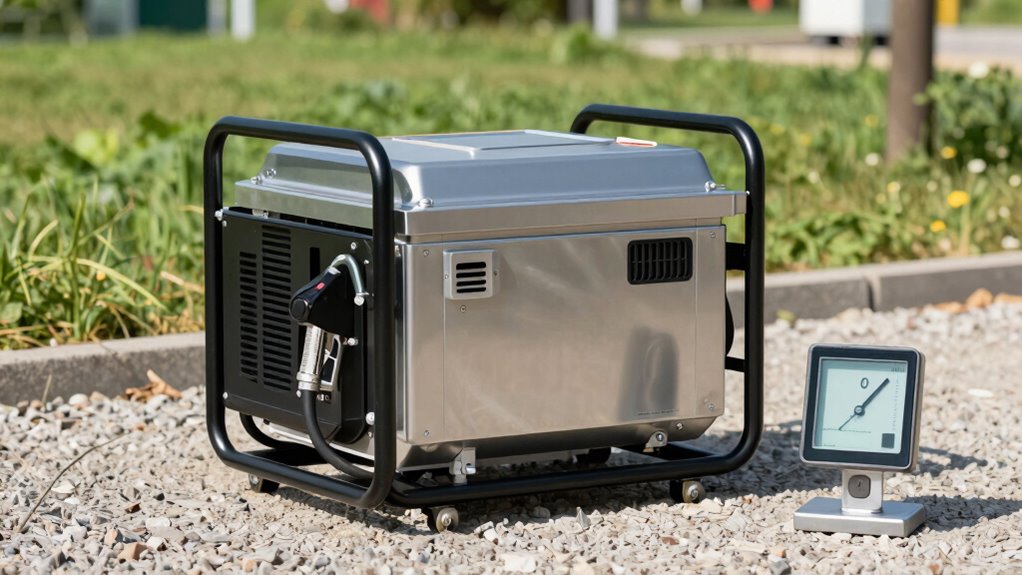

If you’re searching for a fuel efficient inverter generator, you’re likely balancing runtime, fuel versatility, and noise levels. The PowerSmart 4400W Dual Fuel Inverter stands out as the best overall for its dual-fuel flexibility and safety features. The Westinghouse iGen4000DFcv offers a quiet operation ideal for RV use, while the WEN 4800-Watt Dual Fuel Generator provides a robust balance of power and efficiency. Choosing the right model involves weighing fuel type preferences, portability, noise constraints, and budget. Keep reading to see how these options compare and which is best suited for your needs.

Get backup power and energy gear delivered free with Prime
- Fast, free delivery on millions of items
- Prime Video, Amazon Music and more included
- Member-only deals all year
Complete the kit


Key Takeaways
- Dual fuel capability is a common feature among the most fuel-efficient models, offering greater flexibility and runtime options.
- Quiet operation remains a priority for portable use, especially in camping or residential settings, influencing the selection of models like Westinghouse iGen4000DFcv.
- The best picks balance fuel efficiency with ease of use, such as electric start and remote controls, reducing hassle during setup.
- Some models include advanced safety features like CO sensors, which are essential for safe outdoor and indoor use.
- Price and wattage vary widely; higher wattage models tend to consume slightly more fuel, but offer more power for larger appliances.


| fuel efficient inverter generator | Noise Level | Fuel Type | Run Time |
|---|---|---|---|
| PowerSmart 4400W Dual Fuel Inv | — | Gasoline, Propane | — |
| WEN 4800-Watt Dual Fuel Invert | 62 decibels | — | Up to 7 hours at half load |
| Westinghouse 5000 Peak Watt Su | 52 dBA | Gasoline and Propane | Up to 18 hours |
| WEN 2800-Watt Dual Fuel Invert | 60 dB | Gasoline, Propane | Up to 9 hours |
| PowerSmart 3800 Watt Dual Fuel | 59 dBA | Gasoline, Propane | — |
| Westinghouse 2800 Peak Watt Su | 52 dBA | Gasoline and Propane | Up to 12 hours at 25% load |
| Oxseryn 2800-Watts Portable In | Under 58 dBA | Gasoline | — |
| WEN 3600-Watt Dual Fuel Portab | 65 dBA | — | — |
| Westinghouse iGen4000DFcv Dual | 52 dBA | Gasoline and Propane | Up to 7 hours |
| Westinghouse 8200 Peak Watt Tr | — | — | Up to 17 hours at 25% load |
More Details on Our Top Picks
PowerSmart 4400W Dual Fuel Inverter Generator, Gas and Propane Portable with 223cc Engine, 30A RV Ready, Auto Switch, EPA, CO Sensor, Parallel Ready for Home and Outdoor Use
This model stands out for combining dual fuel flexibility with a compact design, making it suitable for both home backup and outdoor adventures. Compared with the WEN 4800, it offers similar wattage but with a quieter operation at 76 dB, ideal for neighborhood settings. Its safety features, including CO detection and overload protection, add peace of mind, especially for prolonged use. However, its weight of 65 lbs can be a drawback for portability, and the recommended continuous load below 2800W limits its performance under heavier demands. This generator makes the most sense for users who value safety, fuel options, and extended runtime in a portable package.
Pros:- Dual fuel capability for gasoline and propane flexibility
- Quiet operation at 76 dB suitable for neighborhood use
- Safety features including CO detection and overload protection
- Long runtime of up to 11 hours on a full tank
Cons:- Heavy at 65 lbs, may require assistance to move
- Maximum continuous load recommended below 2800W for optimal performance
Best for: Homeowners seeking a flexible, safe, and portable backup generator with dual fuel capability
Not ideal for: Campers needing ultra-lightweight units or frequent frequent moving, due to its weight
- Wattage:3600 watts
- Fuel Type:Gasoline, Propane
- Power Source:Fuel Powered
- Recommended Uses:Camping, Commercial, Residential
- Voltage:120 volts
- Tank Volume:1.6 gallons
- Engine Displacement:223 cc
- Runtime:11 hours
Our verdict“Best suited for users wanting a safe, dual fuel inverter generator with extended runtime and safety features.”
WEN 4800-Watt Dual Fuel Inverter Generator with Electric Start and CO Watchdog
This pick offers a higher wattage ceiling at 4800 surge watts, making it suitable for powering multiple devices or small appliances. It excels in quiet operation at just 62 dB, outperforming the PowerSmart in noise levels and making it ideal for delicate electronics or quiet environments. Its electric start adds convenience, especially compared to recoil-start models like the PowerSmart. On the downside, it lacks a specified weight, which complicates portability assessments, and its runtime of up to 7 hours at half load may be limiting for longer outings. The need to purchase a parallel kit separately for linking units adds an extra step for those seeking more power.
Pros:- Quiet operation at 62 dB ideal for sensitive environments
- Electric start for ease of use
- Dual fuel capability with propane and gasoline
- Includes safety features like CO watchdog sensor
Cons:- Run time may be limited to 7 hours at half load
- Lacks specified weight, affecting portability decision
Best for: Campers and tailgaters who prioritize quiet operation and easy electric start
Not ideal for: Heavy-duty emergency backup users who need prolonged runtime without additional units
- Engine:224cc dual-fuel engine
- Surge Watts (Gasoline):4800
- Rated Watts (Gasoline):4000
- Noise Level:62 decibels
- Fuel Tank Capacity:1.9 gallons
- Run Time:Up to 7 hours at half load
- Receptacles:Four 120V NEMA 5-20R, one TT-30R RV, USB ports
- Warranty:3 years
Our verdict“Ideal for users needing quiet, easy-start power with sensitive electronics in portable setups.”
Westinghouse 5000 Peak Watt Super Quiet Dual Fuel Portable Inverter Generator with Remote Electric Start
This generator leads with its high peak wattage of 5000 and impressive runtime of up to 18 hours, surpassing most in the lineup like the PowerSmart and WEN 4800. Its remote electric start adds convenience for frequent use, and its quiet at 52 dBA, making it suitable for camping or emergency backup without disturbing neighbors. However, this model’s increased size and weight make portability more challenging, especially compared to smaller options like the WEN 2800. The higher price point and complex setup may deter casual users, but for those needing a blend of power, quiet operation, and long runtime, it makes a compelling choice.
Pros:- High peak wattage at 5000 for demanding appliances
- Quiet operation at 52 dBA for neighborhood-friendly use
- Remote electric start for convenience
- Extended runtime of up to 18 hours
Cons:- Heavy and bulky for frequent portability
- Higher price compared to smaller models
Best for: Outdoor enthusiasts and emergency responders requiring high wattage and long runtime
Not ideal for: Users with limited space or those prioritizing lightweight, portable units
- Peak Watts:5000
- Rated Watts:3900
- Fuel Type:Gasoline and Propane
- Run Time:Up to 18 hours
- Tank Capacity:3.4 gallons
- Noise Level:52 dBA
- Start Type:Remote Electric, Recoil
Our verdict“Perfect for those needing high power output and long runtime in a quiet, remote start-capable package.”
WEN 2800-Watt Dual Fuel Inverter Generator, Quiet, Portable, and Lightweight with Fuel Shut Off and CO Watchdog
This generator offers a balanced mix of portability and power with 2800 surge and 2250 rated watts, making it suitable for camping or light backup. It’s one of the lightest in the lineup at 45 pounds, easily carried or stored, and its quiet operation at 60 dB enhances user comfort. The dual-fuel feature provides flexibility, and the fuel shutoff improves safety and efficiency. Yet, its runtime of up to 9 hours on a full tank may be limiting for extended outages, and the lack of included parallel connection kit means additional purchases for more power. Its manual recoil start might be a hurdle for some users preferring electric options.
Pros:- Lightweight at 45 pounds for easy transport
- Quiet operation at 60 dB
- Dual fuel for fuel flexibility
- Fuel shutoff for safety and efficiency
Cons:- Limited runtime of up to 9 hours at higher loads
- No included parallel kit for expanding power
Best for: Campers or tailgaters needing a portable, lightweight, dual-fuel generator
Not ideal for: Heavy-duty backup users or those needing longer runtime without refueling
- Power Output:2800 surge watts, 2250 rated watts
- Fuel Type:Gasoline, Propane
- Engine Displacement:98cc
- Noise Level:60 dB
- Tank Capacity:1.58 gallons
- Run Time:Up to 9 hours
- Receptacles:Two 120V NEMA 5-20R, USB ports
- Warranty:3 years
Our verdict“Best for users seeking lightweight, quiet, dual fuel power for portable outdoor use.”
PowerSmart 3800 Watt Dual Fuel Inverter Generator for Camping or Home Use
This generator provides 3800 starting watts and 3300 running watts, making it a balanced option for home backup or camping. Its quiet operation at 59 dBA closely rivals larger units like the Westinghouse iGen5000DF, but at a lower price point, it appeals to budget-minded buyers. The 1.3-gallon tank offers up to 8 hours of runtime, which is adequate for many scenarios, yet may require frequent refueling during extended outages. Its multiple outlets and safety features like CO sensing make it versatile, but the manual recoil start could be less convenient for some users, and its load capacity may limit heavy-duty applications.
Pros:- Quiet operation at 59 dBA makes it neighborhood-friendly
- Dual fuel flexibility offers fuel options
- Multiple outlets including USB ports for versatility
- Relatively low price for its features
Cons:- Limited runtime of up to 8 hours on gasoline
- Heavy weight and manual recoil start could affect portability
Best for: Budget-conscious families or campers who want quiet, safe, dual fuel power
Not ideal for: Heavy users needing long runtime or high power for demanding appliances
- Wattage:3800 watts
- Fuel Type:Gasoline, Propane
- Engine Type:4 Stroke
- Noise Level:59 dBA
- Tank Volume:1.3 gallons
- Runtime:Up to 8 hours
- Total Power Outlets:6
- Color:Red
Our verdict“Ideal for budget-conscious users wanting quiet, dual fuel power with multiple outlets for camping or home backup.”
Westinghouse 2800 Peak Watt Super Quiet & Lightweight Dual Fuel Portable Inverter Generator, Gas & Propane Powered, CO Sensor, Parallel Capable, Long Run Time
This model stands out for its excellent balance of quiet operation at 52 dBA and dual fuel flexibility, making it a top choice for those who want clean power without disturbing neighbors or campmates. Compared with the Oxseryn 2800-Watt, it offers a longer runtime of up to 12 hours at 25% load, which is ideal for longer outings or backup scenarios. Its CO sensor and overload protection enhance safety, especially for home use. However, the need for separate parallel cables and a limited runtime at higher loads are tradeoffs. Overall, this generator is perfect for users prioritizing quiet, safe, and versatile power on the go, with portability and long runtime as key benefits.
Pros:- Quiet operation at 52 dBA, suitable for sensitive environments
- Dual fuel flexibility for extended runtime and convenience
- Safe for sensitive electronics with <3% THD
- Lightweight and portable at 45 pounds
Cons:- Parallel cables sold separately, adding extra cost
- Limited to 12 hours runtime at 25% load, less for high-demand use
Best for: Campers, RV owners, or homeowners seeking a quiet, dual fuel backup with long run time
Not ideal for: Users needing continuous power beyond 12 hours or who want included parallel cables for expansion without extra cost
- Peak Power:2800W
- Running Power:2200W
- Fuel Type:Gasoline and Propane
- Run Time:Up to 12 hours at 25% load
- Weight:45 pounds
- Noise Level:52 dBA
Our verdict“This generator makes a strong choice for those needing quiet, flexible power with long runtime in a portable package.”
Oxseryn 2800-Watts Portable Inverter Generator, Gas Powered, Super Quiet Emergency Home Backup
Compared with the Westinghouse iGen2800DFc, the Oxseryn 2800-Watt offers a slightly lower weight at 39 lbs, emphasizing portability, especially for emergency or camping use. It operates quietly at under 58 dBA, making it suitable for sensitive environments. Its built-in handle and compact design make it easy to carry, but the runtime of up to 9 hours on a 1.1-gallon tank can be limiting for extended outages or longer trips. It provides multiple outlets, including USB, for versatile device charging. However, factory testing may cause a gas smell, and it requires additional setup for high-altitude use. This generator is well-suited for users needing reliable, portable power in emergencies or outdoor activities, with an emphasis on ease of transport.
Pros:- Very quiet operation under 58 dBA
- Lightweight at 39 lbs with built-in handle
- Multiple outlets, including USB and Type-C
- Reliable 2800 peak watts for emergency power
Cons:- Limited runtime of 9 hours, less for prolonged use
- Potential gas smell due to factory testing
Best for: Homeowners seeking a lightweight, portable backup generator for short-term outages or outdoor adventures
Not ideal for: Users requiring long runtime or high-altitude operation without additional accessories
- Wattage:2800 watts (peak), 2000 watts (running)
- Fuel Type:Gasoline
- Tank Volume:1.1 gallons
- Runtime:Up to 9 hours
- Weight:39 lbs
- Noise Level:Under 58 dBA
Our verdict“This generator is ideal for portable, quiet power in emergency or outdoor settings, especially for users prioritizing ease of transport.”
WEN 3600-Watt Dual Fuel Portable Inverter Generator with CO Watchdog
The WEN 3600-Watt inverter provides a higher surge capacity than most 2800W models, making it suitable for more demanding appliances or tools. Its dual fuel capability on gasoline or propane offers flexibility, similar to the Westinghouse model, but with a slightly higher power output. The integrated CO Watchdog sensor enhances safety during prolonged use outdoors. Its noise level of 65 decibels is on the higher side compared to other quiet models, but still acceptable for many outdoor activities. The 1.5-gallon tank limits runtime to around 5 hours at half load, which may be insufficient for extended backup. This pick is best for users needing more power and safety features for outdoor or emergency use, but with less concern about extended runtime.
Pros:- Higher surge wattage (3600W), supports more appliances
- Dual fuel for fuel flexibility
- CO Watchdog sensor for added safety
- Lightweight at 49 pounds
Cons:- Noise level at 65 dBA, louder than some competitors
- Run time of only 5 hours at half load
Best for: Campers or outdoor enthusiasts requiring higher surge capacity and safety for extended outdoor use
Not ideal for: Those seeking ultra-quiet operation or long runtime for continuous backup
- Power Output:3600 surge / 2900 rated watts (gasoline)
- Fuel Tank Capacity:1.5 gallons
- Runtime:Up to 5 hours
- Weight:49 pounds
- Noise Level:65 dBA
- Additional Features:CO Watchdog sensor, fuel shutoff, eco-mode
Our verdict“This generator offers higher power and safety features suited for outdoor activities where safety and capacity matter more than runtime or noise level.”
Westinghouse iGen4000DFcv Dual Fuel Inverter Generator, 4000 Peak Watts, RV Ready, Quiet, Portable
Compared to the Westinghouse iGen2800DFc, the iGen4000DFcv provides significantly more power, with 4000 peak watts and 3300 rated watts, making it suitable for larger RVs or heavier backup loads. Its quiet operation at 52 dBA matches the smaller model, but the larger tank capacity of 1.66 gallons extends runtime up to 7 hours, a notable upgrade. The inclusion of a digital display offers real-time monitoring, aiding in efficient fuel management and load balancing. While it’s relatively heavy and the price isn’t specified, its portability is enhanced by wheels and an extendable handle. This generator appeals to those who need more power with digital control for outdoor or backup use, without sacrificing quiet operation.
Pros:- Higher power output (4000 peak watts)
- Quiet operation at 52 dBA
- Digital display for real-time data
- Extended runtime of 7 hours
Cons:- Weight likely higher, potentially less portable
- Price not listed, possibly more expensive
Best for: RV owners or campers needing a higher wattage, portable generator with digital features
Not ideal for: Individuals seeking ultralight models or with budget constraints due to unspecified price
- Peak Wattage:4000 Watts
- Rated Wattage:3300 Watts
- Fuel Type:Gasoline and Propane
- Run Time:Up to 7 hours
- Tank Capacity:1.66 gallons
- Noise Level:52 dBA
Our verdict“This model suits demanding outdoor users who want substantial power with digital monitoring in a portable form.”
Westinghouse 8200 Peak Watt Tri-Fuel Portable Inverter Generator with Remote Electric Start and CO Sensor
While the iGen8200TFc excels in heavy-duty capacity with 8200 peak watts, it is less focused on fuel efficiency at the high power level. It offers tri-fuel versatility—gasoline, propane, or natural gas—making it highly adaptable but potentially less efficient depending on fuel choice. Its remote electric start adds convenience, and the built-in CO sensor enhances safety. However, details on weight and dimensions are missing, which complicates portability considerations. Compared to smaller models like the Westinghouse iGen2800DFc, this generator leans toward larger backup or job-site applications rather than casual camping. It’s best for users needing maximum power and fuel flexibility with remote operation, accepting that fuel efficiency may be secondary at this scale.
Pros:- Tri-fuel capability for maximum fuel choice
- Remote electric start for convenience
- High power output (8200W peak)
- Built-in CO sensor for safety
Cons:- Likely heavy and less portable
- Fuel efficiency may be lower given high capacity
Best for: Homeowners or contractors requiring high power with tri-fuel flexibility for backup or job sites
Not ideal for: Casual campers or users prioritizing lightweight, portable units or fuel efficiency for small loads
- Peak Watts:8200
- Running Watts:6600
- Fuel Types:Gasoline, Propane, Natural Gas
- Tank Capacity:3.9 gallons
- Run Time:Up to 17 hours at 25% load
- Weight:Not specified
Our verdict“This generator suits heavy-duty applications where maximum power and fuel versatility outweigh portability or fuel efficiency concerns.”

How We Picked
To evaluate these fuel efficient inverter generators, I focused on real-world performance factors that matter to buyers. These included fuel efficiency, measured through runtime per tank and fuel type versatility, as well as noise levels, portability, and safety features like CO sensors. I also considered build quality, ease of operation, and value for money. The ranking reflects a balance of these factors, with the top picks excelling in multiple categories while acknowledging tradeoffs such as price or size. This approach ensures that each recommended model offers a clear advantage suited to specific use cases.| fuel efficient inverter generator | Fuel Type | Run Time |
|---|---|---|
| PowerSmart 4400W Dual Fuel Inv | Gasoline, Propane | — |
| WEN 4800-Watt Dual Fuel Invert | — | Up to 7 hours at half load |
| Westinghouse 5000 Peak Watt Su | Gasoline and Propane | Up to 18 hours |
| WEN 2800-Watt Dual Fuel Invert | Gasoline, Propane | Up to 9 hours |
| PowerSmart 3800 Watt Dual Fuel | Gasoline, Propane | — |
| Westinghouse 2800 Peak Watt Su | Gasoline and Propane | Up to 12 hours at 25% load |
| Oxseryn 2800-Watts Portable In | Gasoline | — |
| WEN 3600-Watt Dual Fuel Portab | — | — |
| Westinghouse iGen4000DFcv Dual | Gasoline and Propane | Up to 7 hours |
| Westinghouse 8200 Peak Watt Tr | — | Up to 17 hours at 25% load |
Factors to Consider When Choosing Fuel Efficient Inverter Generator
Choosing a fuel efficient inverter generator involves understanding several key factors that impact performance, convenience, and safety. Beyond just fuel consumption, you need to consider how the generator fits your lifestyle—whether for camping, backup power, or RV use—and what features align with your priorities. Making the right choice requires balancing efficiency with usability and safety features to match your typical power needs.Fuel Type and Efficiency
Dual fuel options, such as gas and propane, generally increase overall efficiency and extend runtime, giving you more flexibility in fuel sources. Gas tends to be more readily available and has higher energy density, but propane burns cleaner and can be stored longer. Consider how often you plan to refuel and the availability of fuel types in your area. Keep in mind that larger engines may consume more fuel, so look for models with advanced fuel management to maximize efficiency.
Noise Levels and Portability
Quiet operation is essential if you plan to camp or use your generator in residential areas. Inverter technology naturally reduces noise, but some models are significantly quieter than others. Portability also depends on weight and size; lightweight units are easier to carry for outdoor activities but might sacrifice some power or features. Evaluate how often you’ll move the generator and whether noise restrictions apply in your typical environment.
Power Output and Size
Matching your power needs with the generator’s wattage is critical. Overestimating can lead to unnecessary fuel consumption, while underestimating risks overloads. Consider the appliances or devices you intend to run simultaneously—such as RV air conditioners, refrigerators, or power tools—and select a model that provides a comfortable margin. Larger units tend to consume more fuel, but some newer models optimize efficiency at higher wattages.
Safety and Additional Features
Features like CO sensors and automatic shutoff enhance safety, especially when running indoors or in enclosed spaces. Electric start and remote controls improve usability, minimizing manual effort during startup. Some models include parallel capability, allowing you to connect multiple units for more power without significantly increasing fuel consumption. Weigh these features against the initial cost to determine long-term value.
Price and Long-Term Value
Higher-priced models often incorporate better fuel efficiency, quieter operation, and more durable build quality, which can reduce maintenance costs over time. Consider your budget against how frequently you’ll use the generator; investing in a more efficient, reliable model makes sense if it’s a regular necessity. Look for warranties and customer support as part of the overall value proposition.
Frequently Asked Questions
How does dual fuel capability improve fuel efficiency?
Dual fuel generators can switch between gas and propane, allowing you to choose the most economical or available fuel source at any time. Propane tends to burn cleaner and can extend the runtime since you can run multiple tanks or larger quantities. This flexibility can lead to better overall fuel management, especially during extended use or power outages, making your generator more cost-effective over its lifespan.
Are quieter generators always more fuel-efficient?
Not necessarily. While many quiet inverter generators are designed with efficiency in mind, noise levels often correlate with engine size and design rather than fuel consumption alone. However, quieter models typically feature advanced inverter technology that can also improve fuel economy by optimizing engine performance under varying loads. It’s worth considering both noise and efficiency as part of your overall needs.
What safety features should I prioritize in a fuel efficient inverter generator?
CO sensors are vital safety features that detect dangerous carbon monoxide levels and shut down the generator automatically. Overcurrent protection and thermal overload shutoffs are also important to prevent damage and ensure safe operation. These features are especially important if you plan to run the generator indoors or in semi-enclosed spaces, offering peace of mind during extended or critical use.
Is a larger wattage generator always more fuel-efficient?
Not necessarily. Larger wattage models often consume more fuel, but they can be more efficient when used at full load compared to smaller units working at maximum capacity. Efficiency depends on engine design and load management. If your typical power needs are moderate, selecting a generator with a wattage just above your requirements can reduce unnecessary fuel consumption and operate more efficiently.
How important is runtime per tank for fuel efficiency?
Runtime per tank directly reflects fuel efficiency; longer runtimes mean the generator consumes less fuel per hour of operation. For backup or extended outdoor use, a generator with a higher runtime reduces refueling frequency, saving time and effort. Always check the fuel tank capacity relative to the wattage, and consider models with fuel-saving features like economy modes for better overall efficiency.