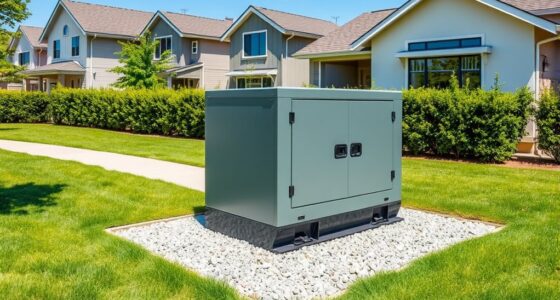

You often overlook the most essential safety rule: never run your generator in enclosed or semi-enclosed spaces. Carbon monoxide gas is odorless and deadly, and running a generator indoors can cause poisoning in minutes. Always operate it outdoors in open areas away from windows, doors, and vents. Proper placement is necessary to prevent dangerous fumes from seeping inside. If you want to avoid serious risks, understanding and following this rule is crucial—keep going to learn more important safety tips.

Get backup power and energy gear delivered free — and shop member deals
- Fast, free delivery on millions of items
- Access to Prime Big Deal Days deals on October 6–7
- Prime Video, Amazon Music and more included
Key Takeaways
- Never operate a generator indoors or in semi-enclosed spaces to prevent carbon monoxide poisoning.
- Always place generators outdoors in well-ventilated areas, away from windows, doors, and vents.
- Regularly inspect and maintain exhaust and ventilation systems to prevent dangerous CO buildup.
- Store fuel in approved containers and keep it away from heat sources to reduce fire risk.
- Avoid bypassing safety features or modifying the generator’s ventilation system to maintain safe operation.
Generator safety is often overlooked, leading to dangerous situations that could easily be prevented. One of the most critical safety rules people ignore involves proper fuel storage and ventilation precautions. You might think keeping fuel nearby is convenient, but storing fuel improperly creates a serious fire hazard. Gasoline and other fuels should always be stored in approved containers and kept in well-ventilated areas, away from heat sources or open flames. Never store large quantities of fuel inside your home or in enclosed spaces, as even a small spark could ignite fumes and cause a dangerous fire or explosion. It’s also essential to check fuel containers regularly for leaks or damage, replacing them if necessary, to prevent leaks that could lead to a fire hazard or environmental contamination.
Store fuel in approved containers away from heat and open flames to prevent fire hazards.
Ventilation precautions are equally critical for safe generator operation. When running your generator, you might be tempted to place it in a garage or enclosed space for convenience, but this is extremely dangerous. Generators emit carbon monoxide (CO), a colorless, odorless gas that can quickly build up in confined areas, causing poisoning or death. Always operate your generator outdoors in an open, well-ventilated space, keeping it away from windows, doors, and vents that could allow CO to seep inside. It’s crucial to position the generator on a flat surface to prevent potential fuel spills or tipping over, which could lead to leaks or fires. Additionally, understanding heat buildup and how it affects your generator’s safety can help prevent overheating and potential hazards.
You also need to be mindful of the generator’s exhaust and ensure it isn’t blocked by debris, foliage, or other objects. Proper ventilation isn’t just about the air around your generator; it also involves understanding how fumes escape and dispersing safely. Regularly check your generator’s ventilation system and exhaust pipe for obstructions, and never attempt to modify or bypass safety features. Remember, neglecting these ventilation precautions can lead to deadly carbon monoxide buildup, especially if you’re running the generator in a semi-enclosed space or near an open window. Additionally, incorporating landscaping elements that improve airflow around your setup can enhance safety. Properly maintaining your generator, including checking the airflow, is vital to prevent dangerous emissions from accumulating.
Furthermore, understanding the importance of filter maintenance and timely replacements can significantly reduce the risk of malfunction or hazardous emissions.
As an affiliate, we earn on qualifying purchases.
Frequently Asked Questions
What Are the Common Signs of Generator Malfunction?
You’ll notice signs of generator malfunction when it makes unusual noises or experiences drops in fuel efficiency. Loud knocking, sputtering, or grinding sounds indicate internal issues. If your generator suddenly consumes more fuel than usual, it’s a sign something’s wrong. These signs warn you to inspect or service your generator promptly, preventing further damage and ensuring it runs smoothly and safely when you need it most.
How Often Should Generator Maintenance Be Performed?
Think of your generator as a living thing that needs regular checkups to stay healthy. You should perform maintenance scheduling at least every 3 to 6 months, depending on usage, to extend its lifespan. Regular inspections, oil changes, and part replacements keep it humming smoothly. Neglecting these tasks shortens its life and risks unexpected breakdowns when you need it most, so stay proactive with your maintenance routine.
Can I Connect a Generator Directly to My Home Wiring?
You shouldn’t connect a generator directly to your home wiring without proper generator installation and electrical integration. Doing so risks backfeeding electricity into the grid, which can cause fires or harm utility workers. Instead, use a transfer switch to safely connect your generator. This guarantees safe electrical integration, protects your home and neighbors, and complies with safety codes. Always consult a professional for proper installation and adherence to safety standards.
What Personal Protective Equipment Is Necessary When Operating a Generator?
Think of personal protective equipment as your shield in a storm; it keeps you safe from unexpected sparks and shocks. When operating a generator, you need safety gloves to guard your hands from potential burns or electrical shocks. Additionally, wear eye protection to prevent debris from causing injuries. Never skip these essentials, because they’re your first line of defense, turning a risky task into a safer, more controlled operation.
How Do I Safely Store Fuel for My Generator?
You should store fuel for your generator in a proper, approved storage container, ensuring it’s tightly sealed to prevent leaks. Before storing, stabilize the fuel with fuel stabilization additive to prolong its shelf life and prevent gum buildup. Keep the container in a cool, well-ventilated area away from heat sources, sparks, or flames. Regularly check for leaks or deterioration, and never store fuel indoors or near living spaces.
carbon monoxide detector for generator
As an affiliate, we earn on qualifying purchases.
As an affiliate, we earn on qualifying purchases.
Conclusion
So, next time you fire up your generator, remember that ignoring safety rules isn’t just risky—it’s a coincidence waiting to happen. That small oversight could be the one thing that leads to disaster, like a sudden power surge or carbon monoxide leak. It’s funny how we often overlook the simplest precautions, only to find out too late. Stay safe, stay alert, and treat your generator with the respect it deserves—because safety isn’t just a rule, it’s a coincidence you want to avoid.
As an affiliate, we earn on qualifying purchases.
approved fuel containers for generator
As an affiliate, we earn on qualifying purchases.
As an affiliate, we earn on qualifying purchases.
Fall Picks
fall essentials
As an affiliate, we earn on qualifying purchases.