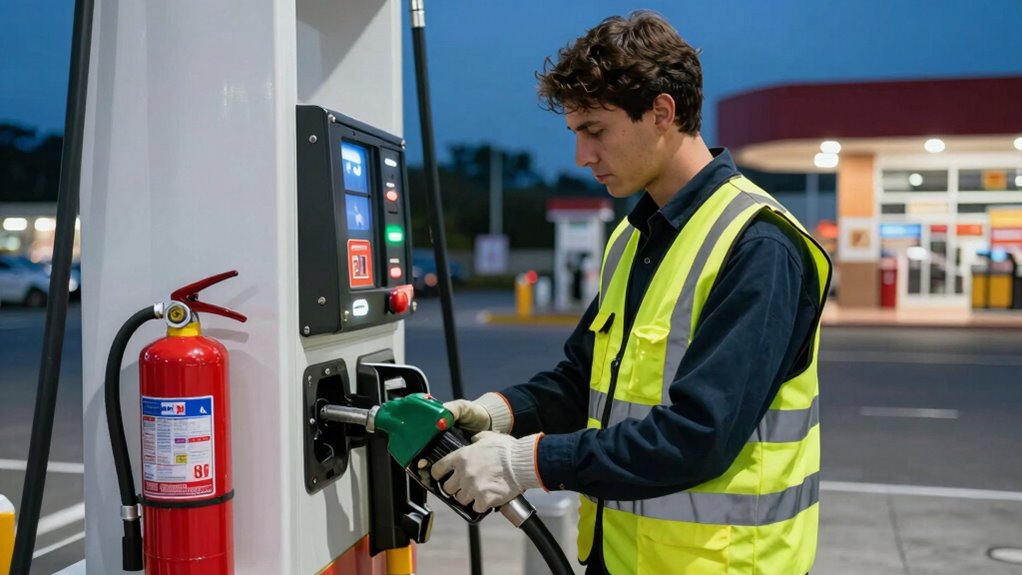

To prepare a safe refueling routine under stress, stay calm and follow a consistent process. Turn off your engine completely and double-check the fuel type before refueling. Keep distractions like your phone away and focus on safety signs and instructions at the station. If you feel anxious, take deep breaths and practice slow, deliberate actions. Remember, developing automatic habits helps reduce stress and guarantees safety—learn more about maintaining safety even in tense moments.

Get backup power and energy gear delivered free with Prime
- Fast, free delivery on millions of items
- Prime Video, Amazon Music and more included
- Member-only deals all year
Key Takeaways
- Follow a consistent, step-by-step refueling process to build automatic safety habits.
- Take deep breaths and stay focused to manage anxiety and maintain attention on safety procedures.
- Prepare your vehicle and fuel cap beforehand to minimize distractions and streamline the process.
- Keep emergency protocols and safety signs in mind to act swiftly during stressful situations.
- Carry safety equipment like a fire extinguisher and regularly check safety features to boost confidence and readiness.
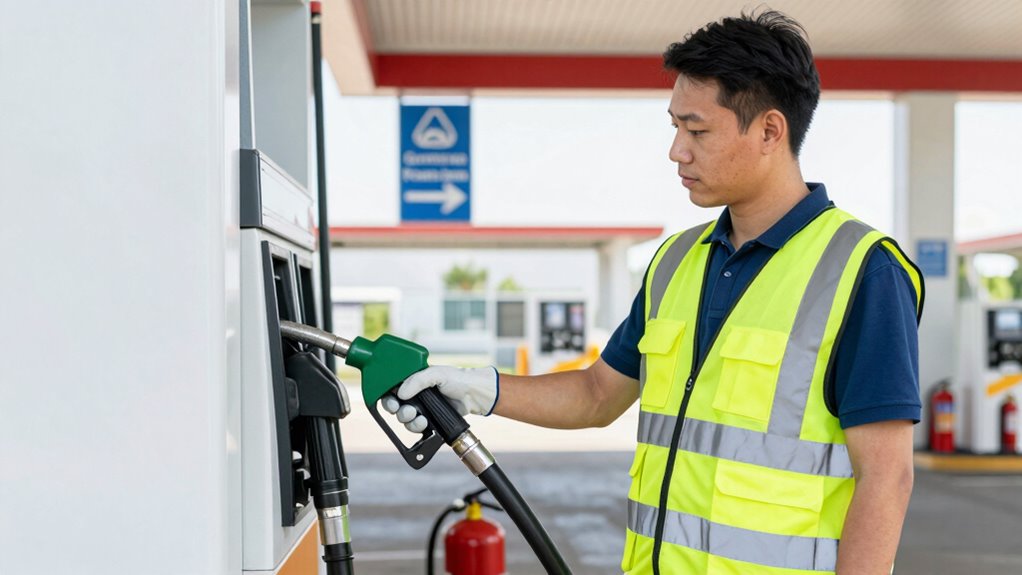
Have you ever noticed how your refueling routine changes when you’re under stress? Maybe you feel rushed, distracted, or anxious, and suddenly, safety procedures seem to slip your mind. Stress can easily lead to careless mistakes at the pump, making it vital to have a clear, prepared routine that prioritizes fuel safety. When you’re under pressure, it’s easy to overlook essential steps—like turning off your engine, avoiding distractions, or handling fuel nozzles properly. Developing a consistent, mindful approach helps you avoid accidents and guarantees you’re following emergency protocols if something goes wrong.
Stress can cause careless mistakes at the pump; develop a mindful, consistent routine for safe refueling.
Start by familiarizing yourself with your vehicle’s refueling instructions and the safety guidelines at your usual station. Knowing where the emergency shut-off valve is or how to quickly disconnect the fuel nozzle can save you from panic in a crisis. When stress hits, your instinct might be to rush, but slow down and stick to a pre-established process. Turn off your engine completely to reduce fire risk, and never attempt to refuel while smoking or using electronic devices. These are basic yet vital fuel safety rules that should become second nature, especially when you’re feeling overwhelmed. Incorporating safety awareness into your routine can significantly reduce the likelihood of accidents in stressful situations. Additionally, understanding emergency protocols and the station’s safety signs can further prepare you for unexpected incidents. Recognizing visual safety signs helps you quickly interpret station instructions and alerts, which is especially important when you’re feeling anxious. Being aware of fuel handling guidelines can also help prevent spills and other hazards during refueling.
Keep your focus on the task at hand, avoiding distractions like phone calls or conversations. If you’re feeling anxious, take a few deep breaths before approaching the pump. Double-check that you’re at the correct fuel type for your vehicle, and ensure the nozzle is securely inserted. Pay attention to the pump’s instructions and monitor the process closely. If an emergency occurs—say, a spill or a fuel leak—you need to act swiftly, following emergency protocols such as shutting off the pump and alerting station personnel immediately. Having these procedures ingrained in your mind allows you to respond calmly and effectively when stress levels are high.
Preparing a safe refueling routine also means planning ahead. Keep your vehicle’s fuel cap accessible and in good condition, and always carry a small fire extinguisher if you’re concerned about safety. Additionally, understanding the importance of contrast ratio in visual displays can help you better assess safety signs and instructions at the station. When you’re under stress, being proactive minimizes the chances of mistakes and helps you stay focused on safe practices. Remember, safety isn’t just about avoiding accidents; it’s about knowing what to do if something unexpected happens. By consistently practicing these steps, you’ll develop confidence in your ability to refuel safely under any circumstances. Over time, this routine becomes automatic, making stress less likely to compromise your safety.
As an affiliate, we earn on qualifying purchases.
Frequently Asked Questions
How Can I Stay Calm During a Stressful Refueling Situation?
To stay calm during a stressful refueling situation, focus on your breath. Use deep breathing to slow your heart rate and clear your mind. Practice mindfulness techniques by paying attention to your surroundings and grounding yourself in the present moment. Remind yourself that the situation is manageable, and take a few slow, deliberate breaths to regain control. These strategies help you stay composed and make safe decisions.
What Tools Are Best for Quick Refueling in Emergencies?
For quick refueling in emergencies, you need reliable tools like a sturdy, approved fuel container that guarantees safety and prevents spills. Keep a well-maintained emergency supply kit nearby, including gloves and eye protection, to handle fuel safely. Always check fuel container safety standards before use. Having these tools ready helps you act swiftly and securely, reducing stress and guaranteeing safe refueling during urgent situations.
How Do I Handle Spills or Fuel Leaks Safely?
When handling spills or fuel leaks, don’t panic—think of it as a major emergency movie scene! Quickly grab your fuel container and spill containment supplies. Move away from flames, and contain the spill with absorbent materials. Use your spill containment kit to prevent fuel from spreading. Ventilate the area, and never try to clean up a large leak alone. Safety first keeps you in control amidst the chaos!
What Should I Do if I Run Out of Fuel Unexpectedly?
If you run out of fuel unexpectedly, stay calm and prioritize safety. Quickly pull over to a safe location, turn off your engine, and activate your hazard lights. Use your fuel management plan to estimate how much fuel you need and consider calling for roadside assistance if necessary. This situation highlights the importance of emergency preparedness, so always keep an emergency kit and extra fuel if possible.
How Can I Prevent Distractions While Refueling Under Stress?
To prevent distractions while refueling under stress, keep your focus on the task at hand. Use your fuel card for quick, secure payment, avoiding cash or card handling that diverts attention. Keep your emergency kit nearby so you’re not searching for tools or supplies. Stay alert, avoid mobile phone use, and confirm the area is safe. Staying organized and calm helps you complete refueling efficiently without unnecessary distractions.
As an affiliate, we earn on qualifying purchases.
Conclusion
By following a disciplined refueling routine under stress, you not only safeguard your vehicle but also protect your life. Remember, a rushed or careless approach can turn a simple task into a catastrophe faster than you can blink. Stay calm, stick to your plan, and prioritize safety above all else. Mastering this routine is your armor against chaos on the road—because when it comes to safety, there’s no room for error.
As an affiliate, we earn on qualifying purchases.
automatic fuel nozzle shut-off device
As an affiliate, we earn on qualifying purchases.
As an affiliate, we earn on qualifying purchases.
Fall Picks
fall essentials
As an affiliate, we earn on qualifying purchases.