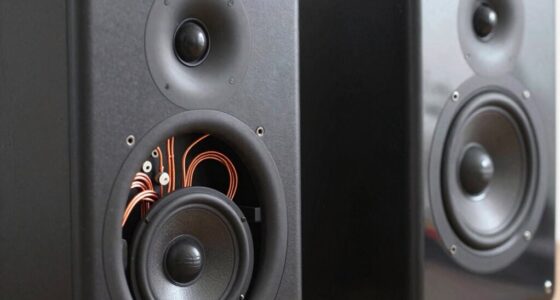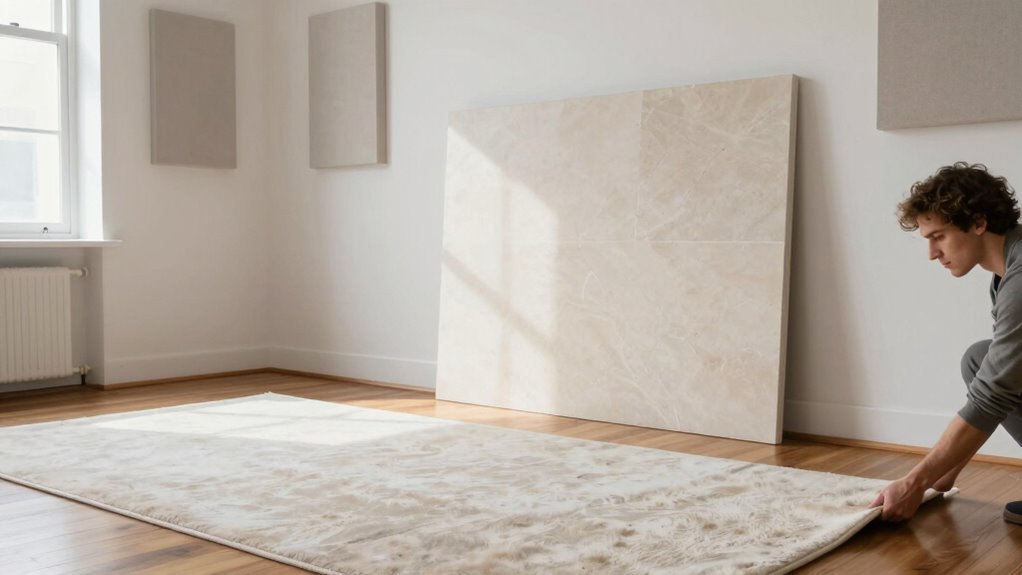

To reduce annoying resonance from hard surfaces, start by adding absorption materials like acoustic panels, foam tiles, or thick curtains to absorb sound waves. Use textured wall finishes or fabric-wrapped panels to scatter sound and break up reflections. Soft furnishings like rugs and cushions also help dampen echoes. Seal gaps with soundproofing techniques to prevent noise leaks. If you want to discover more effective ways to improve your space’s acoustics, stay tuned for additional tips.

Get backup power and energy gear delivered free — and shop member deals
- Fast, free delivery on millions of items
- Access to Prime Big Deal Days deals on October 6–7
- Prime Video, Amazon Music and more included
Key Takeaways
- Add acoustic panels, foam tiles, or thick curtains to absorb sound waves and reduce echo.
- Apply textured wall treatments or matte paints to scatter sound and disrupt reflection.
- Incorporate soft furnishings like rugs and upholstered furniture to naturally absorb noise.
- Seal gaps and use soundproofing techniques to prevent sound leakage and reduce resonance.
- Strategically position diffusers and absorbers to break up sound wave paths and minimize reflections.
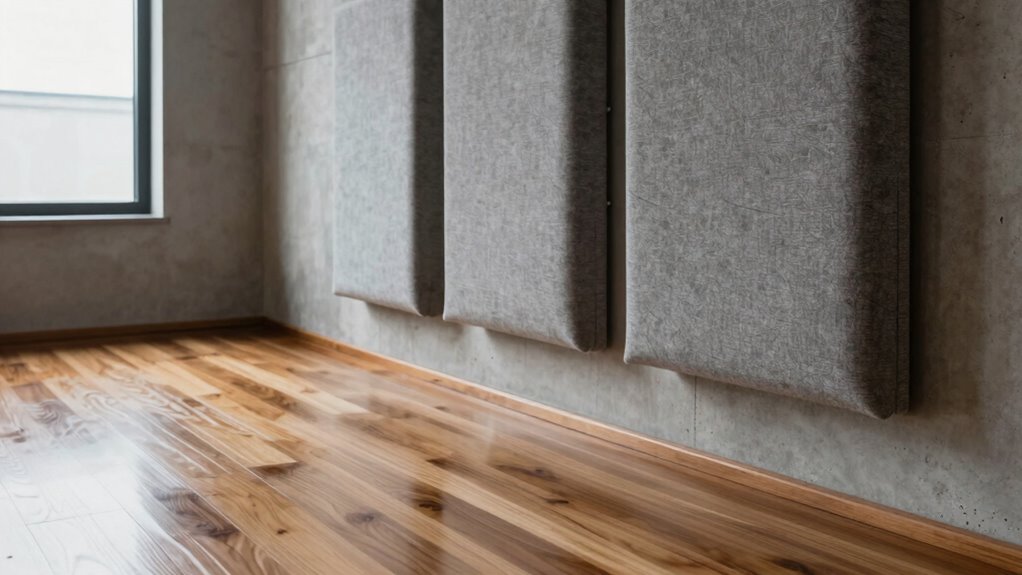
Hard surfaces like concrete, tile, or hardwood can produce unwanted resonance that amplifies noise and vibrations, making spaces less comfortable. When sound waves hit these reflective surfaces, they bounce around, creating echoes and increasing noise levels. This phenomenon can turn a quiet room into a noisy, distracting environment. To combat this, you need to focus on acoustic absorption and surface treatments that specifically target sound reflection and resonance.
Hard surfaces reflect sound, creating echoes and noise—so adding soft, textured, or absorptive materials reduces resonance and improves comfort.
Acoustic absorption involves adding materials that soak up sound waves, preventing them from bouncing back into the room. Soft, porous materials like acoustic panels, foam tiles, or even thick curtains can dramatically reduce echo by transforming reflective energy into tiny amounts of heat. You should strategically place these materials on walls, ceilings, or floors to target the main sound reflection points. For example, installing acoustic panels behind your seating areas or on the ceiling can diminish the resonance that hard surfaces produce. The goal is to absorb enough sound energy so that it doesn’t bounce around excessively, making the space more acoustically balanced.
Surface treatments are another essential aspect. Applying finishes or coatings that disrupt sound reflection can be highly effective. For example, adding textured wall treatments or matte paints can scatter sound waves, reducing their strength and preventing them from bouncing directly back. You might also consider installing fabric-wrapped panels or decorative elements that serve both aesthetic and acoustic purposes. Additionally, soft furnishings like rugs, upholstered furniture, and cushions can act as natural sound absorbers. They not only add comfort but also contribute to controlling resonance by breaking up sound wave paths. Incorporating soundproofing techniques can further enhance noise reduction by sealing gaps and preventing sound leakage. Using acoustic treatment methods to strategically place diffusers and absorbers can make a significant difference in managing resonance. Moreover, understanding sound reflection patterns in a space can help you better optimize placement for maximum impact. Being aware of room acoustics can guide your choices in material placement for optimal results. In some cases, incorporating sound-absorbing materials with different textures and densities can boost overall effectiveness. The key is to break up sound reflections and reduce the overall energy of resonance. The more surfaces you treat with absorbent materials or textured finishes, the less likely sound waves will bounce around uncontrollably. This creates a more pleasant, quieter environment where speech is clearer, and vibrations are minimized.
As an affiliate, we earn on qualifying purchases.
Frequently Asked Questions
What Materials Are Best for Soundproofing Hard Surfaces?
You should consider using acoustic panels and soft furnishings to soundproof hard surfaces effectively. Acoustic panels absorb sound waves, reducing resonance and echo, while soft furnishings like carpets, curtains, and cushions dampen noise. Combining these materials creates a layered approach that minimizes sound reflection. By adding these elements to your space, you’ll notice a significant decrease in annoying resonance, making your environment more comfortable and quieter.
How Do I Measure Resonance Frequency Accurately?
You can’t just guess resonance frequency; that’s like trying to find a needle in a haystack! Use a sound level meter or a smartphone app for resonance damping and frequency tuning. Tap or strike the surface gently with a mallet, then record the peak sound frequency. For precision, employ a frequency analyzer or oscilloscope. Accurate measurement helps you target specific frequencies, making your damping efforts way more effective.
Can Decorative Elements Help Reduce Surface Resonance?
Decorative acoustics can definitely help reduce surface resonance while enhancing your space’s aesthetic. By adding decorative elements like fabric panels, textured wall coverings, or artistic acoustic tiles, you create barriers that absorb and diffuse sound waves. These aesthetic solutions not only improve sound quality but also contribute to the room’s style. Incorporating decorative acoustics is an effective, visually appealing way to tackle resonance issues without sacrificing design.
Is Resonance More Problematic in Small or Large Rooms?
Resonance can feel like a roaring beast in small rooms, making it more problematic because of their limited space. In small rooms, surface resonance amplifies resonance frequency, creating an almost unbearable echo. Larger rooms, with their expansive dimensions, diffuse sound waves better, reducing resonance issues. So, if you’re battling resonance, the room’s size plays a vital role—smaller spaces demand more careful acoustic treatment to tame those troublesome frequencies.
How Often Should I Inspect Soundproofing Treatments?
You should inspect soundproofing treatments regularly, ideally every 6 to 12 months. Focus on checking vibration damping materials to guarantee they haven’t shifted or degraded, which can reduce effectiveness. Also, evaluate acoustic absorption surfaces for dust buildup or damage that might compromise their soundproofing ability. Regular inspections help maintain peak resonance control, preventing unwanted vibrations and echoes, especially in spaces prone to hard surface resonance issues.
As an affiliate, we earn on qualifying purchases.
Conclusion
By adding soft furnishings like rugs, curtains, and acoustic panels, you can considerably cut down on resonance from hard surfaces. These simple steps make your space more comfortable and acoustically pleasant. Did you know that soft materials can absorb up to 70% of sound waves, drastically reducing echo? So, next time your room feels too echoey, remember that a few well-placed textiles can make a big difference. Enjoy a quieter, more enjoyable environment today!
As an affiliate, we earn on qualifying purchases.
As an affiliate, we earn on qualifying purchases.
Fall Picks
fall essentials
As an affiliate, we earn on qualifying purchases.