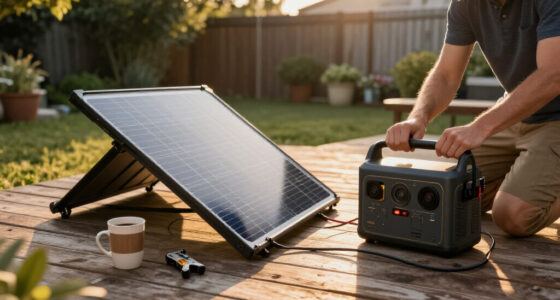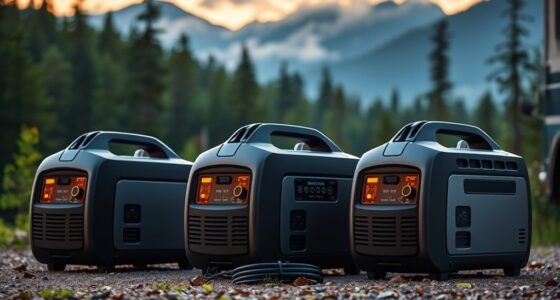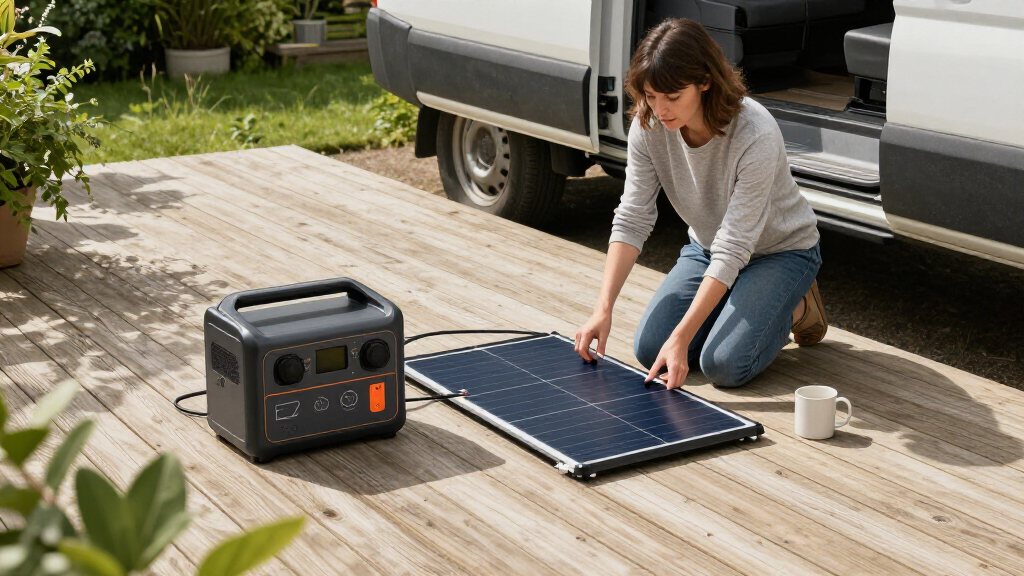
Portable power station solar panels come in wildly different shapes — from sub-$150 starter kits with 30W panels to 2kWh systems that can run a fridge through an outage. After comparing 13 of the most popular kits, the BLUETTI Elite 200 V2 with two 200W panels stands out as the most capable pairing of battery capacity and solar input, while the Jackery Solar Generator 1000 V2 offers the best balance of portability and serious power. For budget buyers and beginners, the MARBERO and EnginStar kits deliver surprising capability at a fraction of the cost. The main tradeoff in this category is capacity versus portability: bigger batteries and panels charge faster and run more gear, but they weigh more and cost far more. Keep reading for the full breakdown of which kit fits your needs.

Get backup power and energy gear delivered free — and shop member deals
- Fast, free delivery on millions of items
- Access to Prime Big Deal Days deals on October 6–7
- Prime Video, Amazon Music and more included
Complete the kit


Key Takeaways
- Panel wattage matters more than most buyers realize — a 30W panel (MARBERO, DaranEner) can take over 20 hours of full sun to recharge its station, while a 200W panel (Jackery 1000 V2, BLUETTI) recharges a larger battery in a fraction of that time.
- The BLUETTI Elite 200 V2 separates itself from every other pick by including two 200W panels, giving it the fastest full-recharge time of the lineup despite having the largest battery at 2,073.6Wh.
- Sub-$200 kits (ZeroKor 40W, DaranEner, MARBERO 111Wh) are genuine values for phone-and-laptop use, but their small inverters (200–300W) rule out power tools, kettles, or most kitchen appliances.
- Two Jackery Explorer 300 listings and two Solar Generator 1000 V2 listings appear here nearly identical — the differences come down to bundled accessories and color, so buyers should compare bundle contents before paying more.
- The BROWEY 1600W’s built-in solar panel is unique in this lineup, but integrated panels capture far less sun than a foldable panel you can angle and reposition throughout the day.
| Jackery Explorer 300 Portable Power Station, 292Wh |  | Best Long-Term Durability | Capacity: 292Wh | Battery chemistry: LiFePO4 | Ports: 2 AC, 100W USB-C PD, 2 USB-A, 120W car port | VIEW LATEST PRICE | See Our Full Breakdown |
| Anker SOLIX C1000 Portable Power Station, 1,056Wh |  | Best for Home Backup | Capacity: 1,056Wh | Battery type: LiFePO4, 3,000 cycles | Running wattage: 1,800W (2,400W surge) | VIEW LATEST PRICE | See Our Full Breakdown |
| Jackery Explorer 300 Portable Power Station with 40W Solar Panel |  | Best Starter Solar Kit | Capacity: 292Wh | Battery chemistry: LiFePO4 | Ports: 2 AC, 100W USB-C PD, 2 USB-A, 120W car port | VIEW LATEST PRICE | See Our Full Breakdown |
| MARBERO 111Wh Portable Power Station with 30W Solar Panel |  | Best Budget Ultralight Kit | Capacity: 111Wh (30,000mAh) | Battery type: Lithium-ion | AC output: 110V, 80W (120W peak) | VIEW LATEST PRICE | See Our Full Breakdown |
| EnginStar 300W Portable Power Station with 60W Foldable Solar Panel |  | Best Value Complete Kit | Capacity: 296Wh | Battery type: Lithium-ion (1,000+ cycles) | AC output: 300W, 2 × 110V pure sine wave | VIEW LATEST PRICE | See Our Full Breakdown |
| BROWEY 1600W Portable Power Station with Built-In Solar Panel |  | Best All-in-One Design | Capacity: 1024Wh | Battery type: LiFePO4, 3000+ cycles to 80% | Output: 1600W (3200W peak), pure sine wave | VIEW LATEST PRICE | See Our Full Breakdown |
| Jackery Solar Generator 1000 V2 with 200W Solar Panel |  | Best Overall | Battery capacity: 1070Wh LFP | AC output: 1500W, 3000W surge peak | Solar panel: 200W (included) | VIEW LATEST PRICE | See Our Full Breakdown |
| ZeroKor 300W Portable Power Station with 60W Solar Panel | 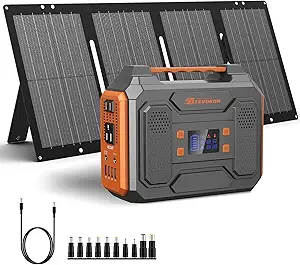 | Best Budget Starter Kit | Output: 300W maximum | Solar panel: 60W monocrystalline, 20.5% efficiency | AC outlets: 2 | VIEW LATEST PRICE | See Our Full Breakdown |
| DaranEner 300W Portable Power Station with 30W Solar Panel |  | Best Lightweight Grab-and-Go | Battery capacity: 192Wh LiFePO4 | AC output: 2 × 110V pure sine wave, 300W rated / 600W surge | USB-C outputs: 1 × 60W PD, 1 × 30W | VIEW LATEST PRICE | See Our Full Breakdown |
| BLUETTI Elite 200 V2 Solar Generator with Two 200W Solar Panels |  | Best Premium Home Backup | Battery capacity: 2073.6Wh LiFePO4 | Continuous AC output: 2600W (3900W power lifting mode) | Solar panels included: 2 × 200W | VIEW LATEST PRICE | See Our Full Breakdown |
| Jackery Solar Generator 1000 v2 with 200W Solar Panel |  | Best Overall | Battery capacity: 1,070Wh | Battery type: LiFePO4 (LFP) | AC output: 1,500W (3,000W surge peak) | VIEW LATEST PRICE | See Our Full Breakdown |
| MARBERO M823 Portable Power Station with 60W Solar Panel |  | Best Value Solar Kit | Battery capacity: 237Wh / 64,000mAh | Battery type: Lithium-ion | AC output: 300W rated, 375W peak, pure sine wave | VIEW LATEST PRICE | See Our Full Breakdown |
| ZeroKor Portable Solar Generator Kit with 300W Power Station and 40W Solar Panel |  | Best Two-Unit Emergency Kit | Main battery capacity: 280Wh | Main output: 300W (550W starting wattage) | Main AC outlets: 2 × 110V pure sine wave, 300W max | VIEW LATEST PRICE | See Our Full Breakdown |
| portable power station solar panel | Ports |
|---|---|
| Jackery Explorer 300 Portable | 2 AC, 100W USB-C PD, 2 USB-A, 120W car port |
| Anker SOLIX C1000 Portable Pow | — |
| Jackery Explorer 300 Portable | 2 AC, 100W USB-C PD, 2 USB-A, 120W car port |
| MARBERO 111Wh Portable Power S | 4 USB-A, 1 USB-C, 2 AC, 1 DC |
| EnginStar 300W Portable Power | 8 total, including 2 AC and 2 regulated 12V/24V DC |
| BROWEY 1600W Portable Power St | 8 total, including 100W USB-C PD |
| Jackery Solar Generator 1000 V | 3 AC, 2 USB-C (100W), 1 USB-A, 1 DC car port |
| ZeroKor 300W Portable Power St | — |
| DaranEner 300W Portable Power | — |
| BLUETTI Elite 200 V2 Solar Gen | — |
| Jackery Solar Generator 1000 v | 3 AC pure sine, 2 USB-C, 1 USB-A, 1 DC car port |
| MARBERO M823 Portable Power St | — |
| ZeroKor Portable Solar Generat | — |
More Details on Our Top Picks
Jackery Explorer 300 Portable Power Station, 292Wh
Buyers comparing small power stations usually focus on watt-hours, but the battery chemistry is what separates a purchase that lasts a decade from one that fades in three years. This option stands out for its LiFePO4 cells rated for over 4,000 cycles — roughly triple the cycle life of the lithium-ion packs in the EnginStar 300W and MARBERO kits, which means more years of daily or seasonal use before capacity noticeably drops. At 7.1 pounds with six simultaneous charging ports and a 100W USB-C PD input, it handles phones, laptops, drones, and small lights with headroom to spare. Compared with the bundled Jackery Explorer 300 with 40W panel, this version is a pound lighter but leaves you sourcing a panel on your own. The real tradeoff: 292Wh and 300W output won’t run a kettle, a kettle-style heater, or any appliance drawing serious watts, so treat this as a device charger, not a home backup.
Pros:- LiFePO4 chemistry rated for over 4,000 charge cycles
- Lightest station in its capacity class at 7.1 lbs
- Six ports including 100W USB-C PD for fast laptop charging
- Reaches 80% in about 2.8 hours with a 100W solar panel
Cons:- Solar panel is not included, so the total system cost rises once you add one
- 300W output ceiling rules out most kitchen appliances and power tools
Best for: Campers, photographers, and remote workers who want a light station they can pair with an aftermarket panel and keep for many years
Not ideal for: Anyone planning to run appliances over 300W or expecting home backup power during outages
- Capacity:292Wh
- Battery chemistry:LiFePO4
- Ports:2 AC, 100W USB-C PD, 2 USB-A, 120W car port
- Solar charge time:80% in approx. 2.8 hours with 100W panel
- Weight:7.1 lbs
- Charge cycles:Over 4,000 cycles to 70% capacity
- Solar panel included:No
Our verdict“This pick makes the most sense for buyers who already own or plan to buy a panel separately and want the longest-lived small station available.”
Anker SOLIX C1000 Portable Power Station, 1,056Wh
When the roundup’s other options max out at 300Wh, this model plays in a different league: 1,056Wh of capacity and 1,800W of continuous output means refrigerators, microwaves, and power tools stay running, not just phones and laptops. Its standout trait is recharge speed — 80% from a wall outlet in 43 minutes, which matters most during repeated outages when you need to top up between grid drops. The LiFePO4 pack is rated for 3,000 cycles, sitting between the Jackery Explorer 300’s 4,000-plus and the shorter-lived lithium-ion kits, but the capacity per cycle is far greater. Solar input up to 600W lets you rebuild the battery quickly off-grid, unlike the EnginStar kit’s 60W panel, which would take days to refill a station this size. Two genuine drawbacks: the fastest AC charging mode requires pairing through the Anker app on a smartphone, and a 600W solar setup needs panels and cabling beyond what casual buyers already own.
Pros:- 1,800W continuous output with 2,400W surge runs major appliances
- 80% AC recharge in 43 minutes for fast turnaround between outages
- Accepts up to 600W of solar input for rapid off-grid recharging
- 11 outlets let you run a whole workbench or kitchen counter of devices
Cons:- UltraFast AC charging requires the Anker app and a paired smartphone
- No solar panel included, and a 600W array is a substantial added purchase
Best for: Households and RV owners who need serious capacity for outages or off-grid trips and can invest in panels separately
Not ideal for: Day hikers and minimalists — the capacity and output are overkill for charging phones and cameras
- Capacity:1,056Wh
- Battery type:LiFePO4, 3,000 cycles
- Running wattage:1,800W (2,400W surge)
- Total outlets:11
- Solar input:Up to 600W
- AC recharge:80% in 43 minutes
- Operating temperature:68–122°F
- Solar panel included:No
Our verdict“Choose this if backup power for appliances — not just gadgets — is the goal, and skip it if your needs end at laptop charging.”
Jackery Explorer 300 Portable Power Station with 40W Solar Panel
Most people buying their first solar setup want everything in one box, and this is the entry point that delivers that without compromise on battery quality. You get the same 292Wh LiFePO4 station as the standalone Explorer 300 — the 4,000-cycle chemistry that outclasses the lithium-ion packs in the MARBERO and EnginStar bundles — plus a matched 40W panel so nothing needs researching or adapting. That convenience is the whole pitch: unbox, unfold, and charge. The catch is patience. The included panel needs roughly 7.5 hours of good sun to bring the station to 80%, versus about 2.8 hours if you bought the bare station and paired it with a 100W panel. For weekend campers who recharge overnight at home and top up slowly by day, that pace is fine. For anyone relying on solar as their primary recharge method, the small panel becomes a bottleneck you’ll outgrow.
Pros:- Complete matched kit with no compatibility guesswork
- Same 4,000-cycle LiFePO4 battery as the standalone Explorer 300
- Light 7.5 lb station with handle and six charging ports
- Panel folds flat for packing in a car or camper
Cons:- Included 40W panel needs about 7.5 hours of sun to reach 80%
- Station and panel may arrive in separate shipments
Best for: First-time solar buyers who want a matched station-and-panel kit from one brand with minimal setup decisions
Not ideal for: Off-grid users who depend on solar as their main recharge source — the 40W panel is too slow for that
- Capacity:292Wh
- Battery chemistry:LiFePO4
- Ports:2 AC, 100W USB-C PD, 2 USB-A, 120W car port
- Included solar panel:40W
- Solar charge time:Approx. 7.5 hours to 80%
- Weight:7.5 lbs
Our verdict“This is the easiest on-ramp to solar charging for casual campers; serious off-grid users should budget for a bigger panel.”
MARBERO 111Wh Portable Power Station with 30W Solar Panel
Nothing else in this lineup weighs less or costs less to get started with solar. The station itself is 2.3 pounds — under a third of the Jackery Explorer 300 kit’s weight — and the folding 30W panel adds only 1.8 more, so the whole system fits in a daypack for tent trips, kayaking, or keeping in a car emergency bag. The 21.5–23.5% conversion efficiency of the panel is respectable, and the station’s protection circuits cover overcharge, overload, and shorts. What you give up is scale and longevity: 111Wh and 80W of AC output means phones, headlamps, and a small fan are the ceiling — no laptops under heavy load, no coolers, no CPAP machines. And unlike the Jackery options with their 4,000-cycle LiFePO4 cells, this uses a standard lithium-ion pack, so expect a shorter service life if you cycle it frequently. This model is better suited to occasional ultralight use than to anything resembling daily reliance.
Pros:- Complete solar kit under 5 lbs total weight
- Folding panel with solid 21.5–23.5% conversion efficiency
- Eight ports across USB, AC, and DC outputs for a station this size
- Built-in overcharge, overload, and short-circuit protection
Cons:- 80W AC output limits it to very small devices
- Lithium-ion chemistry offers a shorter cycle life than LiFePO4 rivals
Best for: Ultralight backpackers, kayak campers, and car-emergency-kit builders who only need phone and small-device charging
Not ideal for: Anyone who needs laptop power, medical devices, or a station they’ll cycle heavily for years
- Capacity:111Wh (30,000mAh)
- Battery type:Lithium-ion
- AC output:110V, 80W (120W peak)
- Included solar panel:30W foldable
- Ports:4 USB-A, 1 USB-C, 2 AC, 1 DC
- Station weight:2.3 lbs
- Panel weight:1.8 lbs
- Panel efficiency:21.5–23.5%
Our verdict“The right choice when weight and simplicity matter more than capacity — the wrong one for anything beyond small-device charging.”
EnginStar 300W Portable Power Station with 60W Foldable Solar Panel
This bundle hits the sweet spot between the MARBERO kit’s tiny capacity and the Anker SOLIX C1000’s appliance-scale power: a 296Wh station running 300W of pure sine wave AC output, paired with a 60W monocrystalline panel at roughly 23% efficiency. Pure sine wave matters more than most spec sheets suggest — it’s the clean electricity that laptops, camera batteries, and other sensitive electronics prefer over the modified sine wave cheaper stations sometimes deliver. Eight output ports across AC, DC, and USB cover a typical campsite’s needs, and three recharge methods (solar, wall, car socket) mean you’re never stranded with one option. The honest tradeoffs: the 65W max charging speed makes the three-hour wall recharge reasonable but the solar pace unhurried for a battery this size, the lithium-ion pack is rated for just over 1,000 cycles compared with the Jackery Explorer 300’s 4,000, and 300W still can’t run high-draw appliances.
Pros:- Complete kit with a 60W panel — the largest panel among the budget bundles here
- Pure sine wave AC output is safer for laptops and camera gear
- Eight ports across AC, DC, and USB cover a whole campsite
- Solar, wall, and 12V car recharging options
Cons:- Lithium-ion pack rated for only about 1,000 cycles
- 65W max charging speed makes solar recharges slow for a 296Wh battery
Best for: Budget-conscious campers and van-lifers who want a full station-plus-panel kit with clean power for electronics
Not ideal for: Buyers prioritizing long-term battery life or anyone needing to run appliances beyond 300W
- Capacity:296Wh
- Battery type:Lithium-ion (1,000+ cycles)
- AC output:300W, 2 × 110V pure sine wave
- Included solar panel:60W monocrystalline, 23% efficiency
- Max charging speed:65W
- Recharge time:About 3 hours (wall)
- Ports:8 total, including 2 AC and 2 regulated 12V/24V DC
- Weight:6.5 lbs
Our verdict“The strongest all-in-one value if you want a capable panel included and clean power for electronics, and can accept a shorter battery lifespan.”
BROWEY 1600W Portable Power Station with Built-In Solar Panel
Most solar generator kits make you carry and connect two separate pieces of gear, but the BROWEY 1600W folds a 40W solar panel directly into the power station itself. That integration is the whole story here: you never misplace a cable, never leave a panel at home, and always have a trickle-charge option in an outage. The 1024Wh LiFePO4 battery and 1600W pure sine wave inverter put it in the same capability class as the Jackery Solar Generator 1000 V2, and the eight-port selection with 100W USB-C PD is generous. Compared with the ZeroKor 300W below it, this is a genuinely useful home-backup unit, not just a phone charger. The tradeoff is that the built-in 40W panel is a convenience feature, not a serious charging strategy — a full solar recharge would take many days, so anyone counting on off-grid solar should look at the Jackery’s 200W panel instead.
Pros:- Solar panel and MPPT controller are built into the unit — nothing to carry or connect separately
- LiFePO4 battery rated for 3000+ cycles and 10+ years of service
- 1600W pure sine wave output with 3200W peak handles power tools and kitchen appliances
- Eight ports including 100W USB-C PD charge a full table of devices at once
Cons:- Built-in solar charging is limited to 40W, so solar recharges are extremely slow
- The advertised 3-hour recharge requires running AC and 100W USB-C charging simultaneously
Best for: Campers and emergency preppers who want one self-contained unit with zero loose parts and a real 1000Wh-class battery
Not ideal for: Off-grid users who plan to recharge primarily from sunlight — the built-in 40W panel is far too slow to be the main charging method
- Capacity:1024Wh
- Battery type:LiFePO4, 3000+ cycles to 80%
- Output:1600W (3200W peak), pure sine wave
- Solar charging:Built-in 40W panel with MPPT controller
- Ports:8 total, including 100W USB-C PD
- AC recharge time:80% in 3 hours (AC + 100W USB-C combined)
- Safety:BMS protection for overvoltage, overheating, short circuits
Our verdict“This pick makes the most sense for buyers who value having everything in one box over fast solar recharging.”
Jackery Solar Generator 1000 V2 with 200W Solar Panel
The Jackery Solar Generator 1000 V2 is the most balanced package in this batch because it pairs a capable 1070Wh LFP battery and 1500W inverter with a genuine 200W solar panel — the only kit here that can realistically recharge itself in a day of good sun. Compared with the BROWEY, you give up the all-in-one convenience but gain roughly five times the solar input, which matters far more for camping trips longer than a weekend. The app’s emergency, quiet, and efficiency charging modes are a practical touch, letting you prioritize speed or silence depending on where you are. Compared with the BLUETTI Elite 200 V2, it’s lighter and cheaper to buy into, at the cost of roughly half the capacity. The main annoyances: the panel ships separately, and the headline one-hour recharge only happens if you enable emergency mode in the app first.
Pros:- 200W included solar panel makes true off-grid recharging practical
- 1500W output with 3000W surge peak runs most kitchen and camping appliances
- LFP battery rated to retain over 70% capacity after 4000 cycles
- App-controlled charging modes add real flexibility for quiet campsites and emergencies
Cons:- Solar panel and power station ship as separate packages
- The one-hour fast-charge claim requires enabling emergency charging mode in the app
Best for: Weekend campers and van-lifers who want a complete solar solution with enough capacity to run a fridge, lights, and laptops between sunny days
Not ideal for: Household backup for extended outages — 1070Wh runs a fridge for hours, not days, and the BLUETTI covers that job better
- Battery capacity:1070Wh LFP
- AC output:1500W, 3000W surge peak
- Solar panel:200W (included)
- Ports:3 AC, 2 USB-C (100W), 1 USB-A, 1 DC car port
- Battery lifespan:70%+ capacity after 4000 cycles
- Weight:23.8 lbs
- Warranty:5 years
Our verdict“The strongest all-around kit for buyers who want one purchase that genuinely works off the grid.”
ZeroKor 300W Portable Power Station with 60W Solar Panel
For a first dip into solar power without a big spend, the ZeroKor 300W kit covers the basics: a compact station with AC, DC, and USB outputs, plus a 60W monocrystalline panel at 20.5% conversion efficiency that can also charge devices directly through its own USB-A, USB-C, and DC ports. That dual-use panel is a smart touch — you can top up phones from the panel alone while the station handles bigger loads. Compared with the DaranEner 300W later in this list, ZeroKor includes double the panel wattage, which means faster sun-driven recharges, though DaranEner fights back with a longer-rated battery chemistry. The 300W ceiling is the defining limit: laptops, lights, fans, and cameras are fine; a microwave or hair dryer is not. One real durability concern is that the panel’s junction box is not waterproof, so it needs careful placement in wet weather.
Pros:- 60W monocrystalline panel included, with its own USB-A, USB-C, and DC outputs for direct device charging
- Built-in MPPT controller improves solar charging efficiency
- Recharges from AC outlet, 12V car outlet, or solar
- Flashlight with reading and SOS modes adds emergency utility
Cons:- 300W maximum output excludes most high-powered appliances
- Solar panel junction box is not waterproof, limiting wet-weather use
Best for: First-time buyers and casual campers who want a complete low-cost solar kit for phones, laptops, lights, and small fans
Not ideal for: Anyone running heating appliances, power tools, or a mini fridge — the 300W output ceiling rules them out entirely
- Output:300W maximum
- Solar panel:60W monocrystalline, 20.5% efficiency
- AC outlets:2
- USB ports:3 × 5V/3A plus 1 quick-charge port
- DC output:9V–12.6V / 10A maximum
- Recharge options:AC, 12V car outlet, or 13V–23V solar with MPPT
- Protection:Short circuit, over-current, over-voltage, overload, overheating
Our verdict“A sensible, low-commitment entry point for small-device solar charging, as long as your expectations stay under 300 watts.”
DaranEner 300W Portable Power Station with 30W Solar Panel
At 5.84 lbs and roughly the size of a lunchbox, the DaranEner is the kit you actually throw in a backpack. Where the ZeroKor 300W setup prioritizes solar throughput, DaranEner bets on portability and battery longevity: its LiFePO4 cells are rated for 3,500+ cycles, comfortably outlasting the standard lithium chemistry in cheaper mini-stations. The port spread is surprisingly complete for the size — two pure sine wave outlets, dual USB-C (60W and 30W), USB-A, a car socket, and two DC5521 barrels — so up to eight devices can share it, a claim few sub-200Wh units can make. The honest tradeoff is speed: the included 30W panel is a maintenance trickle rather than a real recharging method, and the station itself accepts only 90W from the wall, so full recharges take hours. Treat this as a car-camping and emergency-drawer unit, not an off-grid workhorse like the Jackery 1000 V2.
Pros:- Featherweight 5.84 lb build that genuinely fits in a backpack
- LiFePO4 battery rated for 3,500+ cycles to 80% capacity
- Eight simultaneous outputs including dual USB-C PD and pure sine wave AC
- Built-in MPPT controller plus LED flashlight with Low, High, Strobe, and SOS modes
Cons:- Recharge input caps at 90W AC and 60W car, making full recharges slow
- 30W included panel provides only trickle-level solar charging
Best for: Backpackers, car campers, and roadside-emergency planners who need sub-6-pound power for phones, cameras, drones, and a laptop
Not ideal for: Anyone needing fast turnarounds between uses — 90W AC input and a 30W panel mean slow recharges, and 192Wh won’t run appliances
- Battery capacity:192Wh LiFePO4
- AC output:2 × 110V pure sine wave, 300W rated / 600W surge
- USB-C outputs:1 × 60W PD, 1 × 30W
- Other outputs:USB-A 18W, 12V car socket, 2 × DC5521 (60W)
- Solar panel:30W, included
- Battery cycle life:3,500+ cycles to 80% capacity
- Weight:5.84 lbs (8.4 × 5.3 × 7.4 in)
Our verdict“The right choice when weight matters more than capacity — just plan to recharge from the wall most of the time.”
BLUETTI Elite 200 V2 Solar Generator with Two 200W Solar Panels
The BLUETTI Elite 200 V2 plays in a different league from everything else in this batch. With 2073.6Wh of capacity, 2600W continuous output, and a 3900W power-lifting mode, it can run a refrigerator, microwave, and window AC unit simultaneously — jobs the Jackery 1000 V2 and BROWEY simply can’t touch. The 0–80% AC recharge in 50 minutes is the standout spec: after an outage you’re back to mostly full before dinner, where smaller kits take half a day. The 6000+ cycle LiFePO4 battery also outlasts every competitor here on longevity. Two included 200W panels give you 400W of honest solar input out of the box, though the advertised 2.4-hour solar recharge assumes 1000W of panels you’d have to buy separately. This option stands out for whole-home-circuit backup and extended off-grid living; skip it if you only need weekend camping power, because you’ll be carrying 40+ pounds of overkill.
Pros:- 2073.6Wh capacity with 2600W output (3900W power lifting) runs major appliances
- 0–80% recharge in just 50 minutes from AC/DC
- LiFePO4 battery rated for over 6000 cycles — the longest lifespan in this lineup
- Two 200W solar panels included for 400W of real solar input
Cons:- Solar panels ship separately from the power station
- The 2.4-hour solar recharge figure assumes 1000W of panels, not the two included
Best for: Homeowners preparing for multi-day outages and full-time off-grid setups who need appliance-grade power and fast recharges
Not ideal for: Weekend campers and casual users — the size, weight, and cost are far beyond what phones and lights require
- Battery capacity:2073.6Wh LiFePO4
- Continuous AC output:2600W (3900W power lifting mode)
- Solar panels included:2 × 200W
- Battery cycle life:Over 6000 cycles
- AC/DC charge time:0–80% in 50 minutes
- Solar charge time:2.4 hours with 1000W of panels
- Maximum supported devices:9
Our verdict“The pick when a power failure means spoiled food and no heat — capacity and recharge speed nothing else here matches.”
Jackery Solar Generator 1000 v2 with 200W Solar Panel
This pairing of a 1,070Wh LiFePO4 power station with a 200W panel is the most complete solar kit in this roundup. Compared with the MARBERO M823 or ZeroKor kits further down this list, the capacity gap is enormous — five times the storage — which is what allows it to run a fridge, lights, and laptops through a real outage rather than just topping off phones. The 1,500W AC output covers appliances the 300W-class kits simply cannot touch, and the LiFePO4 chemistry promises over 4,000 cycles, far beyond the lithium-ion packs in cheaper bundles. The tradeoffs are weight and complexity: at 23.8 lbs it’s a car-trunk unit, not a backpack one, and the advertised one-hour charge only happens after you enable emergency charging in the app. The panel and station also arrive in separate shipments, so don’t panic when one box shows up alone.
Pros:- 1,070Wh capacity and 1,500W output can run multiple appliances at once
- LiFePO4 battery rated for 4,000+ charge cycles, outlasting lithium-ion rivals
- Included 200W solar panel recharges the station to 80% in about 6 hours
- App control includes a quiet overnight charging mode
Cons:- The headline one-hour charging requires enabling emergency mode in the app
- Heavy compared with sub-300W kits, and the station and panel ship separately
Best for: Campers, van lifers, and homeowners who need backup power for appliances, not just phones and cameras
Not ideal for: Day hikers and ultralight campers — the 23.8 lb station plus a 200W panel is far too heavy to carry any real distance
- Battery capacity:1,070Wh
- Battery type:LiFePO4 (LFP)
- AC output:1,500W (3,000W surge peak)
- Solar panel:200W
- Fast charging:0–100% in 1 hour (app-enabled); 1.7 hours standard
- Ports:3 AC pure sine, 2 USB-C, 1 USB-A, 1 DC car port
- Weight:23.8 lbs
- Battery lifespan:70%+ capacity after 4,000 cycles
Our verdict“If you want one kit that handles both weekend camping and home backup without compromise, this is the one to buy.”
MARBERO M823 Portable Power Station with 60W Solar Panel
For buyers who want a genuine solar charging loop without the four-figure commitment of the Jackery 1000 v2, this kit hits a practical middle ground. Its 237Wh capacity is modest next to Jackery’s 1,070Wh, but it still quadruples the runtime of the smaller MARBERO 111Wh bundle elsewhere in this roundup, and the included 60W foldable panel is meaningfully faster at refilling the battery than the 30–40W panels bundled with entry-level kits. The pure sine wave AC output keeps sensitive electronics like laptops and camera chargers safe, which not every budget kit can claim. The honest limitation is the 300W ceiling — that rules out kettles, hair dryers, and most kitchen appliances — and the lithium-ion chemistry won’t match LiFePO4 lifespan. For campsite electronics and emergency phone-and-light duty, though, those limits rarely matter.
Pros:- 60W foldable panel charges faster than the 30–40W panels in cheaper bundles
- Pure sine wave AC output is safe for laptops and sensitive electronics
- Wide port selection: 2 AC, 4 USB-A, 1 USB-C PD, and DC output
- Built-in flashlight with strobe and SOS modes adds emergency utility
Cons:- 300W output limit excludes most household appliances
- Solar charging stalls without direct sunlight, so cloudy days mean slow top-ups
Best for: Budget-minded campers and road trippers who mainly need to keep phones, tablets, cameras, and a small fan running
Not ideal for: Anyone planning to run appliances over 300W or wanting a whole-outage home backup — the capacity and output ceiling are too low
- Battery capacity:237Wh / 64,000mAh
- Battery type:Lithium-ion
- AC output:300W rated, 375W peak, pure sine wave
- Included solar panel:60W foldable, 21.5–23.5% conversion efficiency
- USB ports:2 USB-A QC3.0 (18W), 2 USB-A (15W), 1 USB-C PD (18W)
- DC output:12–16.8V, 10A (14A max)
- Flashlight modes:Flashlight, strobe, SOS
Our verdict“This is the smart spend for casual campers who want real solar input and clean AC power without paying for capacity they won’t use.”
ZeroKor Portable Solar Generator Kit with 300W Power Station and 40W Solar Panel
What sets this kit apart is its unusual two-unit design: a 280Wh main station paired with a separate 100W power pack, so you can leave the bigger unit at base camp and carry the small one on a hike. Neither unit matches the MARBERO M823’s 60W solar input — the bundled panel is only 40W — so recharging from the sun is the slowest of these three kits. The 300W pure sine wave ceiling puts appliances firmly out of reach, and the manufacturer explicitly warns against air compressors and heat-producing devices, which is a more restrictive real-world limit than the spec sheet suggests. Still, the redundancy is genuinely useful for emergency prep: two independent flashlights, two sets of ports, and layered short-circuit, over-current, and over-voltage protections make this a sensible budget hedge against blackouts rather than a power-user tool.
Pros:- Two independent power units let you split capacity between camp and trail
- Flashlights with reading and SOS modes on both units add redundancy
- Full suite of short-circuit, over-current, over-voltage, and overload protections
- Pure sine wave AC on the main station is safe for electronics
Cons:- 40W panel is the slowest solar recharging option among these kits
- Cannot run heat-prone appliances or air compressors, a stricter limit than the wattage alone implies
Best for: Households building an emergency kit who like the idea of a base station plus a grab-and-go backup unit
Not ideal for: Anyone expecting to run heating appliances, air compressors, or anything near 300W sustained — the kit’s protections will shut it down
- Main battery capacity:280Wh
- Main output:300W (550W starting wattage)
- Main AC outlets:2 × 110V pure sine wave, 300W max
- Solar panel output:40W foldable
- Additional power pack:100W, 2 × 110V outlets
- Main USB ports:3 × 5V/3A, 1 × QC3.0
- Safety protections:Short circuit, over-current, over-voltage, overload
Our verdict“Choose this kit if redundancy for emergencies matters more to you than raw capacity or fast solar recharging.”
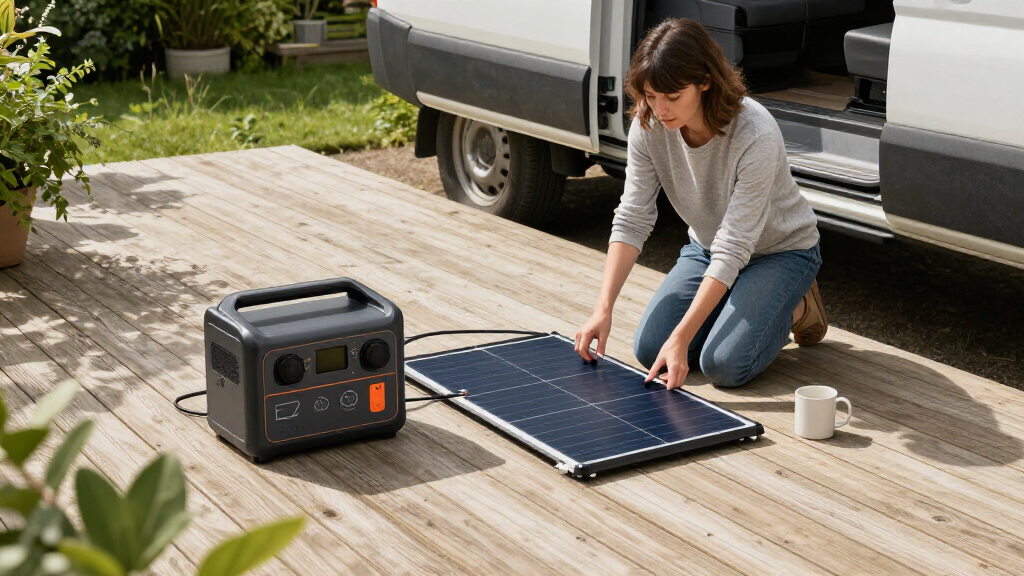
How We Picked
My ranking logic starts with a simple question: does the solar panel actually match the battery it’s charging? A 292Wh station paired with a 40W panel and a 2,073Wh station paired with 400W of panels are both balanced systems — a big battery with a tiny panel is not. I evaluated each kit on watt-hour capacity, inverter output, panel wattage, and recharge time, then weighed portability, outlet variety, and build quality of the panels themselves (foldability, kickstands, weather resistance).
From there, I sorted the lineup by buyer. Whole-home backup candidates like the BLUETTI and Jackery 1000 V2 kits sit at the top because their capacity-to-solar-input ratio supports multi-day use. Mid-size kits like the Anker SOLIX C1000 and EnginStar 300W fill the camping and emergency middle ground. Small kits from MARBERO, ZeroKor, and DaranEner rank lower for capability but earn their spots as genuine entry-level values for charging phones, cameras, and CPAP machines. No kit got a pass on its weaknesses — every pick has real tradeoffs I call out.
Factors to Consider When Choosing Portable Power Station Solar Panels
Choosing between portable power station solar panels is mostly a math problem wrapped in a portability question. Before you pick a kit, understand these six factors — they explain most of the price differences across this lineup and most of the mistakes buyers make.Match Panel Wattage to Battery Size
The single most common mistake is buying a big battery with a small panel. A rough rule: divide battery watt-hours by panel watts to estimate minimum recharge time in ideal sun. A 111Wh MARBERO with a 30W panel recharges in roughly four to five sun-hours — workable. A 1,000Wh station with a 40W panel would take days, which is why the Jackery 1000 V2 kit’s 200W panel matters so much. Real-world conditions usually deliver 50–75% of a panel’s rated output, so always budget extra time. If you plan to recharge mid-trip rather than just top up at home, prioritize panel wattage over battery size. That’s why the BLUETTI’s two-panel setup earns its premium.
Capacity: Buy for Your Real Load, Not Your Fantasies
Run a quick audit before buying: a phone takes 10–15Wh, a laptop 50–75Wh, a portable fridge 40–60Wh per day, and an electric kettle can pull 1,000Wh in a single boil. That math shows why 100–300Wh stations suit weekend campers, while 1,000Wh+ systems only pay off for outage backup or off-grid living. Oversizing wastes money and adds weight you’ll feel every time you load the car. Undersizing means the kit lives on your shelf because it can’t run what you actually need. The 1,056Wh Anker SOLIX C1000 hits a sweet spot for buyers who want fridge-and-router runtime without a 2kWh price tag. Be honest about whether you need to run things or just charge them.
Inverter Wattage and Surge Ratings
Battery capacity tells you how long you can run devices; inverter wattage tells you which devices you can run at all. A 300W inverter handles phones, laptops, lights, and fans but trips instantly on a blender or hair dryer. Devices with motors and compressors also draw a surge at startup — often 2–3x their running wattage — so check the surge rating too. The 1,500W inverter on the Jackery 1000 V2 covers most kitchen appliances; the BROWEY’s 1,600W rating is similar, but its small built-in panel recharges that capability slowly. Pure sine wave inverters (standard on the bigger kits here) are safer for sensitive electronics than modified sine wave, which still appears on some budget units.
Panel Type: Foldable, Fixed, or Built-In
Built-in panels, like the BROWEY’s, are convenient because nothing gets lost or left behind, but they force you to move the entire station to chase the sun. Foldable panels with kickstands — the Jackery, BLUETTI, and EnginStar approach — let you position the panel independently and angle it toward the sun, which can double daily harvest compared to a flat-mounted panel. Check cell type too: monocrystalline cells, which most of these kits use, outperform polycrystalline in partial shade and heat. Also verify the connector — many budget kits use barrel connectors that only work with their own station, while MC4-compatible inputs let you mix brands later.
Weight, Portability, and Expandability
A 2kWh station weighs 50+ pounds; a 111Wh unit weighs under three. If you’re carrying gear to a campsite or boat, that difference decides which kit comes home with you. Some kits split the difference with folded-panel bundles and carry handles that pack into a car trunk efficiently. Also look at expandability: several mid-size and large stations accept additional panels or extra batteries, which protects your investment as needs grow. If you think you’ll eventually want more capacity, buying into an ecosystem (Jackery, BLUETTI, Anker) costs more upfront but avoids stranding your first purchase. Budget kits rarely expand — what you buy is what you have.
Battery Chemistry and Lifespan
Nearly every kit in this lineup now uses LiFePO4 (LFP) chemistry in its larger models, rated for 3,000+ charge cycles — roughly a decade of typical use. Smaller budget stations sometimes still use lithium-ion NMC cells rated for 500–800 cycles, which is fine for occasional camping but degrades faster with regular use. LFP also tolerates heat better and is less prone to thermal issues. Check the cycle rating in the spec sheet before buying — it’s a better predictor of long-term value than watt-hours alone. And whatever the chemistry, store the station at 50–80% charge rather than empty or full to extend its life.
Frequently Asked Questions
Is a bundle (station plus panel) cheaper than buying them separately?
Usually yes, but not always by much — and bundle savings vary most in the mid-range. The Jackery and BLUETTI bundles here typically price the panel at a discount versus buying it à la carte, while some budget kits simply pair a small panel you’d likely want to upgrade anyway. Before buying a bundle, price the station alone and ask whether the included panel’s wattage actually matches the battery — a discounted 30W panel attached to a 1,000Wh station isn’t a deal, it’s a bottleneck. The exception is when you plan to buy a bigger third-party panel later; then a station-only purchase plus a high-wattage panel often beats the bundle.
What size solar panel do I need to recharge my power station in one day?
Divide your station’s watt-hours by the panel’s rated watts, then add 30–50% to account for clouds, panel angle, and heat losses. A 1,000Wh station needs roughly 250–300W of real-world panel output to recharge in one sunny day — which is why the Jackery 1000 V2’s 200W panel is close but may stretch into a second morning in imperfect conditions. The BLUETTI’s 400W total gets there comfortably. If one-day recharging is your goal, prioritize kits where panel watts equal at least a quarter of battery watt-hours. If you only recharge at home from the wall and use solar as backup, you can relax that ratio.
Can I connect a different brand’s solar panel to my power station?
Often yes, as long as two things match: the connector type and the station’s input voltage window. Most modern stations accept MC4 input with an open-circuit voltage range printed in the manual — exceed it and you can damage the charge controller. Budget kits like the MARBERO and ZeroKor sometimes use proprietary barrel connectors, which limits you to their own panels or adapters. Before mixing brands, check the panel’s Voc (open-circuit voltage) against the station’s maximum input, and confirm the wattage doesn’t exceed what the station’s MPPT controller can handle. Done right, mixing lets you add a bigger panel later — one reason to favor MC4-equipped stations like the Anker and BLUETTI.
Are cheap 100–300Wh solar kits actually worth buying?
For the right buyer, absolutely — the MARBERO 111Wh and ZeroKor kits are legitimate tools for keeping phones, headlamps, cameras, and a CPAP running through a night or two. Where they disappoint is expectations: their small inverters can’t run kettles, microwaves, or power tools, and their 30–60W panels recharge slowly even in good sun. If your use case is charging devices during camping trips or having emergency lighting and phone power during an outage, a sub-$200 kit does that job honestly. If you imagine running a refrigerator, you need 1,000Wh and 1500W+ of inverter — spend accordingly instead of buying twice.
Do solar panels work on cloudy days or through windows?
Cloudy days typically cut output to 10–25% of rated watts — a 200W panel becomes a 20–50W panel, which stretches recharge times considerably but doesn’t stop them. Through a window, output drops even further because glass blocks much of the light spectrum panels use, especially tinted or low-E glass. If indoor charging is your plan, treat solar as a trickle and rely on wall outlets. Positioning matters more than people expect: tilting a panel toward the sun’s path and repositioning it every few hours can meaningfully outperform a panel left flat all day. This is also why foldable panels beat built-in ones for daily harvest.
Conclusion
After comparing all 13 kits, the right choice comes down to what you’re powering and how you’ll recharge it. For best overall, the BLUETTI Elite 200 V2 with two 200W panels wins on raw capability — 2,073.6Wh of storage and 400W of solar input make it the only kit here suited to genuine multi-day backup. For best value, the EnginStar 300W with its 60W foldable panel delivers a balanced charge ratio and real portability without the premium-brand price. For best premium performance in a portable size, the Jackery Solar Generator 1000 V2 pairs a 1,070Wh battery with a fast 200W panel and a polished ecosystem.
For beginners, the MARBERO 111Wh kit is the easiest on-ramp — small, simple, and cheap enough to learn on before committing to a bigger system. For campers and road-trippers, the Anker SOLIX C1000 offers serious capacity in a compact frame. And for minimalists who want zero setup, the BROWEY’s built-in panel is a unique if imperfect solution. Whatever you pick, match the panel to the battery and the battery to your actual devices — that single habit separates a kit you use weekly from one that gathers dust.
Fall Picks
fall essentials
As an affiliate, we earn on qualifying purchases.