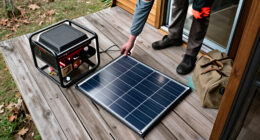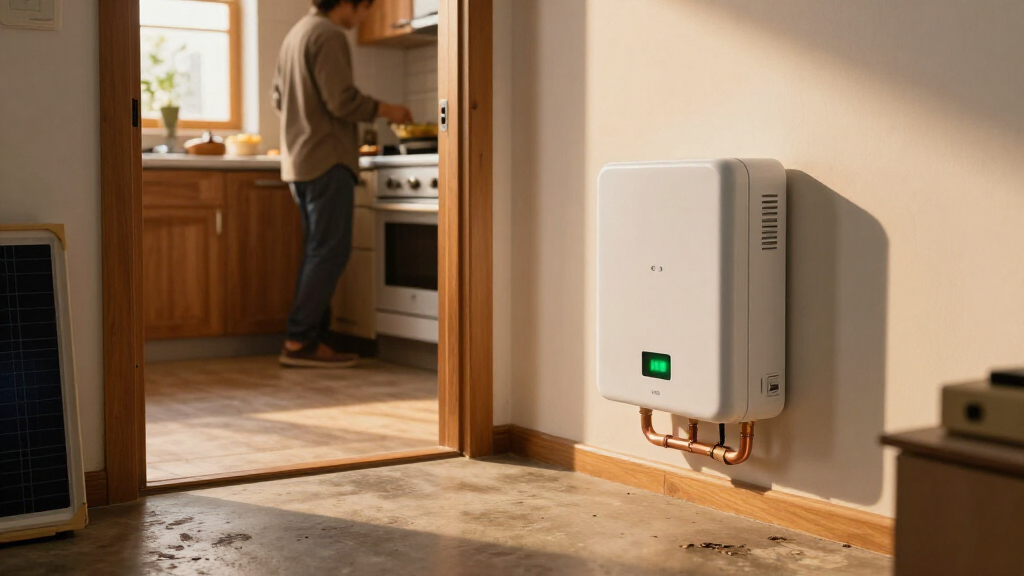
For buyers choosing a home backup battery system, the main decision is whether to connect backup power to household circuits or keep a portable station ready for selected appliances. I put the Anker SOLIX E10 first for its whole-home-ready Power Dock, fast automatic switchover, and expansion to 90 kWh. The EF ECOFLOW DELTA Pro Ultra is the stronger fit for buyers who want high 120V/240V output, extensive charging choices, and circuit management. For a less installation-focused setup, the Jackery HomePower 3600 Plus brings substantial output and two included solar panels.

Get backup power and energy gear delivered free with Prime
- Fast, free delivery on millions of items
- Prime Video, Amazon Music and more included
- Member-only deals all year
These systems are not interchangeable. A docked system can serve household circuits but calls for a more involved setup; portable stations keep the power source flexible but put limits on output, runtime, and what can be powered at once. I also include the Anker SOLIX S2000 for smaller backup needs, where lighter handling and a quick UPS switchover matter more than running many appliances. My rankings favor usable backup capability, scalability, and a clear fit for a household—not headline capacity alone.
Key Takeaways
- Anker SOLIX E10 is the clearest whole-home-oriented choice here: its Power Dock covers 200 A, supports automatic switchover in 20 ms or less, and the battery system can expand to 90 kWh.
- EF ECOFLOW DELTA Pro Ultra offers 7,200 W at 120V or 240V and 0 ms UPS transfer, but its listed system weight is 293.6 lb and the inverter and battery ship separately.
- Jackery HomePower 3600 Plus balances 3,600 W output with a portable wheeled design and two included 200 W solar panels; it is not a substitute for a professionally connected whole-home system.
- Anker SOLIX S2000 suits targeted backup for lower-demand appliances, but its 1,500 W continuous output and 400 W solar input limit how much it can support and recharge at once.
- Before choosing, match the system to the loads you need during an outage: household circuits, individual appliances, or sensitive devices that benefit from a fast UPS switchover.
| Anker SOLIX E10 Home Backup Power System with Power Dock, 6 kWh |  | Best Overall for Whole-Home Backup | Starting capacity: 6 kWh | Expandable capacity: Up to 90 kWh | Continuous output: 7.6 kW | VIEW LATEST PRICE | See Our Full Breakdown |
| EF ECOFLOW DELTA Pro Ultra 12kWh Power Station with Extra Battery |  | Best for High Output and Flexible Charging | Power output: 7,200 W | Voltage: 120V and 240V | Maximum output with three inverters: 21.6 kW | VIEW LATEST PRICE | See Our Full Breakdown |
| Jackery HomePower 3600 Plus Portable Power Station with Two 200W Solar Panels |  | Best Portable Middle Ground | Battery capacity: 3,584 Wh | Output: 3,600 W | Voltage: 120V; 240V in parallel | VIEW LATEST PRICE | See Our Full Breakdown |
| Anker SOLIX S2000 Portable Power Station, 2,010Wh, 1,500W |  | Best Compact Pick for Essential Loads | Capacity: 2,010 Wh | Battery: LiFePO4, 314 Ah | Continuous output: 1,500 W | VIEW LATEST PRICE | See Our Full Breakdown |
| home backup battery system | Expandable capacity | Continuous output | Solar input | Warranty |
|---|---|---|---|---|
| Anker SOLIX E10 Home Backup Po | Up to 90 kWh | 7.6 kW | Up to 9 kW per unit | 5 years for E10; 10 years for Power Dock |
| EF ECOFLOW DELTA Pro Ultra 12k | — | — | — | — |
| Jackery HomePower 3600 Plus Po | Up to 21 kWh per unit or 43 kWh with multiple units | — | — | 5 years |
| Anker SOLIX S2000 Portable Pow | — | 1,500 W | Up to 400 W | — |
More Details on Our Top Picks
Anker SOLIX E10 Home Backup Power System with Power Dock, 6 kWh
I rank the Anker SOLIX E10 first because it is the most directly aimed at backing up a home’s circuits, rather than just serving as a large outlet-equipped battery. Its Power Dock covers up to 200 A and enables automatic switchover in 20 ms or less. That combination makes it a better match for households that want backup integrated with home electrical service and do not want to manually move plugs during an outage. The 6 kWh starting capacity is meaningful, but the bigger distinction is that the system can expand to 90 kWh.
Compared with the EcoFlow DELTA Pro Ultra, the E10 starts with less listed continuous output: 7.6 kW versus EcoFlow’s 7,200 W, a broadly similar class with different system designs and stated figures. EcoFlow supports more charging sources and app-based circuit management, while the E10’s strongest case is the Power Dock and explicit whole-home coverage. Its support for up to 9 kW of solar input per unit also gives it a substantial solar path, particularly for buyers integrating existing panels. The outdoor-oriented design adds placement flexibility, though buyers should confirm the specific installation and solar compatibility details for their property.
The compromises are practical. This is not the simplest plug-in emergency battery: professional installation may be needed, and the Power Dock and home wiring bring a different level of planning than the portable Jackery or S2000. Its 60.6 lb E10 module is also a component in a larger system, not the whole story of installation or movement. Warranty coverage is split, with five years listed for the E10 and ten for the Power Dock. I would choose it for a household prioritizing circuit-level backup and future capacity, but skip it if I only need a battery I can carry to one refrigerator or a few electronics.
Pros:- Power Dock provides up to 200 A coverage for whole-home backup applications.
- Automatic switchover is specified at 20 ms or less.
- 6 kWh capacity can expand to 90 kWh, supporting longer backup plans.
- Supports up to 9 kW of solar input per unit and is designed for outdoor use.
Cons:- Professional installation may be needed, making setup more involved than a portable station.
- The E10 module warranty is five years, shorter than the Power Dock’s ten-year term.
- The dock-connected format is less convenient to relocate than the wheeled Jackery.
Best for: Homeowners seeking a dock-connected backup system with whole-home coverage, fast automatic switchover, solar compatibility, and room to add capacity over time.
Not ideal for: Renters, buyers wanting a simple portable plug-in station, or households unwilling to plan for professional electrical installation.
- Starting capacity:6 kWh
- Expandable capacity:Up to 90 kWh
- Continuous output:7.6 kW
- Solar input:Up to 9 kW per unit
- Power Dock coverage:200 A
- Automatic switchover:20 ms or less
- Battery chemistry:LFP
- Warranty:5 years for E10; 10 years for Power Dock
Our verdict“I recommend the E10 for buyers who want a scalable, Power Dock-based home backup system and can accommodate a more involved installation.”
EF ECOFLOW DELTA Pro Ultra 12kWh Power Station with Extra Battery
The EF ECOFLOW DELTA Pro Ultra is my pick for buyers who value high output and multiple ways to replenish the battery. It supplies 7,200 W at 120V or 240V, and a setup with three inverters can reach 21.6 kW according to the provided specifications. That makes it more capable on paper than the Jackery HomePower 3600 Plus for demanding loads, and more adaptable than the S2000 for equipment requiring 240V. It also scales from 6,144 Wh to as much as 90 kWh, so buyers can plan beyond a short, appliance-by-appliance outage response.
Its charging menu is a major point of difference. The unit can charge from solar, wall outlets, EV charging stations, or outdoor generators. That variety gives households more ways to recover capacity when weather or grid conditions limit one source. App-based circuit management can help control which home circuits receive power, while the stated 0 ms UPS transfer time is aimed at connected devices that should not lose power during a switchover. Compared with the E10, EcoFlow offers the broader charging list and app-based management; the E10, by contrast, has a specifically described Power Dock with 200 A coverage and a straightforward whole-home positioning.
The drawback is that this is a substantial installation and handling commitment. The listed system weight is 293.6 lb, and the inverter and battery ship in separate packages, so receiving and placing the full setup is less straightforward than wheeling in the Jackery. The published output and expansion claims should also be read as system capabilities, not a promise that any mix of household loads can run indefinitely. I would favor EcoFlow when output, 240V support, charging flexibility, and circuit management lead the brief. I would choose the E10 instead if the explicit dock coverage and whole-home integration matter more, or Jackery if I need a more mobile package with included solar panels.
Pros:- Provides 7,200 W at 120V or 240V, with up to 21.6 kW using three inverters.
- Capacity scales from 6,144 Wh to 90 kWh.
- Supports charging from solar, wall outlets, EV charging stations, and outdoor generators.
- 0 ms UPS transfer time and app-based circuit management support a more controlled backup setup.
Cons:- The listed 293.6 lb system weight makes placement and handling difficult.
- Inverter and battery ship in separate packages.
- Its larger-system capabilities require planning around installation, loads, and added components.
Best for: Households that want high 120V/240V output, several charging options, app-based circuit management, and a path to much larger battery capacity.
Not ideal for: Buyers who need a lightweight, single-package system, easy solo relocation, or a basic portable power station without complex setup.
- Power output:7,200 W
- Voltage:120V and 240V
- Maximum output with three inverters:21.6 kW
- Battery capacity:6,144 Wh per battery; expandable to 90 kWh
- Charging options:Solar, wall outlets, EV charging stations, and outdoor generators
- UPS transfer time:0 ms
- Outlets:6
- Listed weight:293.6 lb
Our verdict“I would pick the DELTA Pro Ultra when flexible charging and high 120V/240V output matter more than easy handling.”
Jackery HomePower 3600 Plus Portable Power Station with Two 200W Solar Panels
The Jackery HomePower 3600 Plus is the most balanced choice here for someone who wants meaningful outage capacity without starting with a dock-connected installation. It provides 3,584 Wh and 3,600 W, putting it well ahead of the S2000 for both stored energy and continuous output. That extra headroom matters when a buyer wants to run more than small electronics, though the appliances and their startup surges still determine what can operate together. Two 200 W solar panels are included, offering a straightforward way to begin recharging off-grid without assembling a separate panel list.
Mobility is part of its appeal: the station has wheels and a telescopic handle, unlike the heavier EcoFlow system. At 77.2 lb it is not light to lift, but rolling it is more practical than carrying it. It also accepts AC, solar, gas-generator, and hybrid charging, and can expand to 21 kWh per unit or 43 kWh with multiple units. The option for 240V output when units are connected in parallel adds flexibility, though it involves a larger setup than using one station. Compared with the E10, Jackery is easier to treat as a movable power source but does not offer the same Power Dock coverage for home circuits.
There are limits to that convenience. The 77.2 lb weight makes stairs and vehicle loading awkward, while its 3,600 W output and 3,584 Wh battery are more modest than the largest configurations of the E10 or EcoFlow. Solar panels may also arrive separately, so a complete delivery may not be a single-box affair. The five-year warranty is clearly stated, but it does not change the basic distinction: this is portable backup, not an automatic whole-home connection. I would shortlist it for buyers who want a sizable battery, included solar, and the option to move backup power between a home and other locations. If I wanted circuit-level whole-home coverage, I would rank the E10 higher.
Pros:- 3,584 Wh capacity and 3,600 W output provide more headroom than the S2000.
- Includes two 200 W solar panels and supports AC, solar, generator, and hybrid charging.
- Wheels and a telescopic handle make rolling the 77.2 lb unit easier.
- Expandable capacity and parallel connections add room for larger backup plans.
Cons:- At 77.2 lb, it can be difficult to lift despite its wheels.
- Solar panels may ship separately from the power station.
- It does not provide the E10’s described Power Dock coverage for whole-home circuits.
Best for: Buyers who want a high-output portable station with included solar panels, wheels, multiple charging methods, and expansion options.
Not ideal for: Households seeking automatic whole-home backup through a dock, or anyone who must frequently lift a heavy station by hand.
- Battery capacity:3,584 Wh
- Output:3,600 W
- Voltage:120V; 240V in parallel
- Expandable capacity:Up to 21 kWh per unit or 43 kWh with multiple units
- Charging methods:AC, solar, gas generator, and hybrid
- Included solar panels:Two 200 W panels
- Weight:77.2 lb
- Warranty:5 years
Our verdict“I recommend the Jackery for buyers who want substantial portable backup with solar included, but not a dock-connected whole-home system.”
Anker SOLIX S2000 Portable Power Station, 2,010Wh, 1,500W
The Anker SOLIX S2000 earns its place as the compact choice for targeted home backup. With a 2,010 Wh LiFePO4 battery, 1,500 W continuous output, and 3,000 W peak output, it can serve selected appliances and electronics without the larger footprint or installation planning of the E10 or EcoFlow. Its 35.7 lb weight is far easier to manage than the Jackery’s 77.2 lb, making it the more practical option when I need to move a battery between rooms or store it between outages. Eight outlets also give it room to supply several devices, provided their combined demand stays within its output limits.
The under-10-ms UPS switchover is one of its strongest home-use features. It can suit connected equipment that benefits from a quick change to battery power, while the EcoFlow specifies 0 ms and the E10 describes a Power Dock switchover of 20 ms or less. Those figures are not a complete substitute for checking compatibility with sensitive equipment, but they clarify the S2000’s role: a portable station with UPS capability, not a whole-home electrical system. Its stated battery cycle life of up to 10,000 cycles is also a notable specification, although actual service life depends on use and operating conditions.
Its smaller size brings a direct tradeoff: 400 W maximum solar input limits how quickly it can take in solar energy compared with the Jackery’s included 400 W of panel nameplate capacity and the much larger solar input supported by the E10. The S2000 also has no 12V DC port, which rules out some direct-connection uses. A claimed refrigerator runtime of up to 35 hours is condition-dependent, not a guarantee for every refrigerator or outage. I would choose it over the Jackery when portability and basic essential-load coverage matter more than output and capacity. I would skip it if I need 240V, sustained high-draw appliances, extensive solar charging, or a connection to household circuits.
Pros:- 2,010 Wh LiFePO4 capacity with 1,500 W continuous and 3,000 W peak output.
- Under-10-ms UPS switchover can suit connected devices that need a fast handoff.
- At 35.7 lb, it is easier to move than the Jackery or EcoFlow systems.
- Eight outlets and a stated cycle life of up to 10,000 cycles add useful flexibility.
Cons:- 400 W maximum solar input is limited compared with larger home backup systems.
- It has no 12V DC port.
- Advertised runtime varies with the appliance and operating conditions.
Best for: Buyers who want a more manageable portable battery for selected appliances, electronics, and quick UPS-style backup.
Not ideal for: Households that need whole-home circuit coverage, 240V output, large solar input, or sustained backup for multiple high-demand appliances.
- Capacity:2,010 Wh
- Battery:LiFePO4, 314 Ah
- Continuous output:1,500 W
- Peak output:3,000 W
- Solar input:Up to 400 W
- Outlets:8
- UPS switchover:Under 10 ms
- Weight:35.7 lb
Our verdict“I would choose the S2000 for movable, selected-load backup, but not as a replacement for a higher-output or dock-connected home system.”
How We Picked
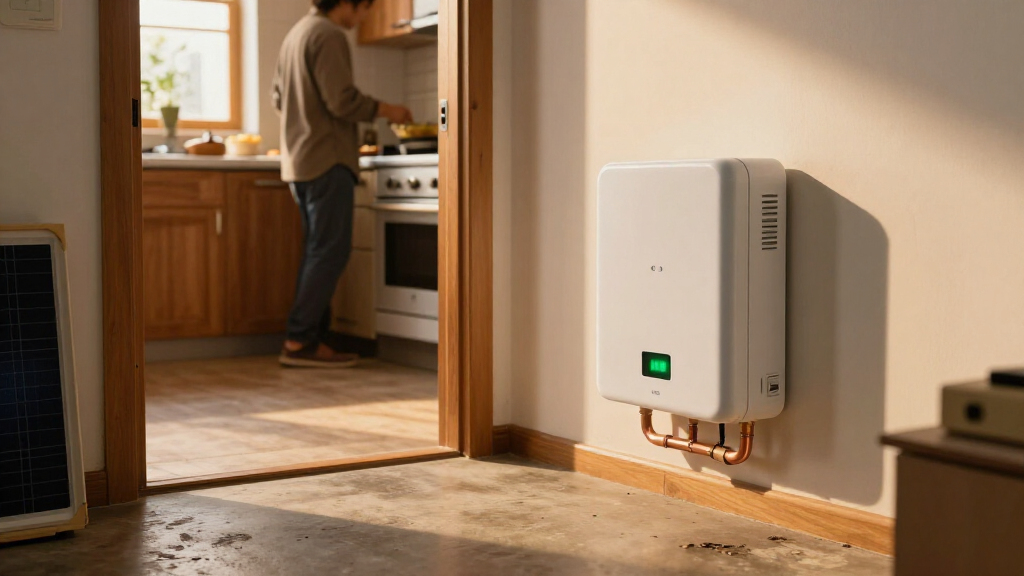
I ranked these four options by how well they address real home backup needs, rather than by treating every portable battery as a whole-house solution. I looked at continuous output, capacity and expansion, voltage options, charging routes, transfer behavior, and practical handling. I also gave weight to the difference between a system designed to connect with home circuits and a portable power station intended to be moved and plugged into devices directly.
The ranking reflects distinct buyer priorities. The Anker SOLIX E10 leads because its Power Dock is explicitly built for whole-home backup coverage, while its capacity can grow substantially. The EcoFlow DELTA Pro Ultra follows with greater listed output than the E10 and an unusually broad set of charging sources, though its weight and shipment configuration make setup more demanding. The Jackery HomePower 3600 Plus ranks as the best portable middle ground, with 3,600 W output, expansion, and solar panels in the package. The Anker SOLIX S2000 is last in overall backup scope, not because it lacks value, but because its lower output and solar limit make it better for selected essentials than a broad household load.
I use the supplied product specifications and descriptions as the basis for comparisons. Actual runtime depends on connected appliances, starting surges, temperature, and operating conditions; advertised maximums do not mean every load can run at once. Installation, local electrical requirements, and compatibility with existing solar should be confirmed with the manufacturer and a qualified electrician where applicable. Warranty terms also differ: the E10 module is listed with a five-year warranty, while its Power Dock has a ten-year warranty.
| home backup battery system | Expandable capacity | Solar input |
|---|---|---|
| Anker SOLIX E10 Home Backup Po | Up to 90 kWh | Up to 9 kW per unit |
| EF ECOFLOW DELTA Pro Ultra 12k | — | — |
| Jackery HomePower 3600 Plus Po | Up to 21 kWh per unit or 43 kWh with multiple units | — |
| Anker SOLIX S2000 Portable Pow | — | Up to 400 W |
Factors to Consider When Choosing Home Backup Battery Systems
I would start by defining what “home backup” means for my household. A battery feeding a few plugged-in devices solves a different problem from a system connected to a home’s electrical circuits. Once that distinction is clear, I can compare output, stored energy, recharge options, installation, and portability without treating the biggest capacity figure as the only deciding factor.
Choose between circuit backup and appliance backup
A dock-connected system such as the Anker SOLIX E10 is aimed at serving household circuits through its Power Dock. That can make outage response more automatic and less dependent on carrying extension cords or unplugging appliances. It also raises the stakes for installation: I would check which circuits are supported, how the system connects to the home, and whether a qualified electrician is needed. The EcoFlow DELTA Pro Ultra adds app-based circuit management, but its system components and weight call for careful setup planning.
Portable stations such as the Jackery HomePower 3600 Plus and Anker SOLIX S2000 are better understood as batteries for selected loads. I would list the appliances I want to run, confirm their running and startup demands, then check how they will connect to the station. A portable unit can be a simpler fit for renters or for a household that wants power available in more than one location, but it does not automatically back up every home circuit.
Match output to appliance demand
Continuous output describes how much load a system can support while operating; peak output can help accommodate brief startup surges, but does not replace adequate continuous capacity. The S2000’s 1,500 W continuous output places it in a more limited role than the Jackery’s 3,600 W. The E10 lists 7.6 kW, and EcoFlow lists 7,200 W at 120V or 240V, putting those systems in a higher-output class. I would not assume a particular combination of refrigerators, pumps, heating equipment, or kitchen appliances will run together without checking each device’s requirements.
Voltage matters too. EcoFlow lists both 120V and 240V, while the Jackery can provide 240V in parallel when units are connected. The product information provided for the E10 centers on the dock and home coverage; buyers should confirm voltage and circuit compatibility for their intended installation. The S2000 is designed around a lower-output portable use case in the supplied specifications, so it is not the right choice for loads that require a 240V connection.
Estimate capacity from the outage you want to cover
Watt-hours indicate stored energy, while watts indicate how much power can be drawn at a given moment. A larger battery may run a modest load longer, but it does not automatically support a high-draw appliance. The S2000 stores 2,010 Wh; the Jackery lists 3,584 Wh; the E10 begins at 6 kWh; and EcoFlow lists 6,144 Wh per battery. The E10 and EcoFlow can expand to 90 kWh, while Jackery offers its own expansion configurations.
I would estimate the energy needs of the devices I expect to run, then leave room for losses and changing conditions rather than treating a listed runtime as fixed. Refrigerator cycling, ambient temperature, device age, and usage patterns can all change actual runtime. The S2000’s “up to 35 hours” refrigerator figure is a conditional claim, not a guarantee. If backup needs include multiple days, heating or cooling equipment, or several household circuits, capacity expansion and a realistic load plan matter more than a single runtime headline.
Compare charging sources and solar limits
Charging flexibility can shape how useful a system is after the battery has been depleted. EcoFlow lists charging from solar, wall outlets, EV charging stations, and outdoor generators, making it the most varied charging setup in this group. The Jackery accepts AC, solar, gas-generator, and hybrid charging and includes two 200 W solar panels. The E10 supports up to 9 kW of solar input per unit and is described as compatible with existing solar, though I would verify the specific installation requirements. The S2000 accepts up to 400 W of solar input, a more limited ceiling for a home trying to restore a large battery quickly.
Solar panel wattage and battery charging rate are not the same thing. Weather, panel placement, shading, system limits, and the state of the battery all affect actual energy captured. I would check whether panels are included, whether they may ship separately, and whether the connectors and electrical specifications match the station. If outages commonly coincide with poor weather, access to wall charging or a generator may matter as much as solar capability.
Treat transfer time and UPS use as a compatibility question
Transfer time describes the handoff from another power source to battery backup, but a number alone does not establish that a system will work with every sensitive device. The EcoFlow lists 0 ms UPS transfer, the S2000 lists under 10 ms, and the E10’s Power Dock lists 20 ms or less. The Jackery description does not provide a UPS transfer figure. If I need uninterrupted power for a computer, communications gear, or other sensitive equipment, I would confirm compatibility with that equipment’s manufacturer and follow the battery system’s instructions rather than assuming any transfer rating is sufficient.
A UPS-style connection is also different from backing up the whole house. A station can keep selected plugged-in devices powered without being connected to home circuits. Buyers who need automatic circuit coverage should compare dock or transfer equipment, installation requirements, and the exact circuits supported—not just UPS timing.
Account for weight, installation, and delivery
Moving a battery during an outage can become a practical issue. The S2000 weighs 35.7 lb, making it the most manageable listed unit here, while the Jackery weighs 77.2 lb but adds wheels and a telescopic handle. EcoFlow lists the system at 293.6 lb, and its inverter and battery ship separately. Those differences affect where the equipment can be placed, how it can be moved, and whether help is needed during delivery or installation.
The E10 has a 60.6 lb E10 module, but its system also includes the Power Dock and related components and may need professional installation. I would plan for the complete installed setup rather than judging it by one module’s weight. Portable does not always mean easy to lift, and whole-home-oriented does not mean ready to use straight out of a shipping box. Check the component list, delivery arrangements, clearances, environmental limits, and warranty coverage before choosing.
Check expansion claims against a real backup plan
Expansion can lengthen backup time and support a broader group of loads, but it adds cost, space, wiring, and configuration requirements even when the exact purchase cost is not the deciding factor. The E10 and EcoFlow both list pathways to 90 kWh; Jackery lists up to 21 kWh per unit or 43 kWh with multiple units. The S2000 is better suited to a simpler, smaller backup plan in the specifications provided.
I would ask what I expect to power now, what I may add later, and whether the system’s expansion method supports that plan. Capacity alone cannot compensate for an inverter that cannot handle the load, and additional batteries do not create a home-circuit connection if the system lacks the required equipment. For a large expansion, I would confirm compatible components and installation rules directly with the manufacturer or a qualified installer.
Frequently Asked Questions
Which system is best for whole-home backup?
I rank the Anker SOLIX E10 first for a whole-home-oriented setup because its Power Dock is specified for up to 200 A coverage and automatic switchover in 20 ms or less. The EcoFlow DELTA Pro Ultra also offers high output, 120V/240V support, and app-based circuit management, but the product information provided describes the E10’s Power Dock more directly as the home coverage component. Buyers should confirm which circuits can be backed up and what installation work their home requires.
Can a portable power station run a refrigerator during an outage?
It can, if the refrigerator’s running draw and startup surge fit within the station’s output limits and the battery has enough usable capacity. The S2000 lists up to 35 hours for a refrigerator, but actual runtime depends on the appliance and conditions. The Jackery provides more listed capacity and output than the S2000, while neither should be treated as a guaranteed whole-home solution. I would check the appliance’s specifications and plan for other loads that may share the battery.
Do I need an electrician to install a home backup battery?
It depends on the system and how it will connect to the home. A dock-connected arrangement such as the E10 may need professional installation, while portable stations are generally intended to power selected devices through their outlets. Connecting equipment to household circuits has electrical and code requirements that differ from plugging an appliance into a portable station. I would follow the manufacturer’s installation guidance and consult a qualified electrician for any connection to home wiring.
Which option is easiest to move?
The Anker SOLIX S2000 is the lightest listed option at 35.7 lb. The Jackery weighs 77.2 lb but has wheels and a telescopic handle, which can make it easier to roll across suitable surfaces. EcoFlow’s listed system weight is 293.6 lb, and the E10 is part of a dock-connected system rather than a simple portable setup. I would consider stairs, storage location, and whether I need to move the battery during an outage—not weight alone.
How much battery capacity do I need for an outage?
The right capacity depends on the appliances you need, their power draw, and how long the outage may last. A higher watt-hour figure can provide more stored energy, but the system also needs enough output to run the devices together and handle startup surges. I would identify essential loads, estimate their energy use, and leave room for operating losses and changing conditions. For longer outages, compare expansion paths and available ways to recharge, including solar, wall power, or a generator.
Conclusion
My recommendation depends on whether the goal is household-circuit coverage or portable power for selected equipment. For a homeowner seeking dock-connected, expandable backup, I would start with the Anker SOLIX E10, while confirming installation needs and the split warranty terms. For high output, 120V/240V support, and varied charging sources, the EF ECOFLOW DELTA Pro Ultra is the more flexible but much heavier choice. For portable backup with solar panels included, I would choose the Jackery HomePower 3600 Plus if rolling a 77.2 lb station is practical. For lighter, focused emergency power, the Anker SOLIX S2000 is the easiest to move, but its output and solar input suit a narrower set of loads. I would choose only after listing the appliances I need to run and matching that plan to the system’s connection method, power limits, and recharge options.
Fall Picks
fall essentials
As an affiliate, we earn on qualifying purchases.