TL;DR

Get backup power and energy gear delivered free with Prime
- Fast, free delivery on millions of items
- Prime Video, Amazon Music and more included
- Member-only deals all year
Cherokee County supervisors in Iowa reversed a moratorium on battery storage, clearing a path for a proposed solar-and-battery project on Smith family farmland. The project, developed with Nomad Infrastructure, still needs necessary permissions; its timeline and final approval status remain uncertain.
Cherokee County, Iowa, has reversed a moratorium on battery storage, opening a path for the Smith family and energy developer Nomad Infrastructure to pursue a solar-and-battery project on farmland. The change followed debate among county supervisors over local economic benefits, property rights and the fire risks associated with large batteries; the project is not yet described as approved for construction.
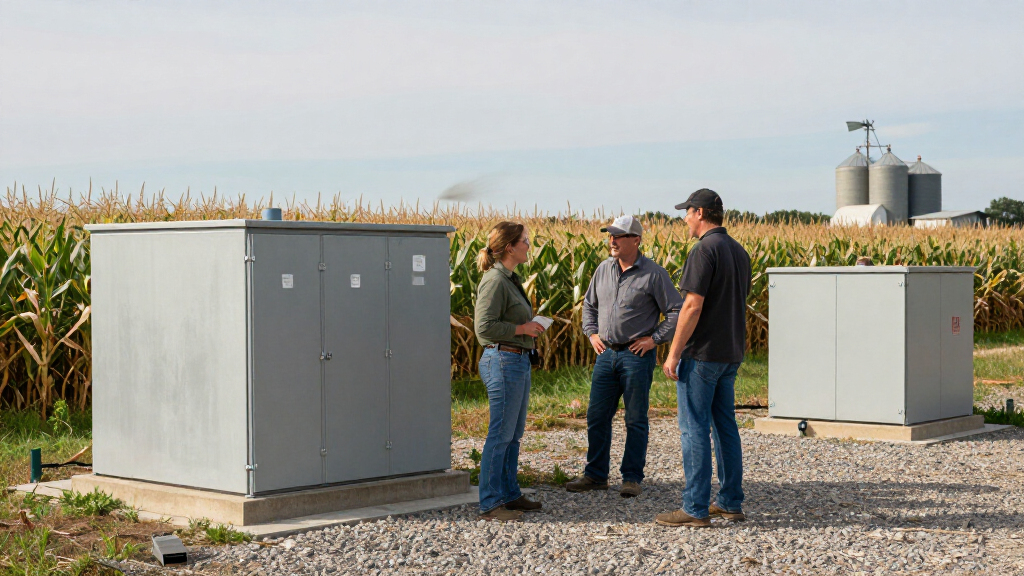
The proposed installation would be built on land owned by the Smiths in partnership with Nomad, an Indiana-based company with experience in solar and battery projects. Thomas Smith, one of the brothers, works for the developer as an engineer. Mark Smith told supervisors that the project had permission from the local rural electric cooperative to transmit power over its wires and sell it into the regional grid operated by the Midcontinent Independent System Operator.
Supervisor Bellefy, a banker, argued that the project could bring investment and property-tax revenue to the county. He estimated construction would involve more than $80 million in investment and could generate $60,000 to $80,000 in annual county tax revenue. Those figures are estimates, not confirmed payments or completed investment. The county’s zoning board had proposed broad setbacks that could have restricted where battery projects could be located; Bellefy said such limits would weaken the project’s business case and reduce potential revenue.
Safety was a central concern in the debate. Grid-scale lithium-ion battery fires can be difficult to extinguish, and the source report cited the fire at Vistra’s Moss Landing, California, battery facility as a prominent example. Iowa energy expert Seaberg held workshops for supervisors in February and May, describing newer battery chemistries, safety codes and modular designs intended to limit fire spread. Bellefy also said the local fire chief addressed concerns. The county’s decision removed the moratorium, but the source does not establish that every permit or approval needed for construction has been issued.
A Farm Project Tests County Policy
The reversal matters because it changes what may be considered on rural land in a county where supervisors had previously halted battery storage. The proposed development could add a new source of investment and tax revenue, while raising practical questions about emergency response and how energy infrastructure fits alongside farming.
The economic case presented to supervisors is specific to this project and remains an estimate. If it proceeds, the Smith installation would also connect local land use to a wider electricity market: its developers plan to sell power through the regional grid. The outcome may inform other Iowa communities weighing proposed battery projects, though the source does not establish that Cherokee County’s decision will determine policy elsewhere.
As an affiliate, we earn on qualifying purchases.
How the Moratorium Was Challenged
The Smiths presented their plans in partnership with Nomad after the county had imposed a moratorium on battery storage. Bellefy made the case that broad zoning setbacks could make the project financially unworkable. He also urged supervisors to weigh the expertise of financial and insurance institutions that would take on risk if the project proceeded.
Bellefy drew on the Private Property Rights Institute, a conservative nonprofit that supports local officials who favor property rights and infrastructure development. Executive director Charlie Kolean said the group wants to reduce regulation and allow owners to build responsibly on their land. Kolean declined to identify the group’s funders, according to the source report. His comments reflect the group’s position, rather than an independent assessment of the proposed project’s safety or economics.
The grid setting is part of the business case. The MISO region has substantial wind and solar generation, while battery deployment is beginning to grow. The source report also points to rising electricity demand from data-center expansion as a potential market for power available when needed. It does not provide a project-specific forecast of sales or revenue from grid operations.
““If the financial institution is fine with it, and the insurance institution is fine with insuring it, I know that their regulations are way heavier than ours.””
— Bellefy
As an affiliate, we earn on qualifying purchases.
Permits, Safety and Revenue Still Open
The source report says the Smiths hope to proceed once they secure the necessary permissions, but does not list which approvals remain, when they will be decided or whether any have since been granted. The project’s final design, construction schedule and operating date are not confirmed.
The estimated investment and annual tax revenue were presented by Bellefy; the report does not provide an independent financial review or a final county revenue calculation. Safety information discussed at the workshops addressed battery technologies and safeguards generally, but the source does not provide a completed site-specific emergency plan, fire assessment or response-capacity review. Those details matter to nearby residents and local responders.
large lithium-ion battery fire safety kit
As an affiliate, we earn on qualifying purchases.
As an affiliate, we earn on qualifying purchases.
The Smiths’ Proposed Construction Timeline
The Smiths said they hope to turn the parcel over to grass in the spring and begin installing solar panels and batteries the following fall, after obtaining necessary permissions. The source does not specify calendar years for those milestones, so the schedule should be treated as a stated plan rather than a confirmed construction date.
Next developments will depend on the project’s outstanding approvals and preparation for construction, including how local safety concerns are handled. The county’s reversal lifts the moratorium, but does not by itself confirm that the installation will be built.
As an affiliate, we earn on qualifying purchases.
Key Questions
What did Cherokee County decide?
County supervisors reversed a moratorium on battery storage, allowing a proposed project to move forward through the remaining approval process. The decision does not, by itself, mean construction has been authorized.
Who is proposing the project?
The Smith family is proposing a solar-and-battery installation on its land in partnership with Nomad Infrastructure, an Indiana-based energy developer.
How much could the project bring to the county?
Bellefy estimated that the project could involve more than $80 million in investment and produce $60,000 to $80,000 in annual county tax revenue. These are estimates reported in the source, not confirmed outcomes.
Why were supervisors concerned about battery storage?
Supervisors raised concerns about fires involving grid-scale batteries, emergency response and potential effects on nearby farms. Workshops covered newer battery chemistries, safety codes and modular container designs, but the source does not report a site-specific safety assessment.
When could construction begin?
The Smiths said they hope to prepare the land in spring and start installation the following fall, once they secure necessary permissions. The report does not specify calendar years or confirm that those approvals have been granted.
Source: rss
Columbus Day / Indigenous Peoples' Day Picks
long weekend sales
As an affiliate, we earn on qualifying purchases.