Home battery backup systems range from compact power stations for essential devices to expandable setups designed to support more of a home during an outage. I rank the Jackery Solar Generator 5000 Plus as the best overall for its 5,040Wh capacity, 120V/240V output, and expansion potential; the EcoFlow DELTA Pro Ultra stands out for buyers seeking a larger system, while the Jackery Explorer 2000 v2 is a simpler, more portable option for smaller loads. The central tradeoff is between capacity and whole-home capability on one side and portability, setup simplicity, and the number of loads you can support on the other. Solar bundles can add a charging path, but they do not by themselves determine how long backup power lasts. Read on for the full comparison, selection criteria, and practical guidance on sizing a system for your household.

Get backup power and energy gear delivered free — and shop member deals
- Fast, free delivery on millions of items
- Access to Prime Big Deal Days deals on October 6–7
- Prime Video, Amazon Music and more included
Complete the kit


Key Takeaways
- The Jackery Solar Generator 5000 Plus leads this lineup by pairing 5,040Wh of storage with 120V/240V output and stated expansion up to 60kWh, giving it a broader growth path than the smaller portable stations.
- The EcoFlow DELTA Pro Ultra is the standout for larger backup needs because its listed 12kWh configuration with an extra battery offers substantially more storage than the single-unit portable picks.
- Solar-panel bundles and battery capacity solve different problems: the Jackery HomePower 3600 Plus bundle and Growatt HELIOS 3600 bundle include panels, while the separately listed power stations do not; panel output and conditions affect recharge, not the battery’s stored capacity.
- Capacity and output are not interchangeable. The ECO-WORTHY Powermega lists 16.07kWh of storage, but its battery-only format is a different kind of purchase from an all-in-one portable station with built-in AC output.
- Smaller stations fit targeted backup better than broad home coverage. The 1,024Wh EcoFlow DELTA 3 Classic and 2,010Wh Anker SOLIX S2000 suit narrower loads more naturally than systems built around multi-kilowatt-hour storage and expansion.
| Jackery Solar Generator 5000 Plus Portable Power Station |  | Best for High-Load Home Backup | Battery capacity: 5,040Wh; expandable to 60kWh | Continuous output: 7,200W | Surge power: 14,400W | VIEW LATEST PRICE | See Our Full Breakdown |
| Jackery HomePower 3600 Plus Portable Power Station with Two 200W Solar Panels |  | Best Ready-to-Solar Bundle | Capacity: 3,584Wh | AC output: 3,600W | Parallel output: 7,200W | VIEW LATEST PRICE | See Our Full Breakdown |
| Jackery HomePower 3600 Plus Portable Power Station, 3584Wh, 3600W |  | Best for Flexible Charging | Capacity: 3,584Wh | AC output: 3,600W | Parallel output: Up to 7,200W | VIEW LATEST PRICE | See Our Full Breakdown |
| EF ECOFLOW DELTA Pro Ultra 12 kWh Power Station with Extra Battery |  | Best Premium Expandable System | Output: 7,200W | Voltage: 120V and 240V | Base battery capacity: 6,144Wh | VIEW LATEST PRICE | See Our Full Breakdown |
| Growatt HELIOS 3600 Portable Power Station with 400W Solar Panels |  | Best Cold-Weather Solar Bundle | Capacity: 3,600Wh | Continuous output: 3,600W | Included solar panels: Two 200W panels | VIEW LATEST PRICE | See Our Full Breakdown |
| Jackery HomePower 3000 Portable Power Station with Two 200W Solar Panels |  | Best Portable Backup for Household Essentials | Capacity: 3,072Wh | AC output: 3,600W | Surge output: 7,200W | VIEW LATEST PRICE | See Our Full Breakdown |
| EF ECOFLOW DELTA 3 Classic Portable Power Station, 1024Wh, 1800W |  | Best for Fast-Charging Electronics Backup | Capacity: 1,024Wh | Output: 1,800W | Surge output: 3,600W | VIEW LATEST PRICE | See Our Full Breakdown |
| Anker SOLIX S2000 Portable Power Station 2010Wh 1500W |  | Best Compact 2kWh Backup | Capacity: 2,010Wh | Continuous output: 1,500W | Peak output: 3,000W | VIEW LATEST PRICE | See Our Full Breakdown |
| ECO-WORTHY Solar Panel Kit LiFePO4 Energy Storage System for Home Backup |  | Best Whole-Home Solar Storage Kit | Solar panels: 6 × 590W N-type monocrystalline | Inverter power: 10kW hybrid inverter | Battery configuration: 2 × 48V 314Ah LiFePO4 batteries | VIEW LATEST PRICE | See Our Full Breakdown |
| ECO-WORTHY Powermega 48V 314Ah LiFePO4 Battery, 16.07kWh |  | Best Expandable Battery for a Custom System | Chemistry: LiFePO4 | Voltage: 51.2V; 48V nominal | Capacity: 314Ah | VIEW LATEST PRICE | See Our Full Breakdown |
| Jackery Explorer 2000 v2 Portable Power Station | 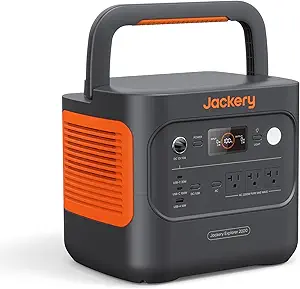 | Best Compact Backup for Essentials | Battery capacity: 2042Wh | Output power: 2200W | Battery type: LiFePO4 | VIEW LATEST PRICE | See Our Full Breakdown |
| home battery backup system | Capacity |
|---|---|
| Jackery Solar Generator 5000 P | — |
| Jackery HomePower 3600 Plus Po | 3,584Wh |
| Jackery HomePower 3600 Plus Po | 3,584Wh |
| EF ECOFLOW DELTA Pro Ultra 12 | — |
| Growatt HELIOS 3600 Portable P | 3,600Wh |
| Jackery HomePower 3000 Portabl | 3,072Wh |
| EF ECOFLOW DELTA 3 Classic Por | 1,024Wh |
| Anker SOLIX S2000 Portable Pow | 2,010Wh |
| ECO-WORTHY Solar Panel Kit LiF | — |
| ECO-WORTHY Powermega 48V 314Ah | 314Ah |
| Jackery Explorer 2000 v2 Porta | — |
More Details on Our Top Picks
Jackery Solar Generator 5000 Plus Portable Power Station
The Jackery Solar Generator 5000 Plus is the strongest fit here for buyers who need more than essential-device backup. Its 7,200W continuous output and 120V/240V supply can handle demanding household loads, while its 5,040Wh battery can grow to 60kWh as backup needs expand. That ceiling is higher than the Jackery HomePower 3600 Plus’s 43kWh multi-unit limit, making this a better match for longer outages or larger systems. Solar input up to 4,000W also gives it more recharge headroom than the Growatt HELIOS 3600’s 2,000W maximum. The tradeoff is scale: this is a substantial system, not an easy grab-and-go station, and the solar panels needed to make full use of its input are separate. I’d choose it for high loads and expansion potential, not light, occasional backup.
Pros:- 7,200W continuous output with 14,400W surge capacity for demanding loads
- Expandable battery capacity up to 60kWh
- Up to 4,000W solar input supports substantial solar recharge capacity
- LiFePO4 battery with ChargeShield 2.0 and stated 11-year durability
Cons:- Large, heavy design limits practical portability
- Solar panels for charging are separate
- Its high expansion ceiling may be unnecessary for buyers backing up only a few devices
Best for: Homeowners who want 120V/240V backup for demanding appliances and room to expand storage for longer outages.
Not ideal for: Buyers who need a lightweight, ready-to-carry station or expect the included package to provide a complete solar setup.
- Battery capacity:5,040Wh; expandable to 60kWh
- Continuous output:7,200W
- Surge power:14,400W
- AC voltage:120V / 240V
- Maximum solar input:4,000W
- Battery chemistry:LiFePO4 with ChargeShield 2.0
- Frequency:60Hz
Our verdict“Choose the Jackery 5000 Plus if high appliance output and a path to large-scale home storage matter more than portability.”
Jackery HomePower 3600 Plus Portable Power Station with Two 200W Solar Panels
This HomePower 3600 Plus bundle is the clearest choice for buyers who want a power station and starter solar panels in one package. The 3,584Wh capacity and 3,600W output give it more backup capability than compact stations such as the EF ECOFLOW DELTA 3 Classic, while its wheels and telescopic handle make it easier to reposition than the larger Jackery 5000 Plus. Two 200W panels provide a way to recharge off-grid, though their combined 400W rating is modest beside the station’s capacity, and the listed solar recharge time is about four hours. The unit can expand and accepts AC, solar, gas-generator, or hybrid charging; parallel units are needed for 240V operation. I’d pick this bundle over the panel-free HomePower 3600 Plus when starting with solar matters, but not if rapid solar replenishment or native 240V output is a priority.
Pros:- Includes two 200W solar panels for an immediate solar-charging option
- 3,600W output suits a broader range of household devices than small backup stations
- Expandable capacity and multiple charging methods support changing backup needs
- Wheels and a telescopic handle ease movement across a home or garage
Cons:- Included panels total only 400W, limiting solar input compared with the station’s capacity
- 240V operation requires units connected in parallel
- The power station and panels ship separately
Best for: Households starting a backup setup who want a wheeled 3,600W station with solar panels included.
Not ideal for: Buyers who need 240V from a single unit, faster solar replenishment, or a compact station for frequent lifting.
- Capacity:3,584Wh
- AC output:3,600W
- Parallel output:7,200W
- Voltage:120V; 240V in parallel
- Expandable capacity:Up to 21kWh per unit or 43kWh with multiple units
- Battery cycle life:6,000 cycles
- Included solar panels:Two 200W panels
- Hybrid charging time:About 2 hours
Our verdict“Choose this bundle if included solar panels and easier movement matter more than single-unit 240V output or high solar input.”
Jackery HomePower 3600 Plus Portable Power Station, 3584Wh, 3600W
Without bundled panels, this HomePower 3600 Plus is a more flexible starting point for buyers who already own solar equipment or plan to choose panels separately. It shares the 3,584Wh capacity and 3,600W output of the panel bundle, along with expansion options and a 6,000-cycle battery rating, but avoids tying the purchase to two 200W panels. Compared with the Growatt HELIOS 3600, it offers more charging routes, including a gas generator, and a wheeled design for moving the station around the home. The main limitation is that 240V requires parallel operation; a single unit supplies 120V. Its large capacity also makes the luggage-style form easier to roll than to lift. I’d favor this version over the bundled model when panel choice is the priority, but the bundle makes more sense for someone who wants panels from the outset.
Pros:- 3,584Wh capacity and 3,600W output provide substantial portable backup
- Expandable capacity supports a larger system over time
- AC, solar, gas-generator, and hybrid charging offer several recharge routes
- Wheels and telescopic handle make rolling easier than carrying
Cons:- No solar panels are included
- 240V output requires parallel operation with another unit
- Large capacity makes it bulky to lift and transport
Best for: Buyers who want a 3,600W expandable backup station and prefer to source compatible solar panels or other charging equipment themselves.
Not ideal for: Households that want included solar panels or need 240V output from one standalone unit.
- Capacity:3,584Wh
- AC output:3,600W
- Parallel output:Up to 7,200W
- Voltage:120V; 240V in parallel
- Expandable capacity:Up to 21kWh per unit or 43kWh with multiple units
- Charging options:Hybrid AC+DC, AC, solar, and gas generator
- Recharge time:About 2 hours hybrid; 2.5 hours AC or gas generator; 4 hours solar
- Battery cycle life:6,000 cycles
- Minimum operating temperature:-4°F
Our verdict“Choose this HomePower 3600 Plus if you want flexible charging and expansion without bundled panels.”
EF ECOFLOW DELTA Pro Ultra 12 kWh Power Station with Extra Battery
The EF ECOFLOW DELTA Pro Ultra is the most system-oriented option in this group, aimed at buyers planning substantial household backup rather than a portable station for occasional outages. Its listed 7,200W output works at 120V or 240V, and the platform can scale from 6,144Wh to 90kWh; with three inverters, AC output can reach 21.6kW. That gives it a higher stated storage ceiling than the Jackery 5000 Plus, though reaching the maximum means adding substantial equipment. Solar, wall power, EV charging stations, and outdoor generators provide more recharge paths than the simpler HomePower 3600 Plus options. The 0ms UPS transfer time also suits sensitive equipment that should not lose power during a switchover. Its separate inverter and battery packages, along with the need for additional batteries to scale, make setup and expansion more involved.
Pros:- 7,200W output supports substantial household loads at 120V or 240V
- Expandable capacity up to 90kWh
- Multiple recharge routes include solar, wall outlets, EV charging stations, and generators
- 0ms UPS transfer time supports sensitive equipment
Cons:- Inverter and battery arrive in separate packages
- Reaching maximum capacity requires additional batteries and up to three inverters
- Large-scale expansion makes this a more involved setup than the portable Jackery HomePower 3600 Plus
Best for: Homeowners building a large, expandable backup system who need 120V/240V support and multiple charging sources.
Not ideal for: Buyers seeking a lightweight, simple plug-in backup unit or a system that reaches its maximum capacity without added equipment.
- Output:7,200W
- Voltage:120V and 240V
- Base battery capacity:6,144Wh
- Maximum expandable capacity:90kWh
- Maximum AC output with three inverters:21.6kW
- Charging options:Solar, wall outlets, EV charging stations, and outdoor generators
- UPS transfer time:0ms
Our verdict“Choose the DELTA Pro Ultra if you want a high-output home system with extensive expansion headroom and can accommodate added equipment.”
Growatt HELIOS 3600 Portable Power Station with 400W Solar Panels
The Growatt HELIOS 3600 pairs a 3,600Wh battery and 3,600W output with two 200W solar panels, giving buyers a bundled solar starting point similar to the Jackery HomePower 3600 Plus panel package. Its standout difference is a stated minimum operating temperature of -22°F, lower than the HomePower 3600 Plus’s listed -4°F limit, which may suit backup plans for cold settings. The system can expand to 36kWh and reach 7,200W at 240V with parallel units, but those figures require compatible added equipment. A 15ms EPS switching time offers a quick backup handoff, though it is not the DELTA Pro Ultra’s stated 0ms UPS transfer. The included panels total 400W, well below the station’s 2,000W maximum solar charging input, so accessing that faster solar potential means adding compatible panels.
Pros:- Includes two 200W solar panels
- Expandable capacity up to 36kWh with parallel output up to 7,200W at 240V
- LFP battery is rated to retain 80% capacity after 4,000 cycles
- Stated minimum operating temperature of -22°F and 15ms EPS switching
Cons:- Included panels provide 400W combined, well below the 2,000W maximum solar input
- 240V and higher parallel output require additional compatible equipment
- Expansion to maximum capacity requires added units
Best for: Buyers who want a solar-included 3,600W backup station for cold-weather locations and may expand with compatible equipment.
Not ideal for: Shoppers who expect the included panels to reach the station’s maximum solar input or need 240V output from one unit.
- Capacity:3,600Wh
- Continuous output:3,600W
- Included solar panels:Two 200W panels
- Maximum solar charging:2,000W
- Parallel output:7,200W at 240V
- Expandable capacity:Up to 36kWh
- EPS switching time:15ms
- Minimum operating temperature:-22°F
Our verdict“Choose the HELIOS 3600 if cold-weather operation and included solar panels are priorities, and you are prepared to add equipment for faster charging or larger capacity.”
Jackery HomePower 3000 Portable Power Station with Two 200W Solar Panels
The Jackery HomePower 3000 balances substantial stored energy with a portable power-station format: its 3,072Wh capacity and 3,600W AC output can support several household essentials without stepping up to a permanently installed system. Its ≤20ms UPS switching is useful for devices that need power to stay on during an outage, though the EcoFlow DELTA 3 Classic switches faster at under 10ms and is the better fit for particularly sensitive equipment. Jackery counters with three times the capacity, plus a TT-30 RV port and multiple ways to recharge. The two included 200W panels add an off-grid option, but solar charging is slow compared with hybrid AC/DC charging, and the power station and panels may arrive separately. I’d choose this for portable, higher-capacity backup, not whole-home split-phase power.
Pros:- 3,072Wh capacity and 3,600W AC output suit a range of household essentials.
- UPS switching of 20ms or less helps keep connected devices powered during an outage.
- Supports AC, hybrid, solar, car, and generator charging.
- LiFePO4 battery is rated for 4,000 cycles to 70% capacity.
Cons:- The included 400W of solar panels take about nine hours to charge the station to 80%.
- The station and solar panels may arrive in separate packages.
- Its portable-station format does not provide the 30kWh-plus capacity of the ECO-WORTHY home storage kit.
Best for: Households seeking portable backup for several essential appliances, with solar and RV charging options.
Not ideal for: Buyers who need whole-home 120V/240V split-phase power or want faster solar charging from the included panels.
- Capacity:3,072Wh
- AC output:3,600W
- Surge output:7,200W
- UPS switching time:≤20ms
- Battery chemistry:LiFePO4
- Battery cycle life:4,000 cycles to 70% capacity
- Included solar panels:2 × 200W
- Recharge time:1.7 hours via hybrid AC/DC; 2.2 hours via AC
- Ports:AC, USB-C, USB-A, DC, TT-30 RV
Our verdict“Choose the HomePower 3000 for portable, higher-capacity essential-circuit backup, but skip it if you need a large split-phase home system.”
EF ECOFLOW DELTA 3 Classic Portable Power Station, 1024Wh, 1800W
The EcoFlow DELTA 3 Classic is the compact, quick-to-recharge choice in this group. AC charging can bring its 1,024Wh battery to 80% in 45 minutes, and under-10ms UPS switching makes it a stronger match than the Jackery HomePower 3000 for electronics that should not lose power during a brief outage. That speed comes with a clear capacity tradeoff: the Jackery stores three times as much energy, so it is better suited to longer appliance runtimes. EcoFlow’s 1,800W output, six outlets, app controls, and 100W USB-C port make it practical for a smaller backup setup that also travels. Solar charging needs an optional panel, and owners cannot expand it with DELTA 2 or DELTA 3 extra batteries. I’d pick it for quick recovery and sensitive devices, not extended household outages.
Pros:- Reaches 80% charge in 45 minutes using AC power.
- Under-10ms UPS switching suits sensitive electronics.
- App controls support monitoring and charging schedules.
- LiFePO4 battery is rated for over 10 years of daily use.
Cons:- Its 1,024Wh capacity is much smaller than the Jackery HomePower 3000’s 3,072Wh.
- Solar panel is optional, adding a separate component for solar recharging.
- Extra batteries from the DELTA 2 and DELTA 3 series are not compatible.
Best for: People backing up a modem, computer, and a few smaller appliances who value fast AC recharging and quick UPS response.
Not ideal for: Households needing long runtimes for multiple appliances or buyers who want to expand capacity with compatible extra batteries.
- Capacity:1,024Wh
- Output:1,800W
- Surge output:3,600W
- X-Boost output:Up to 2,600W
- Battery chemistry:LiFePO4
- AC charging:0–80% in 45 minutes
- UPS switching time:Under 10ms
- USB-C output:100W
- Weight:26.7 pounds
Our verdict“Pick the DELTA 3 Classic for fast-recharging, compact backup for electronics, not for lengthy appliance runtimes.”
Anker SOLIX S2000 Portable Power Station 2010Wh 1500W
The Anker SOLIX S2000 puts roughly 2kWh of storage in a relatively compact 35.7-pound unit, making it a middle ground between the small EcoFlow DELTA 3 Classic and the larger Jackery HomePower 3000. Its 1,500W continuous output and 3,000W peak are less suited to high-draw appliances than the Jackery’s 3,600W output, but the 2,010Wh capacity is a better fit for longer fridge backup than EcoFlow’s 1,024Wh. Anker lists up to 35 hours of refrigerator runtime; actual duration will vary with the appliance and use. Four hundred watts of maximum solar input and several other charging methods give owners flexibility to replenish it. The tradeoffs are practical: there is no dedicated 12V DC port for automotive accessories, and 35.7 pounds is still a load to carry. I’d favor it for compact storage, not maximum output.
Pros:- 2,010Wh capacity offers more stored energy than the EcoFlow DELTA 3 Classic.
- Compact dimensions and 35.7-pound weight suit a 2kWh portable station.
- Supports up to 400W solar input and several other charging methods.
- LFP cells are rated for 10,000 cycles and a 15-year lifespan.
Cons:- 1,500W continuous output is below the Jackery HomePower 3000’s 3,600W rating.
- No dedicated 12V DC port for automotive accessories.
- At 35.7 pounds, it may be awkward for frequent carrying.
Best for: Apartment dwellers and outage planners who want around 2kWh of portable storage for a refrigerator or essential electronics.
Not ideal for: Buyers running higher-wattage appliances, needing a dedicated 12V accessory port, or expecting a lightweight station for frequent carrying.
- Capacity:2,010Wh
- Continuous output:1,500W
- Peak output:3,000W
- Battery type:314Ah LFP cells
- Cycle life:10,000 cycles; stated 15-year lifespan
- Maximum solar input:400W
- Outlets:8, front and rear
- Weight:35.7 pounds
- Dimensions:8.2 × 11.1 × 12.7 inches
Our verdict“Choose the SOLIX S2000 for compact 2kWh backup and flexible recharging, but not for high-output appliances or 12V accessory use.”
ECO-WORTHY Solar Panel Kit LiFePO4 Energy Storage System for Home Backup
The ECO-WORTHY Solar Panel Kit is the only option here designed around substantial home storage rather than a portable power station. With 30kWh-plus usable energy, a 10kW hybrid inverter, and 120V/240V split-phase output, it can support a broader household backup plan than the Jackery HomePower 3000 or Anker SOLIX S2000. Six 590W panels provide a sizeable solar array, while app monitoring and battery safety features add visibility to a more involved setup. The scale is also its main barrier: truck delivery, ample installation space, and electrical expertise may be needed, unlike the plug-in portable stations. The listed dimensions describe the panels, not the whole installed system, so buyers should plan around the complete rack and equipment footprint. I’d choose this for serious solar-backed home resilience, not simple outage convenience.
Pros:- Over 30kWh of usable energy supports longer home backup than the portable stations in this lineup.
- 10kW hybrid inverter and 120V/240V output suit a broader range of household loads.
- Six 590W N-type solar panels are included.
- Battery rack features wheels, while the system offers Wi-Fi/Bluetooth monitoring and stated safety protections.
Cons:- Large equipment requires substantial space and truck delivery.
- Installation may be complex for buyers without electrical experience.
- Inverter appearance may vary, and the listed dimensions describe the panels rather than the full system footprint.
Best for: Homeowners planning substantial solar-backed backup with split-phase output, room for a battery rack, and access to qualified installation help.
Not ideal for: Renters, buyers seeking a plug-in portable station, or DIY users without electrical experience and space for a large system.
- Solar panels:6 × 590W N-type monocrystalline
- Inverter power:10kW hybrid inverter
- Battery configuration:2 × 48V 314Ah LiFePO4 batteries
- Usable energy:30kWh+
- Output voltage:120V / 240V split-phase
- Monitoring:Wi-Fi and Bluetooth
- Inverter MPPT efficiency:99.9%
- Panel dimensions:89.68 × 44.65 × 1.18 inches
Our verdict“Choose this kit for a substantial solar-backed, split-phase home system if you have the space and installation support.”
ECO-WORTHY Powermega 48V 314Ah LiFePO4 Battery, 16.07kWh
The ECO-WORTHY Powermega is a large, single battery for buyers assembling or expanding a compatible 48V home backup system—not a complete power station with an inverter and solar panels included. Its 16.07kWh capacity gives a system builder far more stored energy per battery than the portable Anker SOLIX S2000, and support for up to 15 units in parallel offers a path to much larger storage. A 200A smart BMS, active cell balancing, UL 1973 certification, and aerosol fire suppression address safety and battery management; RS485 and CAN provide connections for compatible equipment. That flexibility assumes the buyer has a suitable inverter and installation plan. The battery is large, ships by truck on a pallet, and needs a delivery address that can handle freight. I’d choose it as a substantial system component, not as standalone backup.
Pros:- 16.07kWh of stored energy in one battery.
- Supports parallel expansion to as many as 15 units.
- Includes a 200A smart BMS with active cell balancing, aerosol fire suppression, and UL 1973 certification.
- Touchscreen, wireless monitoring, RS485, and CAN support system monitoring and integration.
Cons:- A compatible inverter and other system components are required; this is not a complete backup system.
- Large and heavy, with palletized truck delivery.
- The delivery address must accommodate freight service.
Best for: Homeowners and installers building a compatible 48V system who want high capacity per battery and room to expand.
Not ideal for: Buyers seeking an all-in-one backup unit, a plug-and-play portable station, or a battery that can be delivered without freight access.
- Chemistry:LiFePO4
- Voltage:51.2V; 48V nominal
- Capacity:314Ah
- Energy:16.07kWh
- BMS:200A smart BMS with active cell balancing
- Safety certification:UL 1973
- Parallel expansion:Up to 15 units
- Monitoring:7-inch HD touchscreen, Wi-Fi, and Bluetooth
- Communication ports:RS485 and CAN
Our verdict“Choose the Powermega as a high-capacity, expandable battery for a compatible 48V installation, not as a standalone backup station.”
Jackery Explorer 2000 v2 Portable Power Station
I’d choose the Explorer 2000 v2 for targeted home backup rather than whole-home coverage. Its 2042Wh capacity and 2200W output can support selected essentials, while the 20ms UPS switching is useful for devices that need a quick backup handoff. Compared with the Jackery HomePower 3600 Plus, it stores less energy and offers a lower output ceiling, but its smaller 39.5-pound form is easier to move between a utility area, car, or campsite. AC, USB-C, and solar charging add flexibility; AC charging reaches 80% in 66 minutes, while compatible 400W panels can recharge it in as few as six hours. The tradeoff is capacity: this is not a substitute for a larger expandable system when you need to run multiple household circuits for an extended outage, and solar charging depends on compatible panels.
Pros:- 2042Wh capacity and 2200W output suit backup for selected household devices
- 20ms UPS switching supports a quick handoff for compatible equipment
- AC, USB-C, and solar charging provide several ways to replenish the battery
- Silent Charging Mode operates below 30dB
Cons:- 39.5 lb can be cumbersome to carry frequently
- Lower capacity than the Jackery HomePower 3600 Plus limits longer or broader backup
- Solar charging requires compatible panels, which may not be included
Best for: Households seeking portable backup for selected essentials, plus a power station they can move for camping or other outdoor use
Not ideal for: Buyers who need extended whole-home coverage, high-capacity expansion, or a system sized to run several major appliances throughout a long outage
- Battery capacity:2042Wh
- Output power:2200W
- Battery type:LiFePO4
- AC ports:3
- USB-C output:100W PD
- Weight:39.5 lb
- UPS switching time:20ms
- AC charging time:0–80% in 66 minutes
- Solar charging time:As few as 6 hours with 400W panels
Our verdict“Choose the Explorer 2000 v2 for portable, quiet backup of essential devices; pick a larger-capacity system if you need to power more of your home for longer.”
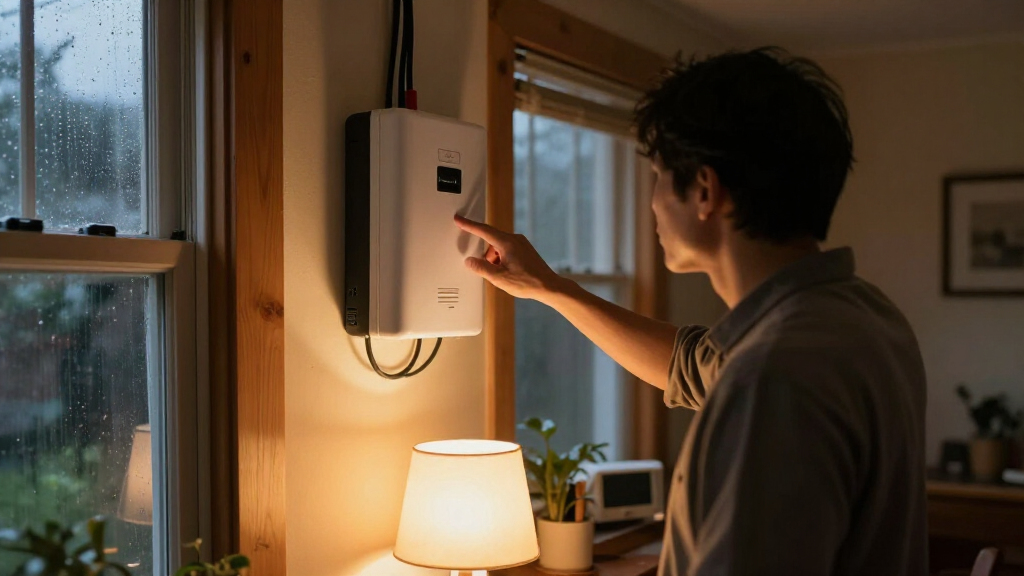
How We Picked
I ranked these systems by how clearly their listed configuration can serve a home-backup job: usable storage potential, AC output, voltage options, expandability, and included charging equipment. The order gives priority to products that combine substantial capacity with useful output and a practical path to larger storage. A high capacity number alone did not automatically earn a top place: a battery that requires a compatible inverter or other equipment presents a different setup burden from a ready-to-use power station.
I also weighed setup complexity, portability, and buyer fit. Bundled solar panels can make a package more complete for recharging, but their rated wattage is not a promise of continuous production. Since the provided product details do not specify items such as transfer-switch compatibility, circuit integration, or runtime for particular appliances, I avoid treating any system as a guaranteed whole-home solution. The rankings distinguish flexible, expandable systems from compact stations and component-based kits rather than implying they serve the same loads.
Factors to Consider When Choosing Home Battery Backup Systems
Choosing a home backup battery starts with the outage jobs you need it to handle, not the largest capacity figure on a listing. I would map the household’s must-run devices, decide whether backup means plug-in power or selected home circuits, and then compare systems on the equipment and installation needed to reach that goal.
Size storage around essential loads and outage length
Write down the devices you want to keep running and estimate how many hours each may be used during an outage. A refrigerator, router, lights, and medical equipment create a different demand from electric cooking, space heating, or central air conditioning. Battery capacity is measured in watt-hours, but actual runtime also depends on load, conversion losses, and how often appliances cycle. A common mistake is to add up appliance wattages and assume that tells you how long the battery will last; energy use over time matters too. If outages are usually brief, a smaller station may cover essentials, while longer outages call for more storage, a recharge plan, or both. I would leave room for uncertainty rather than planning around a battery’s full listed capacity as if every watt-hour were available to use.
Check starting power and voltage before buying
Storage capacity tells you how much energy a battery holds; output tells you which devices it can power at once. Motors and compressors can draw a short surge when they start, so compare both continuous and surge output with the appliances you intend to connect. Voltage matters as well: a 120V output suits many plug-in devices, while some home equipment needs 240V. The Jackery 5000 Plus is distinctive here because its listed output includes 120V/240V, but buyers still need to confirm connection and circuit requirements for their intended loads. Do not assume a large battery can power every appliance just because its capacity is high. Match the system’s output limits to the hardest-to-start device and the combined load you expect to run.
Decide whether you need a portable station or home integration
Portable power stations are designed around accessible outlets and can be useful for selected devices, but backing up home circuits may require compatible connection equipment and a qualified installation. A battery-only setup, such as the ECO-WORTHY Powermega, can call for additional components before it can deliver household AC power. Ask how the system connects to the loads you want supported, whether a transfer switch or inverter is needed, and who will install it. Never connect a generator or battery system to household wiring through an improvised method. Buyers who only need to plug in a few devices may prefer a self-contained station; those seeking circuit-level backup should confirm the full system design before ordering. This distinction can matter more than a small difference in battery capacity.
Treat solar panels as a recharge option, not a runtime guarantee
A panel bundle can help replenish a battery when grid power is unavailable, but the panel’s rated wattage does not mean that output will be available all day. Sun angle, weather, shading, season, and the system’s charging limits all affect real energy collection. Compare the panels’ combined rating with the station’s solar input specifications and ask whether the bundle includes the cables or adapters you need. A common planning error is to assume solar will keep up with household use during cloudy weather or winter conditions. If your priority is overnight backup, size storage for the night and treat daytime solar as a variable source of replenishment. If you already own compatible panels, check input compatibility before paying for a bundle.
Value expansion only if the system can grow the way you need
Expandable systems can make sense when a buyer wants to start with a smaller setup and add storage later, but expansion claims need practical checks. Confirm which batteries are compatible, whether added capacity requires extra equipment, and whether the inverter or output limits also increase. More stored energy does not necessarily let you run more devices at once. Compare the full configuration you expect to own, not just the base unit’s headline capacity. The Jackery 5000 Plus has a listed path up to 60kWh, while the EcoFlow DELTA Pro Ultra is presented here as a 12kWh configuration; those figures point to different scale and purchase plans. If your backup needs are stable and modest, buying capacity you will not use can add weight and system complexity without improving day-to-day resilience.
Plan for placement, maintenance, and safe operation
Before choosing a system, check its dimensions and weight against where it will be stored and how you would move it during an outage. Portable stations can be easier to reposition, while larger batteries and component-based systems may need a dedicated location and installation planning. Read the manufacturer’s instructions for temperature, ventilation, charging, storage, and inspection rather than assuming all lithium batteries have identical requirements. Consider whether you can access the unit’s controls and ports when the power is out, and whether the charging method you expect to use is available in that location. Keep the system away from wet areas and follow the specified operating limits. A backup system is only useful if it is charged, accessible, and suitable for the space where it will operate.
Frequently Asked Questions
Can a portable power station run my entire house during an outage?
Not automatically. A portable station can power compatible devices plugged into its outlets, but running household circuits usually depends on the unit’s output, voltage, connection method, and any required transfer equipment. Large loads such as air conditioning, electric ranges, and electric water heaters can exceed a station’s output or use its stored energy quickly. Before buying, list the circuits you want backed up and have a qualified electrician confirm whether the proposed system can connect to them safely. If you only need a refrigerator, communications, lights, and small electronics, a plug-in setup may be a better fit than circuit-level integration.
How much battery capacity do I need for an overnight outage?
There is no single capacity that fits every household because overnight demand depends on the devices, their power draw, and how long they run. Estimate each essential device’s energy use across the night, then add the totals and allow for conversion losses and a reserve. Refrigerators cycle rather than drawing their full rated power continuously, while heaters and cooking appliances can consume stored energy quickly. A capacity figure such as 1,024Wh, 2,010Wh, or 5,040Wh is a starting point, not a runtime promise. If you are uncertain, track your essential loads or consult their energy labels before choosing a battery.
Should I choose a solar bundle or buy panels separately?
A bundle can reduce compatibility guesswork if its panels are designed for the power station and include the required connections. Buying panels separately may make sense if you already own equipment or need a different panel arrangement, but you must match the station’s solar input limits and connector requirements. In either case, a panel’s rated wattage does not predict the energy it will collect in every location or season. Think about where panels can be placed during an outage, how much sunlight that spot receives, and whether you can move or secure them. The right choice depends on compatibility and practical access to sun, not just the panel count.
Can I add a battery later if my backup needs grow?
Some systems support expansion, but added batteries are not universally interchangeable, even when their capacities look similar. Check the manufacturer’s approved battery models, connection method, and any limits on total system capacity. Also verify whether expansion increases only storage or affects output too; more stored energy can extend runtime without allowing a larger appliance load. A system with a stated expansion path, such as the Jackery 5000 Plus, may suit buyers planning for future growth, while a fixed-capacity station may be simpler for stable needs. Compare the likely cost and equipment for the complete expanded setup before relying on future add-ons.
What should I check before connecting a battery system to home wiring?
Confirm that the system is designed for the connection you want and identify any required inverter, transfer switch, wiring, or professional installation. The product’s voltage and output limits must match the circuits and appliances, and the setup must prevent power from feeding back into utility lines. Never connect a power station to a wall outlet or household wiring with a homemade cord. Ask a licensed electrician to review the equipment and local requirements, especially if you want selected circuits powered automatically. If the product listing does not clearly specify home integration, treat that as a question to resolve before purchase rather than assuming the battery can connect directly.
Conclusion
For the broadest blend of capacity, 120V/240V output, and a stated expansion path, I would start with the Jackery Solar Generator 5000 Plus as the best overall pick. Buyers focused on larger storage should compare the EcoFlow DELTA Pro Ultra 12kWh configuration as the premium choice, while the ECO-WORTHY Powermega 48V battery is aimed at people building a component-based system and willing to confirm the inverter and installation details. For a bundled entry point, the Jackery HomePower 3600 Plus with two 200W panels gives beginners a station-and-panel package to evaluate, though buyers should verify their expected loads and solar compatibility. The best value depends on what you already own: the panel-free HomePower 3600 Plus or smaller Explorer 2000 v2 may make more sense if you do not need bundled panels, while the DELTA 3 Classic and Anker SOLIX S2000 fit narrower backup needs. Choose by the loads you need to support, the way the system connects, and whether you need portability, solar recharging, or room to expand.
Fall Picks
fall essentials
As an affiliate, we earn on qualifying purchases.