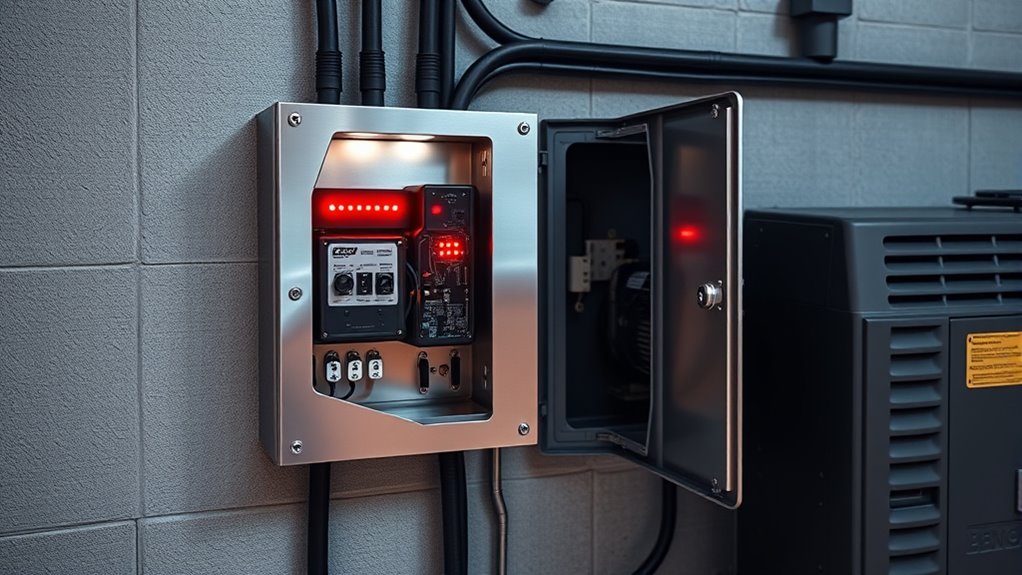

An automatic transfer switch (ATS) detects power outages by monitoring voltage levels from your utility. When it senses a disruption, it quickly isolates your system from the faulty utility line and signals your standby generator to start. Once the generator produces stable power, the ATS seamlessly switches your load from the utility to the generator, restoring power within seconds. If you keep exploring, you’ll discover how this reliable process keeps your power continuous during outages.

Get backup power and energy gear delivered free — and shop member deals
- Fast, free delivery on millions of items
- Access to Prime Big Deal Days deals on October 6–7
- Prime Video, Amazon Music and more included
Key Takeaways
- The ATS monitors utility power and detects outages or voltage fluctuations to determine when to switch to generator power.
- Upon detecting a power loss, the ATS signals the standby generator to start automatically.
- Once the generator produces stable power, the ATS transfers the electrical load from utility to generator seamlessly.
- When utility power is restored, the ATS switches back from the generator to utility supply and signals the generator to shut down.
- Proper maintenance of both the ATS and generator ensures reliable operation and smooth transfer during outages.

Have you ever experienced a power outage that leaves you in the dark or disrupts your daily routine? If so, you already know how important it is to have a reliable backup power system. That’s where standby generators come in—they automatically kick in when the grid fails. But to guarantee everything runs smoothly and safely, your system relies on an essential component: the automatic transfer switch (ATS). Understanding how the ATS works with your standby generator can help you appreciate the seamless power backup it provides.
A reliable backup power system relies on the essential automatic transfer switch (ATS).
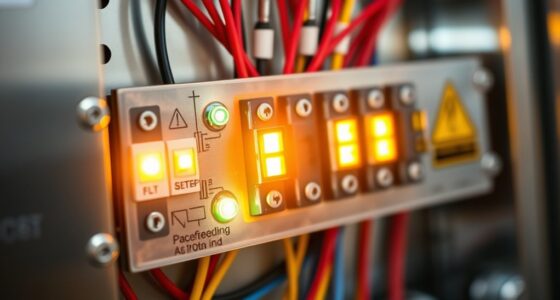
When the power grid is functioning normally, your home or business draws electricity from the utility company. The automatic transfer switch stays in its default position, allowing the main power supply to flow uninterrupted. However, when the ATS detects a power outage—either through voltage fluctuations or complete loss—it instantly isolates your electrical system from the faulty utility line. This quick detection is crucial because it prevents electrical hazards and potential damage to your appliances. Once the switch isolates the system, it signals the standby generator to start. The generator then begins producing power, and the ATS seamlessly transfers your electrical load from the utility to the generator. This transfer happens within seconds, guaranteeing minimal disruption.
During this process, generator maintenance plays a key role in keeping everything running safely and efficiently. Regular inspections, oil checks, and testing guarantee the generator is ready to activate at a moment’s notice. Proper generator maintenance also supports electrical safety by reducing the risk of faults or malfunctions that could jeopardize your safety or damage your equipment. Additionally, proper system sizing ensures your backup power setup can meet your household or business needs without overload or inefficiency. When the utility power is restored, the ATS detects the return of normal voltage levels and automatically switches your power source back from the generator to the utility. Once the transfer is complete, the generator shuts down, ready for the next outage.
Understanding how the ATS works with your standby generator highlights the importance of proper installation and ongoing maintenance. A well-maintained system not only provides reliable power but also ensures electrical safety for your household or business. It’s essential to work with qualified professionals who can install and service the system correctly, adhering to electrical safety standards. By doing so, you guarantee that your backup power system functions flawlessly during emergencies and keeps everyone safe from electrical hazards. Ultimately, the combination of an automatic transfer switch and a standby generator offers peace of mind, knowing you’ll stay powered even when the grid fails.
automatic transfer switch for generator
As an affiliate, we earn on qualifying purchases.
As an affiliate, we earn on qualifying purchases.
Frequently Asked Questions
How Long Does It Take for an ATS to Switch to Generator Power?
It typically takes about 10 to 30 seconds for an ATS to switch to generator power after a power outage. During this time, the transfer switch tests for power loss and guarantees generator compatibility before activating. Regular transfer switch testing helps confirm smooth operation, so your system responds quickly when needed. This quick transition minimizes downtime and keeps your essential systems running seamlessly without interruption.
Can an ATS Operate With Multiple Generator Types?
Think of your ATS as a skilled conductor, capable of managing multiple generator types. It can operate with various generator compatibility and wiring configurations, switching seamlessly based on power needs. By adjusting wiring setups, the ATS guarantees compatibility across different generators, like a conductor harmonizing diverse instruments. This flexibility helps maintain reliable power, regardless of the generator you choose, making your backup system adaptable and resilient in any situation.
What Maintenance Is Required for Automatic Transfer Switches?
You need to regularly inspect and test your automatic transfer switch to guarantee reliable operation, especially for fire safety and compliance with electrical codes. Keep it clean and free of dust, check connections for corrosion or wear, and test it periodically under load conditions. Schedule professional inspections annually, and replace worn components promptly. Proper maintenance helps prevent electrical faults and ensures your generator system activates correctly during power outages.
Are There Legal Regulations for Installing ATS Systems?
Yes, you need to guarantee legal compliance and follow installation standards when installing ATS systems. Local codes and regulations vary, so check with your city or state authorities. Proper permits and inspections are often required to meet safety and electrical standards. Installing an ATS without adhering to these legal requirements can lead to fines, safety hazards, or system failure. Always consult a licensed electrician or professional to ensure proper, compliant installation.
How Does an ATS Communicate With Home Automation Systems?
Think of your ATS as a vigilant guardian, silently communicating through a language of symbols. It uses home automation integration and communication protocols like Wi-Fi, Z-Wave, or Zigbee to connect with your smart system. This seamless dialogue allows your ATS to send and receive signals, coordinating generator switching and ensuring your home stays powered without manual intervention. Your system’s intelligence lies in this quiet, sophisticated exchange.
standby generator transfer switch
As an affiliate, we earn on qualifying purchases.
As an affiliate, we earn on qualifying purchases.
Conclusion
Now that you understand how automatic transfer switches act like diligent gatekeepers, seamlessly switching power sources like a well-rehearsed dance, you’re better equipped to appreciate your standby generator’s silent heroics. Think of the switch as a loyal friend, always watching and ready to step in when needed, ensuring your home stays lit and your life flows smoothly. With this knowledge, you can sleep soundly, knowing your power backup system is quietly working behind the scenes, like a guardian angel.
automatic generator transfer switch
As an affiliate, we earn on qualifying purchases.
As an affiliate, we earn on qualifying purchases.
home backup power transfer switch
As an affiliate, we earn on qualifying purchases.
As an affiliate, we earn on qualifying purchases.
Fall Picks
fall essentials
As an affiliate, we earn on qualifying purchases.