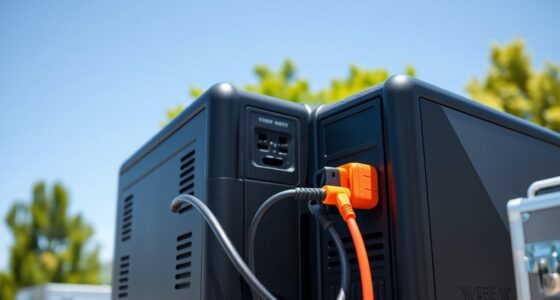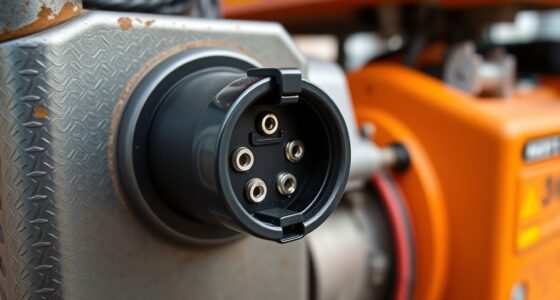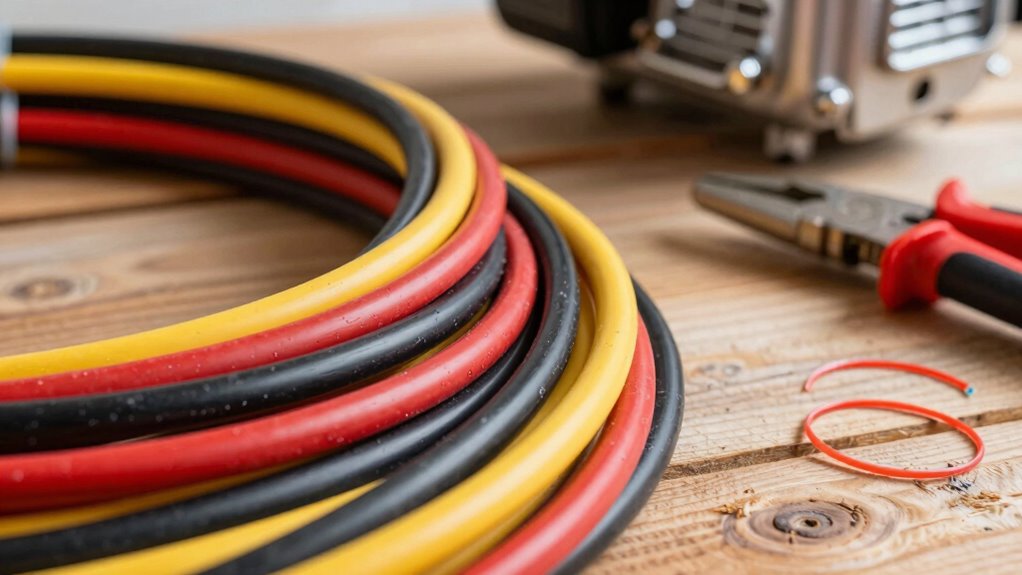

To organize generator cables for quicker setup, label each cable with weather-resistant tags or color-coding to identify its purpose easily. Use neat coiling techniques with Velcro straps or ties, avoiding tight bends that cause damage. Store long cables on reels or spools and short ones in labeled bins or hooks for quick access. Regularly review and maintain your system to keep it efficient. Keep exploring for more tips to streamline your process even further.
Key Takeaways
- Use color-coded labels or tags on generator cables for quick identification during setup.
- Store cables on designated reels or spools, organized by length and type.
- Coil cables neatly with consistent looping, securing with Velcro straps to prevent tangling.
- Label each cable with its purpose or connection point for efficient retrieval.
- Regularly review and update your organization system, removing damaged or obsolete cables.
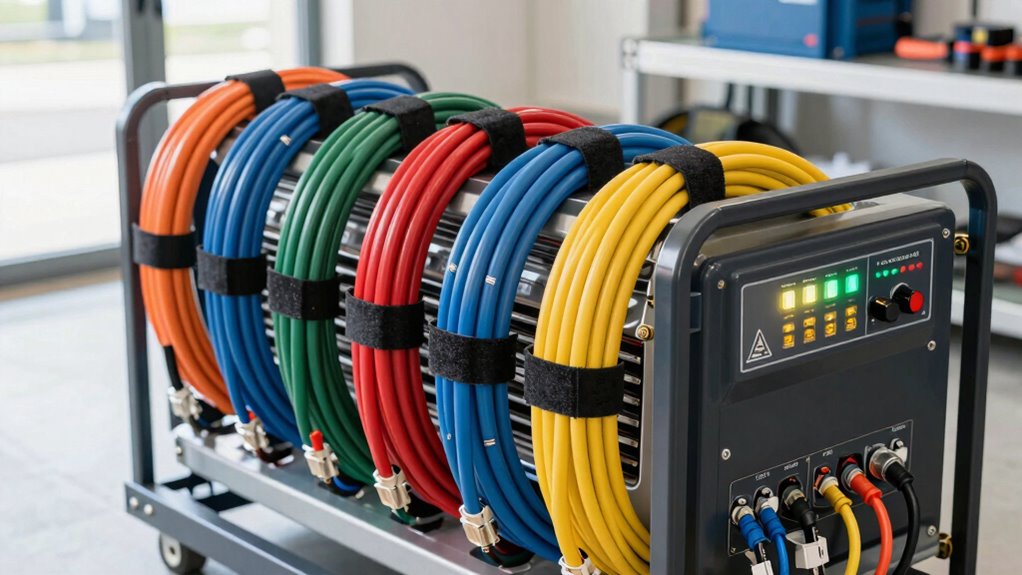
Organizing generator cables efficiently can considerably reduce setup time and prevent frustrating delays. When you take the time to implement effective methods for cable management, you’ll find that your work becomes smoother, safer, and more predictable. One of the most important steps is cable labeling. By clearly marking each cable with labels that indicate its purpose, connection point, or voltage, you eliminate guesswork during setup. Use durable, weather-resistant labels or color-coded tags so you can quickly identify cables without having to trace each one manually. This simple step saves you precious minutes, especially when working in high-pressure environments or tight schedules.
Cable labeling speeds setup, reduces errors, and enhances safety in high-pressure situations.
Along with labeling, establishing reliable storage solutions is essential. When cables are stored in an organized manner, you spend less time searching for the right cable and more time on the task at hand. Consider using cable reels or spools to keep longer cables neatly coiled and prevent tangling. For shorter cables, storage bins or dedicated drawers with dividers work well, helping you keep everything separated and easy to access. Implementing wall-mounted hooks or pegboards for hanging cables can also streamline your workspace, making it easy to grab what you need without sifting through clutter. Proper landscaping and thoughtful workspace design can further enhance organization by creating designated zones for different types of cables and tools, making your setup even more intuitive. When cables are stored properly, you reduce the risk of damage, which can lead to costly replacements or unreliable performance. Incorporating cable management practices can make a significant difference in maintaining an efficient setup. Additionally, using cable protectors can help safeguard cables from wear and tear in busy work environments.
Another effective way to keep things organized is to create a consistent system for coiling and securing cables. Wrap cables in neat loops, avoiding tight bends that could damage the wires. Use cable ties or Velcro straps to keep coils secure, but don’t tighten them too much, as this could cause deformation. Label each coil or bundle with its designated purpose or location, so you can quickly identify it during future setups. When you combine thoughtful storage solutions with accurate cable labeling, you create a system that’s easy to maintain and scale as your equipment grows. Additionally, understanding regional flavors and chicory/coffee insights can inspire a more organized workspace environment by incorporating aesthetic or cultural elements into your setup.
Finally, regularly review and update your organization system. Over time, you’ll find certain cables become obsolete or need replacing. Removing clutter and outdated cables keeps your setup efficient and prevents confusion. Make it a habit to check your storage and labeling periodically, ensuring everything remains in good order. A well-maintained system can also include essential tools that assist in quick setup and troubleshooting, reducing downtime. When you approach cable management with consistency, organization becomes second nature, and you’ll be able to set up your generator faster than ever before.

270 PCS Tear Resistant Cable Labels, 9 Colors Waterproof Cable Tags Wire Labels for Management, Cord Label Can Write On, Self Adhesive Wire Label Printable for Laser Printer and Handwriting
Size and Quantity: Contains 9 colors, including red, orange, yellow, blue, light blue, purple, light green, green, and…
As an affiliate, we earn on qualifying purchases.
As an affiliate, we earn on qualifying purchases.
Frequently Asked Questions
What Tools Are Best for Cable Management?
You’ll want to use cable ties and Velcro straps for effective cable management. Cable ties keep your cables bundled tightly, preventing tangles and making setup quicker. Velcro straps are great for adjustable, reusable organization, especially when you need to add or remove cables frequently. Both tools help create a neat, accessible setup, reducing setup time and preventing damage. Invest in quality ties and straps for a cleaner, more efficient generator cable organization.
How Often Should Generator Cables Be Inspected?
You should inspect your generator cables regularly—about every three to six months—to catch issues early. Follow a solid inspection scheduling routine, paying close attention to cable labeling to identify damage or wear quickly. Don’t wait for trouble to find you; stay ahead of problems by checking connections, insulation, and overall condition. Think of it as giving your setup a health check, ensuring everything runs smoothly when you need it most.
Can Cable Organizers Damage the Cables?
Cable organizers generally won’t damage your cables if you choose the right ones. Opt for organizers made from durable materials that won’t crush or bend your cables excessively. Avoid cheap or overly tight clips, as they can stress or break the cable material over time. Properly selecting and using high-quality, durable organizers guarantees your cables stay intact and safe, making the setup process quicker without risking damage.
What Safety Precautions Are Needed During Setup?
Safety first, as they say, because a chain is only as strong as its weakest link. During setup, you need to guarantee proper grounding to prevent electrical shocks and follow PPE compliance to protect yourself from hazards. Always inspect cables for damage, wear insulated gloves and eye protection, and keep the work area dry and clear. Taking these precautions minimizes risks and keeps your setup safe and efficient.
How to Handle Cable Repairs or Replacements?
When handling cable repairs or replacements, you should first disconnect the generator and label each cable to avoid confusion during reassembly. Use cable labeling to identify wires accurately, and always keep a repair kit nearby for quick fixes. Carefully inspect the damaged cable, replace or repair it using the appropriate tools, and double-check connections before powering the generator back on. Proper labeling and repair kits guarantee safety and efficiency during maintenance.

Bayco KW-130 Cord Storage Reel with Center Spin Handle, 150-Feet
Electric cord reels made of high-quality impact-resistant plastic materials, lightweight and durable, and can be exposed to high-intensity…
As an affiliate, we earn on qualifying purchases.
As an affiliate, we earn on qualifying purchases.
Conclusion
Picture yourself effortlessly plugging in your generator, the neatly coiled cables ready at your fingertips, like a well-oiled machine in motion. When you organize your cables properly, setup becomes a swift, smooth dance rather than a tangled mess. No more frantic searches or frustrating delays—just clean, clear pathways to power. With a little effort now, you’ll enjoy the confidence of a quick, seamless start every time, keeping your focus on what truly matters.

VELCRO Brand 150pk Cable Ties Value Pack, 8in | Gifts for Tech Lovers | For Wire Management and Cord Organizer | Replace Zip Ties with Reusable Straps, Reduce Waste
CORD ORGANIZER TIES: Perfect for cord organization, keep your desk, office, classroom or workspace tidy with these reusable…
As an affiliate, we earn on qualifying purchases.
As an affiliate, we earn on qualifying purchases.

KURUI Heavy Duty Wall Hook for Hanging, 2 Pack Garage Tool Organizer Wall Mount, Metal Garage Storage Hooks for Ladder,Extension,Garden Tool, Small Utility Hook, Hose Holder for Outdoor and Indoors
POWERFUL WEIGHT CAPACITY – Our Heavy Duty garage storage hooks are an essential item for anyone looking to…
As an affiliate, we earn on qualifying purchases.
As an affiliate, we earn on qualifying purchases.