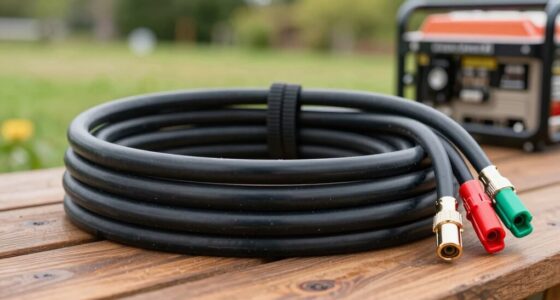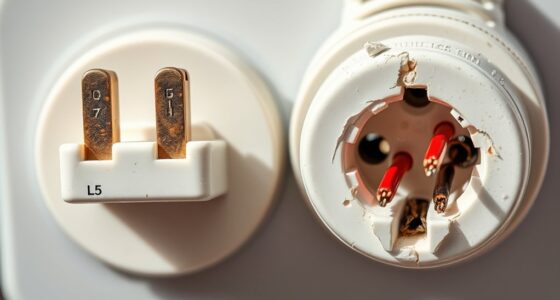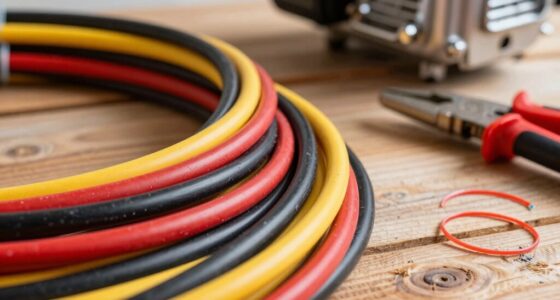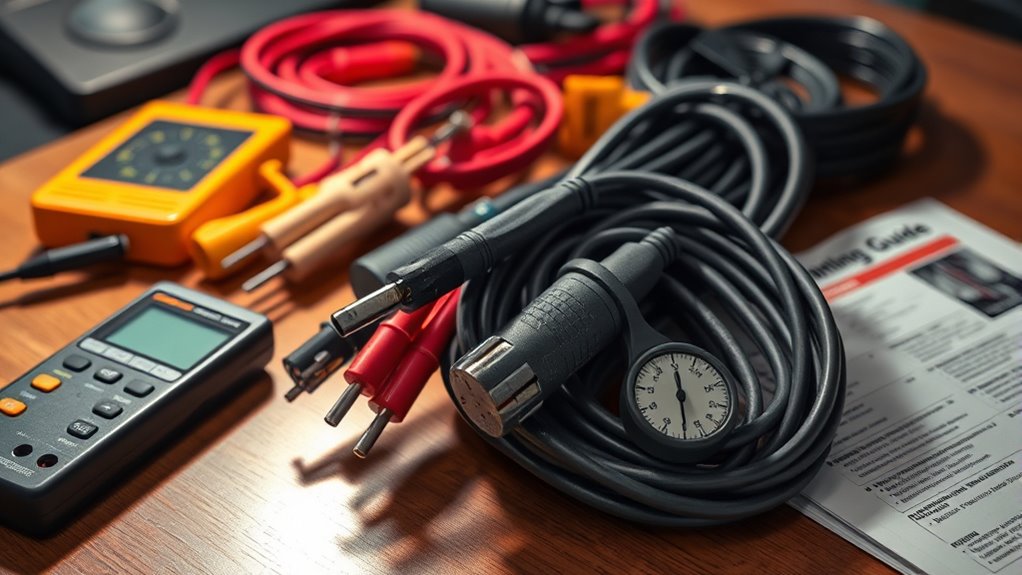

When choosing an extension cord gauge, you need to take into account your device’s power needs, the cord length, and your environment. Higher wattage devices require thicker gauges like 12 or 14 AWG, especially over longer distances to prevent voltage drops and overheating. Prioritize safety over cost and regularly inspect your cords for damage. If you keep these rules in mind, you can guarantee safe, reliable performance—stick with us to discover more helpful tips.

Get backup power and energy gear delivered free with Prime
- Fast, free delivery on millions of items
- Prime Video, Amazon Music and more included
- Member-only deals all year
Key Takeaways
- Match cord gauge to device wattage and power load to prevent overheating and ensure safety.
- Consider cord length; longer cords require thicker gauges to minimize voltage drop.
- Assess usage environment—outdoor, heavy-duty, or temporary setups—to choose appropriate insulation and gauge.
- Prioritize safety over cost by selecting high-quality cords with proper insulation and ratings.
- Regularly inspect and maintain cords, checking for damage, wear, and proper storage to extend lifespan and safety.
Understanding the Power Requirements of Your Devices
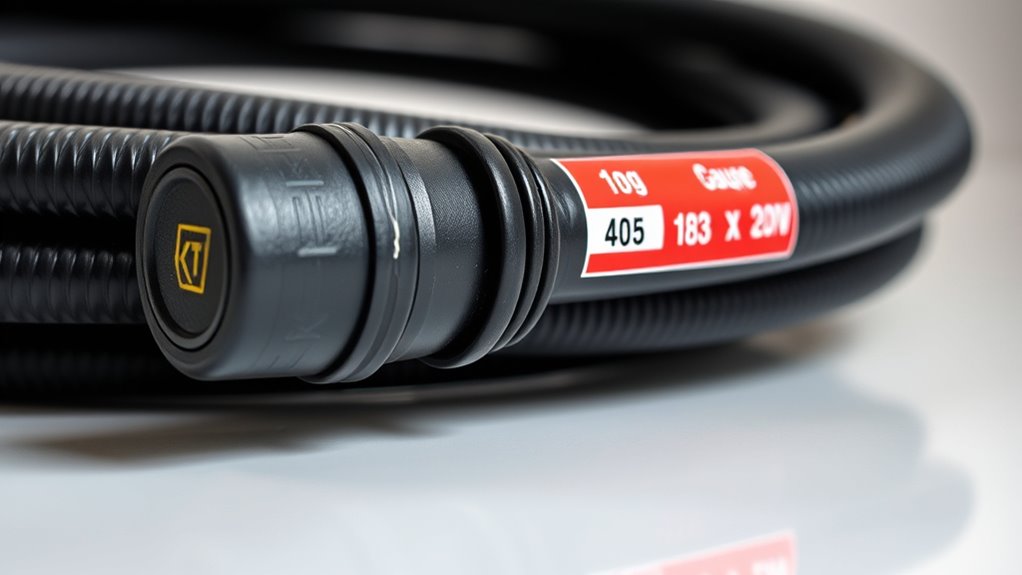
Knowing the power requirements of your devices is essential before choosing an extension cord. You need to determine the power load your devices will draw to select the appropriate wire gauge. Check the wattage or amperage ratings on each device, as higher power loads require thicker wires to safely carry the current. Using a cord with an inadequate wire gauge can lead to overheating or fire hazards. For example, devices with a high power load, like power tools or heaters, need a thicker gauge, such as 12 or 14 AWG. Conversely, low-power items like phone chargers can use a thinner wire. Always match the wire gauge to your devices’ power requirements to guarantee safety and suitable performance. Additionally, understanding air quality concerns can help you choose safer electrical setups that minimize fire risks related to poor ventilation or overloaded circuits.
Recognizing the Impact of Cord Length on Gauge Choices
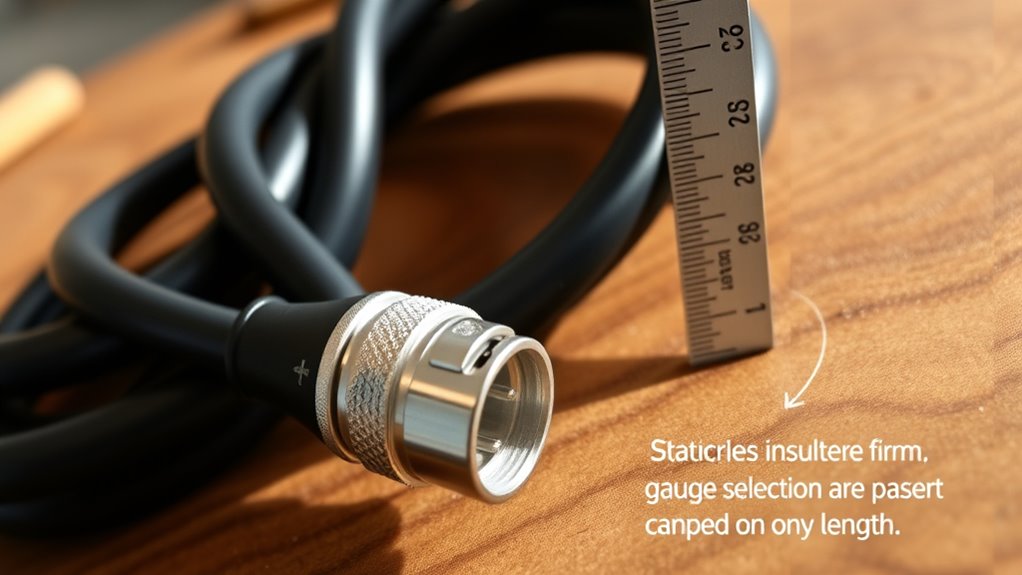
Longer extension cords require a thicker wire gauge to prevent voltage drops and guarantee safe operation. As your cord length increases, the resistance within the wire also rises, which can reduce the voltage reaching your devices. To counteract this, you need to select a wire gauge that can handle extended distances without compromising performance or safety. Thicker gauges, such as 12 or 14 AWG, are better suited for longer cords because they minimize voltage loss. Ignoring the impact of cord length on gauge choices may lead to overheating wires, reduced device efficiency, or potential safety hazards. Always consider the length of your extension cord when choosing the wire gauge to ensure ideal power delivery and safe operation. Additionally, understanding the conductor material used in the wire can influence its conductivity and overall safety.
Matching the Correct Gauge to Your Usage Environment
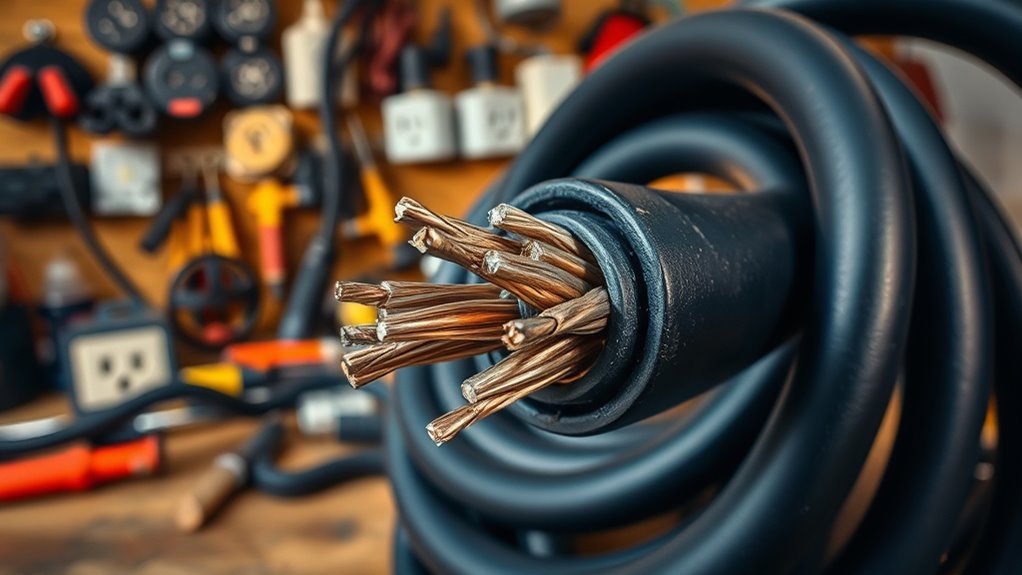
Choosing the right gauge for your extension cord depends heavily on the environment in which you’ll use it. To match the correct gauge, consider your specific needs and how wire gauge standards guide your selection. For temporary setups, thinner gauges like 16 or 18 may suffice, but for higher power demands, thicker gauges such as 14 or 12 are better. Keep in mind:
- Power load and device requirements
- Cord length and potential voltage drop
- Environment factors like outdoor exposure or heavy use
- Gold IRA considerations can influence long-term investment planning, which parallels the importance of selecting the right extension cord gauge for safety and efficiency.
Matching your gauge to your environment guarantees safety and efficiency. Using a gauge too thin for your needs can cause overheating, while too thick may be unnecessary and cumbersome. Always evaluate your usage environment to select the proper extension cord gauge confidently.
Prioritizing Safety Over Cost Savings
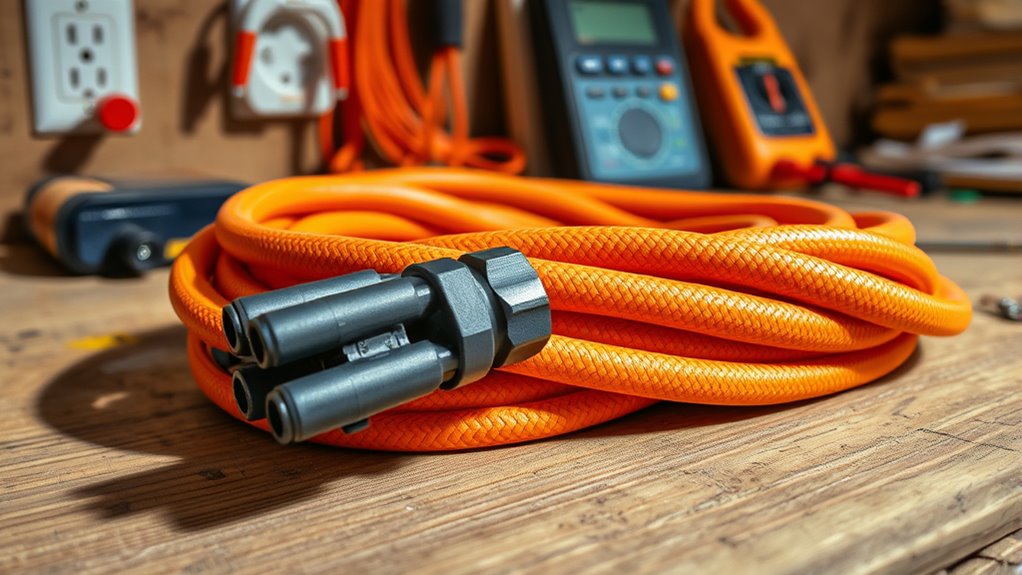
While saving money by selecting a cheaper extension cord might seem appealing, prioritizing safety is essential to prevent accidents and damage. Cheaper cords often lack proper insulation or durable construction, increasing risks of short circuits or fires. Invest in high-quality gauges designed for your specific needs, even if they cost more upfront. Proper cord storage is crucial; avoid tangling or storing cords in damp or hot environments, which can degrade insulation. Weatherproofing techniques, such as using outdoor-rated cords and protective covers, help keep cords safe during adverse conditions. Remember, cutting corners on safety can lead to costly repairs or injuries. Glycolic acid benefits and the importance of using suitable products for specific areas highlight how choosing the right tools and materials ensures safety and effectiveness. Prioritizing quality and appropriate storage over initial savings ensures your setup remains safe, reliable, and long-lasting.
Regularly Inspecting and Maintaining Your Extension Cords
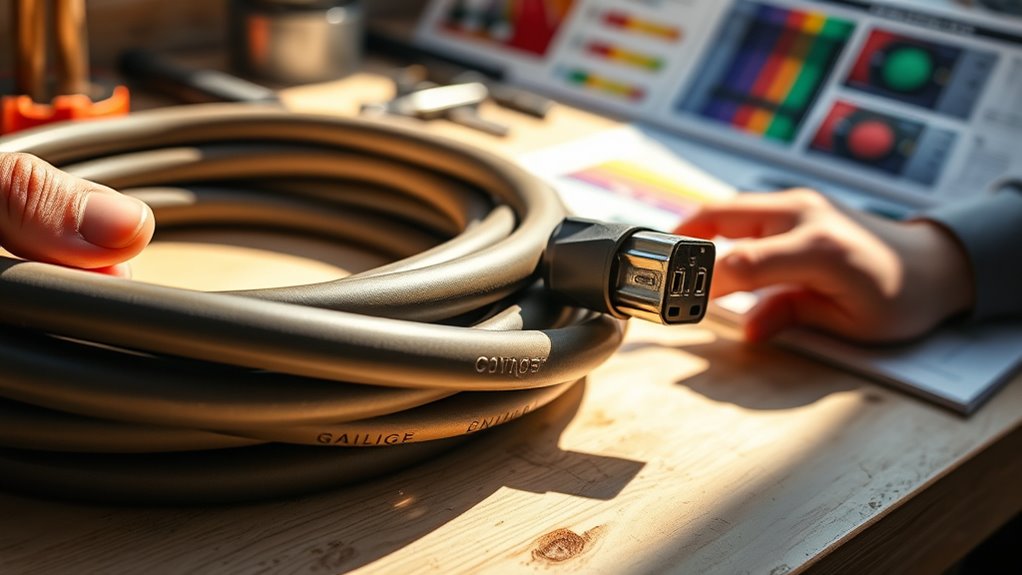
Regularly inspecting and maintaining your extension cords is essential to guarantee their safety and functionality. Proper care prevents damage and ensures reliable performance. Store cords properly when not in use, avoiding tight knots or tangles that can cause wear. Check for signs of wear, such as fraying or cracks, especially around the plug and connector areas. Ensure weather resistance features are intact if used outdoors; damaged weatherproofing can expose cords to moisture and reduce safety. Keep cords off the ground and away from sharp objects. During inspections, look for:
- Cracks, cuts, or exposed wires
- Damaged or missing weather-resistant coatings
- Proper cord storage to prevent unnecessary wear
Maintaining your extension cords helps prolong their life and keeps your workspace safe. Also, understanding the Self Watering Plant Pots concept can inspire you to implement low-maintenance solutions for your garden needs.
Frequently Asked Questions
Can I Use a Thicker Gauge Extension Cord for All Devices?
Yes, you can use a thicker gauge extension cord for all devices, but it’s not always necessary or safe. Wire gauge standards determine the appropriate thickness for different power loads, and using a cord that’s too thick won’t harm your devices. However, for extension cord safety, select the right gauge based on your device’s power needs. Using the correct gauge ensures safe operation and prevents overheating or electrical hazards.
How Do Weather Conditions Affect Extension Cord Gauge Selection?
Weather conditions dramatically impact your extension cord choice. When moisture or rain’s in the air, you’ll need a cord with better weather resistance to prevent shorts or failures. Humidity and wet environments increase the risk of electrical issues, so opt for a thicker gauge or one labeled moisture-resistant. Don’t underestimate weather impact—using the right gauge and insulation can keep you safe and your equipment running smoothly come rain or shine.
Is It Safe to Daisy-Chain Multiple Extension Cords?
Daisy-chaining multiple extension cords isn’t safe because it increases safety hazards and can overload the electrical capacity. When cords are linked, the combined current might surpass what the cords and outlets can handle, risking overheating or fires. Always use a single, properly rated extension cord for your needs, and avoid connecting multiple cords to guarantee safety and prevent electrical hazards. If in doubt, consult an electrician.
What Signs Indicate My Extension Cord Needs Replacement?
If your extension cord shows signs of wear and tear or has electrical burns, it’s time to replace it. These symptoms act as warning signals, like a flickering light in a dark room, indicating danger. Frayed insulation, scorch marks, or exposed wires warn you that the cord can’t safely carry current anymore. Trust these signs—ignoring them risks shock, fire, or damage to your devices. Always prioritize safety and swap out damaged cords promptly.
Are There Specific Gauges Recommended for High-Power Appliances?
For high-power appliances, you should choose extension cords with wire gauge standards of 12 or 10 gauge, depending on the appliance’s power ratings. These gauges handle higher current loads safely, preventing overheating and electrical hazards. Always check your appliance’s power ratings first, and select a cord with an appropriate gauge to guarantee safe and reliable operation. Never use a thinner gauge for high-power devices, as it poses risks.
Conclusion
By following these five rules, you’ll guarantee your extension cords are safe and efficient. Some might think saving a few dollars on a thinner gauge is worth the risk, but neglecting proper selection can lead to overheating or fire hazards. Prioritize safety and performance over cost. With thoughtful planning and regular inspections, you protect yourself and your devices, making sure your setup remains reliable and secure for years to come.
Halloween Picks
halloween
As an affiliate, we earn on qualifying purchases.