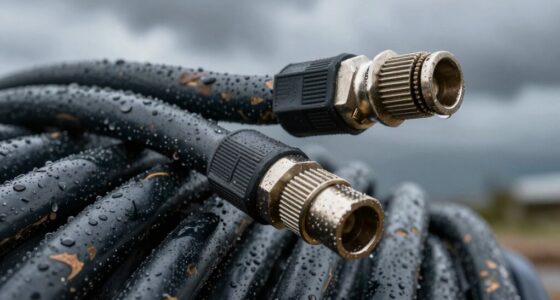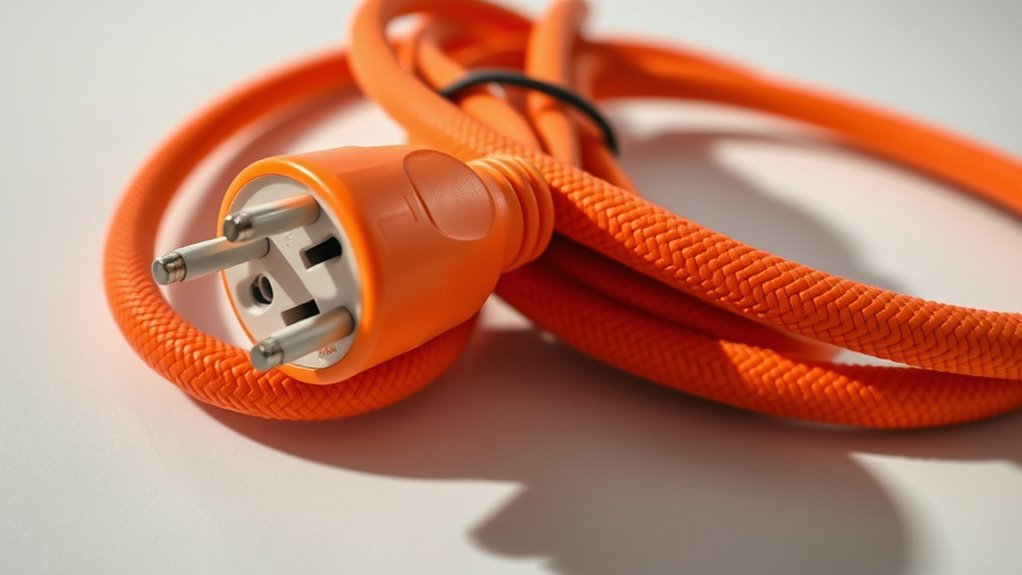

To avoid voltage drops and overheating, choose the shortest extension cord that meets your power needs. Longer cords increase resistance, causing lower voltage and potential overheating. Always check the cord’s rated capacity and don’t overload it by plugging in too many devices. Avoid daisy-chaining cords, as this raises safety risks. Opt for cords with safety features like circuit breakers, and regularly inspect for damages. Keep these tips in mind to guarantee your safety and equipment performance.
Key Takeaways
- Keep extension cords as short as possible to minimize voltage drop and reduce overheating risks.
- Always select cords rated for your device’s wattage and avoid overloading.
- Avoid daisy-chaining multiple extension cords to prevent overload and voltage issues.
- Use cords with safety features like circuit breakers or thermal cut-offs for added protection.
- Regularly inspect cords for damage and replace any with frayed wires or exposed insulation.

Have you ever considered how safe your extension cords really are? Many people overlook the importance of proper cord length and how it impacts safety. Using an extension cord that’s too long can lead to voltage drops, which means the devices connected might not get enough power to operate correctly. This not only affects performance but can also cause overheating, posing a fire risk. To prevent this, choose a cord length that matches your needs. Keep it as short as possible to avoid unnecessary voltage drop and ensure your devices receive consistent power. If you need to extend the reach, opt for a high-quality cord designed to handle longer distances without significant voltage loss. Remember, longer cords aren’t always better; they can be a hidden hazard if not selected thoughtfully. Proper extension cord selection involves considering both length and capacity to maintain safety and efficiency.
Overload prevention is another critical aspect of extension cord safety. Many users mistakenly believe that plugging multiple devices into a single extension cord is harmless, but it can quickly lead to overload. Every extension cord has a maximum load capacity, typically indicated on the cord’s label or packaging. Exceeding this limit causes the wire to heat up, increasing the risk of melting insulation or starting a fire. To prevent overload, always check the combined wattage or amperage of the devices you connect and ensure it stays within the cord’s rated capacity. If you’re running several high-powered tools or appliances, consider using a heavy-duty extension cord rated for higher loads or, better yet, dedicate separate outlets for each device when possible.
Additionally, avoid daisy-chaining multiple extension cords together. Doing so can increase the risk of overload and voltage drop, especially if the cords are of different lengths or ratings. Instead, use a single, appropriately rated extension cord that covers your entire working area. When selecting an extension cord for overload prevention, look for one with built-in safety features like thermal cut-off switches or circuit breakers. These safety mechanisms can shut off power if the cord becomes too hot or overloaded, providing an extra layer of protection.

Portable Power Station with 40W Solar Panel, 100W Solar Powered Generator
- Includes 40W Solar Panel: Foldable solar panel for recharging
- High-Capacity Power Bank: 100W lithium-ion battery for outdoor use
- Multiple Charging Outputs: AC, USB, USB-C, and DC ports
As an affiliate, we earn on qualifying purchases.
Frequently Asked Questions
Can Using Multiple Extension Cords Cause Safety Hazards?
Using multiple extension cords can create safety hazards, especially indoors. You might cause cord damage from overloading or tangling, increasing the risk of electrical shorts or fires. Always limit the number of cords you connect and avoid daisy-chaining them. This helps maintain indoor safety and prevents cord damage. If you need more outlets, consider installing additional dedicated outlets or using power strips with surge protection instead of multiple extension cords.
How Can I Tell if My Extension Cord Is Overloaded?
You can tell if your extension cord is overloaded by checking its rating, usually marked on the cord. If you’re using multiple devices that draw more current than the cord’s capacity, it’s overloaded. Always choose the proper cord by matching your device’s power needs with the extension cord’s ratings. Proper cord selection helps prevent overheating and voltage drops, ensuring safe and reliable use.
Are There Specific Extension Cords for Outdoor Use?
Of course, there are outdoor extension cords—because who doesn’t want their yard to turn into a lightning bolt show? Look for weatherproof ratings and rugged insulation types, designed to brave rain, sun, and snow. These cords resist moisture and temperature swings, ensuring safety and durability. So, next time you’re outdoors, grab an outdoor cord—your plants and power tools will thank you with a safe, shock-free performance.
What Is the Maximum Recommended Length for an Extension Cord?
You should limit your extension cord length to 50 feet for maximum safety. The gauge importance and power capacity play a key role here; thicker gauges (lower numbers) handle longer distances better by reducing voltage drop. For high-power tools or outdoor use, stick to shorter cords or those with a lower gauge to guarantee safe operation and prevent overheating. Always check the manufacturer’s recommendations for your specific cord and device.
How Do I Safely Store Extension Cords When Not in Use?
You should coil your extension cords loosely and store them in a cool, dry place to prevent damage. Did you know that improper storage causes 20% of extension cord failures? Use storage tips like hanging cords on hooks or storing them in a dedicated box. Proper cord organization not only prolongs their lifespan but also keeps your workspace safe and clutter-free. Always guarantee cords are fully dry before storing.

Portable Solar Generator 300W Portable Power Station with 60W Solar Panel
- Portable with 60W Solar Panel: Powerful 300W generator for outdoor use
- Multiple Charging Outlets: AC, DC, USB ports with SOS flashlight
- Versatile Charging Options: Recharge via AC, solar, or carport
As an affiliate, we earn on qualifying purchases.
Conclusion
By following these safety tips, you can prevent overheating and voltage drops that could turn your home into a disaster zone. Always choose the right cord for your needs, avoid overloading, and inspect cords regularly. Remember, neglecting these precautions is like inviting a wildfire into your living room—dangerous and destructive. Stay vigilant, prioritize safety, and keep your electrical system running smoothly. After all, a safe home isn’t just a goal—it’s your sanctuary from chaos.

Takki Solar Generator 120W Peak Portable Power Station with 21W Solar Panel 88.8Wh Battery Power Bank with 110V AC Outlet for Camping RV Tent Home Outages Emergency
- Lightweight and Compact: Weighs only 2.29 lbs, fits in backpack
- Fast Charging: Charges from 0% to 80% in 2 hours
- Includes Solar Panel: Foldable 21W solar panel for sunlight recharge
As an affiliate, we earn on qualifying purchases.

DARAN Portable Power Station 89.6Wh LiFePO4 Battery 100W(200W Peak) Solar Power Bank, Portable Charger Small Generator with AC Outlets & PD Fast Charging for Home/Laptop/Camping(Solar Panel Optional)
- Compact and Lightweight: Fits in pocket, weighs 2.54 pounds
- Ergonomic Handle: Easy to carry on the go
- Multiple Output Ports: 7 ports including AC, USB-C, USB-A, DC
As an affiliate, we earn on qualifying purchases.