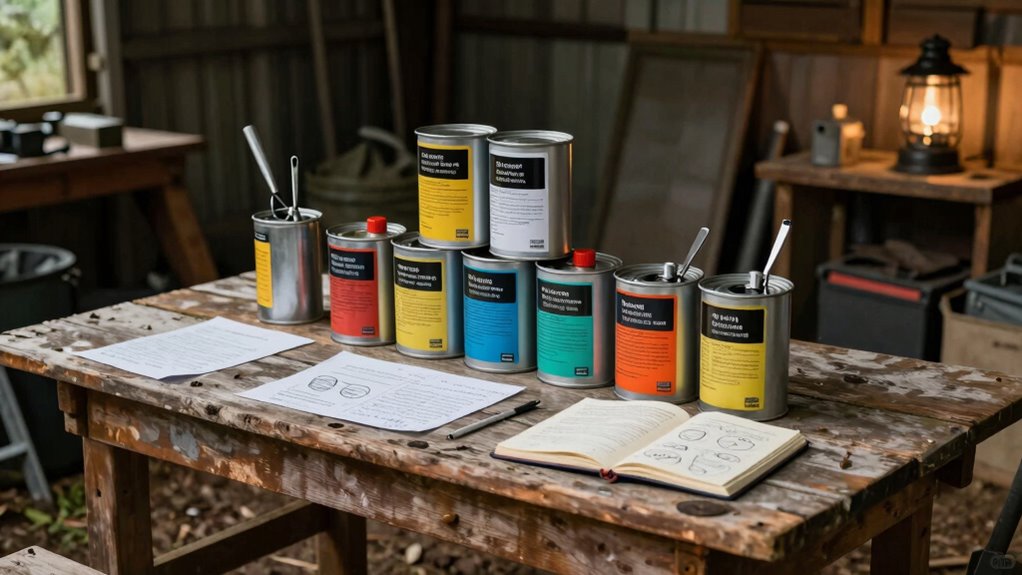
To build a fuel plan for multi-day blackouts, start by identifying all appliances and devices that need power or heat and calculate their daily fuel use. Store enough fuel in secure, airtight containers in cool, dry places, clearly labeled and away from living areas. Regularly inspect and rotate supplies to keep them fresh, and follow safety guidelines. Keep fire safety equipment nearby, and if you want to learn more about creating a sustainable, safe fuel strategy, keep exploring this essential preparedness step.
Open a free Amazon Business account
Business pricing, bulk buying and tax-exempt orders.
As an affiliate, we earn on qualifying purchases.
Key Takeaways
- Assess all appliances and devices needing fuel, calculating daily consumption for each to determine total requirements.
- Store fuel in appropriate, labeled containers in cool, dry areas away from heat and flames.
- Plan for several days to weeks of fuel, rotating supplies and checking for quality and expiration.
- Follow safety regulations, keep fire extinguishers nearby, and handle fuel with proper safety gear.
- Regularly review and update your fuel plan, replenishing supplies before they expire or degrade.
When facing the prospect of multi-day blackouts, having a solid fuel plan is essential to keep your home powered and your family safe. The key to this plan is proper fuel storage and making sure you have enough emergency supplies to last through the outage. Start by evaluating your energy needs. Determine what appliances, heating sources, or devices require fuel and how much they consume daily. This will give you a clear idea of the amount of fuel you need to store. Avoid guessing; precise calculations prevent running out of fuel too quickly or overstocking unnecessarily.
Assess your energy needs carefully to ensure sufficient fuel storage for extended blackouts and avoid unnecessary overstocking.
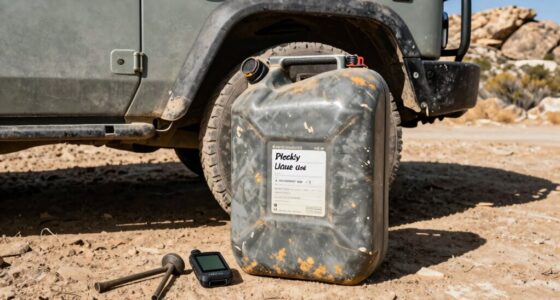
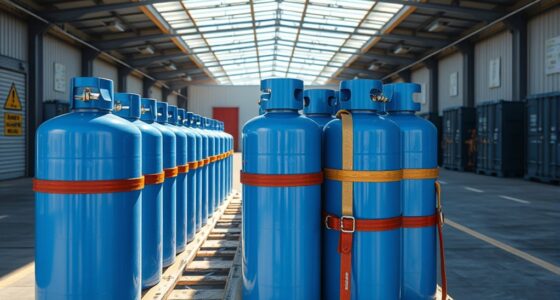
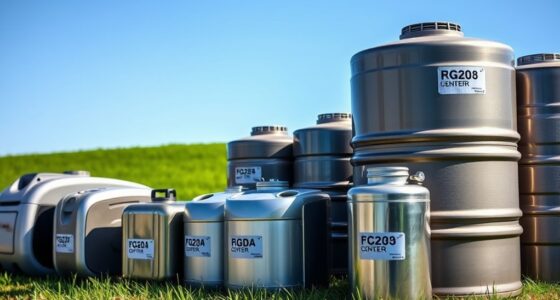
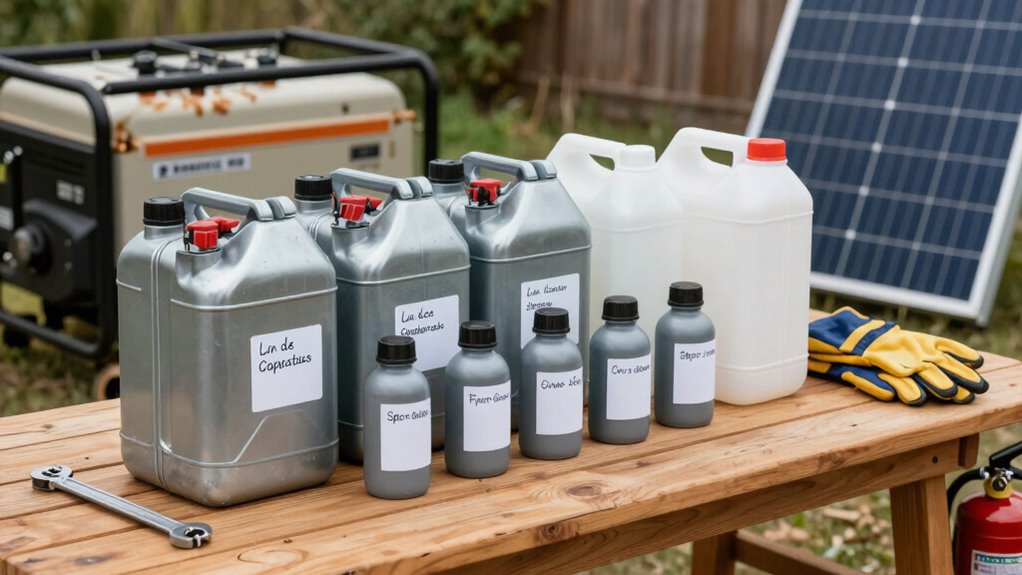
Fuel storage is vital in building an effective plan. Use appropriate, airtight containers designed for fuel storage to prevent leaks and spoilage. Keep your fuel in a cool, dry, well-ventilated area away from direct sunlight and sources of heat or flame. Safety is paramount—never store fuel inside your living space, and always follow local regulations regarding fuel storage. Consider investing in larger, secure containers if you anticipate a long blackout, but make sure they are easy to handle and transport if needed. Label all containers clearly for quick identification, especially if you store different types of fuel, like propane, kerosene, or diesel. Additionally, understanding fuel quality can help ensure your supplies remain safe and effective over time. Proper storage practices can also extend the shelf life of your fuel and prevent potential hazards. Regular inspection and fuel maintenance are essential to detect leaks or contamination early and maintain safe storage conditions. Maintaining proper storage conditions can significantly improve the longevity of your fuel supplies.
Having an emergency supply of fuel means you’re prepared for extended outages. Stockpile enough fuel to cover at least several days to a week or more, depending on your needs. Rotate your supplies regularly to keep the fuel fresh and usable. Remember, fuel can degrade over time, which diminishes its efficiency and safety. Check your supplies periodically, and replenish them before they reach expiration. Also, keep essential safety equipment nearby—fire extinguishers rated for fuel fires, gloves, and safety goggles—so you can handle fuel safely if needed. Proper fuel storage practices and regular maintenance are crucial for safety and efficiency.
As an affiliate, we earn on qualifying purchases.
Frequently Asked Questions
What Types of Fuel Are Safest for Long-Term Storage?
You should opt for fuels like stabilized gasoline, kerosene, or diesel, as they offer better fuel stability for long-term storage. Use proper storage containers designed for fuel, such as approved metal or high-density plastic containers, to prevent leaks and degradation. Regularly check and rotate your supplies to maintain quality. Keep fuels in a cool, dry place away from heat sources to guarantee safety and extend storage life.
How Often Should I Rotate Stored Fuel?
You should rotate your stored fuel every 6 to 12 months to maintain fuel stability and guarantee safety. Investigating the theory that older fuel degrades over time reveals it can become less efficient or even unsafe. Use proper storage containers designed for fuel, and label them clearly. Regular rotation helps prevent buildup of contaminants, keeps your supply fresh, and ensures your fuel remains reliable when you need it most.
Can I Mix Different Fuel Types Safely?
Mixing different fuel types isn’t generally safe due to potential chemical reactions and engine damage. Fuel blending can be done safely if you stick to recommended ratios and compatible fuels, like ethanol-blended gasoline with pure gasoline. Always prioritize storage safety by using proper containers and clearly labeling fuels. If unsure, consult manufacturer guidelines or a fuel expert to avoid contamination, spoilage, or hazardous reactions that could compromise your equipment or safety.
What Are the Legal Considerations for Storing Large Fuel Quantities?
You need to guarantee regulatory compliance when storing large fuel quantities. Check local, state, and federal regulations, as many areas require storage permits and adherence to safety standards. Obtain necessary storage permits before setting up your fuel reserves, and regularly review regulations to stay compliant. Proper documentation and safety measures help prevent legal issues, accidents, and fines, ensuring your fuel storage remains lawful and secure during a multi-day blackout.
How Do I Dispose of Expired or Contaminated Fuel Safely?
You should dispose of expired or contaminated fuel safely by first stabilizing it with fuel stabilizers to prevent further deterioration. Transfer the fuel into approved, clearly labeled storage containers designed for fuel. Contact your local hazardous waste disposal facility to ensure proper disposal, as handling contaminated fuel improperly can be dangerous. Never pour it down drains or onto the ground; always follow local regulations for safe disposal.
kerosene heater safety equipment
As an affiliate, we earn on qualifying purchases.
As an affiliate, we earn on qualifying purchases.
Conclusion
By now, you’ve got a solid plan in place for your multi-day blackout, ensuring you won’t be left in the dark or without essential fuel. Remember, even the most ingenious prep can be undone without proper management and regular checks—think of it as your own personal “DuckTales” adventure, minus the villains. Keep your supplies organized and stay flexible; preparedness is your best ally in weathering any storm, just like a true 21st-century survivalist.
diesel fuel canisters for emergency storage
As an affiliate, we earn on qualifying purchases.
As an affiliate, we earn on qualifying purchases.
As an affiliate, we earn on qualifying purchases.
Fall yard work Picks
leaf blowers
As an affiliate, we earn on qualifying purchases.