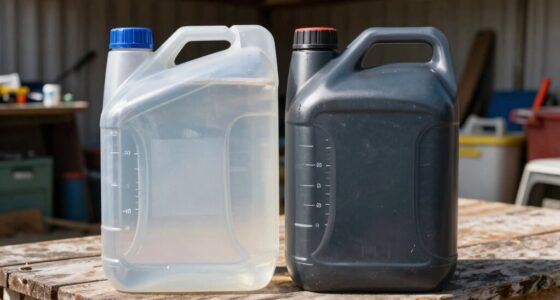

Many people believe fuel stabilizers work magic on old or contaminated fuel, but in reality, they only slow degradation—they can’t fix severe contamination. Assuming all stabilizers are equal or effective without checking labels can cause problems. Proper storage conditions, such as sealed containers and stable temperatures, are essential, yet often overlooked. Relying solely on calculators or ignoring manufacturer instructions leads to poor fuel quality. Keep these misconceptions in mind to protect your equipment; more insights await if you keep exploring.

Get backup power and energy gear delivered free — and shop member deals
- Fast, free delivery on millions of items
- Access to Prime Big Deal Days deals on October 6–7
- Prime Video, Amazon Music and more included
Key Takeaways
- Fuel stabilizers are effective only on fresh or lightly degraded fuel, not on heavily contaminated or long-stored fuel.
- Not all stabilizers are compatible with every engine or fuel type; always follow manufacturer instructions.
- Proper storage conditions, such as sealed containers and stable temperatures, are crucial for maintaining fuel quality.
- Stabilizers slow fuel degradation but do not prevent it indefinitely; regular checks and fuel rotation are necessary.
- Storage calculators can overestimate fuel stability; physical inspections and environmental factors are essential for accurate assessment.
fuel stabilizer for small engines
As an affiliate, we earn on qualifying purchases.
As an affiliate, we earn on qualifying purchases.
Using Fuel Stabilizers With Old or Contaminated Fuel

Have you ever wondered if you can salvage old or contaminated fuel? Fuel contamination often occurs due to moisture, debris, or microbial growth, especially in poorly maintained storage environments. Using a fuel stabilizer can help, but it’s not always a fix-all. If the fuel is markedly contaminated or has been stored for years, stabilizers may not restore its quality. Instead, they work best when added to fresh fuel or lightly degraded fuel to prevent further deterioration. In a contaminated storage environment, removing water or debris before adding stabilizer is vital. Remember, stabilizers slow oxidation and gumming, but they can’t undo severe contamination. Always assess your fuel’s condition before treating it, as attempting to save heavily contaminated fuel might do more harm than good.
fuel storage container with vent
As an affiliate, we earn on qualifying purchases.
As an affiliate, we earn on qualifying purchases.
Assuming All Stabilizers Are the Same and Equally Effective
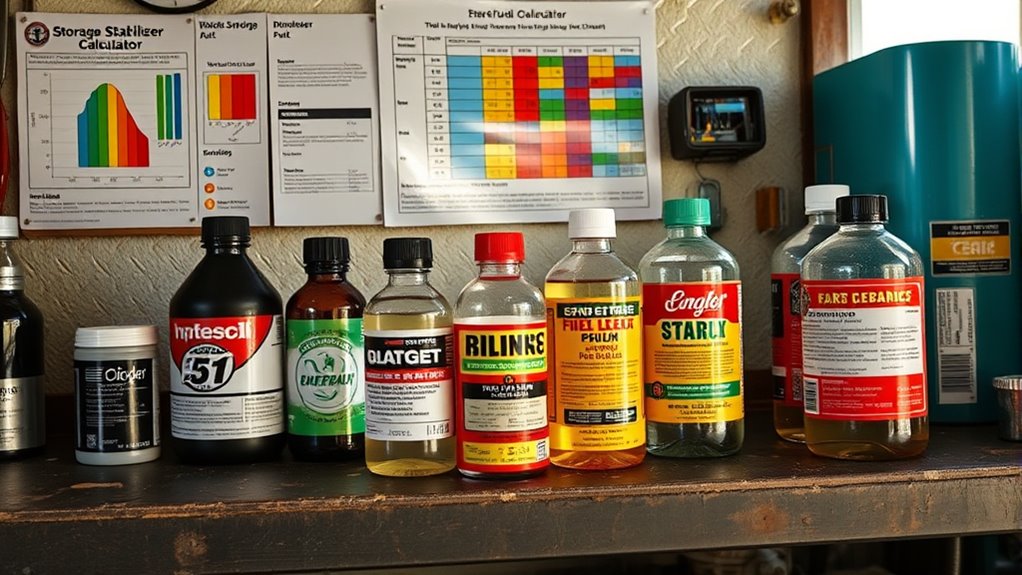
Many people assume that all fuel stabilizers work equally well because they often come with similar labels and claims. However, not all fuel additives are created equal. Some stabilizers are formulated specifically for certain fuel types or storage durations, making them more effective for your needs. Assuming one stabilizer works the same as another can lead to improper protection, especially if you’re using different storage containers that may affect fuel quality. The effectiveness of a stabilizer depends on its ingredients and how well it interacts with your fuel and container. Always read labels carefully and choose a stabilizer designed for your specific fuel and storage situation. Relying on a generic product can compromise the fuel’s longevity and performance. Additionally, variations in formulation and intended use can significantly impact how well a stabilizer preserves fuel over time.
As an affiliate, we earn on qualifying purchases.
Ignoring the Importance of Proper Storage Conditions
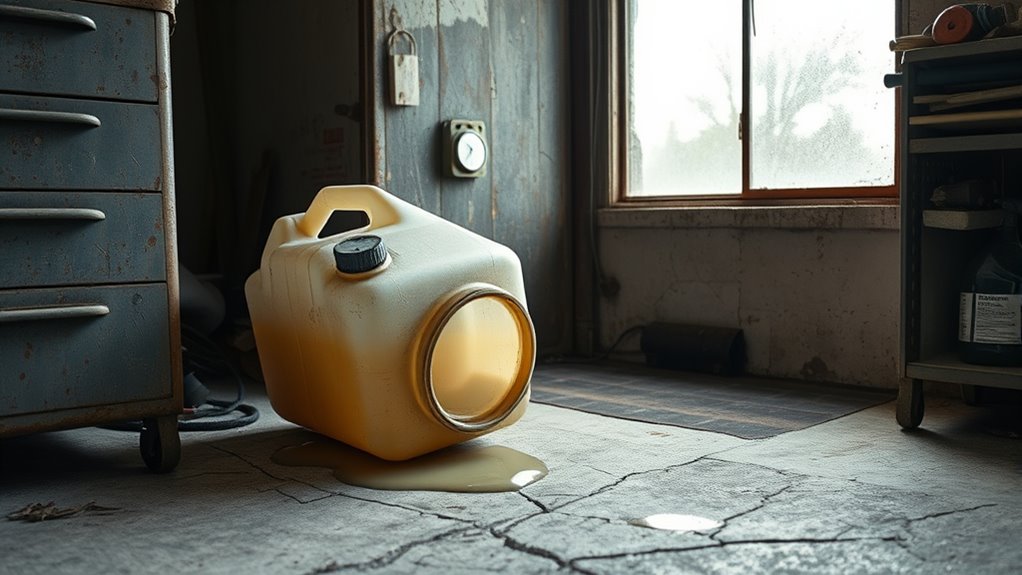
Ignoring proper storage conditions can lead to fuel deterioration and potential safety hazards. You need to keep fuel in a temperature-controlled environment and guarantee good ventilation to prevent moisture buildup. Failing to do so can reduce fuel stability and cause damage to your equipment. Additionally, maintaining an organized and clutter-free workspace can help monitor fuel conditions more effectively, ensuring optimal storage practices.
Temperature Control Matters
Temperature fluctuations can markedly impact fuel stability, making proper storage conditions essential. When temperatures vary, humidity effects become more pronounced, leading to moisture buildup inside containers. This moisture can cause fuel degradation, corrosion, and microbial growth, especially if container materials aren’t resistant to such conditions. Metal containers may conduct heat and cool quickly, increasing the risk of condensation, while plastic ones might trap humidity if not sealed properly. Keeping fuel in a stable, cool environment minimizes these risks, preserving fuel quality longer. Consistently high or fluctuating temperatures accelerate fuel breakdown, reducing its shelf life and effectiveness. Proper storage conditions are crucial for maintaining fuel integrity over time. Prioritizing temperature control and choosing appropriate container materials help ensure your fuel remains stable, safe, and ready for use when needed.
Ventilation Prevents Damage
Ventilation plays a crucial role in preventing fuel damage during storage by allowing moisture and volatile vapors to escape. Proper airflow ensures better air quality, reducing the buildup of harmful fumes that can degrade fuel. Good ventilation also enhances ventilation safety, minimizing risks of fire or explosion. To understand its importance, consider this overview:
| Aspect | Benefit | Key Consideration |
|---|---|---|
| Air Quality | Removes harmful vapors | Ensure continuous airflow |
| Moisture Control | Prevents condensation | Use vents and keep area dry |
| Safety | Reduces fire hazards | Avoid blockages and leaks |
As an affiliate, we earn on qualifying purchases.
Overestimating the Shelf Life of Stabilized Fuel

Even with fuel stabilizers, it’s easy to overestimate how long stabilized fuel remains usable. Fuel degradation occurs over time, and additive effectiveness diminishes faster than many realize. Relying solely on storage durations can lead to problems, especially if you ignore signs of fuel quality decline. Proper storage conditions**** are essential to maintain fuel integrity over extended periods.
- Fuel can break down even with stabilizers, affecting engine performance
- Additive effectiveness lessens after a certain period, risking poor combustion
- Temperature fluctuations speed up fuel degradation
- Old stabilized fuel may cause engine clogs and corrosion
- Storage conditions play a vital role in preserving fuel quality
Relying Solely on Storage Calculators Without Regular Maintenance Checks
Relying only on storage calculators can give you a false sense of security about your fuel’s condition. These tools often overestimate accuracy and don’t account for system changes over time. Regular maintenance checks are essential to guarantee your fuel stays safe and effective. Additionally, understanding the importance of proper storage conditions can help prevent fuel degradation and maintain its quality over extended periods.
Overestimating Calculator Accuracy
While storage calculators can be helpful tools, depending solely on them without performing regular maintenance checks can lead to overestimating their accuracy. Many people fall into fuel additive misconceptions, assuming the calculator accounts for all variables. However, storage calculator limitations mean they can’t predict changes caused by temperature fluctuations, fuel quality, or container conditions. Relying only on these tools might give you a false sense of security. To avoid this, you should:
- Regularly inspect fuel for contamination or phase separation
- Check for signs of fuel degradation, like bad smell or viscosity changes
- Update input data based on recent environmental conditions
- Understand that calculators don’t account for system leaks or evaporation
- Recognize that fuel stability varies with storage duration and container type
Relying solely on calculators ignores these critical factors, risking storage failure.
Ignoring System Changes
Fuel storage calculators provide useful estimates, but they can’t account for changes within your system over time. If you’ve performed system upgrades or altered fuel sources, relying solely on a calculator can lead to inaccurate storage durations. Equipment modifications may affect fuel additive compatibility, requiring adjustments to your storage plan. Regular maintenance checks are essential to identify issues like degraded seals, corrosion, or outdated components that impact fuel quality. Ignoring these system changes can cause fuel breakdown or engine problems later. By combining ongoing system assessments with your storage calculator, you ensure your fuel remains stable and compatible with your equipment. Remember, calculators are helpful tools, but they shouldn’t replace proactive maintenance tailored to your system’s evolving needs. Additionally, staying informed about system integrity and performing periodic inspections helps preserve fuel quality over time.
Believing That Stabilized Fuel Is Suitable for All Engines and Equipment
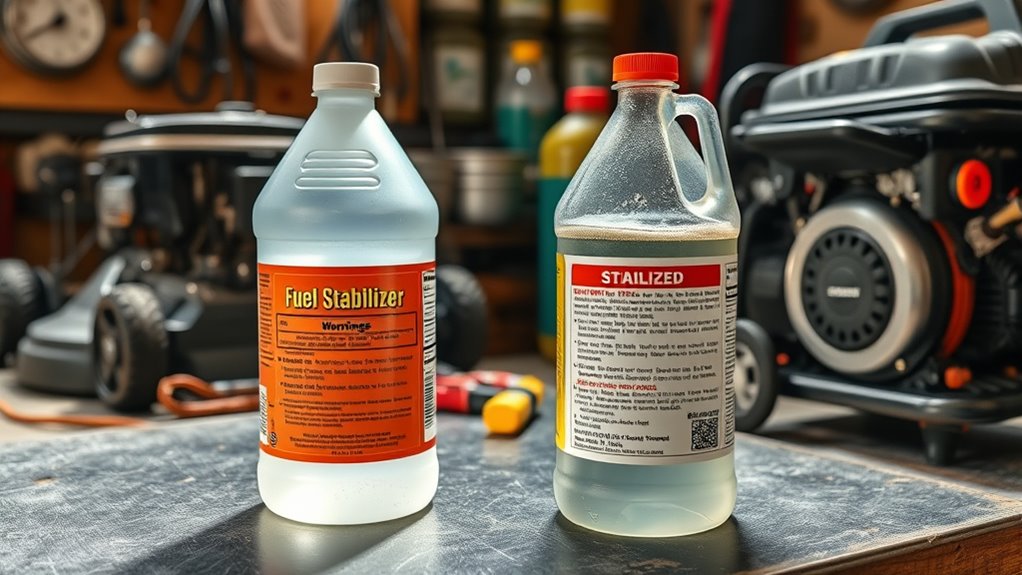
Many assume that stabilized fuel works equally well in all engines and equipment, but this isn’t always the case. Not all fuel stabilizers suit every engine type or equipment, especially considering fuel compatibility and engine specifications. Using the wrong stabilizer can cause issues like poor performance or damage. For example, small engines, marine engines, and vintage equipment often have specific fuel requirements. Some stabilizers are designed solely for gasoline, not diesel or ethanol blends. Certain engines require stabilizers with corrosion inhibitors. Vintage or specialized equipment may need fuel treatments tailored to their design. High-performance engines may need additives beyond standard stabilizers. Manufacturer instructions often specify which stabilizer to use for ideal results. Additionally, understanding the fuel system of your equipment can help determine the most suitable stabilizer to prevent issues.
Neglecting to Follow Manufacturer Instructions on Stabilizer Use
Neglecting to follow the manufacturer’s instructions when using fuel stabilizers can lead to serious problems, including engine damage and decreased performance. Manufacturer guidelines are designed to guarantee you use the product correctly for ideal results. Ignoring these instructions or misreading product labels can cause improper mixing, overuse, or underuse of stabilizer, which may fail to protect your fuel effectively. Always read and follow the directions on the product label carefully. Different stabilizers have specific requirements regarding dosage, storage conditions, and mixing procedures. Failing to adhere to these guidelines can compromise the stabilizer’s effectiveness, leading to fuel degradation or engine issues. Additionally, understanding farmhouse decor trends can help you create a more cohesive and aesthetically pleasing environment for your storage areas. To protect your equipment, prioritize following the manufacturer’s instructions precisely, and never assume one product’s directions apply to all stabilizers.
Forgetting to Drain or Properly Seal Fuel Containers for Long-Term Storage
If you don’t drain or seal your fuel containers properly before storing them long-term, you risk damaging your equipment and creating safety hazards. Failing to follow proper sealing procedures can lead to fuel leaks, evaporation, and contamination. Always check fuel container labels for specific storage instructions. When sealing, ensure caps are tight and containers are airtight to prevent moisture and air from entering. Without proper sealing, fuel can degrade or become contaminated, reducing engine performance later. Additionally, leaving fuel in containers without draining can cause gumming and corrosion inside equipment. Be cautious about where you store fuel—preferably in cool, dry places. Proper sealing and careful handling help preserve fuel quality and prevent dangerous leaks or spills. Maintaining a clean storage environment also supports environmental considerations and safe disposal practices.
Using Stabilizers as a Substitute for Regular Fuel Rotation

Using fuel stabilizers can be a practical alternative to regular fuel rotation, especially when you can’t frequently run your equipment. Stabilizers help maintain fuel quality over extended storage durations, reducing the risk of fuel degradation and gumming. This means you can keep your fuel fresh for months without needing to run your engine often. Additionally, choosing the right dog names can reflect your pet’s personality and breed characteristics, making the experience of naming your dog more meaningful. However, relying solely on stabilizers isn’t a substitute for proper fuel management if you plan to store fuel for very long periods. While stabilizers slow down deterioration, they don’t eliminate it entirely. For peak results, combine stabilizer use with periodic checks to ensure fuel remains effective. This approach helps preserve fuel quality and keeps your equipment ready to use, even if you skip regular fuel rotation.
Overlooking the Impact of Temperature and Humidity on Stored Fuel
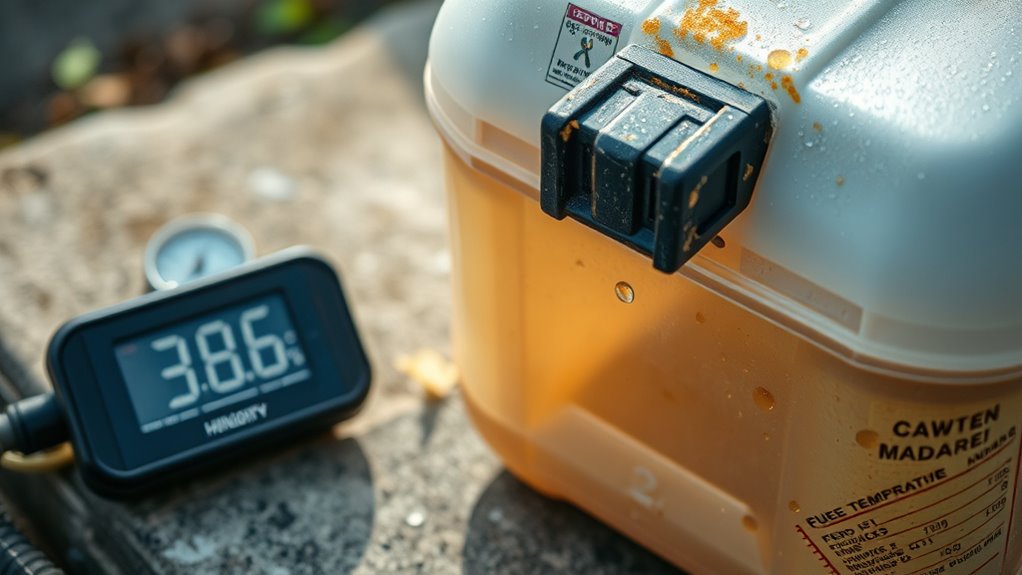
Temperature and humidity levels play a crucial role in the quality of stored fuel, yet they’re often overlooked. Fluctuating temperatures cause fuel to expand and contract, which can lead to phase separation or condensation inside the tank. Humidity effects, such as moisture buildup, promote rust and microbial growth, degrading fuel quality. Sudden temperature fluctuations can accelerate fuel deterioration, making stabilizers less effective. High humidity levels increase the risk of water contamination, which can cause engine problems. Ignoring these factors may result in stale, contaminated fuel that’s hard to burn efficiently.
- Fuel absorbing moisture due to humidity effects
- Increased condensation from temperature fluctuations
- Rust formation in poorly ventilated tanks
- Microbial growth in humid conditions
- Accelerated fuel breakdown over time
Frequently Asked Questions
How Do Stabilizers Affect Different Types of Fuel?
Fuel stabilizers interact differently with various fuel types, so you need to consider additive compatibility. For gasoline, stabilizers prevent oxidation and keep the fuel fresh, but not all stabilizers work with ethanol blends. Diesel stabilizers protect against microbial growth and gelling. Always check the label to verify the stabilizer is suitable for your specific fuel type, guaranteeing optimal performance and preventing engine issues.
Can Fuel Stabilizers Prevent All Types of Fuel Degradation?
Fuel stabilizers can’t prevent all types of fuel degradation, but they do substantially slow down issues caused by fuel additives breaking down over time. When you use stabilizers in your storage tanks, you’re protecting your fuel from oxidation and moisture buildup. However, some fuels, especially ethanol blends, are more prone to degradation, so it’s essential to monitor storage conditions and use appropriate stabilizers to maintain fuel quality.
What Are the Signs of Fuel Deterioration Despite Stabilizer Use?
In the blink of an eye, you notice fuel smell and sediment buildup, signaling fuel deterioration even with stabilizer use. These signs indicate that your fuel may have gone bad, losing its effectiveness and risking engine damage. Don’t ignore these cues; they suggest the stabilizer isn’t fully protecting your fuel. Regularly check for changes in smell, color, and sediment, and consider replacing fuel if deterioration persists.
How Often Should I Test Stored Fuel for Quality?
You should test your stored fuel every 3 to 6 months, depending on the storage duration. Regular fuel testing helps you identify signs of deterioration, such as water separation or sediment buildup, before it causes problems. If your fuel has been stored longer than six months, it’s wise to conduct a thorough test and possibly add fresh stabilizer or replace the fuel entirely, ensuring peak performance when you need it.
Are There Environmental Considerations When Disposing of Stabilized Fuel?
Yes, there are environmental considerations when disposing of stabilized fuel. You should minimize environmental impact by following proper disposal methods, such as taking it to a certified hazardous waste facility or contacting local waste management authorities. Avoid pouring fuel into drains, water sources, or onto the ground, as it can contaminate water supplies and harm ecosystems. Proper disposal guarantees safety and helps protect the environment from harmful pollutants.
Conclusion
Think of fuel storage like tending a garden—you need to care for it regularly. Don’t assume all stabilizers are equal or that your storage conditions don’t matter. By following proper guidelines and checking your fuel often, you’ll keep it fresh and ready, like a well-watered plant. Neglect now, and your stored fuel could turn to useless sludge. Stay vigilant, and your engine will thank you, running smoothly like a well-tuned machine.
Evergreen bestsellers Picks
bestsellers
As an affiliate, we earn on qualifying purchases.