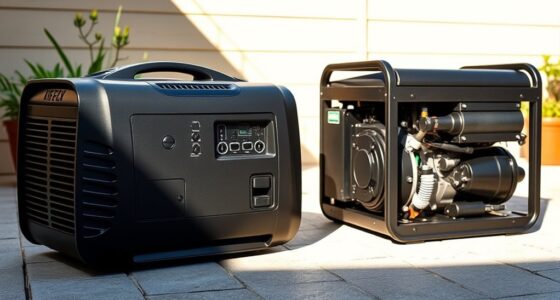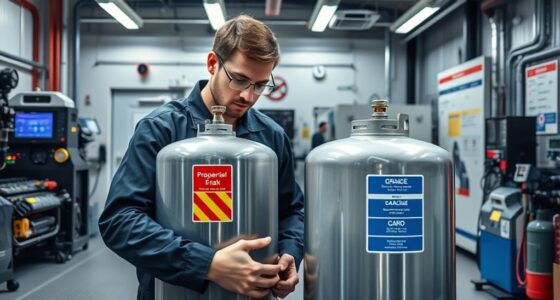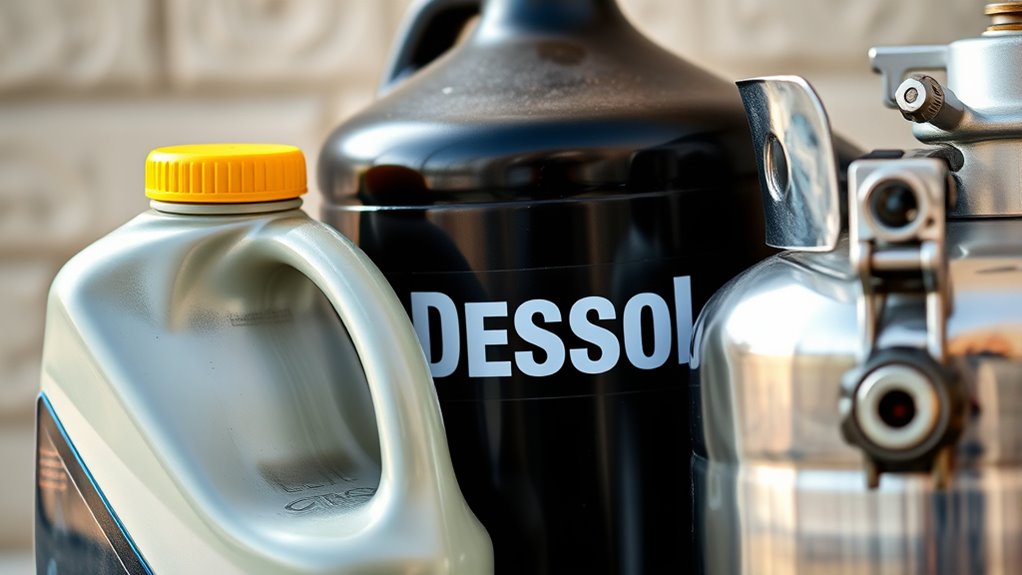

When comparing generator fuels, gasoline offers lower upfront costs and simpler maintenance but tends to burn fuel faster and produce more emissions. Diesel engines provide better fuel efficiency and longer run times, yet they require more complex maintenance and produce more pollutants like particulates and nitrogen oxides. Propane is cleaner, safer to store, and often cheaper to operate, making it a good eco-friendly choice. To find the best option for your needs, explore the details behind each fuel type.
Key Takeaways
- Diesel engines offer higher fuel efficiency and longer mileage, making them cost-effective for continuous operation.
- Propane burns cleaner, producing fewer emissions and pollutants, and is safer and easier to store than gasoline or diesel.
- Gasoline generators are generally cheaper upfront and easier to maintain but have higher emissions and lower fuel efficiency.
- Diesel engines tend to have shorter lifespans and require more complex maintenance, with higher initial costs.
- Propane provides lower operating costs, cleaner burn, and is suitable for remote or emergency applications.
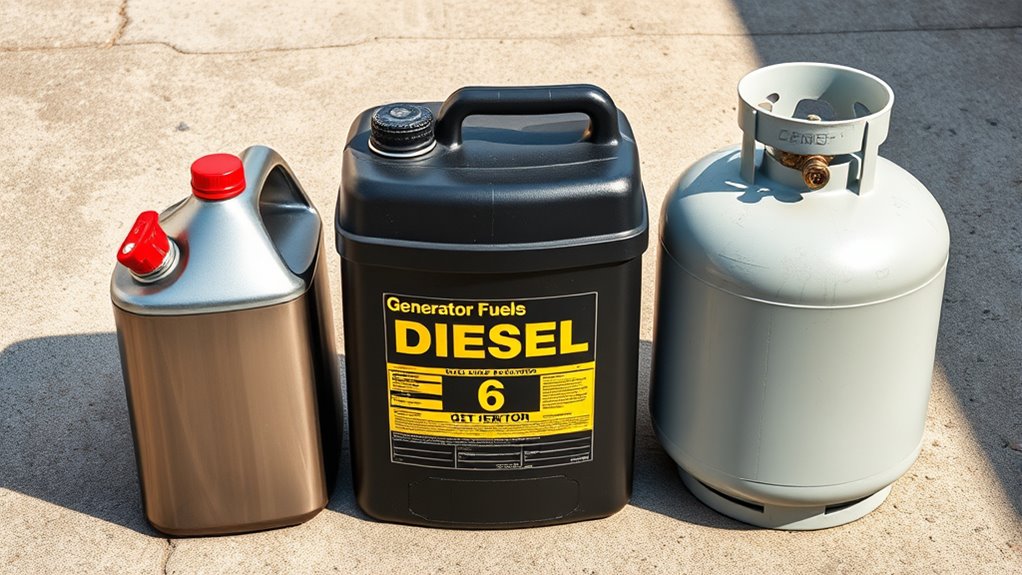
Gasoline engines are familiar and widespread, making them a convenient option for many users. They tend to have lower upfront costs and are easier to maintain. However, when it comes to fuel efficiency, gasoline generally falls short compared to diesel. Gasoline engines burn fuel faster and aren’t as efficient at extracting energy from each gallon. This means you’ll need to refuel more often, which can add up over time. From an environmental standpoint, gasoline combustion produces higher levels of carbon dioxide and other pollutants, contributing more considerably to air pollution and climate change. Additionally, gasoline engines typically have shorter lifespans and may require more frequent repairs than diesel engines.
Diesel fuels, on the other hand, are known for their superior fuel efficiency. Diesel engines convert a higher percentage of fuel into usable power, so you get more mileage per gallon. This efficiency makes diesel a cost-effective choice in the long run, especially for larger generators or equipment used continuously. But it’s not just about economy; diesel also emits fewer greenhouse gases per unit of energy than gasoline, which can make it somewhat better for the environment. Still, diesel exhaust contains particulates and nitrogen oxides, which are harmful pollutants that contribute to smog and respiratory issues. So, while diesel may be more fuel-efficient and slightly cleaner in terms of greenhouse gases, it still poses environmental challenges.
Propane offers a different set of advantages. It burns cleaner than both gasoline and diesel, producing fewer emissions and pollutants. This makes propane a more environmentally friendly choice, especially if reducing your carbon footprint is a priority. As for fuel efficiency, propane generally isn’t as efficient as diesel but can be more efficient than gasoline in some applications. Propane-powered generators tend to have a lower operating cost because the fuel itself is often cheaper and burns more cleanly, requiring less maintenance over time. Additionally, propane is stored as a liquid under pressure, making it safer and easier to transport and store, especially in remote areas or during emergencies. Understanding fuel efficiency can help you choose the best option for your specific needs.

Westinghouse 12500 Watt Dual Fuel Home Backup Portable Generator, Remote Electric Start, Transfer Switch Ready, Gas and Propane Powered
- Power Output: 9500W running, 12500W peak (Gas)
- Fuel Options: Gasoline and propane powered
- Starting Mechanism: Remote, electric, and recoil start
As an affiliate, we earn on qualifying purchases.
As an affiliate, we earn on qualifying purchases.
Frequently Asked Questions
Which Fuel Type Is Safest for Residential Use?
You’ll find propane is the safest for residential use because of its easier storage safety and handling precautions. It’s less flammable than gasoline or diesel, reducing fire risks. Propane tanks are designed for secure storage, and leaks are easier to detect due to its distinctive smell. With proper handling precautions, propane offers a safer, cleaner option for home generators, minimizing hazards and ensuring peace of mind during power outages.
How Do Fuel Prices Fluctuate Seasonally?
You’ll notice fuel prices fluctuate with seasonal trends, often rising during winter due to increased demand for heating and transportation. Pricing volatility is common during summer as hurricanes and other weather events disrupt supply chains. These seasonal patterns impact costs, so you should monitor trends regularly to plan your fuel purchases. Staying aware of seasonal trends helps you avoid high prices and manage your generator fuel expenses effectively.
Are There Environmental Regulations Affecting Fuel Choices?
While it might seem like a minor detail, emission standards and fuel certification play a big role in your fuel choices. Stricter environmental regulations encourage cleaner-burning options, pushing you toward fuels with lower emissions. These rules guarantee fuels meet specific standards, influencing availability and cost. So, you’re gently guided toward more eco-friendly options, making your decision easier while supporting environmental sustainability.
Can Generator Fuel Types Be Mixed or Stored Together?
You should avoid fuel mixing and storing different generator fuel types together. Mixing fuels can cause dangerous chemical reactions and damage your equipment. Always store each fuel type separately in approved containers and follow safety guidelines. Proper storage guarantees safe handling, prevents contamination, and maintains fuel quality. Never top off one fuel with another, and keep fuels away from heat or open flames to reduce fire risks.
What Maintenance Is Required for Each Fuel Generator?
Ever wondered what maintenance each fuel generator needs? You should regularly check and change oil, filters, and spark plugs for gasoline and propane units, while diesel generators require fuel filter and glow plug inspections. Proper fuel storage minimizes contamination and corrosion, reducing maintenance costs. Do you keep your generator’s fuel system clean and well-maintained? Routine checks prolong lifespan, ensure efficiency, and save you money in the long run.

GENERATOR PARTS SPECIALIST Tune up Kit Cummins Onan HDKAJ HDKAK HDKAT with Onamax Oil (HDKAJ Spec L-T w/oil)
- Complete OEM Maintenance Kit: Includes all necessary hard parts and oil
- Onan Air Filter: PN: 140-2897
- Onan Fuel Filter: PN: 147-0860
As an affiliate, we earn on qualifying purchases.
As an affiliate, we earn on qualifying purchases.
Conclusion
Choosing between gasoline, diesel, and propane is like selecting a trusted companion for your journey. Gasoline offers quick start and agility, diesel provides strength and endurance, while propane symbolizes versatility and cleaner energy. Each fuel is a different path through the woods—your choice depends on what trail suits your needs best. Whichever you pick, remember it’s your lantern in the dark, guiding you safely through any power outage or adventure ahead.

PowerSmart 4400W Dual Fuel Inverter Generator, Gas and Propane Portable Generator with 223cc Engine, 30A RV Ready, Auto Switch, EPA, CO Sensor, Parallel Ready, for Home Use, Camping Outdoor
- Dual Fuel Power: Gasoline and propane options for versatility
- Power Output: 4400W surge / 3600W rated (Gas), 4000W surge / 3300W rated (LPG)
- Extended Runtime: Up to 11 hours at 25% load with 1.6-gallon tank
As an affiliate, we earn on qualifying purchases.
As an affiliate, we earn on qualifying purchases.