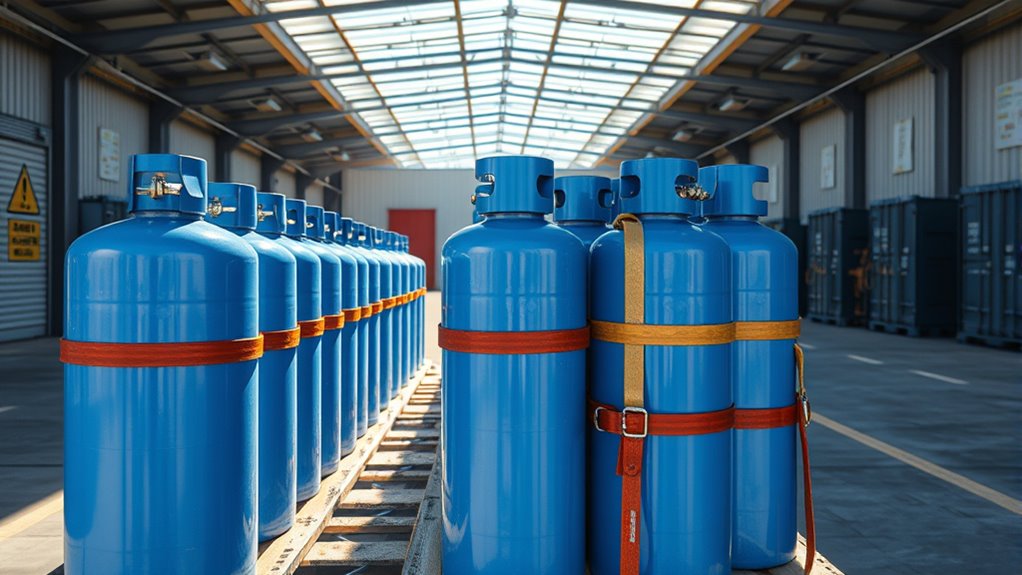

To transport and store propane cylinders safely, you should regularly inspect them for damage, leaks, and corrosion, ensuring valves are tight. Store cylinders outdoors in well-ventilated areas away from heat, direct sunlight, and combustible materials, and never in enclosed spaces like garages or basements. During transport, secure cylinders upright in a vented vehicle and avoid rough handling. Following these safety practices helps prevent leaks, fires, and explosions—continue to learn the essential details to keep yourself and others safe.

Get backup power and energy gear delivered free — and shop member deals
- Fast, free delivery on millions of items
- Access to Prime Big Deal Days deals on October 6–7
- Prime Video, Amazon Music and more included
Key Takeaways
- Inspect cylinders regularly for damage, leaks, corrosion, dents, or cracks before transport or storage.
- Store cylinders outdoors in well-ventilated, shaded areas away from heat and combustible materials.
- Ensure cylinders are tightly sealed and valves are secure before moving or storing.
- Avoid enclosed spaces like basements or garages unless properly ventilated; use open windows or exhaust fans if necessary.
- Follow safety guidelines to prevent leaks, fire, or explosion risks during transportation and storage.
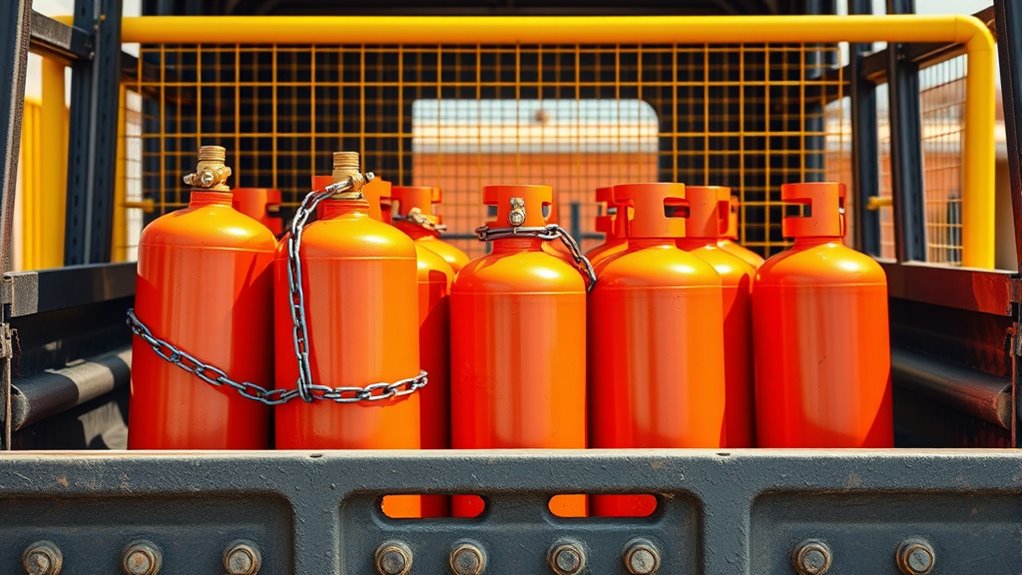
Transporting and storing propane cylinders securely is essential to prevent accidents and guarantee your safety. One of the most important steps you can take is to regularly perform a thorough cylinder inspection. Before moving or storing a cylinder, check for any signs of damage, corrosion, leaks, or rust. Make sure the valve is tightly sealed and that there are no dents or cracks on the cylinder’s surface. A damaged or compromised cylinder can be dangerous, so if you notice any issues during your inspection, do not use or transport it until it’s been properly repaired or replaced. Proper inspection ensures that your cylinders remain in good condition and reduces the risk of leaks or explosions during handling.
When it comes to storing propane cylinders, proper ventilation plays a critical role. You should always keep cylinders in well-ventilated areas to prevent the buildup of any leaked propane, which can be highly flammable and pose a serious fire hazard. Never store cylinders in enclosed spaces like basements, closets, or garages unless they are specifically designed for that purpose with adequate ventilation. Outdoors, choose a shaded, dry spot away from direct sunlight, heat sources, and combustible materials. Ensure the area allows fresh air to circulate freely around the cylinders, reducing the chance of propane accumulation in case of a leak. If storing indoors temporarily, open windows and use exhaust fans to keep air moving. Proper ventilation not only minimizes fire risks but also helps disperse any propane vapors that may escape, keeping your environment safe. Additionally, understanding storage guidelines can further improve your safety practices.
Frequently Asked Questions
Can I Transport Propane Cylinders in a Car Trunk?
Yes, you can transport propane cylinders in your car trunk, but you need to follow safety rules. Make certain the cylinder is upright, well-ventilated, and labeled properly. Keep the trunk well-ventilated to reduce pressure buildup and avoid heat exposure. Make sure the cylinder’s labeling is visible, indicating it’s pressurized and contains propane. Never transport cylinders in the passenger compartment or where they can be damaged.
What Should I Do if a Propane Cylinder Leaks?
If you detect a propane leak, you should immediately evacuate the area and avoid sparks or flames. Use leak detection methods like soapy water to identify the source, then turn off the cylinder valve if possible. Call emergency response services right away, and do not attempt to fix the leak yourself. Ventilate the space thoroughly, stay away from the leak, and wait for trained professionals to handle the situation safely.
Are There Specific Storage Temperature Limits for Propane?
Did you know propane expands by about 17 times when heated? That’s why proper temperature regulation is vital. You should store propane cylinders in a cool, well-ventilated environment between 45°F and 85°F (7°C-29°C). Extreme temperatures can increase risk of leaks or explosions. Always keep cylinders away from direct sunlight, heat sources, or freezing conditions, ensuring a safe storage environment that minimizes hazards.
How Often Should Propane Cylinders Be Inspected?
You should inspect propane cylinders at least once a year to guarantee safety. During inspections, check for proper cylinder labeling, corrosion, leaks, and damage. Regular inspections help identify issues early, preventing accidents. Always follow manufacturer guidelines and local regulations for inspection frequency. If you notice any irregularities, get the cylinder checked or replaced promptly. Staying diligent with inspections keeps you safe and compliant when handling propane cylinders.
Can I Store Propane Cylinders Indoors Safely?
Storing propane cylinders indoors is a no-go unless you follow strict safety rules. You shouldn’t store them in unventilated areas; proper indoor ventilation is essential to prevent gas build-up. Always check that cylinders are labeled correctly and kept upright. Think of it as walking a tightrope—you need to be cautious and aware of potential hazards to keep yourself and others safe. When in doubt, it’s best to store cylinders outside in a well-ventilated space.
Conclusion
By following these safety tips, you guarantee your propane cylinders stay secure and leak-free during transportation and storage. Always handle them with care, keep them upright, and store them in well-ventilated areas away from heat sources. Isn’t your safety worth the extra caution? Remember, a little diligence now can prevent accidents later. Stay alert, follow guidelines, and enjoy the convenience of propane without putting yourself or others at risk.
Fall Picks
fall essentials
As an affiliate, we earn on qualifying purchases.