
TL;DR

Get backup power and energy gear delivered free with Prime
- Fast, free delivery on millions of items
- Prime Video, Amazon Music and more included
- Member-only deals all year
House Beautiful published expert guidance on replacing 14 everyday household items, including detectors, shower liners, towels, mattresses and HVAC filters. Suggested schedules vary by product, manufacturer and condition; the article also recommends checking for signs of wear rather than relying on age alone.
House Beautiful has published a guide recommending replacement schedules for 14 everyday household items, including smoke and carbon monoxide detectors, shower liners, towels, mattresses and HVAC filters. The report, which cites designers and home-care guidance, says worn or poorly maintained items can affect home safety, cleanliness and equipment performance.
The suggested intervals range from three months for some HVAC filters to as long as 10 years for certain detectors, grout and duvets. The report stresses that schedules depend on the item: detector manufacturers set different lifespans, while towels, pillows and linens may need replacing sooner if they become musty, lose their shape or show persistent discoloration.
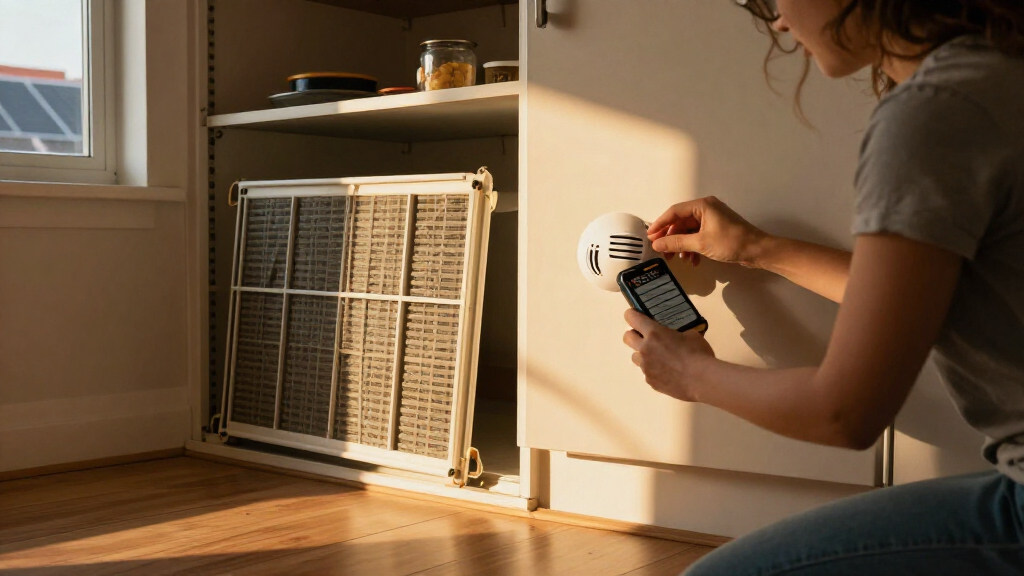
For smoke and carbon monoxide alarms, the report gives a general replacement window of five to 10 years, but advises checking the specific model’s manufacturer instructions. It says alarms should be tested monthly and batteries changed annually. For HVAC filters, it cites Energy Star and maintenance experts recommending monthly checks and replacement about every three months, with more frequent changes if a filter becomes especially dirty.
Other recommendations include replacing shower liners after six months to one year, bath towels after one to three years, mattresses after seven to 10 years, pillows after one to two years, and sheets after two to three years. Duvets are listed at five to 10 years. The report also says grout may need redoing after five to 10 years, or sooner if it pulls away or deteriorates.
Safety and Upkeep at Home
Some replacement decisions are more than a matter of appearance. A detector that has aged beyond its useful life may not respond as intended in an emergency, while deteriorated grout can allow water to reach surrounding materials. Regular filter checks, meanwhile, can support HVAC operation and help limit dust and allergens circulating in a home, according to the guidance cited in the report.
For bedding and bath items, the advice is practical rather than a guarantee of health benefits: frequent washing and replacement when items are worn can address odors, diminished absorbency and accumulated dirt. Visible condition and product instructions remain important alongside any general timetable.
Products Worth Considering

Levoit Vital 100S-P Air Purifier with Washable Pre-Filter

Blueair Blue Pure 511i Max Smart Air Purifier

Levoit Core 400S-P Smart Air Purifier for Large Rooms
As an affiliate, we earn on qualifying purchases.
How the Replacement Advice Was Compiled
The House Beautiful article presents recommendations from interior designers and home-care sources, including Linda Hayslett of LH.Designs, Rebekah Zaveloff of Imparfait Design Studio, Vyanca Soto of Market Studio Interiors, Rebecca Bobroff of Rebecca Bobroff Design and Danielle Hurhula of Quince. It also refers to Energy Star guidance for HVAC filters.
The report’s opening items cover detectors, shower liners, towels, grout, mattresses, pillows, bed linens and HVAC filters. The supplied source text cuts off partway through the HVAC-filter discussion and does not include the remaining six entries. It therefore confirms only eight of the 14 item names and their advice; the missing entries cannot be reliably identified from the material provided.
““Even the most gorgeous spaces lose their charm if we forget to update essentials.””
— Linda Hayslett, principal designer at LH.Designs
The Six Missing Item Recommendations
The supplied source ends during the HVAC-filter section, so it does not show the report’s final six items or their replacement intervals. The available material also does not provide a publication date, the full methodology behind the schedules, or details of the cited SafeHome.org study beyond its 2024 date and its reported comparison of bathroom surfaces.
Replacement timing is not uniform across brands or households. The report itself says detector lifespans vary by manufacturer and that filter replacement may need to happen more often when filters are visibly dirty. Its intervals should be treated as general guidance, not a substitute for product labels, manufacturer instructions or inspection of an item’s condition.
Check Labels and Signs of Wear
Homeowners can start by checking detector model information and manufacturer replacement dates, then test alarms monthly and replace batteries annually, as the report advises. HVAC filters should be inspected monthly; the report gives about three months as a general replacement interval, subject to how quickly a filter becomes dirty.
For textiles and grout, the article points readers to condition as well as age: replace towels that remain musty or feel scratchy, pillows that lose their shape, and grout that has pulled away or deteriorated. The six household items omitted from the supplied text remain unconfirmed, so the complete 14-item list cannot be reproduced from this source alone.
Key Questions
Which household items are covered in the supplied report?
The available text names smoke and carbon monoxide detectors, shower liners, bath towels, grout, mattresses, bed pillows, bed linens and HVAC filters. It says the guide covers 14 items, but the supplied source cuts off before naming the other six.
How often should smoke and carbon monoxide detectors be replaced?
The report gives a general range of five to 10 years, while advising readers to check the instructions for their specific model. It also recommends monthly testing and annual battery replacement.
How often should HVAC filters be changed?
The report cites Energy Star and maintenance experts recommending monthly checks and replacement about every three months. A filter that looks especially dirty may need to be changed sooner.
Do the suggested replacement intervals apply to every home?
No. The article presents general ranges, and some recommendations depend on manufacturer instructions, material and condition. Signs such as persistent mustiness, loss of shape or deteriorated grout can indicate a need to replace or repair an item sooner.
Source: housebeautiful.com