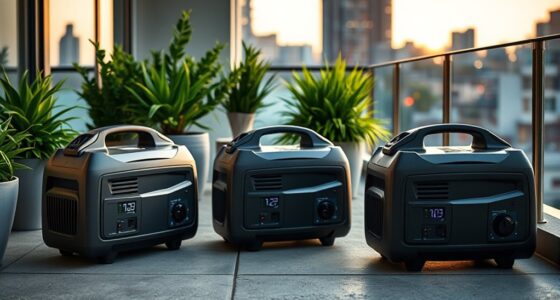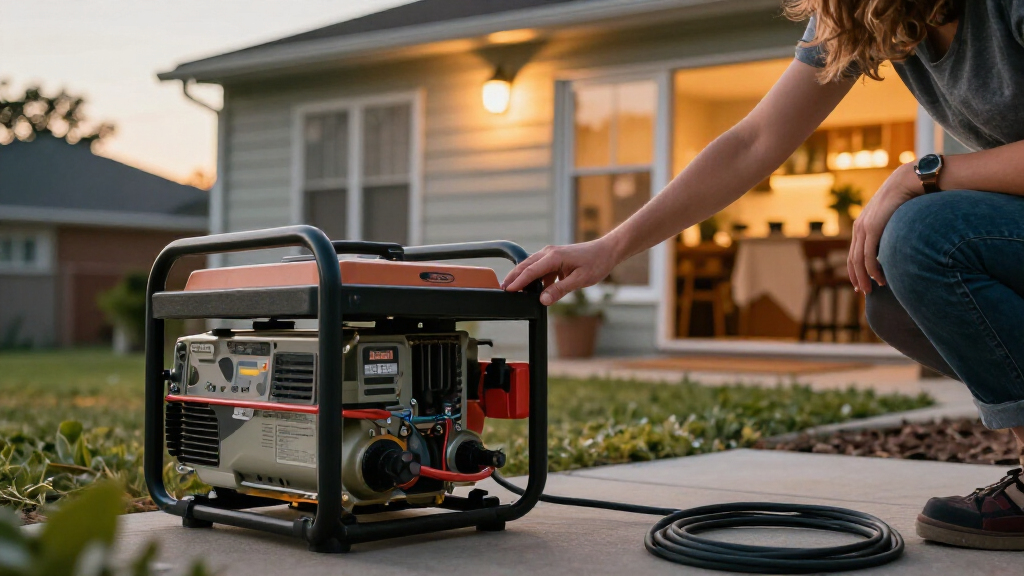
For most households, I’d start with the Westinghouse iGen12000TFc: its tri-fuel capability and high output make it the strongest all-around fit for backup needs. The Westinghouse iGen8200TFc is a more manageable option for essential circuits, while the WEN DF680iX offers a smaller dual-fuel alternative. The central tradeoff is between running more household loads and choosing a generator that is easier to move, store, and operate. Fuel choice, transfer-switch compatibility, and realistic running wattage also matter more than peak output alone. Read on for the full breakdown and recommendations by buyer type.

Get backup power and energy gear delivered free with Prime
- Fast, free delivery on millions of items
- Prime Video, Amazon Music and more included
- Member-only deals all year
Complete the kit


Key Takeaways
- High output and fuel flexibility set the leading picks apart: the iGen12000TFc combines substantial capacity with three fuel options, while smaller models trade whole-home ambitions for easier handling.
- Tri-fuel is most useful when fuel availability is uncertain: it gives backup planners more options, but does not remove the need to store fuel safely or check the generator’s output on each fuel.
- Dual-fuel models cover many essential-load plans: options such as the WEN DF680iX let buyers choose between gasoline and propane without stepping up to the largest machines.
- Peak watts can overstate what a generator can support continuously: size around running watts and the starting demands of equipment such as pumps, refrigerators, and air conditioners.
- Several listings share similar names and wattage claims: compare exact model numbers, fuel types, and documented specifications before choosing between the Westinghouse WGen and iGen families or the repeated Oxseryn and AIVOLT entries.
| Westinghouse iGen12000TFc Tri-Fuel Portable Inverter Generator with Remote Start |  | Best Overall for Large Home Backup | Gasoline output: 12,000W peak; 9,000W running | Propane output: 11,000W peak; 8,100W running | Natural gas output: 9,800W peak; 7,200W running | VIEW LATEST PRICE | See Our Full Breakdown |
| Westinghouse WGen10500TFc 13,500-Watt Tri-Fuel Portable Generator |  | Best for Maximum Running Output | Peak output: 13,500W | Running output: 10,500W | Fuel types: Gasoline, propane, natural gas | VIEW LATEST PRICE | See Our Full Breakdown |
| WEN DF680iX 6800-Watt Dual-Fuel RV-Ready Inverter Generator |  | Best Mid-Range Inverter for Essential Circuits | Gasoline output: 6,800W surge; 5,100W rated | Propane output: 6,000W surge; 4,500W rated | Fuel types: Gasoline and propane | VIEW LATEST PRICE | See Our Full Breakdown |
| Westinghouse WGen5300DFcv Dual-Fuel Portable Generator with CO Sensor |  | Best Value for Basic Home Backup | Gasoline output: 6,500W peak; 5,300W running | Propane output: 5,800W peak; 4,800W running | Fuel types: Gasoline and propane | VIEW LATEST PRICE | See Our Full Breakdown |
| AIVOLT 4200 Watts Inverter Generator, Open Frame Gas Powered |  | Best Compact Pick for Light Backup | Peak output: 4,200W | Running output: 3,300W | Fuel: Gasoline | VIEW LATEST PRICE | See Our Full Breakdown |
| Westinghouse WGen9500DF Dual Fuel Portable Generator |  | Best High-Output Dual-Fuel Pick | Gasoline output: 9,500 running watts; 12,500 peak watts | Propane output: 8,500 running watts; 11,200 peak watts | Fuel types: Gasoline and propane | VIEW LATEST PRICE | See Our Full Breakdown |
| Westinghouse iGen8200TFc Tri-Fuel Portable Inverter Generator |  | Best for Cleaner Power and Fuel Flexibility | Gasoline output: 6,600 running watts; 8,200 peak watts | Propane output: 5,940 running watts; 7,380 peak watts | Natural-gas output: 5,280 running watts; 6,560 peak watts | VIEW LATEST PRICE | See Our Full Breakdown |
| AIVOLT 4200W Gas Inverter Generator |  | Best Compact Option for Essential Loads | Output: 3,300 running watts; 4,200 peak watts | Fuel type: Gasoline | Voltage: 120V | VIEW LATEST PRICE | See Our Full Breakdown |
| Westinghouse WGen11500TFc Tri-Fuel Portable Generator |  | Best for Maximum Household Output | Output: 11,500 running watts; 14,500 peak watts | Fuel types: Gasoline, propane, and natural gas | Engine: 550cc 4-stroke OHV | VIEW LATEST PRICE | See Our Full Breakdown |
| Oxseryn 4400-Watt Gas Inverter Generator |  | Best for Basic RV and Outage Backup | Output: 3,400 running watts; 4,400 peak watts | Fuel type: Gasoline | Fuel tank: 2 gallons | VIEW LATEST PRICE | See Our Full Breakdown |
| Oxseryn 2800W Portable Gasoline Inverter Generator |  | Best Compact Pick for Essential Electronics | Fuel: Gasoline | Peak output: 2,800 watts | Running output: 2,000 watts | VIEW LATEST PRICE | See Our Full Breakdown |
| Westinghouse WGen10500DFc Dual Fuel Portable Generator, 13,500 Peak Watts |  | Best for High-Capacity Home Backup | Fuel types: Gasoline and propane | Peak output: 13,500 watts | Running output: 10,500 watts | VIEW LATEST PRICE | See Our Full Breakdown |
| Westinghouse iGen12000DFc Dual Fuel Portable Inverter Generator, 12,000W |  | Best Premium Inverter for Whole-Home Loads | Fuel: Gasoline and propane | Peak output: 12,000 watts on gasoline; 11,000 watts on propane | Running output: 9,000 watts on gasoline; 8,100 watts on propane | VIEW LATEST PRICE | See Our Full Breakdown |
| PowerSmart 3800W Portable Inverter Generator |  | Best Value for Midrange Essential Loads | Fuel: Gasoline | Starting output: 3,800 watts | Running output: 3,200 watts | VIEW LATEST PRICE | See Our Full Breakdown |
| Oxseryn 4400-Watt Gas-Powered Inverter Generator |  | Best for RV-Ready Output on a Budget | Fuel: Gasoline | Peak output: 4,400 watts | Running output: 3,400 watts | VIEW LATEST PRICE | See Our Full Breakdown |
| inverter generators for home backup | Runtime | Engine | Outlets | Fuel tank |
|---|---|---|---|---|
| Westinghouse iGen12000TFc Tri- | Up to 19 hours at 25% load on gasoline | 457cc 4-stroke OHV | 14-50R 50A, L14-30R 30A, 120V 5-20R duplex | — |
| Westinghouse WGen10500TFc 13,5 | Up to 19 hours at 25% load on gasoline | 500cc 4-stroke OHV | L14-30R 30A and 14-50R 50A | 9.5 gallons |
| WEN DF680iX 6800-Watt Dual-Fue | Gasoline: up to 6.1 hours at half load; propane: up to 9 hours at half load with a 20-pound tank | 224cc | L14-30R, two 120V three-prong, TT-30R, 12V DC, two 5V USB | 2.9 gallons |
| Westinghouse WGen5300DFcv Dual | Up to 14.5 hours | 274cc 4-stroke OHV | 5–20R 120V duplex, TT-30R 30A, L14-30R 30A | 4.7 gallons |
| AIVOLT 4200 Watts Inverter Gen | Up to 16 hours at 25% load | 223cc 4-stroke | TT-30R, two 5-20R household outlets, two USB | 2.6 gallons |
| Westinghouse WGen9500DF Dual F | Up to 12 hours | 457cc 4-stroke OHV | — | 6.6 gallons |
| Westinghouse iGen8200TFc Tri-F | Up to 17 hours at 25% load | 298cc 4-stroke OHV | — | 3.9 gallons |
| AIVOLT 4200W Gas Inverter Gene | Up to 16 hours at 25% load | — | One TT-30R RV outlet, two 5-20R household outlets, and two USB ports | 2.6 gallons |
| Westinghouse WGen11500TFc Tri- | Up to 19 hours at 25% load on gasoline | 550cc 4-stroke OHV | 30A L14-30R and 50A 14-50R | 9.5 gallons |
| Oxseryn 4400-Watt Gas Inverter | Up to 14 hours at 25% load | 4-stroke | Two 120V AC, one 30A RV, and one 12V DC | 2 gallons |
| Oxseryn 2800W Portable Gasolin | Up to 10 hours at 25% load | — | 2 × 120V AC, 1 × 12V DC, 1 × USB, 1 × USB-C | — |
| Westinghouse WGen10500DFc Dual | Up to 19 hours at 25% load on gasoline | 500 cc, 4-stroke OHV | — | — |
| Westinghouse iGen12000DFc Dual | Up to 19 hours at 25% load | 457 cc, 4-stroke OHV | 14-50R 50A, L14-30R 30A, GFCI 5-20R 20A duplex | — |
| PowerSmart 3800W Portable Inve | — | 143 cc, 4-stroke | 120V 20A 5-20R duplex, 120V 30A L5-30R twist-lock, 12V 8A DC, dual 5V 2.1A USB | — |
| Oxseryn 4400-Watt Gas-Powered | Up to 14 hours at 25% load with ECO mode | 208 cc, 4-stroke | 2 × 120V AC, 1 × 12V DC, 1 × RV | — |
More Details on Our Top Picks
Westinghouse iGen12000TFc Tri-Fuel Portable Inverter Generator with Remote Start
For a home backup setup that needs substantial output and fuel flexibility, I’d put the iGen12000TFc first. It supplies up to 9,000 running watts on gasoline, with lower output on propane and natural gas, so it can support more household circuits than the smaller WEN DF680iX. Its tri-fuel design also gives owners a way to use an available natural gas line or stored propane when gasoline is inconvenient. Low-THD inverter output suits sensitive electronics, while remote start and 50A transfer-switch-ready service make backup use more practical. The tradeoff is size: its 457cc engine and 7.9-gallon tank make it a substantial machine to move and store. The 19-hour figure applies at just 25% load, so buyers should not treat it as full-load runtime.
Pros:- Tri-fuel operation offers gasoline, propane, and natural gas flexibility.
- 9,000 running watts on gasoline supports more home backup loads than the WEN DF680iX.
- Less than 3% THD is suited to sensitive electronics.
- Remote start and 50A transfer-switch-ready outlet support home backup use.
Cons:- Its 457cc engine and 7.9-gallon tank make transport and storage challenging.
- The 19-hour runtime claim is at 25% load, not a typical full backup load.
Best for: Homeowners who want high-capacity inverter power, 120/240V service, and the option to run on natural gas or propane.
Not ideal for: Apartment dwellers or buyers needing a generator they can lift and store easily; its large engine and fuel tank make it a substantial unit.
- Gasoline output:12,000W peak; 9,000W running
- Propane output:11,000W peak; 8,100W running
- Natural gas output:9,800W peak; 7,200W running
- Fuel types:Gasoline, propane, natural gas
- Engine:457cc 4-stroke OHV
- Runtime:Up to 19 hours at 25% load on gasoline
- THD:Less than 3%
- Outlets:14-50R 50A, L14-30R 30A, 120V 5-20R duplex
Our verdict“Choose the iGen12000TFc if you need broad home backup capacity and three fuel options, and have room for a large portable generator.”
Westinghouse WGen10500TFc 13,500-Watt Tri-Fuel Portable Generator
If sustained wattage is the priority, I’d choose the WGen10500TFc over the iGen12000TFc: it is rated for 10,500 running watts on gasoline, compared with the iGen’s 9,000. That extra running capacity can give a home backup setup more room for simultaneous loads. It also runs on gasoline, propane, or natural gas and includes a remote key fob, push-button start, and recoil backup. Its 50A outlet supports a suitable transfer-switch connection, though an automatic transfer switch is sold separately. The key distinction from the iGen is that the WGen10500TFc is a conventional portable generator, not an inverter model. Buyers seeking inverter output characteristics for sensitive electronics should look at the iGen12000TFc or WEN DF680iX instead. Its 500cc engine and heavy-duty frame also call for a plan to move and store it.
Pros:- 10,500 running watts on gasoline exceeds the iGen12000TFc’s rated gasoline running output.
- Tri-fuel operation allows use of gasoline, propane, or natural gas.
- Remote key fob and push-button start have recoil backup.
- 50A and 30A outlets support home and equipment connections.
Cons:- It is not an inverter generator, unlike the iGen12000TFc and WEN DF680iX.
- Automatic transfer switch is sold separately.
- Its 500cc engine and heavy-duty design require space and a moving plan.
Best for: Homeowners prioritizing high continuous output and three fuel choices for a transfer-switch-ready backup setup.
Not ideal for: Buyers who specifically need inverter power for sensitive electronics or want a compact, easy-to-store generator.
- Peak output:13,500W
- Running output:10,500W
- Fuel types:Gasoline, propane, natural gas
- Engine:500cc 4-stroke OHV
- Fuel tank:9.5 gallons
- Runtime:Up to 19 hours at 25% load on gasoline
- Outlets:L14-30R 30A and 14-50R 50A
- Starting system:Push-button electric, remote key fob, recoil backup
Our verdict“Pick the WGen10500TFc when continuous output and fuel flexibility matter more than inverter technology or easy portability.”
WEN DF680iX 6800-Watt Dual-Fuel RV-Ready Inverter Generator
The WEN DF680iX occupies the useful middle ground between the small AIVOLT 4200 and the much larger Westinghouse iGen12000TFc. Its 5,100 rated watts on gasoline provide more capacity than the AIVOLT’s 3,300 running watts, while its bonded-neutral 240V configuration and L14-30R outlet suit some home backup and RV setups. Gasoline and propane operation add fuel choice, though the listed runtime is modest: up to 6.1 hours at half load on gasoline. Unlike the Westinghouse tri-fuel models, it cannot use natural gas, and its output is far below theirs for whole-home ambitions. Wheels and a telescoping handle make it easier to reposition than those large units. I’d treat it as an essential-circuits or RV option, not a substitute for a high-output home standby setup.
Pros:- Rated output of 5,100W on gasoline is higher than the AIVOLT 4200’s 3,300W.
- Runs on gasoline or propane.
- Bonded-neutral 240V configuration and L14-30R outlet suit compatible backup connections.
- Onboard wheels and telescoping handle aid repositioning.
Cons:- Gasoline runtime is up to 6.1 hours at half load.
- It does not offer the natural gas option available on the Westinghouse tri-fuel models.
- A 240V parallel connection kit is sold separately.
Best for: RV owners and households seeking inverter power for selected essential circuits, with gasoline and propane as fuel options.
Not ideal for: Homeowners aiming to power many large appliances at once or seeking natural gas compatibility and long refueling intervals.
- Gasoline output:6,800W surge; 5,100W rated
- Propane output:6,000W surge; 4,500W rated
- Fuel types:Gasoline and propane
- Engine:224cc
- Fuel tank:2.9 gallons
- Runtime:Gasoline: up to 6.1 hours at half load; propane: up to 9 hours at half load with a 20-pound tank
- Noise level:64 dB at quarter load
- Outlets:L14-30R, two 120V three-prong, TT-30R, 12V DC, two 5V USB
Our verdict“Choose the DF680iX for portable inverter power at a useful mid-range output, provided its runtime and capacity fit your essential loads.”
Westinghouse WGen5300DFcv Dual-Fuel Portable Generator with CO Sensor
For buyers who need a simpler backup source for selected household circuits, the WGen5300DFcv keeps the setup straightforward: gasoline or propane, a 30A transfer-switch-ready outlet, and an RV-ready connection. Its 5,300 running watts on gasoline are close to the WEN DF680iX’s 5,100 rated watts, but the WEN is an inverter model with a different output profile and more portable handle design. The WGen5300DFcv’s appeal is its included wheel kit, propane hose, and basic setup accessories, alongside CO and low-oil shutdown protection. It is not the right pick for buyers who require tri-fuel flexibility or a compact inverter generator. The 14.5-hour runtime is specified for its 4.7-gallon tank; load and fuel choice will affect actual run time.
Pros:- Gasoline and propane operation provide a fuel alternative.
- 30A transfer-switch-ready and RV-ready outlets support home or road use.
- CO sensor and automatic low-oil shutdown add operating safeguards.
- Wheel kit and propane hose are included.
Cons:- It is not an inverter model, unlike the WEN DF680iX.
- Its 30A connection and 5,300W gasoline running output limit the loads it can serve.
- Some assembly is required.
Best for: Homeowners seeking a moderate-output generator for selected circuits, with propane as a backup fuel and a 30A connection.
Not ideal for: Buyers who need inverter output, natural gas operation, or enough capacity to cover high-demand whole-home loads.
- Gasoline output:6,500W peak; 5,300W running
- Propane output:5,800W peak; 4,800W running
- Fuel types:Gasoline and propane
- Engine:274cc 4-stroke OHV
- Fuel tank:4.7 gallons
- Runtime:Up to 14.5 hours
- Voltage:120/240V selector; 120V listed output
- Outlets:5–20R 120V duplex, TT-30R 30A, L14-30R 30A
Our verdict“Choose the WGen5300DFcv for a practical dual-fuel 30A backup setup when inverter output and tri-fuel operation are not requirements.”
AIVOLT 4200 Watts Inverter Generator, Open Frame Gas Powered
When storage space and easy repositioning matter more than running several large loads, I’d look at the AIVOLT 4200. At 54.3 pounds, it is far easier to handle than the Westinghouse WGen5300DFcv or iGen12000TFc, but its 3,300 running watts make it a light backup choice for essentials rather than broad household coverage. Its inverter output has less than 3% THD, which suits sensitive electronics, and the 2.6-gallon tank is rated for up to 16 hours at 25% load. That long figure depends on a light load, and the open-frame design gives less enclosure than a conventional enclosed portable unit. Unlike the WEN DF680iX, it runs only on gasoline. Parallel capability can expand output, but requires an optional kit.
Pros:- At 54.3 pounds, it is much easier to move than the Westinghouse home backup models.
- Less than 3% THD is suited to sensitive electronics.
- Rated for up to 16 hours at 25% load from a 2.6-gallon tank.
- Includes an RV outlet, household outlets, USB ports, and parallel capability.
Cons:- 3,300 running watts limit it to lighter backup loads.
- Gasoline is the only listed fuel, unlike the dual-fuel WEN DF680iX.
- Open-frame design and 68 dB noise level may be less suitable for residential use.
Best for: Households needing a light, compact generator for electronics and a few essential loads during short outages.
Not ideal for: Buyers who need 240V home backup connections, propane or natural gas, or capacity for multiple high-draw appliances.
- Peak output:4,200W
- Running output:3,300W
- Fuel:Gasoline
- Engine:223cc 4-stroke
- Fuel tank:2.6 gallons
- Runtime:Up to 16 hours at 25% load
- THD:Less than 3%
- Weight and noise:54.3 lb; 68 dB at 23 ft
- Outlets:TT-30R, two 5-20R household outlets, two USB
Our verdict“Pick the AIVOLT 4200 if low weight and clean inverter output matter more than broad home coverage or fuel flexibility.”
Westinghouse WGen9500DF Dual Fuel Portable Generator
The WGen9500DF suits households that want substantial backup output and a choice between gasoline and propane. Its 9,500 running watts on gasoline and 50A outlet can support a transfer-switch connection and a wider range of household loads than the smaller AIVOLT 4200W. Remote, electric, and recoil starting give you several ways to start it, though you still need to manage fuel and setup. The tradeoff is that it runs on only two fuel types, while the Westinghouse WGen11500TFc can also use natural gas and delivers more running watts. Its 6.6-gallon tank provides up to 12 hours per fill, so extended outages call for refueling. This makes the WGen9500DF a strong fit when output and propane flexibility matter more than longer runtime or tri-fuel capability.
Pros:- Provides 9,500 running watts on gasoline and 8,500 on propane.
- Supports gasoline and propane operation.
- Offers remote, electric, and recoil starting.
- Includes a 50A outlet for transfer-switch or RV connections.
Cons:- Gasoline runtime is up to 12 hours per 6.6-gallon tank.
- Lacks natural-gas capability offered by the WGen11500TFc.
- Requires fuel and some assembly before use.
Best for: Households with a transfer switch that need high output and want gasoline or propane as backup fuel options.
Not ideal for: Homeowners who want natural-gas operation or longer gasoline runtime between refills; the WGen11500TFc offers both tri-fuel capability and a larger tank.
- Gasoline output:9,500 running watts; 12,500 peak watts
- Propane output:8,500 running watts; 11,200 peak watts
- Fuel types:Gasoline and propane
- Engine:457cc 4-stroke OHV
- Fuel tank:6.6 gallons
- Runtime:Up to 12 hours
- Starting methods:Remote, electric, and recoil
- Transfer-switch outlet:120/240V 14-50R 50A
Our verdict“Choose the WGen9500DF if you want high household output with gasoline or propane flexibility and can accept regular refueling.”
Westinghouse iGen8200TFc Tri-Fuel Portable Inverter Generator
The iGen8200TFc combines inverter output with three fuel choices, making it a practical match for backup plans that may depend on stored gasoline, propane, or a natural-gas line. Its less-than-3% THD rating is a useful distinction from the larger WGen11500TFc, whose listed THD is less than 5%, for households prioritizing cleaner power for electronics. At 6,600 running watts on gasoline, it has less headroom than that larger generator and the WGen9500DF, so it is better suited to selected household circuits than a broader set of heavy loads. The 3.9-gallon tank and up-to-17-hour runtime at 25% load favor lighter demand; runtime and output change with fuel and load. A 50A outlet supports transfer-switch connections, while remote and electric start simplify operation.
Pros:- Runs on gasoline, propane, or natural gas.
- Less than 3% THD is specified for cleaner power to sensitive electronics.
- Includes a 50A transfer-switch-ready outlet.
- Remote and electric starting plus a CO sensor.
Cons:- Gasoline output is 6,600 running watts, below the WGen9500DF and WGen11500TFc.
- The 3.9-gallon tank limits gasoline capacity.
- Output and runtime vary with fuel type and load.
Best for: Homeowners seeking an inverter generator for selected backup circuits, sensitive electronics, and access to natural gas as a fuel option.
Not ideal for: Households that need the highest output for several large loads at once; the WGen11500TFc supplies substantially more running watts.
- Gasoline output:6,600 running watts; 8,200 peak watts
- Propane output:5,940 running watts; 7,380 peak watts
- Natural-gas output:5,280 running watts; 6,560 peak watts
- Engine:298cc 4-stroke OHV
- Fuel tank:3.9 gallons
- Runtime:Up to 17 hours at 25% load
- Total harmonic distortion:Less than 3%
- Transfer-switch outlet:14-50R 50A
- Safety:CO sensor, low-oil shutdown, and overload protection
Our verdict“Pick the iGen8200TFc for tri-fuel flexibility and low-THD inverter power when its output is enough for your selected circuits.”
AIVOLT 4200W Gas Inverter Generator
At 54.3 pounds, the AIVOLT 4200W is the most portable choice in this group, a useful advantage if you need to move it between storage and an outdoor operating spot. Its 3,300 running watts are better suited to a refrigerator, lights, communications gear, and other selected loads than whole-home backup. The 50A Westinghouse WGen9500DF offers far more capacity and a transfer-switch outlet, but it is a much larger class of generator; the AIVOLT instead keeps the setup compact and provides inverter output with less than 3% THD. Its up-to-16-hour runtime at 25% load comes from a 2.6-gallon tank, but heavier demand shortens that figure. The open frame also means less enclosure than a closed-frame design, and expanding output requires an optional parallel kit.
Pros:- Weighs 54.3 pounds, making it easier to move than the larger Westinghouse backup models.
- Less than 3% THD is specified for sensitive electronics.
- Up to 16 hours of runtime at 25% load from a 2.6-gallon tank.
- Includes an RV outlet, household outlets, and two USB ports.
Cons:- 3,300 running watts restrict it to selected loads rather than broad household backup.
- Parallel operation requires an optional kit.
- Open-frame construction provides less enclosure than a closed-frame generator.
Best for: People in smaller homes or apartments who need a portable source for a few essential devices during an outage.
Not ideal for: Households seeking transfer-switch-ready, high-wattage backup for multiple large appliances; its 3,300 running watts and 120V output are limiting.
- Output:3,300 running watts; 4,200 peak watts
- Fuel type:Gasoline
- Voltage:120V
- Fuel tank:2.6 gallons
- Runtime:Up to 16 hours at 25% load
- Total harmonic distortion:Less than 3%
- Weight:54.3 pounds
- Outlets:One TT-30R RV outlet, two 5-20R household outlets, and two USB ports
Our verdict“Choose the AIVOLT if portability and clean power for a few essential loads matter more than transfer-switch capacity.”
Westinghouse WGen11500TFc Tri-Fuel Portable Generator
For a home backup plan built around running multiple demanding appliances, the WGen11500TFc leads this group with 11,500 running watts on gasoline and a 50A outlet. It offers more headroom than the WGen9500DF and can run on gasoline, propane, or natural gas, giving homeowners with a gas line another option during a long outage. The tradeoffs are its less-than-5% THD rating, which is higher than the iGen8200TFc’s less-than-3% figure, and the need to buy an automatic transfer switch separately. Its up-to-19-hour runtime applies at 25% load on gasoline, so heavier use will reduce time between refills. Remote and push-button starting and a CO sensor support easier operation, but this is a large-output conventional generator rather than the cleaner-power choice for electronics-focused backup.
Pros:- Delivers 11,500 running watts and 14,500 peak watts on gasoline.
- Supports gasoline, propane, and natural gas.
- Includes 30A and 50A outlets for transfer-switch connections.
- Remote and push-button electric start, plus a CO sensor.
Cons:- Automatic transfer switch is sold separately.
- Less than 5% THD is higher than the iGen8200TFc’s less-than-3% specification.
- The up-to-19-hour runtime applies at 25% load on gasoline.
Best for: Households with a transfer-switch plan that need substantial output for several circuits and want gasoline, propane, or natural gas options.
Not ideal for: Buyers prioritizing inverter power with less than 3% THD or those seeking a compact generator for a few essential devices; the iGen8200TFc or AIVOLT 4200W fits those needs better.
- Output:11,500 running watts; 14,500 peak watts
- Fuel types:Gasoline, propane, and natural gas
- Engine:550cc 4-stroke OHV
- Fuel tank:9.5 gallons
- Runtime:Up to 19 hours at 25% load on gasoline
- Total harmonic distortion:Less than 5%
- Starting system:Push-button electric and remote start
- Outlets:30A L14-30R and 50A 14-50R
- Safety:CO sensor, low-oil shutdown, and overload protection
Our verdict“Choose the WGen11500TFc when high household output and three fuel choices outweigh the appeal of a smaller, lower-THD inverter model.”
Oxseryn 4400-Watt Gas Inverter Generator
The Oxseryn 4400 is a modest step up in running output from the AIVOLT 4200W, with 3,400 running watts and a 30A RV outlet. That makes it a plausible fit for essential home loads or an RV connection, but its gasoline-only design and 120V outlets limit its role compared with the dual-fuel WGen9500DF or tri-fuel iGen8200TFc. The 2-gallon tank keeps the unit compact, though its up-to-14-hour runtime is specified only at 25% load; expect less time when drawing more power. ECO mode can help match engine operation to lighter demand, while cold-start technology and low-oil shutdown address practical operating conditions. Its open-frame construction offers less enclosure, and the one-year warranty is shorter than the three-year coverage listed for the Westinghouse options.
Pros:- Provides 3,400 running watts with a 30A RV outlet.
- Includes ECO mode and cold-start technology.
- Low-oil shutdown and overload protection are specified.
- Up to 14 hours of runtime at 25% load.
Cons:- Runs on gasoline only, unlike the dual-fuel WGen9500DF.
- The 2-gallon tank means heavier loads can require frequent refueling.
- One-year warranty is shorter than the three-year Westinghouse warranties listed here.
Best for: RV owners and smaller households who need a compact gasoline inverter for a few essential loads and value a 30A outlet.
Not ideal for: Homeowners who need fuel flexibility, a longer warranty, or enough output for many large appliances; the Westinghouse WGen9500DF offers substantially higher capacity and dual-fuel operation.
- Output:3,400 running watts; 4,400 peak watts
- Fuel type:Gasoline
- Fuel tank:2 gallons
- Runtime:Up to 14 hours at 25% load
- Engine:4-stroke
- Weight:57 pounds
- Outlets:Two 120V AC, one 30A RV, and one 12V DC
- Warranty:1 year
Our verdict“Pick the Oxseryn 4400 for basic RV or essential-load backup when its gasoline-only setup and modest output match your needs.”
Oxseryn 2800W Portable Gasoline Inverter Generator
I’d choose the Oxseryn 2800W when portability and clean output matter more than running several household appliances. Its 2,000 running watts and under-3% THD suit electronics and a limited set of essentials, while its 40-pound weight is easier to manage than the 47-pound PowerSmart 3800W. The tradeoff is less capacity: the PowerSmart offers 3,200 running watts, giving a home-backup setup more room for simultaneous loads. Oxseryn’s stated 10-hour runtime applies at 25% load, so heavier use will shorten the interval between refills. Multiple AC, DC, USB, and USB-C connections add charging flexibility, but this is a small-outage or device-support option—not a substitute for a higher-output generator connected for broader household backup.
Pros:- 40-pound weight and carry handle make it easier to move than the PowerSmart 3800W.
- Under-3% THD is suited to charging sensitive electronics.
- AC, DC, USB, and USB-C ports provide varied charging options.
- Listed noise level is 58 dB at 23 feet.
Cons:- 2,000 running watts restrict how many appliances can operate at once.
- The 10-hour runtime is stated only at 25% load.
- One-year warranty is shorter than the PowerSmart 3800W’s two-year warranty.
Best for: People who need a light, portable generator for phones, electronics, and a small number of essential devices during short outages.
Not ideal for: Households hoping to run multiple large appliances or support broad home circuits, since 2,000 running watts limits the load.
- Fuel:Gasoline
- Peak output:2,800 watts
- Running output:2,000 watts
- Runtime:Up to 10 hours at 25% load
- Total harmonic distortion:Less than 3%
- Noise level:58 dB at 23 feet
- Outlets:2 × 120V AC, 1 × 12V DC, 1 × USB, 1 × USB-C
- Weight:40 pounds
- Warranty:1 year
Our verdict“Choose the Oxseryn 2800W for portable, low-load backup and device charging, not for powering several household appliances.”
Westinghouse WGen10500DFc Dual Fuel Portable Generator, 13,500 Peak Watts
For buyers prioritizing household capacity over inverter-style quiet operation, the Westinghouse WGen10500DFc offers a substantial step up from the smaller Oxseryn 4400W: it provides 10,500 running watts and 240-volt output, making it better suited to larger loads and transfer-switch connections. Gasoline and propane give owners a fuel choice, while the remote and push-button start can make outage startup less cumbersome. Its stated 19-hour runtime is at 25% load on gasoline, not a promise of all-day operation under heavy demand. This model is a conventional portable generator, unlike the inverter Westinghouse iGen12000DFc, so buyers focused on clean inverter output should compare that option instead. The large engine and 9.5-gallon tank add useful capacity but make moving and storing it more demanding.
Pros:- 10,500 running watts provide far more capacity than the Oxseryn 4400W.
- Runs on gasoline or propane.
- Remote and electric start with recoil backup.
- CO sensor and automatic low-oil shutdown add safety protections.
Cons:- It is a conventional portable generator rather than an inverter model.
- Large engine and fuel tank make transport and storage more demanding.
- An automatic transfer switch is sold separately.
Best for: Homeowners seeking substantial 240-volt backup capacity, dual-fuel flexibility, and transfer-switch-ready connections.
Not ideal for: Buyers who need a compact, quiet inverter generator or who cannot manage a large generator with a 500 cc engine and 9.5-gallon tank.
- Fuel types:Gasoline and propane
- Peak output:13,500 watts
- Running output:10,500 watts
- Engine:500 cc, 4-stroke OHV
- Fuel tank capacity:9.5 gallons
- Runtime:Up to 19 hours at 25% load on gasoline
- Voltage:240 volts
- Starting system:Electric push-button, remote key fob, and recoil backup
- Safety features:CO sensor and automatic low-oil shutdown
Our verdict“Pick the WGen10500DFc when high household output and dual-fuel operation matter more than inverter design or compact portability.”
Westinghouse iGen12000DFc Dual Fuel Portable Inverter Generator, 12,000W
The Westinghouse iGen12000DFc pairs high output with inverter power, a combination that sets it apart from the non-inverter WGen10500DFc. With 9,000 running watts on gasoline, 120/240V output, and transfer-switch-ready connections, it can support a wider range of home backup needs while keeping stated THD below 3%. Dual-fuel operation and remote or electric starting add flexibility when an outage lasts. Eco Mode is listed as reducing noise to as low as 64 dBA, but that is still noticeable near living areas. The product information also gives conflicting tank capacities—7.9 gallons in the description and 9.8 gallons in the specifications—so I would not rely on a precise runtime estimate from tank size. It costs more in space and handling effort than compact options such as the PowerSmart 3800W.
Pros:- 9,000 gasoline running watts combine substantial capacity with inverter output.
- Gasoline and propane fuel options provide flexibility.
- Under-3% THD is intended for sensitive electronics.
- Remote and electric start, digital display, and transfer-switch-ready outlets support home backup.
Cons:- Tank capacity is inconsistent in the supplied information: 7.9 gallons versus 9.8 gallons.
- Noise is listed as low as 64 dBA, which remains noticeable.
- Its capacity and feature set make it a larger, less portable choice than the PowerSmart 3800W.
Best for: Homeowners who want inverter-quality output, substantial 120/240V capacity, and gasoline-or-propane operation for extended outages.
Not ideal for: Buyers needing a light or especially quiet unit, or anyone who requires a confirmed fuel-tank capacity before planning runtime.
- Fuel:Gasoline and propane
- Peak output:12,000 watts on gasoline; 11,000 watts on propane
- Running output:9,000 watts on gasoline; 8,100 watts on propane
- Total harmonic distortion:Less than 3%
- Engine:457 cc, 4-stroke OHV
- Runtime:Up to 19 hours at 25% load
- Noise level:As low as 64 dBA
- Voltage:120/240V
- Outlets:14-50R 50A, L14-30R 30A, GFCI 5-20R 20A duplex
Our verdict“Choose the iGen12000DFc if you need high-output inverter backup and dual-fuel flexibility, and can accept its size and unresolved tank-capacity discrepancy.”
PowerSmart 3800W Portable Inverter Generator
The PowerSmart 3800W is the more capable middle ground between the 2,000-running-watt Oxseryn 2800W and the much larger Westinghouse iGen12000DFc. Its 3,200 running watts provide more headroom for essential household loads, while under-3% THD suits electronics. A 120V 30A twist-lock outlet gives users a connection option the smaller Oxseryn lacks, though this is still a gasoline-only, recoil-start generator—not a high-capacity 240V backup system. The 1.19-gallon tank is a meaningful limitation during a prolonged outage, since refueling can become frequent under sustained demand. At 47 pounds, it remains portable, and the listed 59 dBA at 23 feet is quieter than the open-frame Oxseryn 4400W’s under-72-dBA figure. I’d shortlist it for limited circuits, not whole-home coverage.
Pros:- 3,200 running watts offer more headroom than the Oxseryn 2800W.
- Under-3% THD is suited to sensitive electronics.
- 120V 30A twist-lock outlet complements the standard duplex outlet.
- 47-pound weight and 59 dBA listed noise level support portable, lower-noise use.
Cons:- Gasoline-only operation offers less fuel flexibility than the Westinghouse dual-fuel models.
- The 1.19-gallon tank may require frequent refueling during extended or heavier use.
- Recoil start and 120V output make it less suited to broad home backup than the iGen12000DFc.
Best for: Households that want a portable inverter for selected essentials and electronics, with more running capacity than a compact 2,000-watt unit.
Not ideal for: People seeking whole-home or 240V backup, dual-fuel operation, or long operation between refills.
- Fuel:Gasoline
- Starting output:3,800 watts
- Running output:3,200 watts
- Total harmonic distortion:Under 3%
- Engine:143 cc, 4-stroke
- Tank capacity:1.19 gallons
- Noise level:59 dBA at 23 feet
- Outlets:120V 20A 5-20R duplex, 120V 30A L5-30R twist-lock, 12V 8A DC, dual 5V 2.1A USB
- Weight:47 pounds
Our verdict“Pick the PowerSmart 3800W for portable, moderate-load backup when inverter output matters more than dual-fuel capability or long refueling intervals.”
Oxseryn 4400-Watt Gas-Powered Inverter Generator
For buyers who want more output than the PowerSmart 3800W and an RV outlet, the Oxseryn 4400W offers 3,400 running watts in a portable open-frame format. That extra capacity can accommodate a broader set of essential loads than the PowerSmart’s 3,200 running watts, but it does not make this a whole-home solution. Its up to 14-hour runtime at 25% load is paired with a two-gallon tank, so extended heavier use will call for refueling sooner. The listed noise level is under 72 dBA at 23 feet, considerably higher than the PowerSmart’s 59 dBA figure; that difference may matter when the generator runs near occupied areas. At 56 pounds, it is still movable, but it is heavier than either the PowerSmart or Oxseryn 2800W. I’d favor it for RV connections and moderate backup loads, not quiet operation.
Pros:- 3,400 running watts exceed the PowerSmart 3800W’s 3,200 running watts.
- Dedicated RV outlet adds a useful connection for RV use.
- ECO mode supports up to 14 hours at 25% load.
- Fuel gauge, cold-start technology, low-oil shutdown, and overload protection are included.
Cons:- Open-frame design is listed at under 72 dBA, louder than the PowerSmart 3800W.
- Two-gallon tank limits time between refills under sustained use.
- At 56 pounds, it is heavier than the PowerSmart 3800W and Oxseryn 2800W.
Best for: RV owners and households seeking a portable gasoline inverter with an RV outlet and enough capacity for a moderate set of essential loads.
Not ideal for: People who need low-noise operation, dual-fuel flexibility, or long runtime under substantial loads.
- Fuel:Gasoline
- Peak output:4,400 watts
- Running output:3,400 watts
- Engine:208 cc, 4-stroke
- Fuel tank capacity:2 gallons
- Runtime:Up to 14 hours at 25% load with ECO mode
- Noise level:Under 72 dBA at 23 feet
- Outlets:2 × 120V AC, 1 × 12V DC, 1 × RV
- Weight:56 pounds
Our verdict“Choose the Oxseryn 4400W for RV-ready connections and moderate backup capacity if higher noise and gasoline-only operation are acceptable.”
How We Picked
I ranked these generators for home outage backup, weighing usable running output, fuel flexibility, and the ability to support a realistic set of household loads. Higher output helped when paired with practical backup features, but peak wattage alone did not determine a model’s position. I also considered how portability, controls, and maintenance demands affect owners who may need to start and connect a generator during an outage.
Fuel options and intended use explain much of the order: tri-fuel models lead for buyers who want flexibility, while dual-fuel and compact gas models suit narrower load plans or tighter storage. The larger Westinghouse WGen units can provide substantial output, but they are conventional portable generators rather than inverter models, so I place the inverter lineup ahead for this roundup’s specific category. Similar or repeated product names receive no extra credit; buyers should verify the exact model and specifications in the listing before deciding.
Factors to Consider When Choosing Inverter Generators For Home Backup
I’d plan the backup system around your home’s loads and how you will connect the generator. A good choice starts with the circuits you need during an outage, then accounts for fuel, safe placement, and the practical effort of moving and maintaining the unit.
Size for Running Loads and Startup Surges
List the appliances you expect to run at the same time, then use their running wattage as your baseline. Motors in well pumps, refrigerators, and air conditioners can draw more power briefly at startup, so a generator that just clears the steady load may still struggle. Check both running and starting ratings for the generator and the appliances you care about. Avoid adding every circuit’s maximum draw if you will operate loads in sequence; a written load plan can reduce the capacity you need. If the home has several large motors or you want broad circuit coverage, ask an electrician to review the plan before buying. This is where the difference between a compact essential-load unit and a high-output model becomes clear.
Choose Fuel Around Your Outage Plan
Gasoline, propane, and natural gas each create different storage and supply demands. Gasoline is widely available but needs fresh, safely stored fuel; propane can be stored for longer, though cylinder capacity and cold-weather performance affect runtime. A natural gas connection can simplify refueling if the generator supports it and the connection is installed correctly. Tri-fuel provides more choices, but output and runtime can vary by fuel, so check the manual rather than assuming identical performance. Match the fuel system to what you can reliably access during a regional outage. Keep the fuel plan simple enough that everyone in the household can follow it.
Plan the Electrical Connection Before Purchase
A portable generator needs a safe route to the loads it will power. For selected home circuits, a transfer switch or approved interlock installed by a qualified electrician is the usual path; never connect a generator directly to a household outlet. Confirm the generator’s outlets, voltage, and amperage match the equipment and connection method you plan to use. Extension cords may work for a limited set of appliances, but they need the right rating and placement, and they can become cumbersome for multiple loads. Ask about neutral bonding and grounding requirements for your specific setup. Sorting this out before purchase can prevent an expensive mismatch between generator and home wiring.
Treat Placement and Carbon Monoxide Safety as Requirements
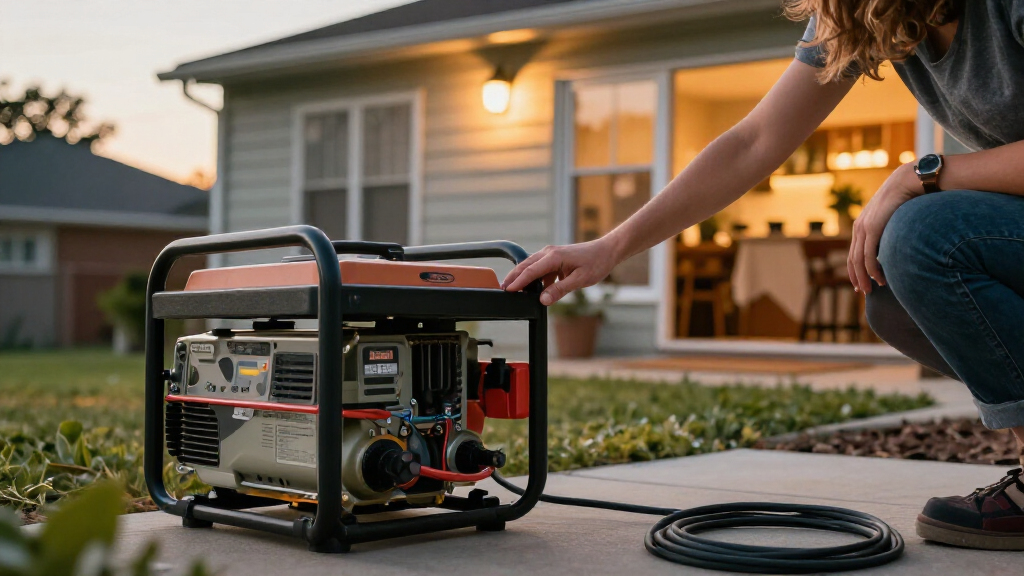
Portable generators produce carbon monoxide, so they must operate outdoors and away from doors, windows, and vents, following the manufacturer’s clearance instructions. A garage, shed, or covered porch can still allow exhaust to enter the home. Install working carbon monoxide alarms on every level and near sleeping areas, and follow local fire guidance for operation and refueling. A CO sensor on a generator is an added safeguard, not permission to run it closer to the house. Think through where the unit can sit safely before choosing a large model that may be difficult to reposition. Safe placement is part of the backup plan, not an afterthought.
Balance Portability With Capacity and Storage
Output tends to bring weight, size, and more involved storage needs. A large generator may cover more loads but can be difficult to move over steps or uneven ground, especially when fuel is aboard. Check the unit’s weight, wheel and handle design, and the route from storage to its operating spot. Compact models fit more easily in limited storage and may be simpler for one person to handle, though they support fewer simultaneous loads. Consider where the generator will be stored when not in use and how you will protect it from weather without restricting ventilation during operation. Buy capacity you can actually deploy and maintain.
Compare Inverter Benefits With Backup Priorities
Inverter generators are often chosen for cleaner power and the ability to adjust engine speed to demand, which can suit sensitive electronics and lighter loads. Those qualities do not automatically make every inverter model quieter, more fuel efficient, or powerful enough for a whole house; check the manufacturer’s figures and independent documentation where available. Conventional portable models can offer high output, but this roundup’s WGen entries are not inverter generators despite appearing alongside the inverter options. Decide whether your priority is inverter operation, broad household capacity, or a balance of the two. Also check maintenance intervals, service access, and parts availability for the exact model. A generator that is easy to keep ready has more value during a long outage.
Frequently Asked Questions
Can an inverter generator power my whole house?
It depends on the home’s simultaneous loads and the generator’s continuous output, not just its peak-watt figure. A large inverter model may handle selected circuits or a carefully managed load plan, while central air conditioning, electric heating, and multiple motors can exceed its capacity. Write down the appliances you need, including startup demands, and have an electrician check the transfer equipment and circuit plan. If you want whole-home coverage without load management, compare the required capacity with standby-generator options as well. The label “whole house” alone does not establish what a particular setup can run.
Should I choose tri-fuel or dual-fuel for home backup?
Tri-fuel makes sense if access to gasoline, propane, or natural gas could change during a long outage and your selected model supports the connection you can use. Dual-fuel is simpler if two fuels already cover your likely needs, and it can reduce the number of operating details to manage. Compare output and runtime on each fuel because ratings may differ. Natural gas use also depends on a suitable supply and correctly installed connection. Choose based on fuel you can access and store safely, rather than the number of fuel options by itself.
What should I check before connecting a generator to household wiring?
Confirm the generator has the right voltage and outlet for the planned connection, and have a qualified electrician assess the home’s transfer switch or approved interlock. Never feed power into a household outlet, since that can send electricity back onto utility lines and create serious hazards. Ask whether the generator’s neutral and grounding arrangement matches the transfer equipment. You should also know which circuits will be powered and how to avoid exceeding the generator’s running capacity. The connection plan should be settled before an outage, not improvised during one.
How much generator capacity do I need for a refrigerator and well pump?
There is no single wattage answer because pump size and appliance startup demands vary. Find the nameplate or manual ratings for both, paying special attention to starting watts, then add the loads you expect to run at the same time. A pump may have a brief surge that changes which generator sizes are suitable. If ratings are hard to find or the pump is hardwired, an electrician can measure or confirm its requirements. Leave some operating headroom so that adding a light or charger does not push the generator to its limit.
Are the Westinghouse WGen models inverter generators?
The WGen products in this lineup are conventional portable generators, while the iGen models are the inverter options. That distinction matters if you specifically want inverter operation for electronics or variable engine speed. The WGen units may appeal to buyers focused on high output and fuel options, but their presence in a product list does not make them inverter models. Check the exact model documentation before ordering, especially when similar names and wattage claims appear together. If inverter technology is a firm requirement, narrow the comparison to models whose specifications explicitly identify an inverter system.
Conclusion
For the strongest mix of household capacity and fuel choice, I’d choose the Westinghouse iGen12000TFc as best overall and best for buyers planning to power several essential circuits. The WEN DF680iX is my value pick for a more limited backup plan that benefits from dual-fuel flexibility, while the iGen8200TFc fits buyers who want tri-fuel options at a more manageable output level. For beginners, I’d favor a model with controls and connections that match a simple, electrician-reviewed circuit plan rather than the largest wattage figure. If premium means maximum fuel flexibility and capacity, the iGen12000TFc leads; if your specific need is very high output and inverter operation is not required, compare the larger WGen models while accounting for that difference. Before choosing, verify the exact model’s fuel-specific output, connection compatibility, and safe operating requirements.