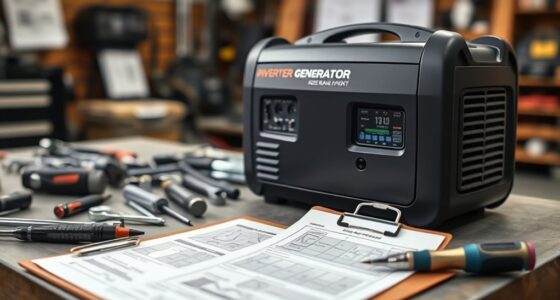
To calibrate your generator’s frequency and AVR settings, start by verifying the output with a reliable frequency meter. Adjust the engine speed to match the desired Hz, ensuring stable RPMs under different loads. Fine-tune the AVR controls to maintain a steady voltage within acceptable limits. Regular checks and precise adjustments will help prevent fluctuations that could harm your equipment. Keep going; you’ll find more detailed tips to optimize your generator’s performance.
Key Takeaways
- Use a reliable frequency meter to verify generator output and adjust engine RPM for correct Hz.
- Fine-tune AVR controls to maintain steady voltage levels under varying loads.
- Regularly check and calibrate both frequency and voltage after installation or maintenance.
- Adjust governor settings to correct frequency drifts and ensure consistent engine speed.
- Conduct routine testing to prevent fluctuations and ensure power quality and system stability.
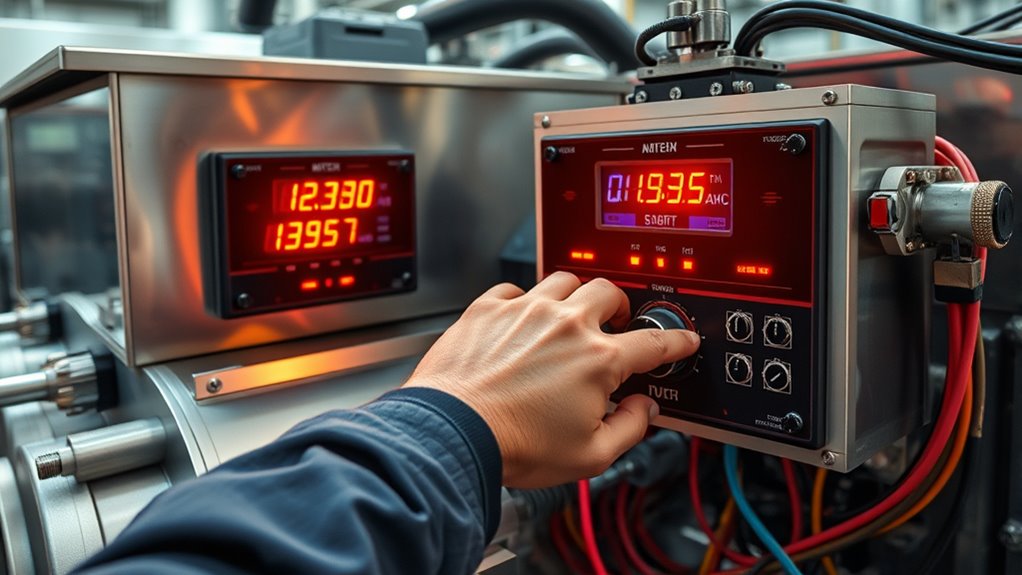
Proper calibration of generator frequency and Automatic Voltage Regulator (AVR) settings is essential to guarantee reliable and stable power output. When your generator’s frequency is precisely calibrated, it ensures that the electrical devices connected to it receive power at the correct cycles per second, typically 50 or 60 Hz depending on your region. This frequency stability is fundamental because fluctuations can cause equipment malfunctions, reduce lifespan, or even lead to failures. Similarly, proper voltage regulation maintained through the AVR keeps the voltage output steady, preventing surges or drops that could damage sensitive electronics or compromise system performance.
Proper generator calibration ensures stable voltage and frequency, protecting your equipment and guaranteeing reliable power supply.
Achieving ideal voltage regulation involves fine-tuning the AVR so that it responds accurately to load changes. If the voltage regulation isn’t properly set, your generator might produce excessively high voltage during low loads, risking equipment damage, or too low voltage during high loads, leading to underperformance or shutdowns. To calibrate the AVR effectively, you start by operating the generator under a known load, then adjust the AVR controls until the output voltage remains steady within acceptable limits. This process helps maintain a consistent voltage level, regardless of fluctuating load demands, which is essential for stable operation.
Frequency stability depends on precise adjustments to the generator’s governing system. You should regularly verify the generator’s frequency using a reliable frequency meter, especially after installation or any maintenance. If the frequency drifts away from the rated value, you need to adjust the governor settings. This involves tweaking the speed control mechanisms so that the engine runs at the correct RPM, which directly influences the frequency. Ensuring the engine maintains a steady speed under varying loads helps keep the frequency stable and prevents issues related to frequency deviations, such as synchronization problems or equipment malfunction. Additionally, considering the role of power quality in maintaining consistent operation can help prevent downstream issues caused by unstable output.
Both voltage regulation and frequency stability are interconnected; when one is off, it can impact the other. For example, if the generator runs at an incorrect speed, not only will the frequency be unstable, but the voltage regulation can also suffer, leading to uneven power quality. That’s why regular calibration and testing are essential. You should schedule routine checks, especially before critical operations, to confirm that the generator’s frequency and voltage outputs are within specified ranges. Proper calibration not only prolongs the lifespan of your equipment but also ensures safe, consistent, and efficient power supply, minimizing downtime and costly repairs.
Top picks for "calibration generator frequency"
Open Amazon search results for this keyword.
As an affiliate, we earn on qualifying purchases.
Frequently Asked Questions
How Often Should Generator Frequency Be Calibrated?
You should calibrate your generator frequency at least once a year to guarantee peak performance and frequency stability. Regular generator maintenance helps identify small deviations early, preventing larger issues. Frequent calibration keeps your generator running smoothly, maintaining consistent power output. If your generator operates in critical applications, consider more frequent checks. Proper calibration ensures reliable operation, reduces downtime, and extends your equipment’s lifespan, making it a essential part of your maintenance routine.
What Tools Are Required for AVR Calibration?
Think of AVR calibration as tuning a musical instrument to hit the perfect note. You’ll need a digital multimeter to measure voltage and current accurately, acting as your trusty tuning fork. An oscilloscope becomes your eye, visualizing the waveform to guarantee stability and precision. With these tools, you can fine-tune your AVR, making sure your generator hums smoothly and reliably, like a well-orchestrated symphony.
Can Calibration Be Done Without Shutting Down the Generator?
Yes, you can perform some calibration procedures without shutting down the generator, which is part of routine generator maintenance. During calibration, you might use a portable test setup or remote monitoring tools to adjust AVR settings and monitor frequency. However, for precise and safe results, it’s recommended to follow proper calibration procedures, possibly during scheduled shutdowns, to avoid risks and ensure accurate generator performance.
What Are Common Signs of AVR Miscalibration?
Think of your AVR as the heart of your generator’s stability; when miscalibrated, it can cause voltage swings, flickering lights, or frequent breaker trips. You might notice fluctuating voltages or inconsistent power output, signaling poor voltage regulation. These signs reveal your AVR’s miscalibration, impacting overall generator stability. Regular checks and proper calibration keep your generator steady, ensuring reliable power and peace of mind during critical moments.
How Does Ambient Temperature Affect Calibration Accuracy?
Ambient temperature can considerably impact calibration accuracy because thermal variations cause components to expand or contract, affecting the AVR’s performance. When temperatures fluctuate, the generator’s frequency and voltage readings might drift, leading to inaccurate calibrations. You should regularly check and adjust your settings to account for ambient temperature changes. Using temperature-compensated equipment or performing calibrations in a controlled environment helps maintain ideal calibration accuracy.
Conclusion
By properly calibrating your generator’s frequency and AVR settings, you guarantee reliable power output and protect your equipment. Don’t worry if it seems complicated at first—taking the time to learn these adjustments actually simplifies future maintenance. Remember, a well-calibrated generator not only runs smoothly but also saves you time and money in the long run. So, stay confident and keep your generator running perfectly; a little effort now pays off later.