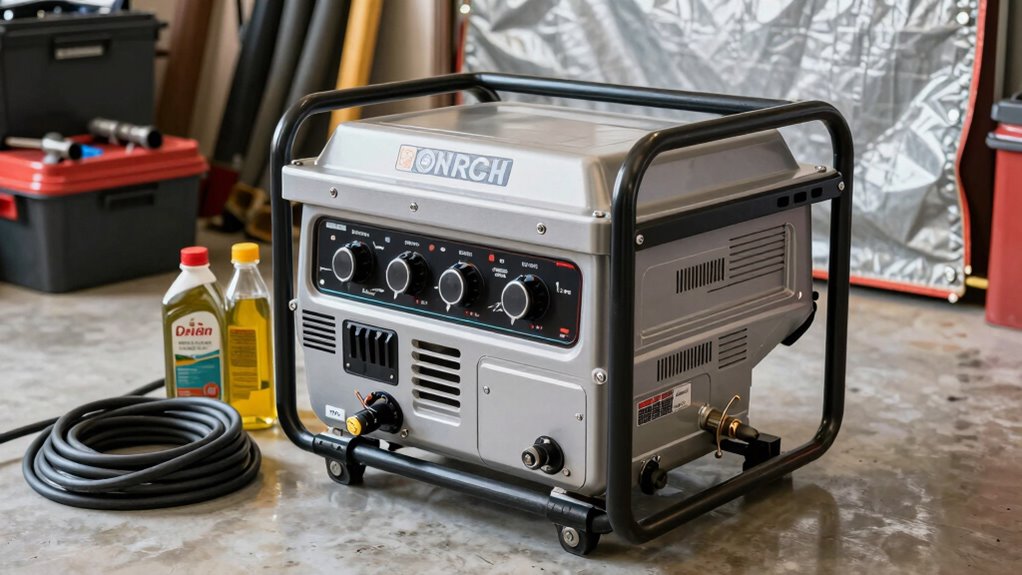

To prepare your generator for peak storm season, start by inspecting fuel stability; add fuel stabilizer and drain old fuel, replacing it with fresh, stabilized fuel. Test and maintain the battery, ensuring it’s fully charged and free of corrosion, and replace it if needed. Check fuel lines, filters, and other components for leaks or damage. Regular inspections and preventative maintenance are essential for reliability. Continue exploring how to keep your generator in top shape during storms.
Key Takeaways
- Add fuel stabilizer and drain old fuel to ensure fresh, reliable fuel during storms.
- Inspect and replace damaged fuel lines and filters to prevent leaks and blockages.
- Test and maintain the battery, cleaning terminals and replacing if necessary, for quick generator startup.
- Conduct regular inspections of the generator, focusing on fuel system and battery health.
- Store fuel properly and monitor its shelf life to avoid engine issues during peak storm season.

Are you ready to keep the lights on during storm season? Preparing your generator now ensures you won’t be caught off guard when severe weather hits. The first step involves checking fuel stability. Fuel can degrade over time, especially if left sitting in the tank without proper treatment. To prevent issues like clogging or poor engine performance, consider adding a fuel stabilizer. This additive keeps the fuel fresh and prevents the formation of gum and varnish that can clog lines and filters. If your generator has been unused for a while, drain the old fuel and refill with fresh, stabilized fuel. Additionally, inspect the fuel lines and filters for cracks or leaks, replacing any damaged parts to ensure clean fuel flow. Proper fuel management not only prolongs the lifespan of your generator but also guarantees reliable operation when you need it most. Regular maintenance of fuel quality is crucial for generator reliability, especially since regional weather patterns can impact how often you should check your equipment. Keeping your generator in optimal condition also involves monitoring fuel shelf life, which varies depending on environmental conditions and fuel storage practices.
Next, focus on battery maintenance. Many generators rely on batteries for starting, and a weak or dead battery can be a major obstacle during emergencies. Test your battery’s charge with a multimeter, making sure it holds a proper voltage—generally around 12.6 volts for a fully charged 12-volt battery. If the charge is low, give it a full charge using a compatible battery charger. Clean any corrosion from the terminals with a wire brush and apply a protective coating of petroleum jelly or terminal protectant spray to prevent future corrosion. If your battery shows signs of aging or doesn’t hold a charge after testing, it’s wise to replace it ahead of storm season. Ensuring your battery is in top shape guarantees quick starts, saving you time and stress when power outages strike. Regularly checking your battery health can help prevent unexpected failures at critical times.
As an affiliate, we earn on qualifying purchases.
Frequently Asked Questions
How Often Should I Run My Generator During Off-Season?
You should run your generator at least once a month during the off-season to guarantee it’s ready when needed. This maintenance tip helps keep parts lubricated and detects issues early. Use proper storage solutions, like a clean, dry place, and consider adding fuel stabilizer. Regular testing prevents unexpected failures and prolongs your generator’s lifespan, so make this a routine to stay prepared for any emergency.
Can I Store Fuel Directly in the Generator Tank Long-Term?
Imagine your generator’s tank as a tiny reservoir, but storing fuel long-term isn’t ideal. You shouldn’t keep fuel directly in the tank for extended periods. Instead, drain it and add fuel stabilizers to fresh fuel stored in proper storage containers. Stabilizers prevent oxidation and gumming, ensuring your generator runs smoothly when you need it most. Regularly check and replace stored fuel to keep your backup power ready.
What Accessories Are Essential for Storm-Ready Generators?
To stay storm-ready, you need essential accessories like fuel stabilizers and weatherproof covers. Fuel stabilizers keep your generator’s fuel fresh during long storage, preventing gunk and engine issues. Weatherproof covers protect your generator from rain, snow, and debris, ensuring it stays dry and functional. These accessories are crucial for maintaining your generator’s reliability and readiness, so you can count on it when storms hit unexpectedly.
How Do I Safely Dispose of Old Generator Fuel?
To safely dispose of old generator fuel, first, guarantee your fuel is stabilized to prevent spills. Transfer the fuel to a proper, approved container. Follow disposal procedures by taking the container to a hazardous waste facility or authorized disposal site. Never pour old fuel on the ground or down drains. Proper handling reduces environmental risks and keeps you safe. Always wear protective gear and consult local regulations for disposal guidelines.
Are There Specific Safety Precautions for Portable Versus Standby Generators?
Think of your generator as a trusted guardian—portable or standby, each has its own safety dance. Portable generators need outdoor use, proper grounding, and vigilant maintenance, while standby units require professional installation and regular inspections. Follow safety guidelines like keeping fuel away from heat, ensuring proper ventilation, and never overloading. These precautions symbolize respect for your equipment’s power, keeping you safe during storm season’s chaos.
As an affiliate, we earn on qualifying purchases.
Conclusion
By preparing your generator, you guarantee safety and reliability. By checking fuel levels, inspecting components, and testing performance, you stay ready. By understanding your generator’s needs, you protect your home and loved ones. By staying proactive, you face storm season with confidence. Prepare today, protect tomorrow, and face the storm with peace of mind. Your preparedness is your power—embrace it, and weather the storm with strength.
generator fuel line replacement kit
As an affiliate, we earn on qualifying purchases.
As an affiliate, we earn on qualifying purchases.
As an affiliate, we earn on qualifying purchases.